
Adolescent depression affects roughly 1 in 5 teens, and research consistently shows that parent involvement is one of the strongest protective factors. When parents actively engage in their teen’s mental health journey, treatment outcomes improve significantly and symptoms decrease faster.
At The Teen Center, we’ve seen firsthand how families who work together-combining professional support with home-based care-help their teens recover more effectively. This guide shows you exactly how to build that supportive home team.
How Parent Involvement Cuts Depression Risk
Research from a large Chinese study of over 21,000 adolescents found that higher perceived parental involvement predicted significantly lower depressive symptoms, with the strongest effect coming from emotional involvement and life involvement rather than academic pressure alone. The data showed a clear pattern: teens whose parents were emotionally warm and involved in their daily lives had substantially fewer depressive symptoms, even after accounting for socioeconomic status and other factors. This isn’t theoretical-the study measured specific types of involvement across emotional support, social engagement, life guidance, and academic help, revealing that emotional warmth matters far more than monitoring grades.
What the Research Actually Shows
A meta-analysis of 20 randomized trials involving over 2,200 adolescents found that adding a parent component to teen-focused treatment produced measurable improvements in outcomes, with the benefit being larger for behavioral problems than mood symptoms alone. The effect size was small but consistent, meaning parent involvement works reliably across different treatment settings. Studies from the National Institutes of Health confirm that teens who spend more time with parents in real interaction show fewer depressive symptoms. The emotional involvement dimension produced the best predictive model for reducing depressive symptoms, suggesting that what parents do emotionally matters more than what they do structurally.
Family Structure and Treatment Response
When adolescents have both parents actively involved in treatment, they achieve significantly better outcomes and higher rates of symptom remission. Data from Mayo Clinic’s EMERALD program showed that teens with both parents in the household had a 38% graduation rate compared to 23.6% for those with separated parents, and were more than twice as likely to achieve minimal depressive symptoms.
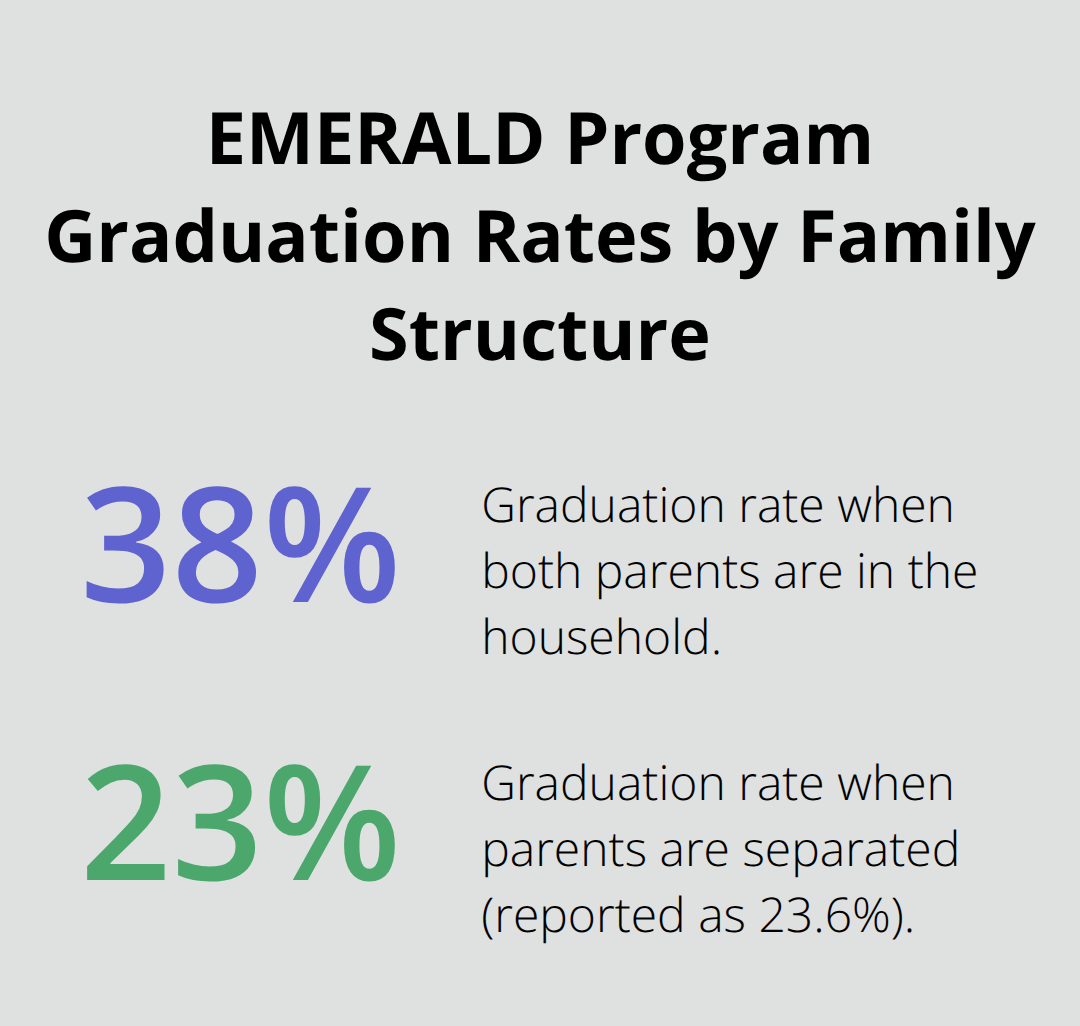
This gap persisted even after adjusting for socioeconomic status, suggesting that active parental coordination-not just family income-drives better outcomes. Single parents can absolutely support their teens effectively, but the research indicates that when both parents participate in treatment planning and follow-through, treatment responses strengthen measurably.
Why Emotional Warmth Outperforms Other Parental Behaviors
The Chinese study’s most striking finding separated emotional involvement from other parental activities. Emotional warmth and life involvement showed strong negative associations with depression, while academic involvement and social involvement produced weaker protective effects. Parents who create emotional safety-through warm check-ins, active listening, and genuine interest in their teen’s inner world-protect against depression far more effectively than parents who focus primarily on academic monitoring or social oversight. This distinction matters because it redirects parental energy toward what actually works: building secure emotional bonds rather than intensifying pressure.
Putting Research Into Practice
The evidence points to a clear direction for parents: prioritize emotional connection and life guidance over surveillance and control. Teens recover faster when parents know them deeply, respond to their emotional needs, and involve them in family decisions. The combination of emotional warmth, consistent presence, and coordinated professional support creates the conditions for real change. Understanding these research findings sets the foundation for the specific strategies that transform a household into a genuine support system-which is exactly what the next section covers.
Building the Home Environment That Heals
Routines Create the Foundation for Recovery
Emotional warmth without structure collapses quickly, and structure without warmth feels cold and punitive. The research is unambiguous: teens recover from depression when their homes combine consistent routines with genuine emotional presence. Start by anchoring your day around non-negotiable family moments. Shared meals matter far more than parents realize-the American Psychological Association emphasizes that consistent mealtimes create predictability and signal to your teen that family connection is a priority, not something that happens when there’s nothing else to do. Establish one meal daily where phones stay off the table and conversation happens naturally.
Beyond meals, create a predictable bedtime routine that begins at the same time each night, trying for eight to ten hours of sleep since sleep deprivation directly worsens depressive symptoms. Set clear boundaries around screen time after 8 PM; the blue light from devices suppresses melatonin production and fragments sleep quality. These routines aren’t rigid punishment-they’re scaffolding that allows your teen’s nervous system to settle. When a depressed teen knows what to expect, anxiety decreases and they can focus energy on healing instead of managing unpredictability.
Listen Without Rushing to Fix
Active listening requires you to stop trying to fix everything immediately. When your teen shares something difficult, listen fully without offering solutions, judgment, or redirection to your own experiences. The National Institute of Mental Health recommends creating a nonverbal signal your teen can use when they need support, allowing them to communicate emotional distress without forcing words.
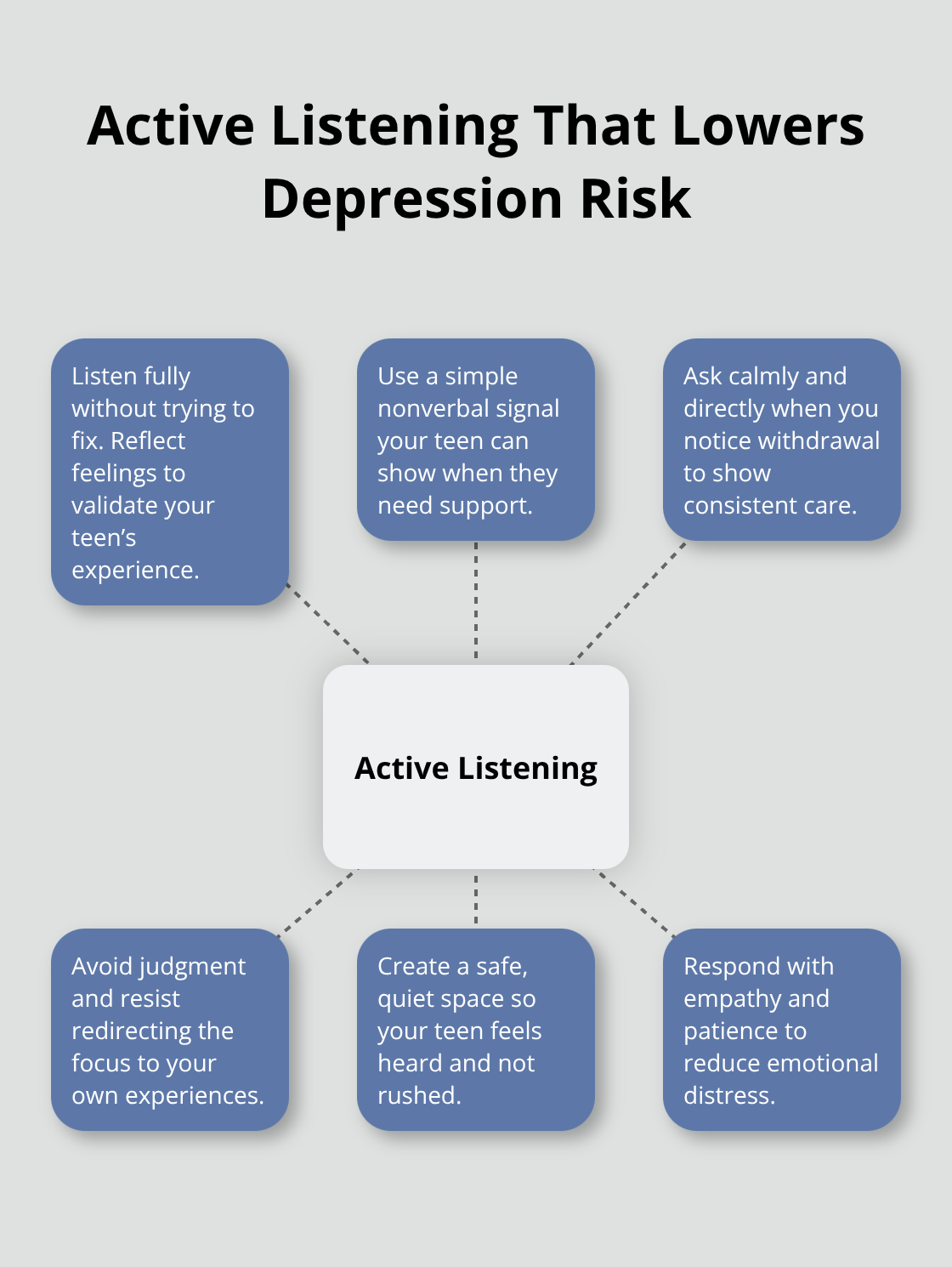
If your teen seems withdrawn, ask directly and calmly rather than ignoring the shift.
Recognize that increased withdrawal, irritability, sudden mood shifts, or talk of hopelessness are warning signs that demand immediate attention. If your teen mentions hopelessness or harming themselves, contact a mental health professional that day rather than waiting for an appointment. Set up a cozy relaxation corner in your home with soft lighting, comfortable seating, and access to calming tools like a gratitude journal or mood tracker. Involve your teen in choosing what goes there so it feels like their space, not something imposed.
When Home Support Reaches Its Limits
When you notice warning signs escalate, move from home support to professional intervention quickly-this isn’t failure, it’s the home team functioning correctly by recognizing its limits and bringing in specialists. Professional mental health providers can assess whether your teen needs medication, intensive therapy, or crisis support that home routines alone cannot provide. The transition from household management to clinical care happens smoothly when you’ve already established the emotional foundation this section describes, which means your teen enters treatment with a secure base rather than starting from crisis mode. This groundwork transforms how your teen engages with the next phase: working alongside mental health professionals who can coordinate with your family’s efforts.
How to Work With Your Teen’s Mental Health Provider
Professional mental health care works best when parents stop thinking of themselves as bystanders and start operating as active team members. Your role isn’t to replace the therapist or psychiatrist-it’s to extend their work into the hours when your teen is at home, where most of their life actually happens. This means attending sessions when clinically appropriate, understanding what your teen is working on in treatment, and applying those principles in real time. Modern family therapy is far more specific than many parents expect: a trained clinician helps you identify which parental behaviors maintain depression and which ones interrupt it, then coaches you to shift those patterns. When a therapist suggests your teen needs medication management, your job includes monitoring how the medication affects mood and sleep, reporting side effects clearly, and ensuring your teen takes it consistently.
Coordinate Care Between Home and Clinic
Research from a meta-analysis of 20 randomized trials found that when parents actively participate in adolescent treatment-whether through separate sessions, co-therapy, or coordinated home follow-through-outcomes measurably improve. The benefit is especially strong for behavioral problems, but it extends to mood disorders when parents understand what they’re reinforcing at home.
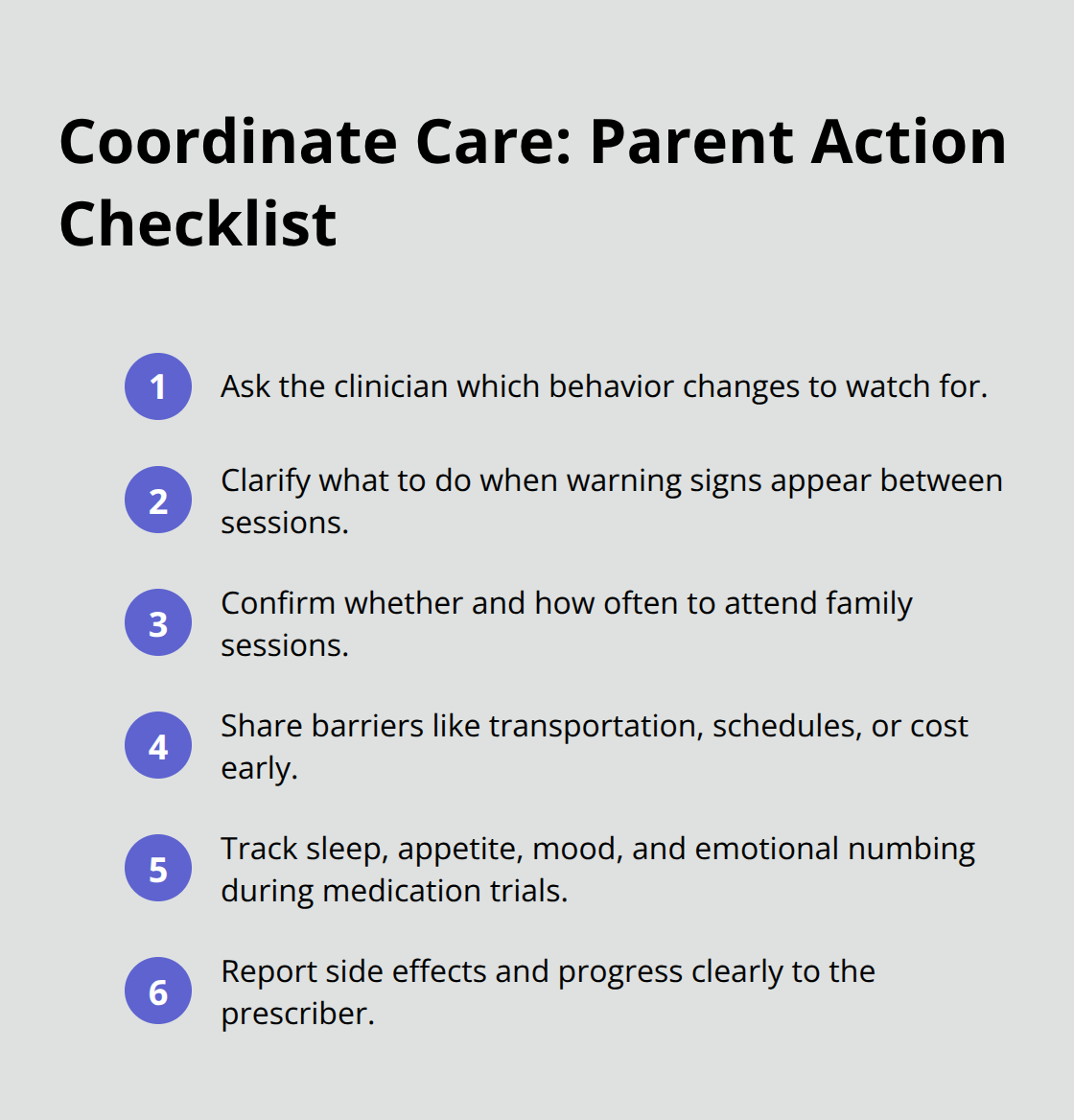
Start by asking your teen’s clinician directly: What specific changes should I watch for? What should I do when my teen shows warning signs between sessions? Should I attend family sessions, and if so, how often? Some clinicians recommend parents attend every session; others prefer monthly check-ins to avoid undermining the teen’s autonomy.
Open, nonjudgmental communication about emotions at home improves teens’ ability to cope with depression. This means you’re not just supporting treatment-you’re actively practicing the same skills the therapist teaches. If your teen is prescribed an antidepressant, track sleep quality, appetite changes, mood shifts, and any emotional numbing over the first two to four weeks, then report these observations directly to the prescriber. Many parents miss medication side effects because they don’t know what to monitor.
Support Treatment Between Sessions
Between therapy sessions, resist the urge to process everything your teen shares; instead, ask what they want to talk about and listen. If your teen mentions something serious-hopelessness, self-harm, substance use-contact the clinician that day rather than waiting for the next appointment. The coordination between home and clinic breaks down when parents assume the therapist will handle everything, then feel blindsided when their teen’s mood crashes.
Treatment adherence improves dramatically when parents actively support attendance, accompany their teen to appointments, and follow through on homework assignments the therapist assigns. If barriers exist-transportation, work schedules, cost-tell the clinician immediately so they can adjust the treatment plan or connect you to resources. Your teen’s recovery depends on this partnership functioning smoothly, which requires you to be transparent about what’s working at home and what isn’t, so the clinician can adjust their approach accordingly.
Recognize When Professional Support Intensifies
If your teen’s symptoms worsen despite outpatient treatment, or if warning signs escalate to crisis levels, professional providers can offer more intensive options. Some adolescents benefit from residential or intensive outpatient programs that provide structured daily treatment, medication management, and family therapy coordinated with school support. When you notice increased withdrawal, irritability, mood changes, or talk of hopelessness, contact your teen’s clinician immediately rather than waiting to see if symptoms pass on their own. Early response to warning signs improves outcomes significantly and often prevents crisis situations from developing.
Final Thoughts
Parent involvement in adolescent depression treatment isn’t optional-it’s foundational. The research confirms that when parents actively participate in their teen’s recovery, treatment outcomes improve measurably, symptoms decrease faster, and teens achieve lasting stability rather than temporary relief. You’ve now seen the evidence from large-scale studies, clinical programs, and meta-analyses showing that emotional warmth, consistent routines, and coordinated care with mental health professionals create the conditions where real change happens.
Building a supportive home team means shifting from hoping your teen gets better to actively participating in their recovery. This involves establishing routines that signal safety, listening without judgment, recognizing warning signs early, and working alongside clinicians rather than leaving treatment entirely to professionals. The combination of home-based support and professional care works because they operate in different spaces: therapists provide specialized assessment and intervention, while parents provide the daily emotional presence and consistency that sustains progress between sessions.
If you haven’t already, contact a mental health provider who can assess your teen’s needs and help you understand your specific role in their treatment. If your teen is already in treatment, schedule a conversation with their clinician about how you can strengthen your involvement at home. We at The Teen Center offer specialized, evidence-based care designed specifically for adolescents, including individual and family therapy, medication management, and crisis support both in person and via telehealth-learn more about how we support families.