A mental health crisis in your family doesn’t come with a warning label or a convenient schedule. When your teen is in danger, you need to act fast-and you need to know exactly what to do.
At The Teen Center, we’ve created this guide to help you recognize the warning signs, respond effectively, and access crisis resources for families when every second matters. The right information and support can make all the difference.
What to Watch For When Your Teen Is in Crisis
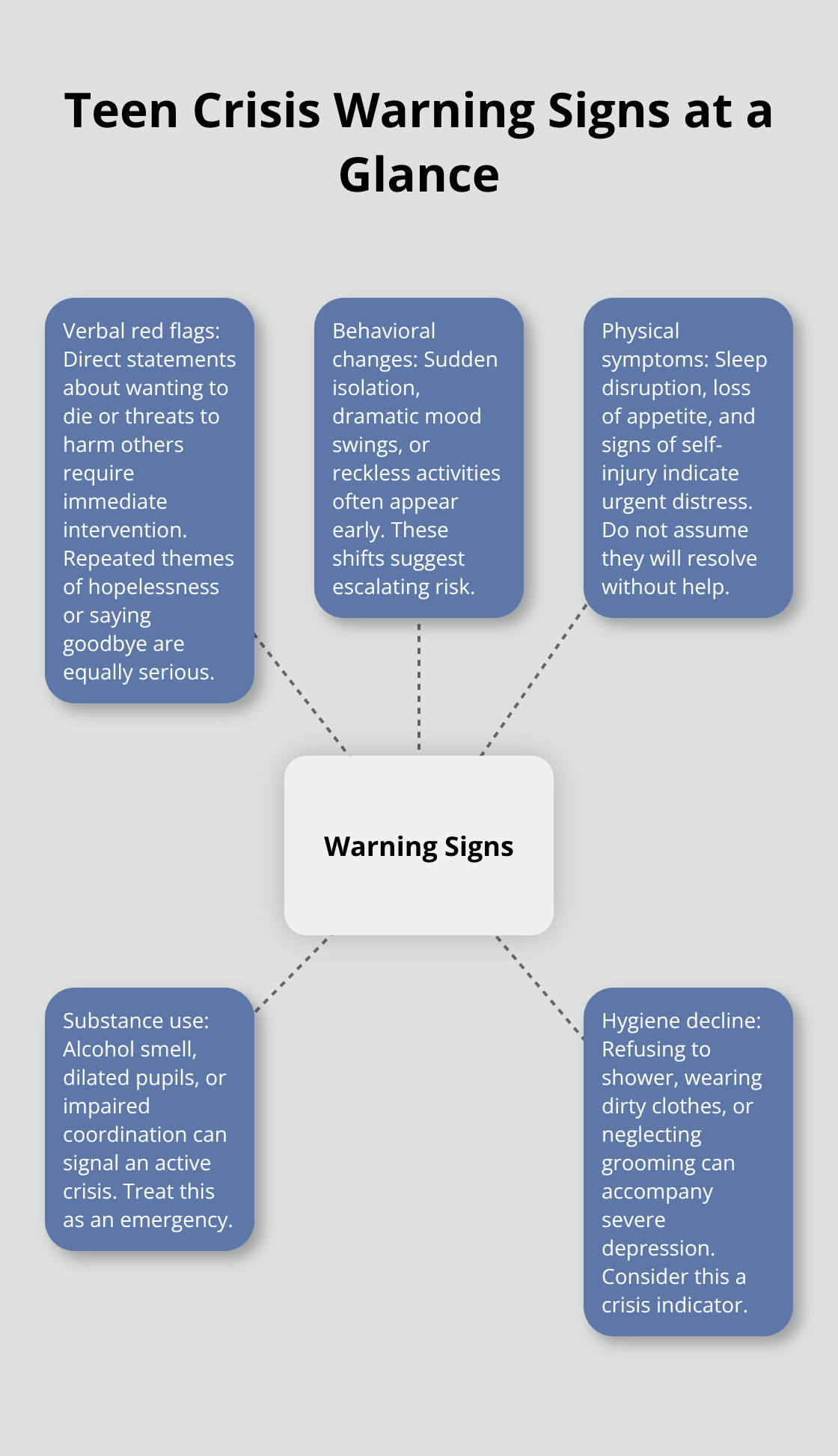
A mental health crisis in teens shows up differently than most parents expect. It’s not always loud or obvious. According to NAMI’s guidance on mental health crises, explicit suicidal thoughts or statements are a clear warning sign, but so are threats to harm others, severe agitation, hallucinations, or sudden social withdrawal. Many parents miss the quieter signals until the situation becomes dangerous. Behavioral changes often appear first-your teen might suddenly isolate from friends, show dramatic mood swings, or engage in reckless activities they never would have before. Physical symptoms matter too. Watch for sleep disruption, loss of appetite, or new patterns of self-injury like cutting or burning. These aren’t signs to wait out or hope will improve on their own.
They demand immediate attention.
Verbal Clues You Cannot Ignore
What your teen says and writes matters as much as what they do. Direct statements like “I want to die,” “I can’t do this anymore,” or “I’m a burden” are absolute red flags that require immediate crisis intervention. Don’t dismiss these as typical teenage drama or attention-seeking. Written communication counts equally-check social media posts, journal entries, or text messages for themes of hopelessness, self-blame, or talk of saying goodbye. Threats to harm others are equally serious and require the same urgent response. The tone and frequency matter. One dark joke differs from repeated statements about death or harm. Your instinct as a parent matters here. If something feels wrong, it probably is. Trust that instinct completely and act on it rather than waiting to see if the situation improves. Hesitation in a true crisis can cost lives. Contact 988, the national mental health lifeline, immediately if you hear any of these statements. Call 911 if your teen is in immediate danger or has access to means of self-harm.
Physical Signs That Demand Action Now
Self-harm and physical symptoms are concrete evidence that your teen needs crisis support right away. Visible cuts, burns, or bruises in various stages of healing on arms, legs, or torso indicate active self-injury. Some teens hide these marks deliberately, so unexplained long sleeves in summer or sudden preference for baggy clothing can signal concealment. Extreme weight changes (whether rapid weight loss or gain) combined with other warning signs point to serious distress. Substance use often accelerates during a mental health crisis. If your teen suddenly smells of alcohol, has dilated pupils, or shows impaired coordination, a crisis may already be underway. Lack of personal hygiene-refusing to shower, wearing dirty clothes, neglecting grooming-frequently accompanies severe depression or other mental health emergencies. These physical changes don’t exist in isolation. They cluster together. When your teen shows two or more of these signs alongside behavioral or verbal red flags, the situation is urgent. Contact your teen’s therapist or psychiatrist immediately if they’re already in treatment. If they’re not in treatment, go to the nearest emergency room or call 911. Do not leave your teen alone while waiting for help.
Moving From Recognition to Response
You’ve now identified the warning signs. Your teen shows multiple red flags, and you know something is seriously wrong. The next step isn’t to gather more information or hope the situation stabilizes on its own. You need to act-and you need to know exactly how to respond in those critical first moments.
What to Do in the First Minutes
Stay Calm and Create Safety
The moment you recognize your teen is in crisis, your job shifts from observation to action. Stay physically present and calm, even if panic rises inside you. Your teen’s nervous system will mirror yours, so controlled breathing and a steady voice matter more than you realize. Move to a safe space away from potential means of harm-remove access to medications, sharp objects, cords, or anything that could be used for self-injury. If your teen is agitated or aggressive, maintain distance and avoid sudden movements or loud commands. Speak in short, simple sentences. Instead of saying everything at once, say one thing: “I’m here with you” or “We’re going to get help.” This isn’t the moment to ask why they feel this way or launch into a lecture about consequences.
Know When to Call 988 Versus 911
Knowing when to call 988 versus 911 determines the speed of intervention. Call 988, the national mental health lifeline available 24/7, if your teen expresses suicidal thoughts but is not actively attempting self-harm and has no access to means. You can call, text, or use online chat through 988. The conversation is free, confidential, and trained counselors specialize in de-escalation and crisis support. Call 911 or go directly to the nearest emergency room if your teen actively harms themselves, has made a specific plan to end their life with access to means, threatens to harm others, experiences hallucinations or severe confusion, or is under the influence of substances and shows dangerous behavior. Do not wait for a callback or try to manage the situation alone.
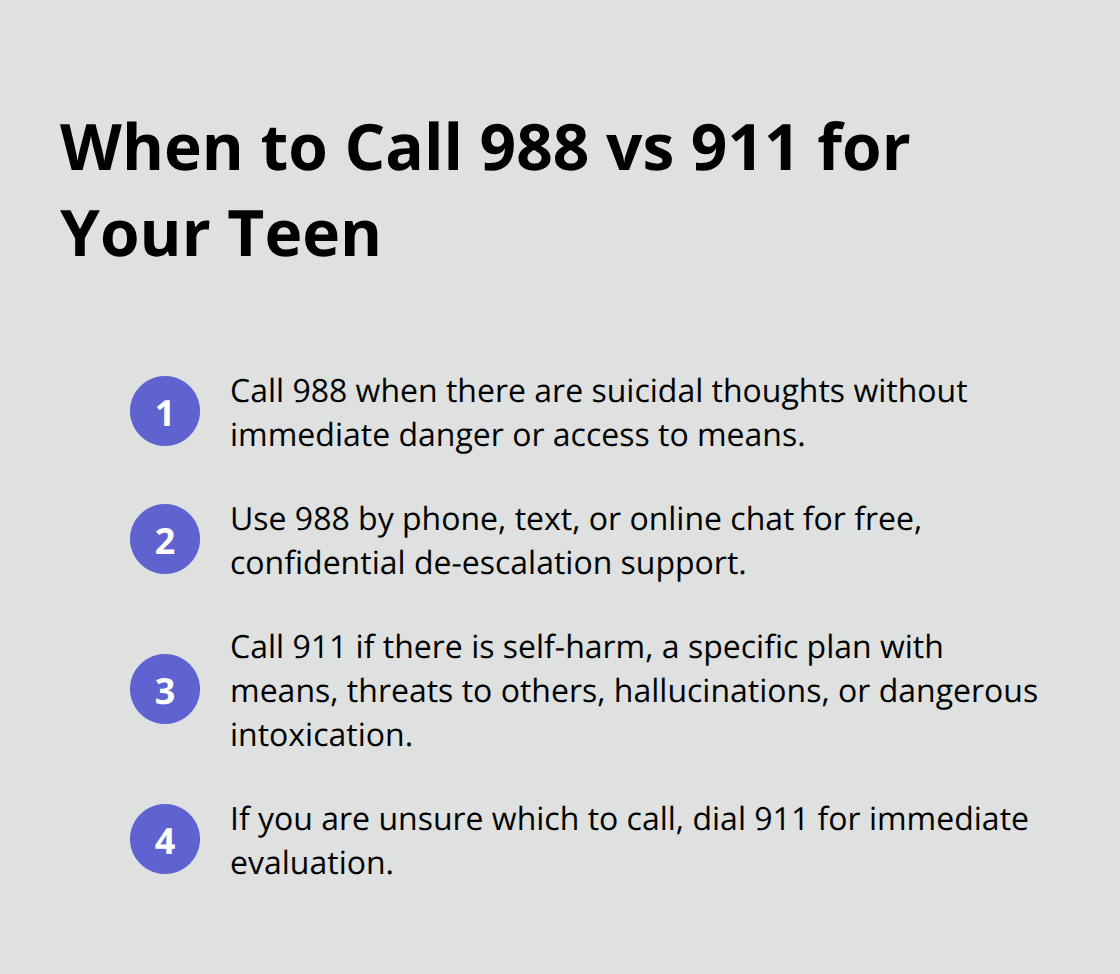
If you’re unsure which to call, call 911. Paramedics and emergency departments handle mental health crises regularly and can assess whether your teen needs immediate psychiatric hospitalization.
What to Do While Waiting for Help
While waiting for emergency responders, keep your teen in sight at all times and remove any objects they could use for harm. If your teen is calm enough to talk, ask simple questions about what they need right now. Some teens respond to quiet music, dimmed lights, or a familiar comfort item. Others need you to sit silently nearby. Let their behavior guide you rather than imposing what you think will help. The goal during these minutes is to prevent harm and show your teen they’re not facing this alone. Those conversations about why they feel this way happen later, during recovery and follow-up care. Right now, your only focus is safety and connection.
What Happens After the Crisis Moment Passes
Once emergency responders arrive or your teen reaches the hospital, the immediate danger subsides-but the work of recovery begins. Your teen needs assessment from mental health professionals who can determine the right level of care, whether that’s hospitalization, intensive outpatient treatment, or ongoing therapy. If your teen is already in treatment with a therapist or psychiatrist, contact them immediately after the crisis stabilizes. If your teen is not in treatment, a mental health assessment is essential. Your primary care physician can provide screenings and referrals to specialists who can build a treatment plan tailored to your teen’s specific needs and circumstances.
Where to Get Help Right Now
Call 988 for Immediate Crisis Support
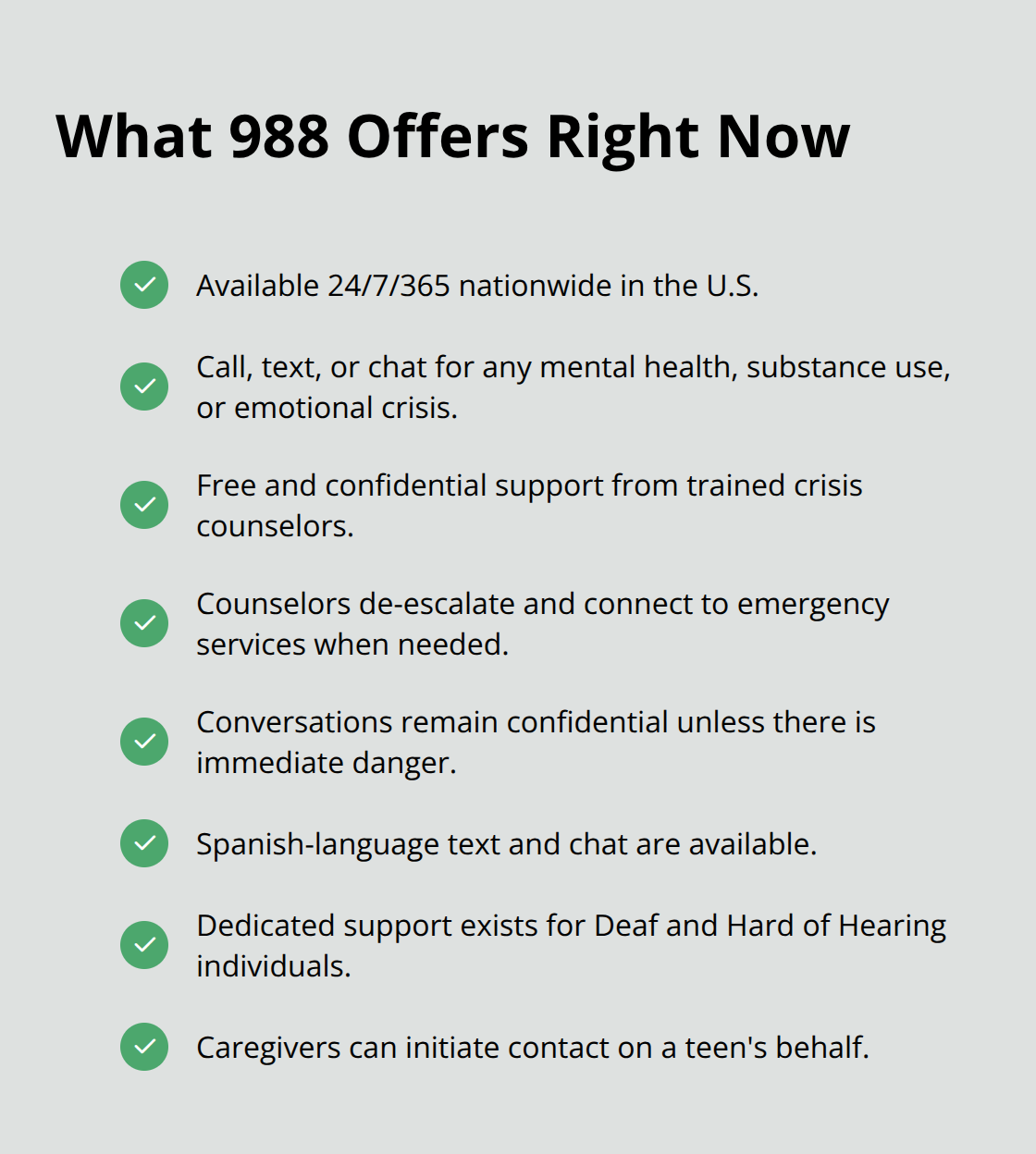
When your teen is in crisis, you need resources that answer immediately, not resources that make you navigate a phone tree or wait for a callback. The 988 Suicide and Crisis Lifeline operates 24/7/365 and handles far more than suicidal crises alone. Call, text, or chat at 988 for any mental health emergency, substance use concern, or emotional distress. Trained counselors specialize in de-escalation and crisis intervention, and the service costs nothing while remaining completely confidential. According to SAMHSA, which oversees the 988 network, conversations stay confidential unless your teen faces immediate danger. Spanish-language text and chat services are available, along with dedicated support for Deaf and Hard of Hearing individuals. If your teen refuses to call but you’re worried, you can initiate contact on their behalf to receive guidance on next steps.
Speed Matters: Why Calling Beats Texting
The key advantage of calling 988 over texting or chatting is speed. A live counselor answers calls within seconds, while text responses may take longer during high-volume periods. When your teen is actively in crisis, those seconds matter. A counselor can assess danger level, talk your teen through immediate coping strategies, and connect them to emergency services if needed-all in real time. If your teen feels more comfortable texting or chatting due to anxiety or shame, those options still provide trained support. The choice between call, text, and chat depends on what your teen will actually use in that moment.
Emergency Departments Handle Psychiatric Crises
When your teen needs in-person evaluation immediately, your local emergency department is equipped to handle psychiatric crises. Emergency rooms have psychiatrists and crisis teams trained to assess whether your teen needs hospitalization, intensive outpatient programs, or stabilization with referral to outpatient care. Do not worry about insurance, cost, or whether the ER is the right place. If your teen actively harms themselves, expresses a specific plan to end their life, or threatens to harm others, the ER is the correct destination. Call 911 for transport if your teen is unsafe to drive or if you need paramedics to help manage dangerous behavior.
Mobile Crisis Teams Bring Help to Your Home
Some communities have mobile crisis teams that respond to homes instead of requiring hospital transport. Community Crisis Services, Inc. in Prince George’s County, for example, operates 24/7 and dispatches teams to assess and stabilize teens in their homes when appropriate. If you live in an area with mobile crisis services, ask the 988 operator or 911 dispatcher whether that option is available in your location. The difference matters because a home-based assessment can reduce your teen’s trauma while still providing expert evaluation and connecting them to the right level of care.
Final Thoughts
The crisis has passed, but your teen’s recovery demands immediate action. Create a family crisis plan before you need it so panic transforms into clear steps. Write down your teen’s therapist and psychiatrist contact information, list local emergency numbers, and identify safe spaces in your home where your teen can go when distressed. Include coping strategies your teen has learned, trusted people they can call, and the specific steps for when to contact 988 versus 911. Review this plan with your teen during calm moments so everyone knows exactly what happens next time a crisis emerges.
Follow-up care after a crisis determines whether your teen builds lasting stability or cycles back into danger. The hospital or emergency department will provide discharge paperwork with referrals, but you must act on those referrals immediately rather than waiting. Schedule the first therapy appointment before leaving the hospital if possible, and if your teen was not in treatment before the crisis, they need a comprehensive mental health assessment and an ongoing treatment plan. Research shows that teens who engage in treatment within two weeks of a crisis have significantly better outcomes than those who delay.
Crisis resources for families extend far beyond the emergency moment, and ongoing support makes the difference between recovery and relapse. If your teen needs specialized mental health care after a crisis, The Teen Center offers intensive outpatient programs, individual and family therapy, medication management, and crisis support for adolescents ages 12 through 17. We work with your family throughout recovery because parents are essential to healing and help teens build resilience, work through trauma, and achieve emotional stability.