
Getting insurance coverage for teen therapy can feel overwhelming. Between verifying benefits, understanding deductibles, and dealing with claim denials, many families struggle to navigate the system.
At The Teen Center, we’ve seen firsthand how confusing this process becomes when teens need mental health support. This guide breaks down exactly how to secure payment for therapy and avoid common roadblocks.
What Insurance Plans Actually Cover for Teen Therapy
Insurance plans fall into three main categories, and each one treats mental health coverage differently. HMO plans require you to pick a primary care physician and obtain referrals for specialists like therapists, which keeps costs lower but limits flexibility. PPO plans offer broader networks without referral requirements, though you’ll pay higher premiums and copays in exchange for more provider options. EPO plans sit in the middle-no referrals needed, but you’re restricted to in-network providers except in emergencies. The critical difference for teen therapy is that HMOs often create bottlenecks because your primary care doctor controls access to mental health specialists, while PPOs give you direct access but at a steeper cost.
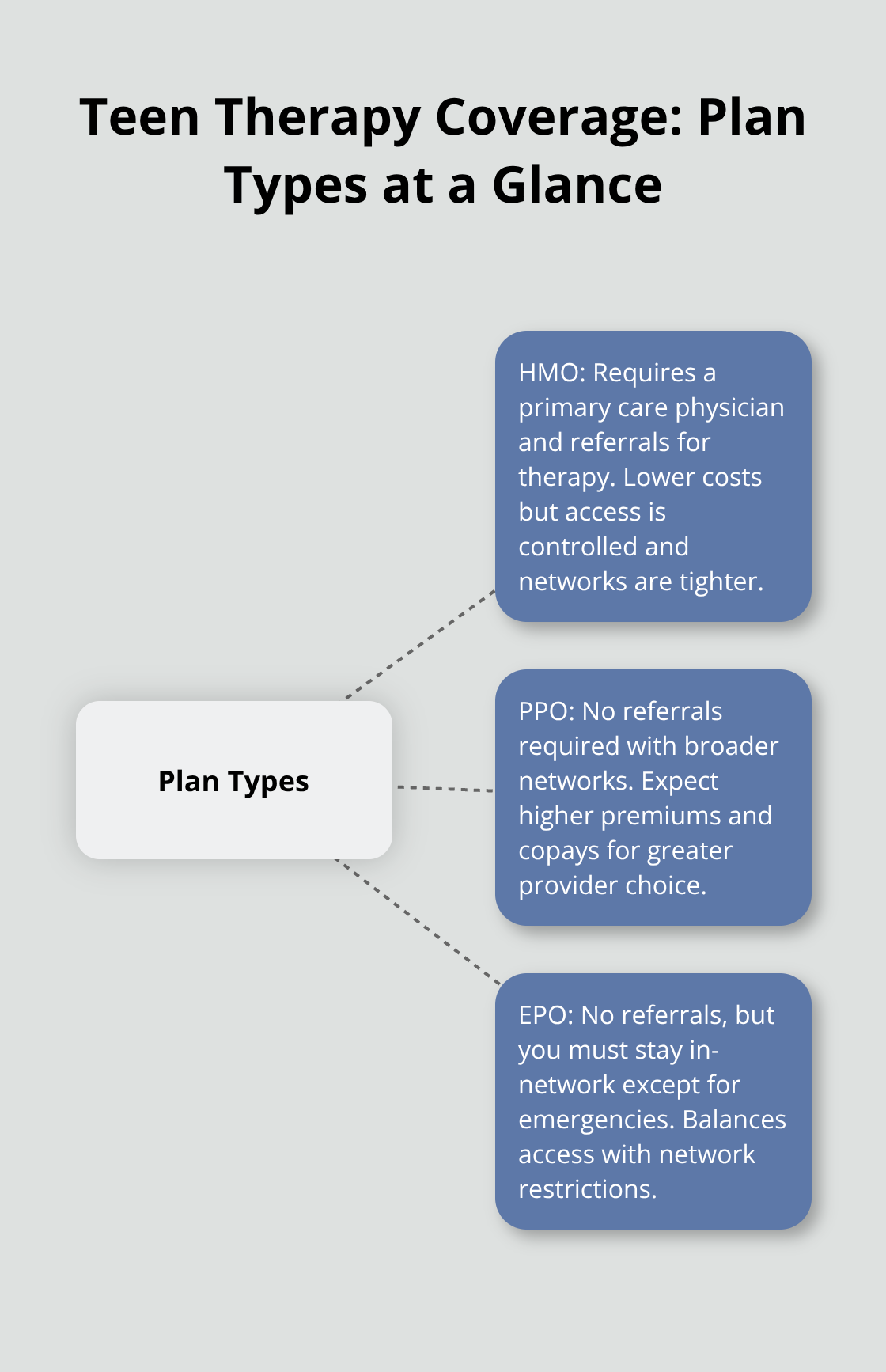
How Your Plan Type Affects Access to Teen Therapy
If you have an HMO and your teen needs therapy, you’ll start with your PCP, who will then refer you to an in-network therapist. This process typically takes one to two weeks, which matters when your teen is struggling. Under the Affordable Care Act, all marketplace plans and most employer-sponsored plans must cover mental health services. The Mental Health Parity and Addiction Equity Act requires insurers to cover mental health on equal terms with physical health. However, parity only applies to plans that include mental health benefits-some older or limited plans still don’t, so you need to verify this upfront by requesting a written summary of benefits from your insurer.
In-Network Providers and Single-Case Agreements
The in-network versus out-of-network distinction will directly impact what you pay. In-network therapists have contracts with your insurer and cost significantly less-typically a copay of $30 to $50 per session. Out-of-network providers can cost $150 to $300 per session, with you paying a percentage of that fee after your deductible. If your teen’s therapist is out-of-network, you can request a Single-Case Agreement, which allows the insurer to pay that specific provider at in-network rates on a one-time basis. This negotiation usually takes a few days, so bring it up early if your preferred therapist isn’t in-network.
Understanding Deductibles and Out-of-Pocket Costs
Your deductible is the amount you pay before insurance kicks in-for example, a $400 deductible means you cover the first $400 in therapy costs out of your own pocket. Copays and coinsurance count toward this deductible, so tracking these payments matters. Once you hit your deductible, you’ll pay a fixed copay per visit or a percentage of the cost, called coinsurance. Many plans set an out-of-pocket maximum-typically $1,000 to $2,500 annually-meaning once you reach that total, your insurer covers 100 percent of remaining therapy costs for the year.
To estimate your actual costs, call your insurer’s member services line and ask for your remaining deductible and out-of-pocket maximum. Your therapist’s billing department can also run a benefits check to give you a concrete number before your teen’s first appointment. With these numbers in hand, you’ll know exactly what to expect financially and can move forward with confidence. The next step involves verifying your coverage before treatment starts, which prevents surprises and denials down the road.
How to Verify Coverage and Prevent Claim Denials
Ask Your Insurer the Right Questions
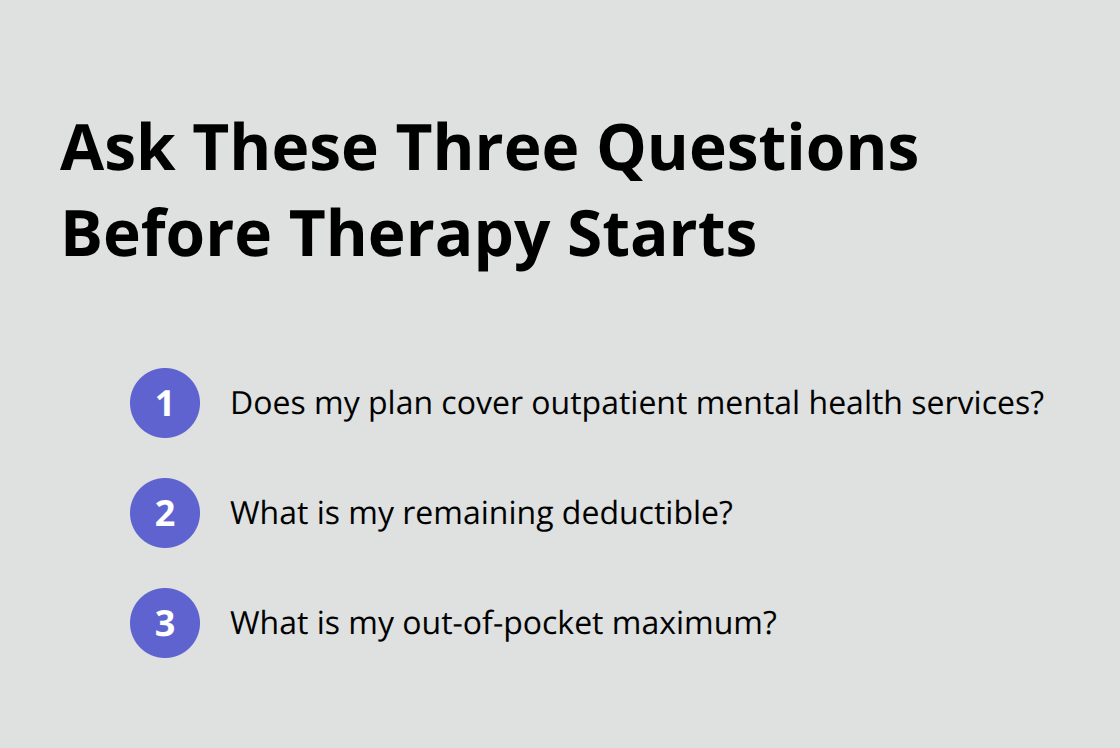
Before your teen’s first therapy appointment, contact your insurance company’s member services line and ask three specific questions: Does my plan cover outpatient mental health services? What is my remaining deductible? What is my out-of-pocket maximum?
Write down the representative’s name, date, and confirmation number-this creates a paper trail if coverage disputes arise later. Request a written summary of benefits that clearly lists mental health coverage, copays, and any prior authorization requirements. Your insurer must provide this under the Affordable Care Act.
Understand Prior Authorization Requirements
Many families skip the verification step and discover mid-treatment that their plan requires prior authorization before therapy begins, which can delay payment or result in claim denials. Some plans require authorization every four weeks for ongoing therapy, while others grant approval for several months upfront. Ask your insurer explicitly whether your teen’s specific treatment needs prior authorization, and if so, have your therapist’s office submit the request immediately. This typically includes clinical documentation showing medical necessity-your therapist can handle this. If authorization is denied, your therapist can request a peer-to-peer review, where a clinician at the insurance company discusses the case directly with your provider. These reviews often overturn denials within 48 to 72 hours when clinical evidence supports continued care.
Track Claims and Organize Documentation
When your therapist’s billing department submits claims, you should track what happens on your end. Ask your provider for an itemized receipt after each session showing the date, service code, and charge amount. Keep these receipts organized-they’re essential if you need to appeal a denial or dispute a bill. Your organized records demonstrate that you took action and followed proper procedures, which strengthens any future appeals.
Respond to Denials With Evidence
If a claim is denied, read the denial letter carefully and identify the exact reason: coverage limits exceeded, not medically necessary, out-of-network provider, or missing prior authorization. Each reason requires a different response. If the denial cites a coverage limit, your appeal should reference the Mental Health Parity and Addiction Equity Act and argue that physical health conditions don’t face the same restrictions. If the insurer claims treatment isn’t medically necessary, include treatment notes from your therapist explaining why ongoing therapy aligns with the insurer’s own medical necessity guidelines-these guidelines are usually available on the insurer’s website or can be requested directly.
File Appeals Within Deadlines
File your appeal within the deadline stated in the denial letter, typically 30 to 180 days depending on your plan. Submit appeals via certified mail with a return receipt so you have proof of delivery. Many families give up after one denial, but insurers often approve coverage on appeal when families provide strong clinical documentation and reference their own policies. If the process becomes overwhelming, organizations like NAMI offer HelpLine support to guide you through appeals and coverage disputes at no cost. Once you’ve verified coverage and established a clear authorization process, the next step involves understanding what happens when your insurer restricts treatment duration or limits which providers you can access.
What Really Blocks Insurance Payment for Teen Therapy
Prior Authorization Creates Treatment Delays
Prior authorization requirements stop therapy before it starts. When your insurer requires authorization before therapy begins, your teen’s treatment sits on hold while paperwork moves through the system. Some plans demand reauthorization every four weeks, forcing your therapist to submit clinical documentation repeatedly just to keep sessions covered. The insurance company’s utilization review team assesses whether treatment meets their medical necessity guidelines, and if they deny authorization, your therapist can request a peer-to-peer review where a clinician discusses your teen’s case directly with the insurer. These reviews typically resolve within 48 to 72 hours, but that delay matters when your teen struggles with anxiety or depression.
The worst scenario happens when families start therapy without confirming authorization requirements, then receive a bill for sessions the insurer won’t cover retroactively. Your therapist’s billing department should submit authorization requests immediately after your first appointment, but you need to follow up within one week to confirm the request was received and remains pending review. If authorization gets denied, ask your provider for the specific reason and the insurer’s medical necessity guidelines so you can craft a targeted appeal with clinical evidence supporting continued care.
Insurance Visit Limits Restrict Necessary Treatment
Insurance companies restrict how long they’ll cover therapy by imposing visit limits or duration caps that don’t align with your teen’s actual needs. A plan might cover only 20 outpatient therapy visits annually, which sounds adequate until your teen needs intensive treatment for trauma or severe depression. The Mental Health Parity and Addiction Equity Act requires mental health coverage on equal terms with physical health, so if your plan covers unlimited physical therapy visits for a sports injury, mental health should receive similar flexibility.
When your insurer imposes restrictions that violate parity requirements, reference this law explicitly in your appeal and ask the insurer to justify why mental health treatment deserves different limits than physical conditions. This approach shifts the burden back to the insurance company to explain their reasoning rather than forcing you to prove medical necessity alone.
Out-of-Network Providers Drain Your Budget
Out-of-network providers present another barrier because many families assume their teen’s preferred therapist is covered, only to discover the provider isn’t in-network and they’ll pay 50 to 70 percent of the full fee out of pocket. Request a Single-Case Agreement immediately if your therapist isn’t in-network, which allows the insurer to pay that specific provider at negotiated rates for your teen’s treatment. This negotiation takes a few days, so initiate it before your first appointment rather than after several sessions have already incurred out-of-network charges.
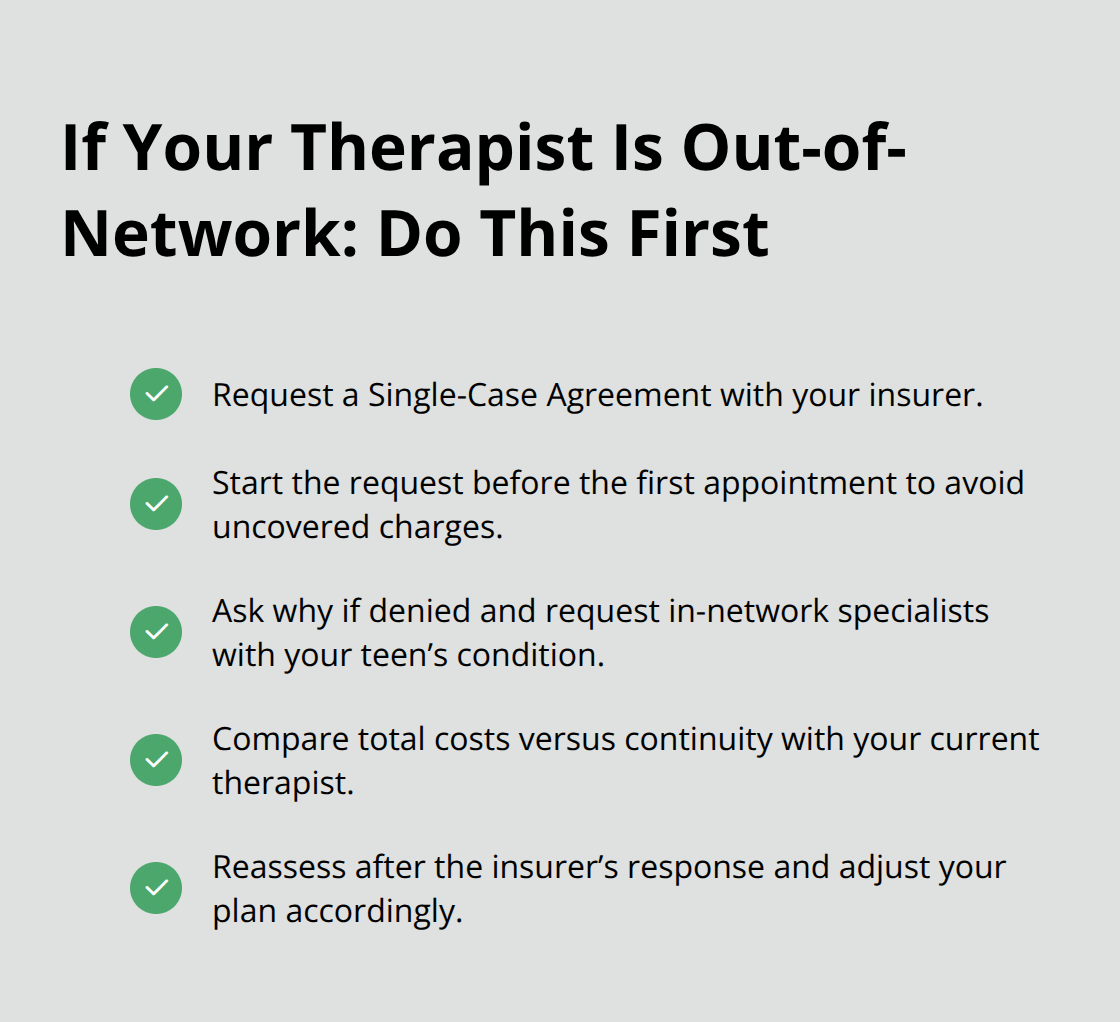
If the insurer denies the Single-Case Agreement, ask why and whether any in-network providers specialize in your teen’s specific condition, then weigh the cost difference against treatment quality and continuity. Sometimes the therapeutic relationship your teen has already built with an out-of-network provider justifies the higher cost, while other times switching to an in-network therapist makes financial sense.
Final Thoughts
Securing insurance coverage for teen therapy requires three concrete actions before treatment starts: verify your benefits, understand your plan’s authorization process, and respond to denials with clinical evidence. The Mental Health Parity and Addiction Equity Act protects your right to equal coverage, so when insurers impose restrictions that wouldn’t apply to physical health conditions, you have legal ground to appeal. Keep detailed records of every communication, denial letter, and treatment note because these documents strengthen your case when you challenge coverage decisions.
Insurance coverage for teen therapy remains inconsistent across plans, but families who ask the right questions upfront avoid most payment surprises. Call your insurer’s member services line before your teen’s first appointment, request written benefits documentation, and confirm whether prior authorization is required. If your preferred therapist is out-of-network, request a Single-Case Agreement immediately rather than waiting until bills arrive.
When denials happen, don’t accept them as final-file appeals within the stated deadline, reference your insurer’s own medical necessity guidelines, and include your therapist’s clinical documentation showing why treatment is medically necessary. Organizations like NAMI offer free HelpLine support to guide you through appeals and coverage disputes, and your therapist’s billing department can also advocate on your behalf. If you’re struggling to find affordable teen mental health care, contact us to learn how our intensive outpatient programs, individual and family therapy, and crisis support can help your teen build resilience and achieve emotional stability.