Mental health care for teens shouldn’t drain your family’s finances. Many families assume therapy is out of reach because of cost, but insurance-friendly teen therapy options exist that make treatment affordable.
At The Teen Center, we work with insurance plans to help families access the care their teens need without breaking the bank. This guide walks you through coverage options, maximization strategies, and concrete steps to get your teen connected to support.
What Your Insurance Actually Covers for Teen Therapy
Most health insurance plans cover teen mental health treatment when it meets medical necessity criteria, but the specifics vary dramatically by plan and insurer. The Mental Health Parity and Addiction Equity Act requires insurers to cover mental health services at levels comparable to physical health care, yet families still encounter denials and unexpected out-of-pocket costs. Understanding what your specific plan covers before your teen starts therapy prevents frustrating surprises and helps you avoid wasted time pursuing services your insurance won’t pay for.
Start with Your Insurance Card
Pull your insurance card and call the number on the back to ask three direct questions: Does the plan cover outpatient teen therapy? Which therapists are in-network? What is your deductible, copay amount, and any visit limits per year? Many insurers have online portals where you can search in-network providers, but calling directly produces more accurate answers since provider directories often contain outdated information. Ask the representative to confirm coverage specifics in writing if possible, since verbal approvals can disappear when claims are submitted.
Real Costs Vary Based on Your Plan Type
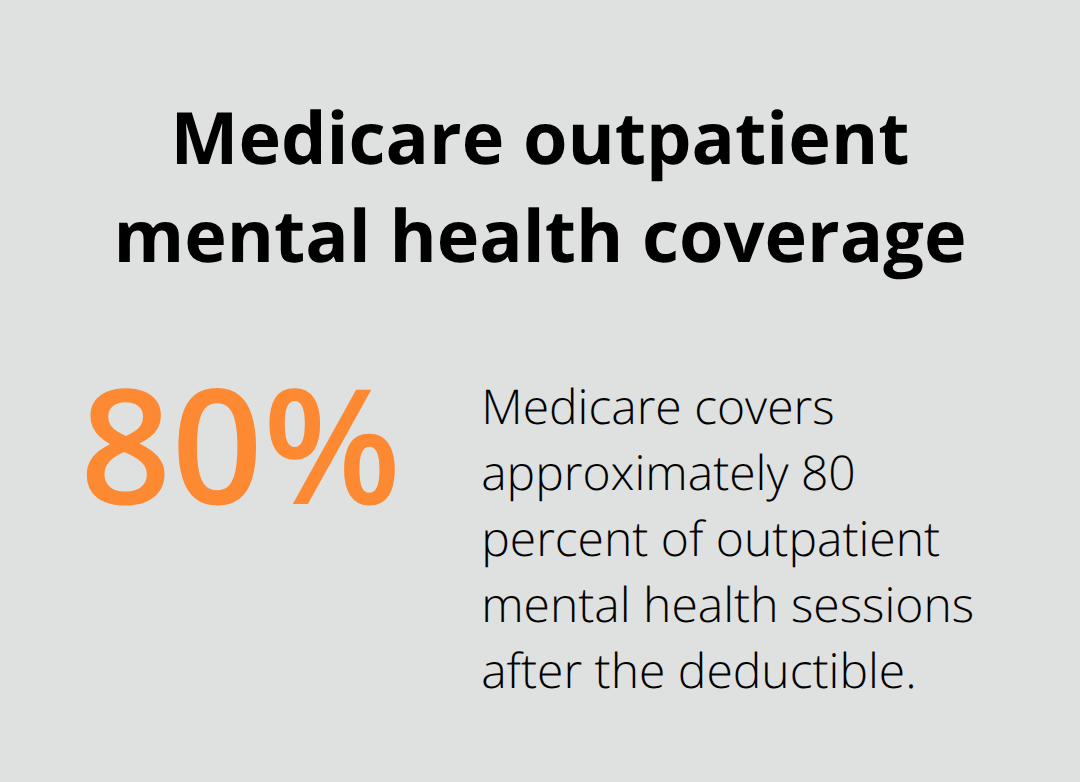
Out-of-pocket expenses depend on whether you use in-network or out-of-network providers and your plan’s cost-sharing structure. In-network therapy typically costs between $0 and $50 per session after you meet your deductible, while out-of-network sessions often run $100 to $200 or more, with insurance reimbursing only a percentage. Medicare covers approximately 80 percent of outpatient mental health sessions after the deductible, which means your copay might be $20 to $40 per visit depending on the service type.
Employer plans with Employee Assistance Programs frequently offer three to five free initial therapy sessions, a benefit many families overlook entirely. Contact your HR department to learn whether your employer offers an EAP, as these sessions can help you and your teen decide if ongoing therapy makes sense before you commit to regular copays. Deductibles reset annually, so timing therapy around your plan year matters-starting in January means you’ll pay out-of-pocket costs sooner, while starting in November means fewer sessions count toward the deductible before the new year resets. Some plans cap mental health visits at 20 or 30 per year, making it critical to confirm these limits before you commit to weekly therapy.
Insurance Denials Happen Frequently and Are Often Reversible
Insurers deny teen therapy claims for four primary reasons: your teen doesn’t meet their definition of medical necessity, they recommend a lower level of care instead, the provider is out-of-network, or your teen exceeds their visit limits. When a denial arrives, the letter includes the specific medical necessity criteria the insurer used, which tells you exactly what documentation you need to overturn the decision. A peer-to-peer review between your teen’s therapist and the insurer’s medical director frequently results in approval, especially when documentation clearly shows safety concerns or measurable progress that justifies continued care.
Request an internal appeal within 30 days of the denial letter, and if that fails, file an external appeal with your state’s insurance commissioner. Florida Senate Bill 1620 requires treatment centers to create treatment plans within five days of admission, which strengthens your documentation for appeals by establishing clear baseline data and progress metrics. Families who maintain detailed records of all communications, gather updated risk assessments, and document measurable improvements have significantly better outcomes in appeals than those who submit generic requests.
What Happens Next
Once you understand your coverage and confirm in-network providers, the next step involves maximizing those benefits to reduce what you actually pay out of pocket.
How to Lock In Lower Costs Before Your Teen Starts Therapy
Verify Coverage in Writing Before Your First Appointment
Call your insurer at least one week before scheduling and ask for the name of the representative you spoke with, the date, and the specific details they confirmed about in-network providers, deductible status, copay amounts, and any annual visit limits. Request written confirmation via email or mail, since verbal approvals carry no weight when claims are processed. Many families skip this step and discover mid-treatment that their therapist is out-of-network or that they’ve already exceeded their plan’s visit cap.
In-network providers cost dramatically less than out-of-network ones-typically $0 to $50 per session versus $100 to $300 or more-and insurers reimburse a smaller percentage of out-of-network claims. Federally Qualified Health Centers and Community Mental Health Centers accept Medicaid at high rates and offer sliding fee scales, making them valuable options for families with limited budgets.
Use Free Sessions to Test Fit Before Committing
If your employer offers an Employee Assistance Program, use those three to five free sessions to test whether ongoing therapy fits your teen’s needs and your family’s schedule before committing to regular copays. This approach eliminates guesswork about whether your teen will engage with a particular therapist or treatment style.
Time Your Start Date Around Your Deductible
Timing matters more than most families realize. If your deductible hasn’t been met, starting therapy in January means you’ll pay full out-of-pocket costs until the deductible resets, while starting in November means fewer sessions count against it before the new year. Track your deductible progress throughout the year by requesting an Explanation of Benefits after each session, which shows exactly how much counts toward your deductible and how many visits remain before hitting any annual caps.
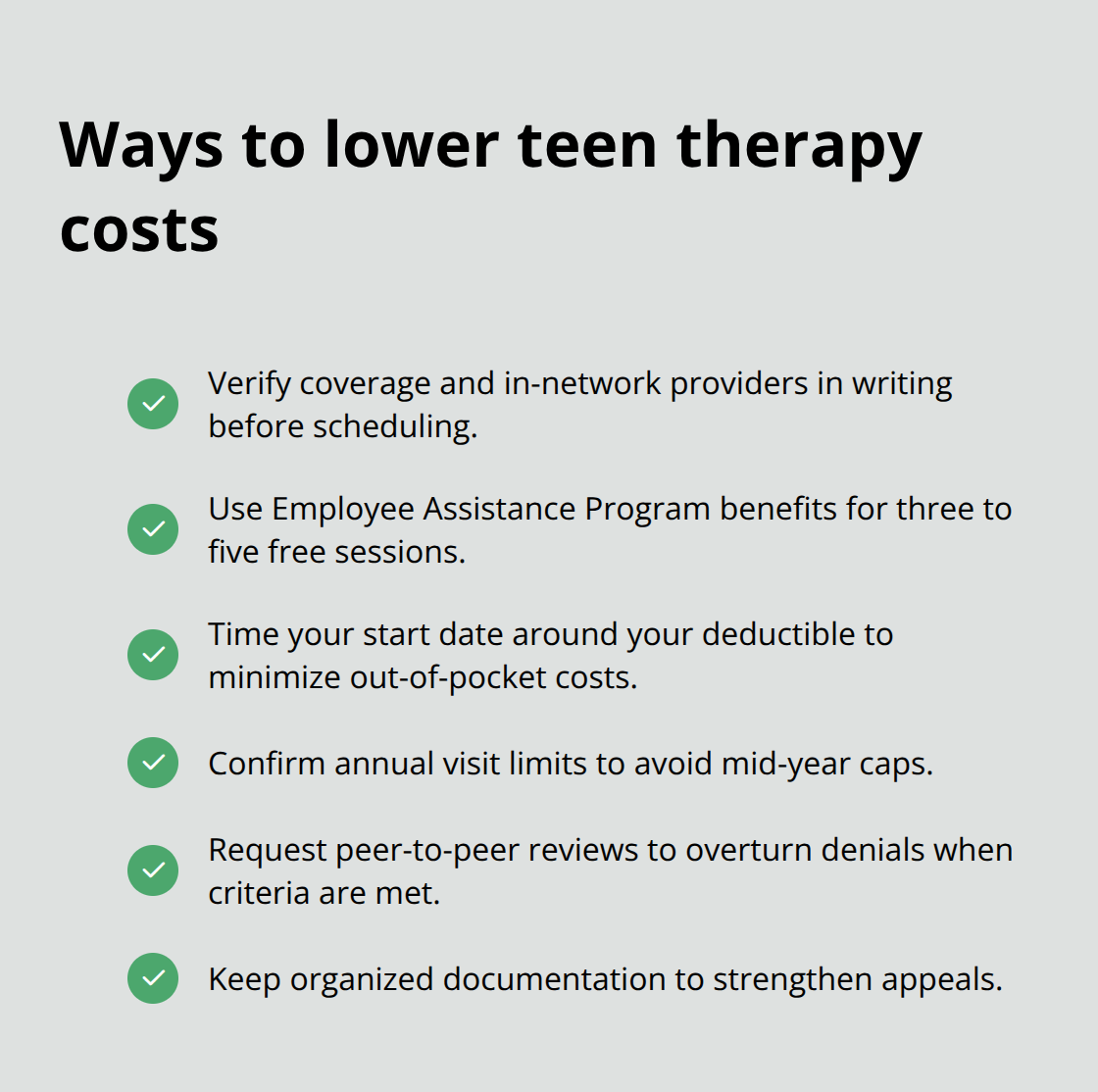
Plans frequently cap mental health visits at 20 or 30 per year, so if your teen needs weekly therapy, confirm you have sufficient visits available before your first appointment.
Turn Denials Into Approvals With Documentation
When denials arrive, the rejection letter specifies exactly which medical necessity criteria your teen didn’t meet-use that information to gather updated documentation from your therapist showing safety concerns, symptom severity, or measurable progress. Peer-to-peer reviews between your therapist and the insurer’s medical director overturn denials regularly, especially when documentation demonstrates clear risk or functional impairment that justifies continued care.
Families who maintain organized records of all communications, assessment results, and progress notes win appeals far more often than those submitting generic requests. This documentation becomes your strongest tool when you challenge a denial through internal or external appeals.
With your coverage locked in and your deductible strategy in place, the next step involves selecting providers and payment structures that align with your family’s financial situation.
How to Access Affordable Care Through Insurance
Verify In-Network Status With Your Insurer
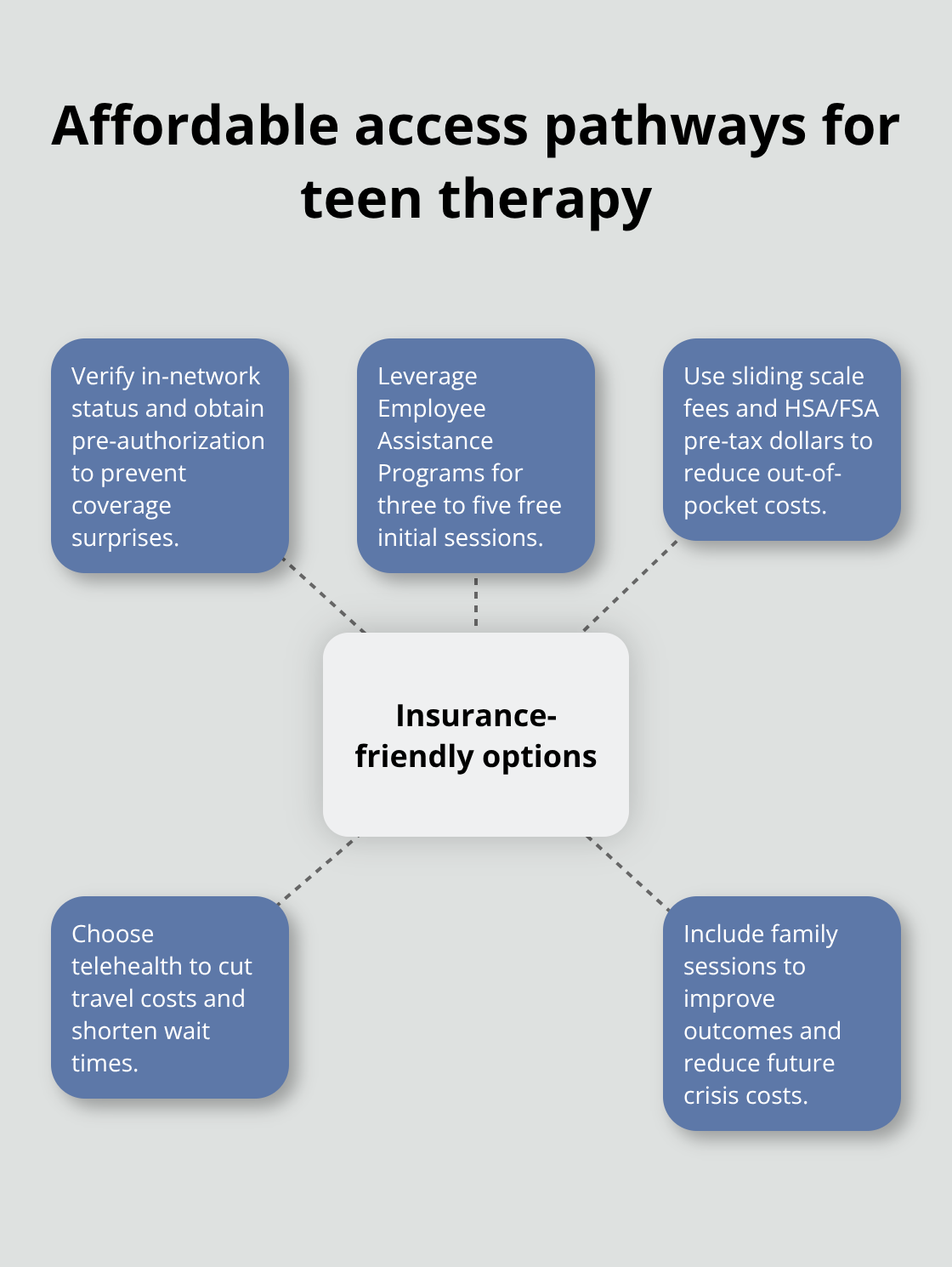
Contact your insurer to confirm whether providers appear in their in-network directory for your specific plan type, since network status varies by employer and plan year. In-network providers cost dramatically less than out-of-network alternatives. Request written pre-authorization from your insurer before scheduling your first appointment, which prevents coverage surprises during treatment. Many families skip this verification step and discover mid-treatment that their therapist is out-of-network or that they’ve already exceeded their plan’s visit cap.
Leverage Free Initial Sessions From Your Employer
Contact your HR department to learn whether your employer offers an Employee Assistance Program, which frequently covers three to five free initial therapy sessions at no cost. These sessions let your teen and your family test whether ongoing therapy fits your needs and your schedule before you commit to regular copays. This approach eliminates guesswork about whether your teen will engage with a particular therapist or treatment style.
Use Sliding Scales and Tax-Advantaged Accounts for Uninsured Families
Families without insurance or those facing high deductibles can access flexible payment arrangements that don’t force you to choose between care and rent. Sliding scale fees start at rates significantly lower than standard copays, and Health Savings Accounts and Flexible Spending Accounts allow families to pay with pre-tax dollars, which reduces actual out-of-pocket costs. Ask your provider whether they accept these payment methods before your first appointment.
Eliminate Travel Costs With Telehealth
Telehealth appointments remove transportation barriers entirely, which matters when families live far from in-person clinics or lack reliable transportation. Statewide telehealth access means your teen connects with a therapist within days rather than weeks, avoiding the 60-day wait times that some Community Mental Health Centers report in certain regions. Your teen accesses care from home, which also reduces scheduling conflicts and increases appointment attendance.
Combine Individual Therapy With Family Involvement
Research shows that therapy combined with family involvement produces better outcomes than individual sessions alone, so the investment you make now prevents costlier crisis interventions later. Treatment plans that include family sessions strengthen communication, reduce household stress, and align coping strategies across your entire family system.
Final Thoughts
Accessing insurance-friendly teen therapy starts with one phone call to your insurer. You now have the tools to verify coverage, identify in-network providers, understand your deductible timeline, and overturn denials when they arrive. Early intervention prevents costly emergency room visits, hospitalizations, and long-term mental health complications that compound over time.
Teens who receive therapy during their first depressive or anxiety episode recover faster and experience fewer relapses than those who wait years before seeking help. Every month your teen struggles without support represents missed academic progress, damaged peer relationships, and deepening emotional pain that becomes harder to reverse. We at The Teen Center understand that cost and access barriers keep many families from getting help, which is why we deliver specialized, evidence-based mental health care through intensive outpatient programs, individual and family therapy, medication management, and crisis support both in person and via telehealth.
Your next step is straightforward: pull your insurance card, call the number on the back, and ask those three critical questions about coverage, in-network providers, and deductibles. Then contact The Teen Center to verify whether we’re in-network with your plan and schedule an initial consultation. Your teen’s mental health is worth the effort, and affordable care is within reach when you know where to look.