
Finding teen therapists can feel overwhelming for parents who want to support their child’s mental health. The right therapist can make a real difference, but knowing where to start is half the battle.
At The Teen Center, we’ve created this guide to walk you through each step of the process. From recognizing when your teen needs support to building a strong therapeutic relationship, we’ll help you navigate this journey with confidence.
When Your Teen Needs Professional Support
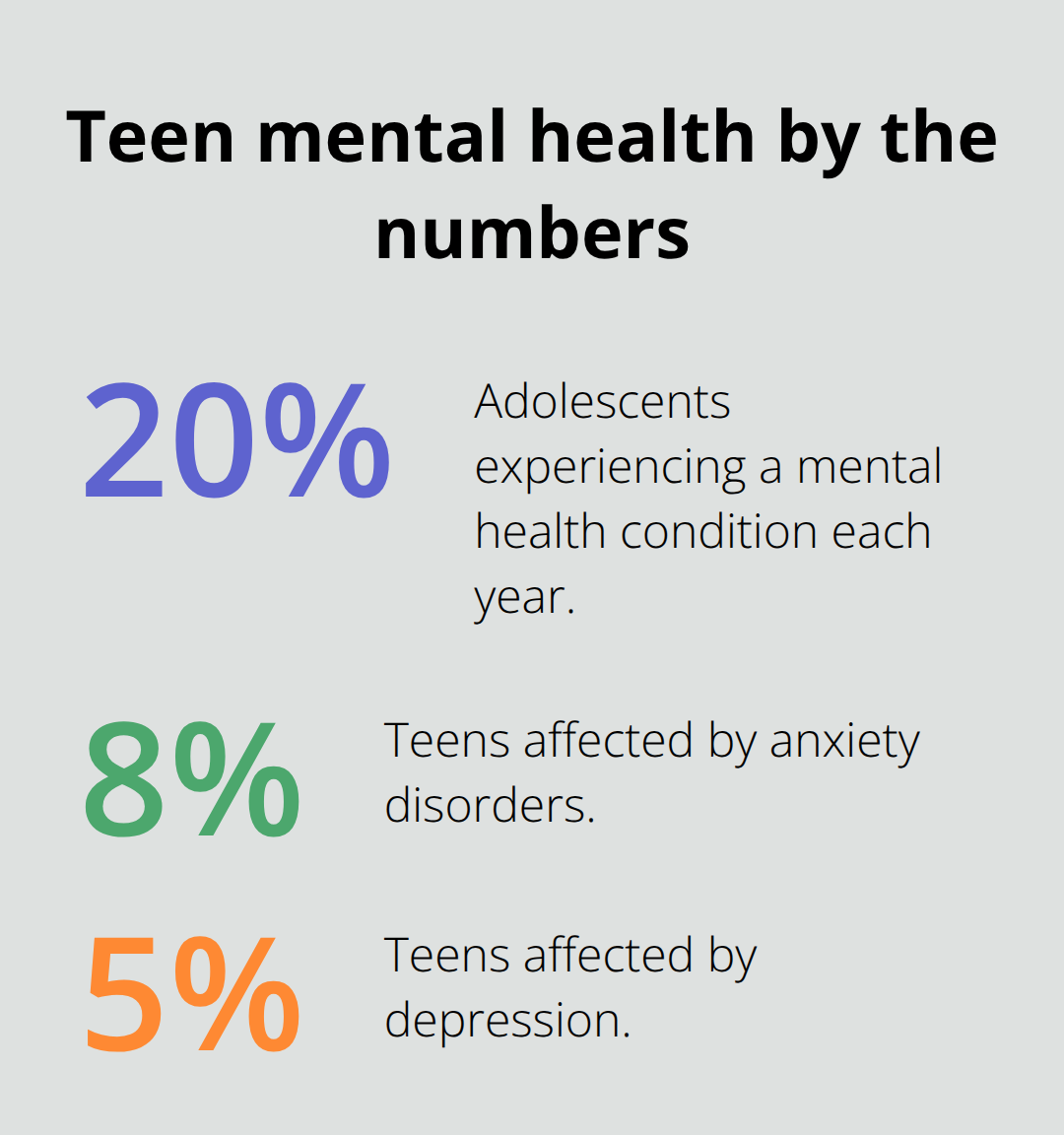
Most parents wait too long before seeking therapy for their teens. According to the National Institute of Mental Health, about 20% of adolescents experience a mental health condition each year, yet the average delay between symptom onset and treatment is eight to ten years. That’s a decade of your teen struggling in silence.
Recognizing the Signs
The signs that therapy could help your teen aren’t always obvious, but they’re often hiding in plain sight. Significant changes in sleep patterns, eating habits, or school performance warrant attention. If your teen withdraws from friends, expresses hopelessness, or shows increased irritability that lasts more than two weeks, these are concrete indicators that professional support matters.
Substance use, self-harm, or talk of suicide require immediate action and are non-negotiable reasons to contact a mental health professional. Anxiety disorders affect about 8% of teens, while depression affects roughly 5%, according to data from the Centers for Disease Control and Prevention. These conditions are treatable, but they won’t resolve on their own through willpower or time.
Starting the Conversation
Starting the conversation about therapy works best when you approach it as problem-solving rather than punishment. Frame it as getting help for something specific-academic struggles, social stress, or emotional pain-rather than suggesting something is wrong with your teen as a person.
Many parents make the mistake of ambushing this conversation or waiting until a crisis forces the issue. Instead, pick a calm moment and be direct about what you’ve noticed. Say something like: “I’ve seen you struggling with anxiety, and I think talking to someone trained to help with this could make things easier.” Avoid making it sound optional if professional support is genuinely needed.
Handling Resistance
Your teen may resist initially, and that’s normal. Expect pushback, but don’t let that stop you from moving forward. Research from the American Academy of Child and Adolescent Psychiatry shows that teens who understand why they’re going to therapy and feel involved in the decision have better treatment outcomes.
Give your teen some control by letting them help choose the therapist or decide whether they prefer in-person or telehealth sessions. This small amount of agency can shift their mindset from feeling forced into therapy to feeling like they’re taking an active step toward feeling better. Once your teen accepts the idea of professional support, the next challenge becomes finding the right fit-someone who understands their specific struggles and can build genuine rapport with them.
Finding the Right Teen Therapist
Credentials matter far more than experience alone when selecting a teen therapist. Look specifically for Licensed Clinical Social Workers (LCSWs), Licensed Professional Counselors (LPCs), psychologists with doctoral degrees (PhD or PsyD), or psychiatrists (MDs). These designations mean the therapist has completed graduate-level training and passed state licensing exams. Many parents assume that any licensed therapist can effectively treat teens, but that’s wrong. Ask directly whether the therapist has specialized training in adolescent mental health. Some therapists work primarily with adults and see teens occasionally, which isn’t the same as having dedicated expertise in teenage development, peer relationships, and the specific challenges adolescents face. The American Academy of Child and Adolescent Psychiatry maintains a directory where you can verify credentials and specializations. Insurance networks also list in-network providers with their qualifications clearly stated, which filters out unlicensed practitioners immediately. Referrals from your teen’s school counselor, pediatrician, or local mental health organizations carry real weight because these professionals know which therapists actually deliver results with the teen population in your area.
Matching Therapy Approaches to Your Teen’s Needs
Cognitive Behavioral Therapy (CBT) has strong research backing for teen anxiety and depression. Dialectical Behavior Therapy (DBT) works better for teens struggling with self-harm, emotional regulation, or suicidal thoughts. Family therapy addresses relational patterns and works well when family dynamics contribute to your teen’s struggles.
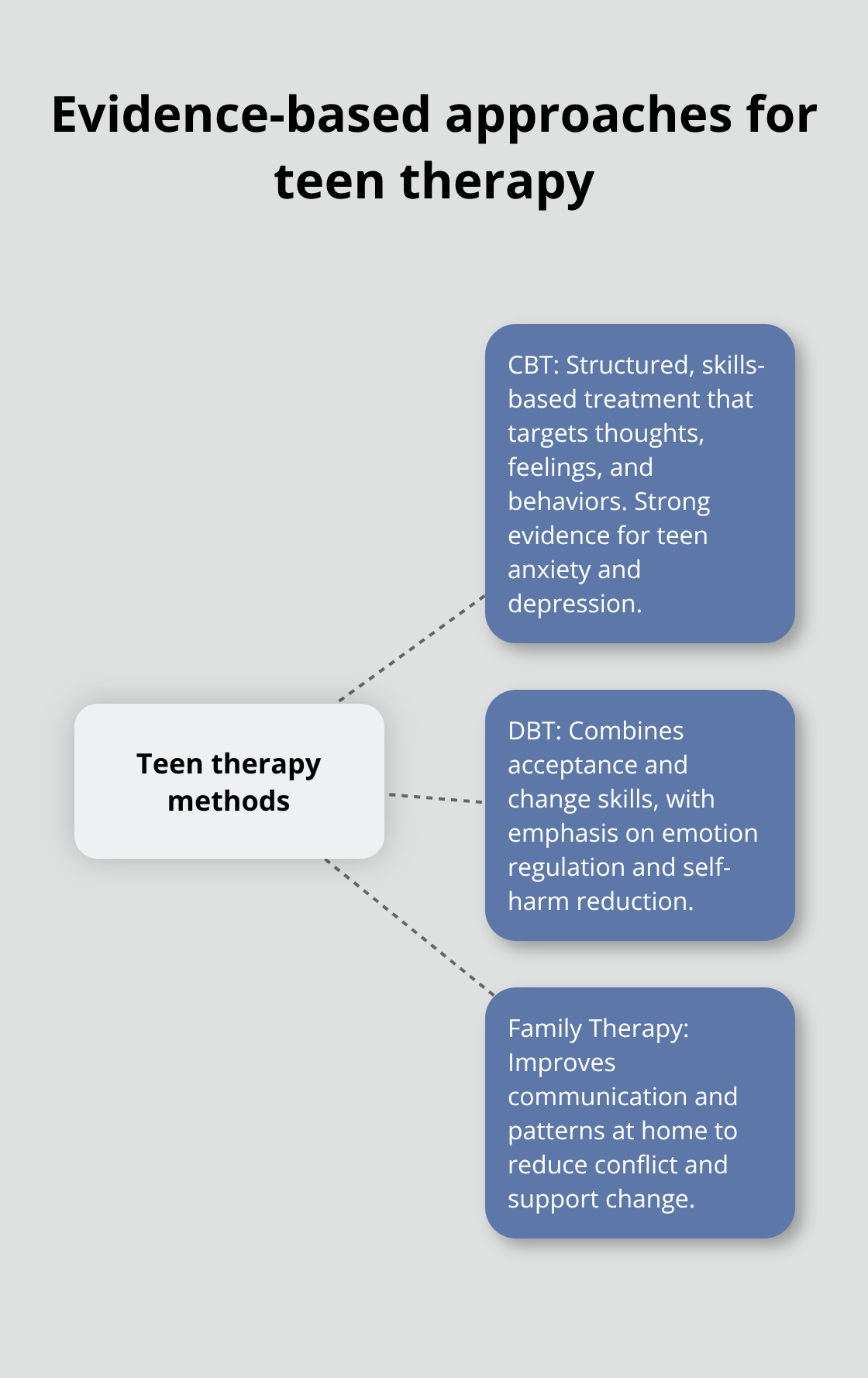
Ask potential therapists which evidence-based approaches they use and why they’re recommending a specific method for your teen’s situation. Some therapists claim to use multiple modalities, but vague flexibility often means they lack deep expertise in any single approach. During your initial consultation, a qualified therapist will explain their proposed treatment plan in concrete terms, not abstract psychology jargon. They’ll tell you specifically how many sessions your teen might need, what progress looks like, and how they’ll measure improvement. If a therapist can’t articulate this clearly, move on.
Locating Therapists Through Practical Channels
Insurance networks remain the fastest way to narrow your search because they eliminate cost barriers immediately. Your insurance card lists a behavioral health phone number, or you can search the insurer’s online provider directory by location and specialty. Filter results for therapists accepting new adolescent patients, then cross-reference their credentials through state licensing boards. Psychology Today’s therapist finder and TherapyDen allow you to filter by age specialty, therapy type, and insurance acceptance, saving you hours of phone calls. Many therapists have waitlists of three to six months, so start contacting providers immediately even if your teen isn’t ready to start right away. School counselors and pediatricians typically have relationships with therapists they trust and refer to regularly, making their recommendations more valuable than online reviews. Some employers offer Employee Assistance Programs (EAPs) that provide free referral services and sometimes cover initial therapy sessions. When you contact a therapist’s office, ask whether they have immediate openings or a waitlist, what their cancellation policy is, and whether they offer telehealth sessions for flexibility.
Key Questions That Reveal Therapist Competence
Ask potential therapists how they handle confidentiality with parents. The best therapists maintain clear boundaries where they don’t share everything your teen says, but they do communicate about treatment progress and safety concerns. Therapists who promise total confidentiality from parents or who share every detail with you are both problematic.
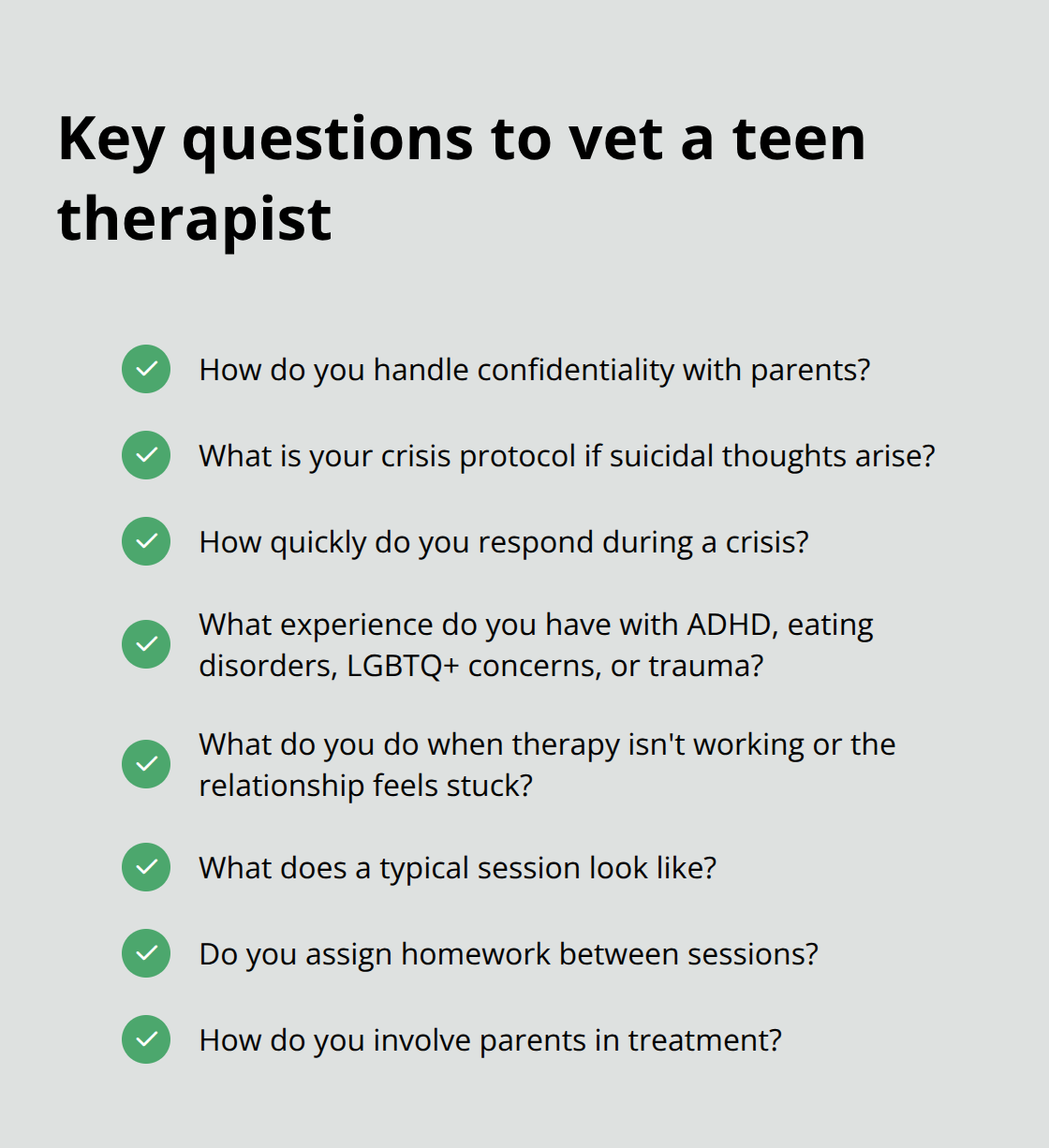
Ask what their crisis protocol looks like if your teen experiences suicidal thoughts during treatment. A solid answer includes specific steps they take, how quickly they respond, and whether they coordinate with emergency services if needed. Ask about their experience with your teen’s specific issue, whether that’s ADHD, eating disorders, LGBTQ+ identity concerns, or trauma. A therapist who says they treat everything equally is less helpful than one who acknowledges certain specializations. Ask what they do when therapy isn’t working or when the therapeutic relationship feels stuck. Good therapists proactively address this and may recommend switching to a different provider if the fit isn’t right. Ask about their typical session structure, homework assignments, and how they involve parents in treatment. Some therapists see teens alone exclusively while others build regular parent sessions into the plan. Understanding their philosophy here prevents frustration later and sets realistic expectations for how treatment will unfold.
Making the Right Match and Getting Started
Assessing the Therapeutic Fit
The first therapy session often determines whether your teen will stick with treatment or quit after two visits. A therapist can have perfect credentials but still be the wrong fit if they don’t connect with your teen’s personality, communication style, or life circumstances. Pay attention to how the therapist interacts during that initial appointment. Do they talk down to your teen or treat them as a capable person with valid concerns? Do they ask specific questions about your teen’s actual life rather than relying on generic screening questionnaires?
A therapist who remembers details from your teen’s first session and references them in session two demonstrates genuine engagement. After the first session, ask your teen direct questions about the experience without leading them. Instead of asking if they liked the therapist, ask what they talked about, whether the therapist seemed to understand their situation, and whether they felt comfortable in the room. Your teen’s gut reaction matters more than your approval.
Building Trust Over Time
Some therapists specialize in working with resistant teens and deliberately take time to build rapport before addressing heavy therapeutic work. If your teen feels rushed into discussing trauma or painful emotions in session one, that’s a red flag. Trust develops gradually through consistent, non-judgmental interactions over weeks, not hours.
Early sessions typically involve assessment and goal-setting rather than intensive therapy work. Expect the therapist to ask detailed questions about your teen’s family history, medical background, current stressors, and specific symptoms. They’ll likely use standardized screening tools to measure anxiety, depression, or other concerns. This data-gathering phase frustrates some teens who want immediate solutions, so explain beforehand that the first few sessions establish a baseline so the therapist understands exactly what they’re treating.
Choosing Between In-Person and Telehealth
Telehealth therapy works exceptionally well for teens and eliminates transportation barriers that prevent consistent attendance. The flexibility appeals to teens with packed schedules, and many feel less self-conscious opening up through a screen initially.
Telehealth doesn’t work for everyone, however. Teens with severe behavioral issues, active suicidality, or substance abuse may need in-person sessions where a therapist can directly observe nonverbal cues and respond to crises immediately. Ask potential therapists whether they offer both modalities and under what circumstances they’d recommend switching. Some therapists require at least one in-person session before transitioning to telehealth to establish the relationship properly.
Your teen’s school schedule, your work flexibility, and transportation logistics should all factor into whether in-person or telehealth makes practical sense for your family. The right choice depends on your specific situation (work commitments, distance to the therapist’s office, your teen’s comfort level with technology) rather than a one-size-fits-all answer.
Final Thoughts
Finding teen therapists requires patience, but the effort you invest now shapes your teen’s mental health trajectory for years to come. The process involves verifying credentials, asking the right questions, and trusting your teen’s instincts about whether the therapeutic relationship feels genuine. Start your search early rather than waiting for a crisis to force your action, and accept that the first therapist you contact may not be the right fit-that’s normal and expected.
Your role as a parent continues once therapy begins. Maintain open communication with the therapist about treatment progress, attend family sessions when recommended, and reinforce the skills your teen learns in sessions. Research consistently shows that parental involvement significantly improves therapy outcomes, even when your teen is a teenager who seems to want independence from you (this doesn’t mean controlling the process or demanding detailed reports about every conversation-it means showing up, asking thoughtful questions, and demonstrating commitment to their mental health journey).
Contact one therapist this week rather than waiting for the perfect moment or complete certainty. We at The Teen Center work with adolescents ages 12–17 who need comprehensive mental health care, offering evidence-based treatment both in person and through telehealth for anxiety, depression, trauma, and behavioral challenges. Learn more about specialized adolescent mental health programs at The Teen Center.