Depression affects roughly 15% of teenagers in the United States, making it one of the most common mental health challenges young people face today. At The Teen Center, we know that finding the right adolescent depression treatment options can feel overwhelming for families navigating this difficult situation.
The good news is that effective treatments exist. Whether through therapy, medication, or a combination of both, teens with depression can recover and thrive.
How Common Is Depression in Teenagers
Depression Rates Among Adolescents
Adolescent depression affects around 4 to 6 percent of teens aged 13 to 17 at any given time, though the actual number who experience depressive episodes during their teenage years is substantially higher. Depression ranks as one of the leading causes of disability in adolescents worldwide, with one in seven 10-19-year-olds experiencing a mental disorder. This recurrence rate shows why early identification and treatment matter so much. Untreated depression does not simply fade away on its own-waiting to address it typically means watching symptoms intensify and spread into every corner of a teen’s life.
How Depression Disrupts School and Grades
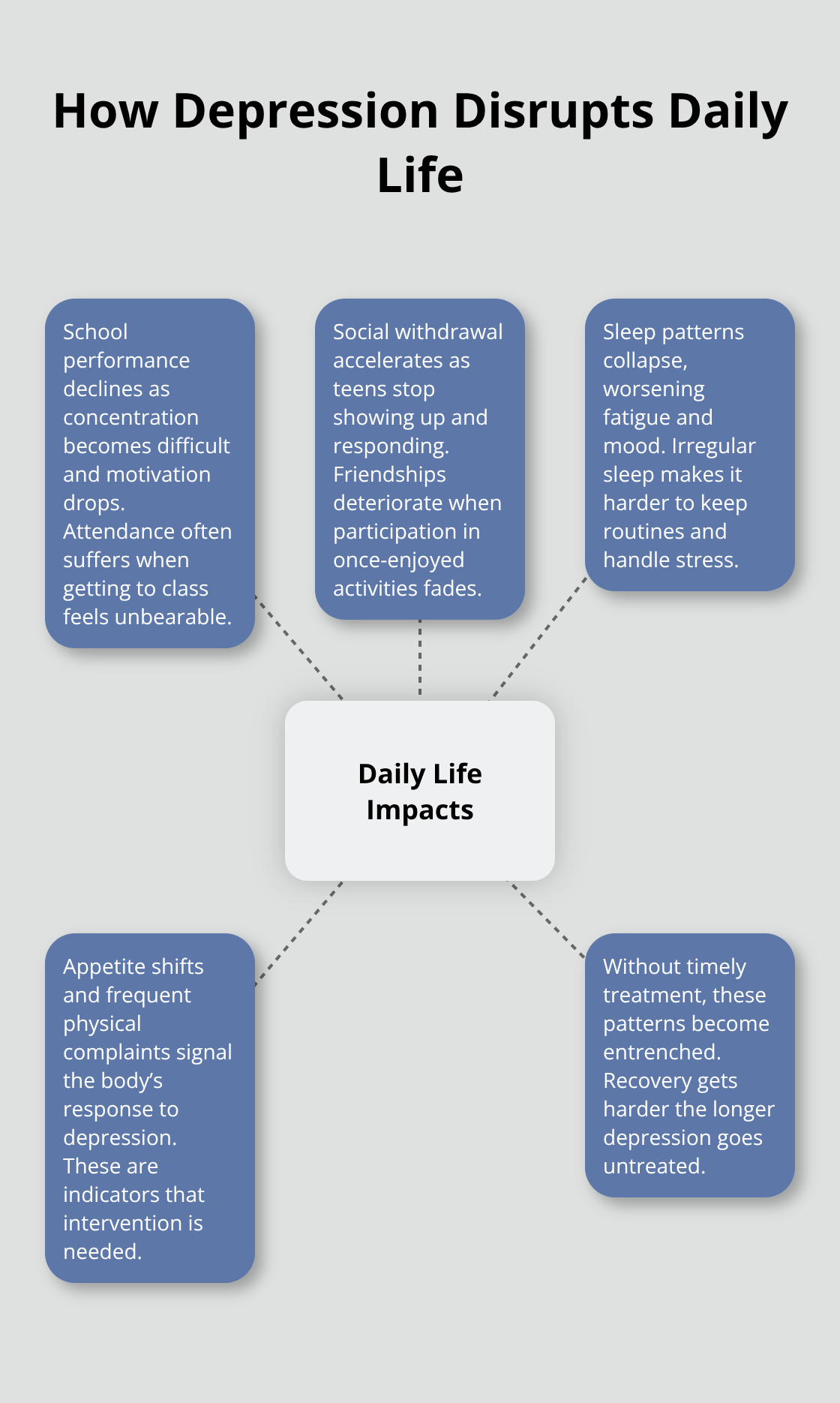
The impact on daily functioning is immediate and measurable. Depressed teens often see their grades drop significantly because concentration becomes nearly impossible, motivation evaporates, and attending school feels unbearable. A teen’s academic performance suffers when depression takes hold, and the damage compounds over time if treatment does not start quickly.
Social Withdrawal and Relationship Breakdown
Social withdrawal accelerates alongside academic decline. Friendships deteriorate when a teen stops showing up, stops responding to messages, and stops participating in activities they once enjoyed. The isolation that depression creates feeds the depression itself, creating a cycle that becomes harder to break the longer it continues.
Physical and Sleep Changes
Sleep patterns collapse, appetite shifts, and physical complaints become frequent. These changes are not simply inconveniences-they represent the body’s response to depression and signal that intervention is needed. The longer depression goes untreated, the more entrenched these patterns become, making recovery harder down the line.
Why Early Treatment Changes Everything
Research shows that teens who receive evidence-based treatment respond better and recover faster than those who delay. The window for intervention matters far more than most families realize. Starting treatment early-whether through therapy, medication, or both-changes the trajectory dramatically. Understanding what treatment options exist and how they work is the first step toward helping your teen move forward.
What Therapy Actually Does for Depressed Teens
CBT: How It Interrupts the Depression Cycle
Cognitive behavioral therapy stands out as the most rigorously tested approach for adolescent depression, and the research backing it is substantial. A meta-analysis of 31 randomized trials involving 4,335 teenagers found that CBT reduces depressive symptoms with a medium effect size of around 0.53, meaning real, measurable improvement happens for most teens who engage with it. The core mechanism is straightforward: CBT teaches teens to recognize how their thoughts, feelings, and behaviors connect and reinforce each other. When a depressed teen assumes nobody likes them, that thought triggers withdrawal from friends, which then confirms the original belief. CBT interrupts this cycle through specific techniques.
Behavioral activation gets teens moving again. Therapists create structured activity plans that reengage teens with school, hobbies, and social contact, which directly lifts mood. Cognitive restructuring uses the ABCDE method, where teens identify an activating event, notice their belief about it, recognize the consequences of that belief, dispute the thought using evidence, and develop a more effective response. This is not generic positive thinking; it is learning to recognize distortions like catastrophizing or black-and-white thinking and replace them with accurate assessments.
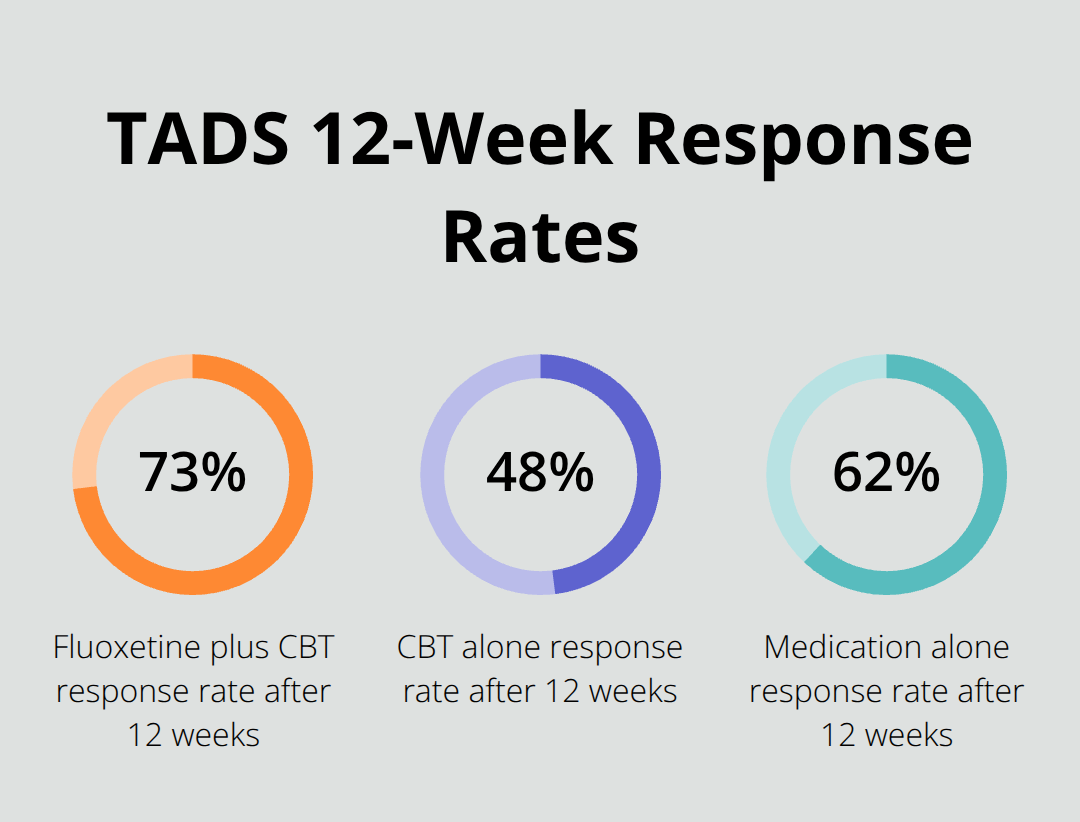
The Treatment for Adolescents with Depression Study found that CBT combined with fluoxetine produced a 73 percent response rate after 12 weeks, compared to 48 percent for CBT alone and 62 percent for medication alone. This shows that therapy works better when paired with medication for moderate to severe cases.
Why Family Involvement Strengthens Outcomes
Family involvement in therapy matters far more than many families assume. Research shows that when parents participate in treatment, outcomes improve significantly at follow-up, with effects particularly strong for younger teens. Parents learn to recognize depressive symptoms early, coach their teen through coping skills at home, and avoid patterns that accidentally reinforce depression.
Individual therapy sessions build the teen’s own coping toolkit. Problem-solving frameworks like the SOLVE method teach teens to generate options, weigh likely outcomes, select the best choice, and evaluate results when facing stressors. Affective regulation strategies (including a feelings thermometer and a stay-cool plan) help teens recognize emotional escalation before it spirals. Progressive muscle relaxation and guided imagery provide concrete tools for managing anxiety that often accompanies depression.
What Happens When First Treatment Fails
The Treatment of Depression in SSRI-Resistant Adolescents trial showed that for teens not responding to a first medication, switching to a different antidepressant plus CBT yielded a 55 percent response rate versus 41 percent for medication alone. This confirms that structured therapy enhances outcomes even when initial treatment fails.
The typical course involves 12 to 15 weekly sessions, then biweekly sessions for about two months, then gradual spacing out with monthly follow-ups. This structure prevents the common mistake of stopping too early; many families end therapy once mood improves, but consolidation sessions prevent relapse.
Alternative Therapy Approaches Worth Considering
Interpersonal therapy offers another well-supported path, focusing specifically on relationship changes and helping teens build new connections. These sessions typically run 12 to 16 weeks with some parental involvement. What matters most is starting with a clinician experienced in treating adolescents and committing to the full treatment course rather than stopping when symptoms first ease.
The choice between therapy types matters less than the choice to start treatment with a qualified professional. Once a teen and family understand how therapy actually works-not as a quick fix but as a structured process that teaches real skills-they can move forward with confidence. Understanding medication options and how they work alongside therapy is the next step in building a complete treatment plan.
Antidepressants for Teens: What Works and What to Expect
Fluoxetine and Other First-Line Medications
Fluoxetine stands as the most established first-line medication for adolescent depression, backed by three randomized trials showing clear superiority over placebo. Medication decisions require careful evaluation, not quick prescriptions. Before any antidepressant starts, a psychiatrist or experienced pediatrician must screen for self-harm risk, identify comorbid conditions like anxiety or ADHD, review family mental health history, and establish clear treatment goals. Sertraline, escitalopram, and fluvoxamine represent other FDA-approved options depending on age and specific diagnosis, each with slightly different side effect profiles.
Starting with the lowest effective dose matters significantly because it reduces overdose risk if a teen obtains the full bottle and minimizes early side effects that often cause families to abandon treatment prematurely. Most side effects appear within the first one to two weeks and typically resolve on their own, though full antidepressant effects take two to six weeks to emerge.
Understanding the FDA Black Box Warning
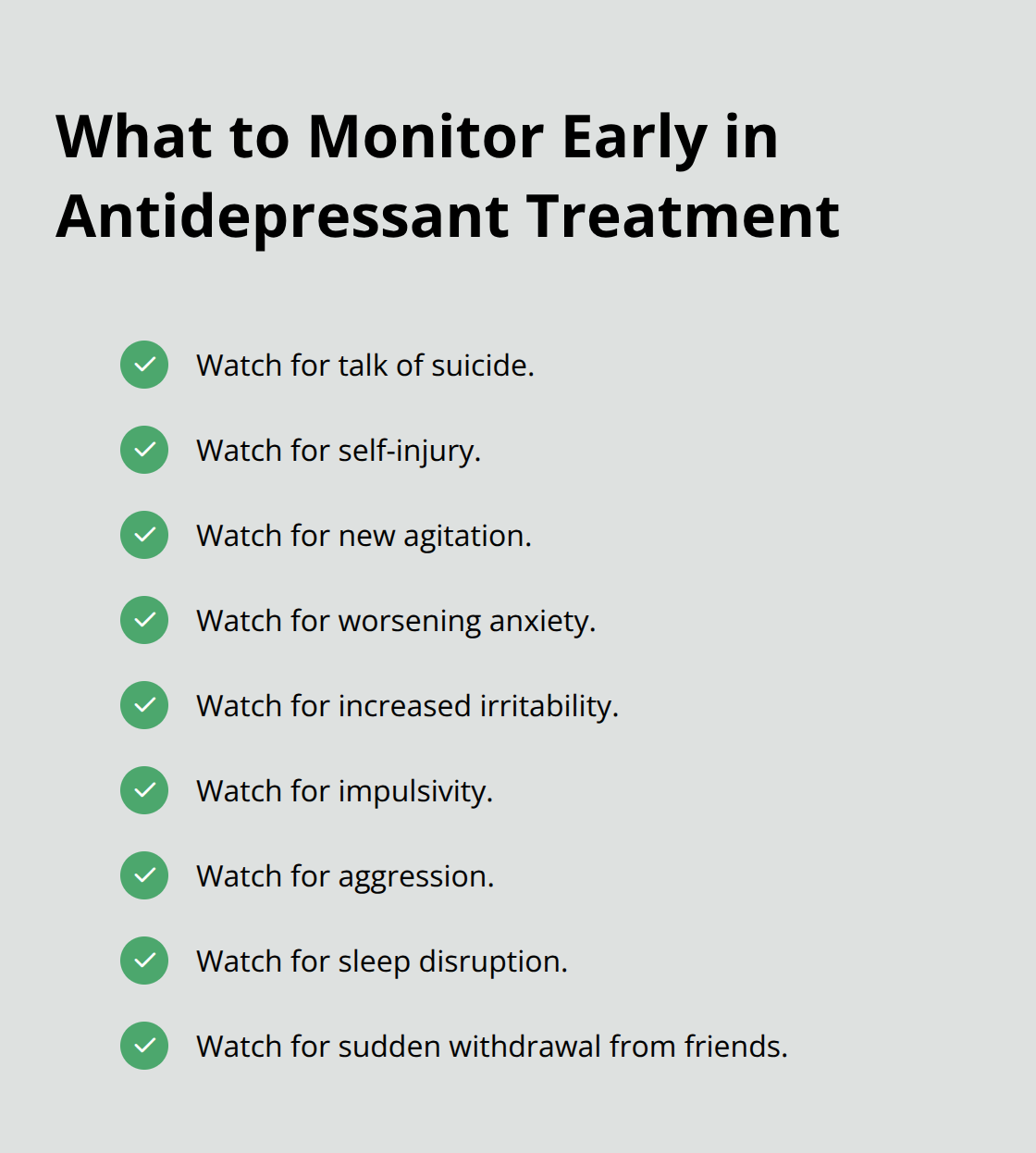
The FDA black box warning about increased suicidal thinking in individuals under 25 requires serious attention during the first months of treatment and whenever doses change. This is not a reason to avoid medication; untreated depression carries substantially greater suicide risk than treated depression. Watch specifically for talk of suicide, self-injury, new agitation, worsening anxiety, increased irritability, impulsivity, aggression, sleep disruption, or sudden withdrawal from friends.
Do not stop antidepressants abruptly because discontinuation syndrome causes relapse and physical discomfort; tapering under clinical guidance takes weeks. Regular monitoring by a healthcare professional should occur frequently early on, with visits every one to two weeks during initiation and dose adjustments, then spacing out as stability develops.
Combining Medication with Therapy for Maximum Impact
The Treatment for Adolescents with Depression Study demonstrated that combining fluoxetine with CBT produced 73 percent response after 12 weeks compared to 48 percent for therapy alone, making this combination the gold standard for moderate to severe cases. Medication alone addresses neurochemical imbalances but leaves behavioral patterns and thinking distortions untouched, which is why therapy fills a critical gap.
Plan for medication to remain in place at least one year after symptom remission; stopping during high-stress periods like standardized tests or college transitions increases relapse risk significantly. Gradual tapering prevents withdrawal and allows observation of whether depression returns.
What Happens When Initial Treatment Fails
If initial medication fails to produce adequate response, the TORDIA trial showed that switching to a different SSRI or SNRI plus structured CBT yielded 55 percent response versus 41 percent for medication switching alone, confirming that therapy strengthens medication effectiveness across treatment stages. Family involvement extends beyond just giving pills; parents should understand how the medication works, recognize early warning signs, and support skill practice from therapy sessions at home.
The right medication reduces depressive symptoms without creating a drugged feeling or personality change, and antidepressants are not addictive when used as prescribed. If mood improves but the teen reports numbness or emotional flatness, dose adjustment or medication change may be necessary because partial improvement is not the goal. Building a strong, trusting relationship with the prescribing clinician where questions are welcomed and concerns addressed openly directly predicts treatment success and medication adherence.
Final Thoughts
The evidence shows that combining therapy and medication produces better outcomes than either approach alone. The Treatment for Adolescents with Depression Study found that fluoxetine paired with CBT achieved a 73 percent response rate after 12 weeks, substantially outperforming either treatment in isolation. This reflects what actually happens when teens receive coordinated care addressing both brain chemistry and behavioral patterns simultaneously.
Finding the right adolescent depression treatment options means working with professionals who understand your teen’s specific situation. Depression looks different in every teenager-one teen may struggle primarily with motivation and withdrawal, while another battles intrusive negative thoughts or anxiety that fuels depression. A thorough evaluation screens for comorbid conditions, family history, and suicide risk before treatment begins, which determines whether medication alone makes sense, whether therapy alone might work, or whether combination treatment is necessary from the start.
Your role as a parent or guardian shapes treatment success more than many families realize. When you participate in therapy sessions, learn about your teen’s treatment plan, and practice skills at home, outcomes improve significantly. If your teen is struggling with adolescent depression, contact The Teen Center to explore how coordinated treatment can help your family move forward.