Anxiety affects roughly 1 in 5 teenagers, and many struggle to find effective ways to manage it. We at The Teen Center believe that guidance for anxious teens should be practical, actionable, and grounded in real strategies that work.
This blog post walks you through concrete tools you can use today, along with approaches to build lasting confidence over time. You’ll find techniques backed by research, not vague advice.
How Anxiety Manifests in Adolescents and Why It Matters
Anxiety in teenagers shows up differently than you might expect. According to the Journal of Child and Family Studies in 2022, anxiety levels are significantly higher in teen girls than boys, with social comparison, fear of judgment, and academic pressures as primary drivers. The physical signs are real and immediate: butterflies in the stomach, sweaty palms, shaky hands, a racing heartbeat, and muscle tension. But here’s what matters-these physical responses aren’t dangerous, even though they feel uncomfortable.
Many anxious teens also withdraw from friends and activities they once enjoyed, experience frequent headaches or stomachaches with no medical cause, sleep poorly, become irritable over small things, and worry persistently about tests, relationships, or the future. If your teen complains of stomach pain before school or avoids social situations they used to enjoy, anxiety is likely at work. The tricky part is that anxiety often strikes in completely safe situations-a classroom presentation, meeting new people, or asking a question in class-because the brain’s fight-or-flight response doesn’t distinguish between real danger and perceived social threat.
Why Social Media and Academic Pressure Fuel Teen Anxiety
Social media amplifies anxiety in teen girls especially through constant social comparison and fear of judgment. A teen scrolling through filtered images and curated highlight reels naturally questions whether they measure up, fueling perfectionism and self-doubt. Academic pressure compounds this: standardized testing, college preparation starting in middle school, and the pressure to maintain high grades create genuine stress. Peer relationships also shift during adolescence, making social acceptance feel like survival.
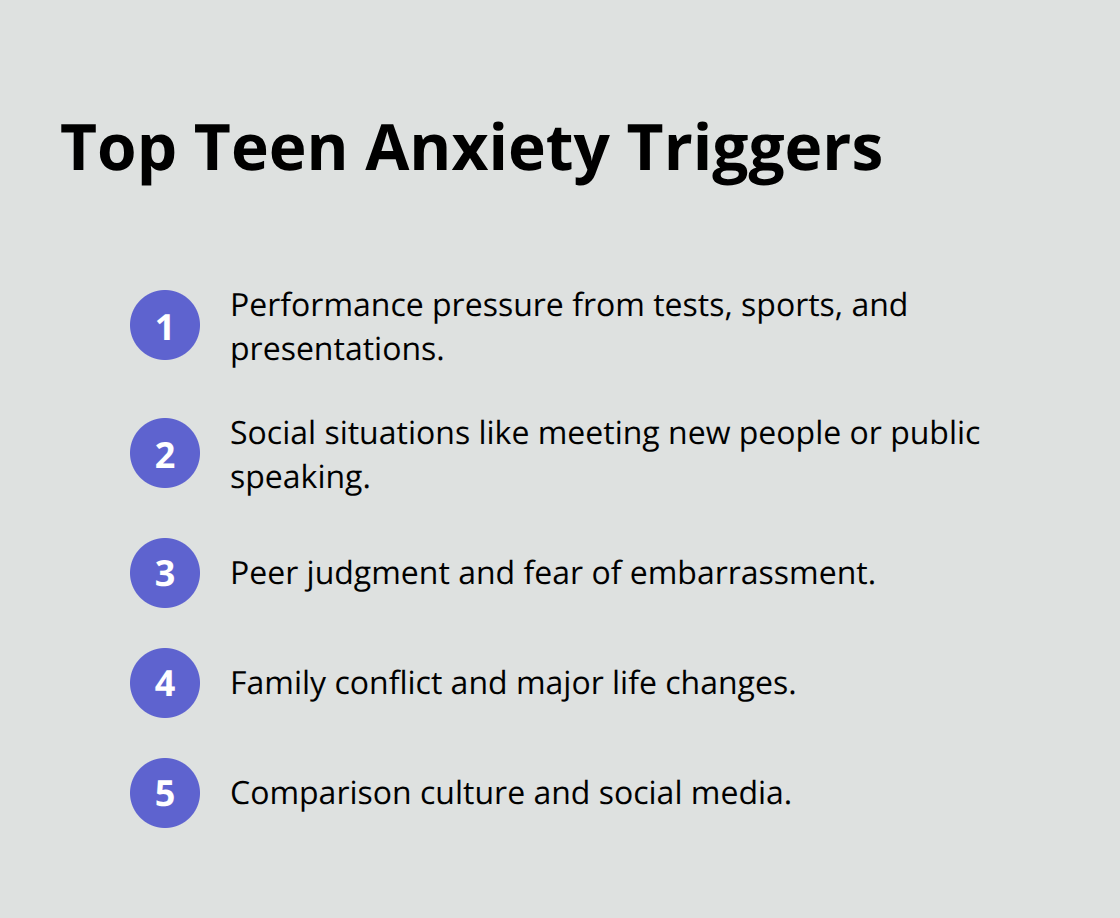
What triggers anxiety in one teen might not affect another, but the most common culprits are performance pressure (tests, sports, presentations), social situations (new people, public speaking, peer judgment), family conflict, major life changes, and comparison culture online. Recognizing these triggers in your teen’s life helps you anticipate anxious moments and offer support before anxiety spirals.
Recognizing When Professional Support Becomes Essential
Anxiety becomes a signal to seek professional help when it persists despite your teen’s efforts to manage it, interferes with school performance or friendships, or causes physical symptoms that limit daily life. If your teen avoids school, refuses to attend social events, or their worry feels constant and uncontrollable, professional support is the right move. Early intervention prevents anxiety from deepening and teaches your teen skills they’ll use for life. The next section covers practical tools your teen can start using today to manage anxiety in the moment.
Daily Tools That Actually Stop Anxiety in the Moment
Anxiety strikes without warning, so your teen needs tools they can use anywhere-in class, before a presentation, or lying awake at night. The most effective immediate strategies combine breathing control with sensory grounding because they interrupt the fight-or-flight response at the physical level.
Breathing Techniques That Lower Cortisol Fast
Deep belly breathing works fast: your teen inhales slowly through the nose, lets the belly expand fully, then exhales gently through the mouth for several cycles. This activates the parasympathetic nervous system, which directly lowers cortisol and heart rate. A practical version uses the 4–5 breath cycle: count to four while inhaling, count to four while exhaling, and repeat for two to three minutes. Your teen can pace this using their fingers-each finger represents one breath-so they have a physical anchor that requires no app or special equipment.
Grounding Exercises That Anchor Attention
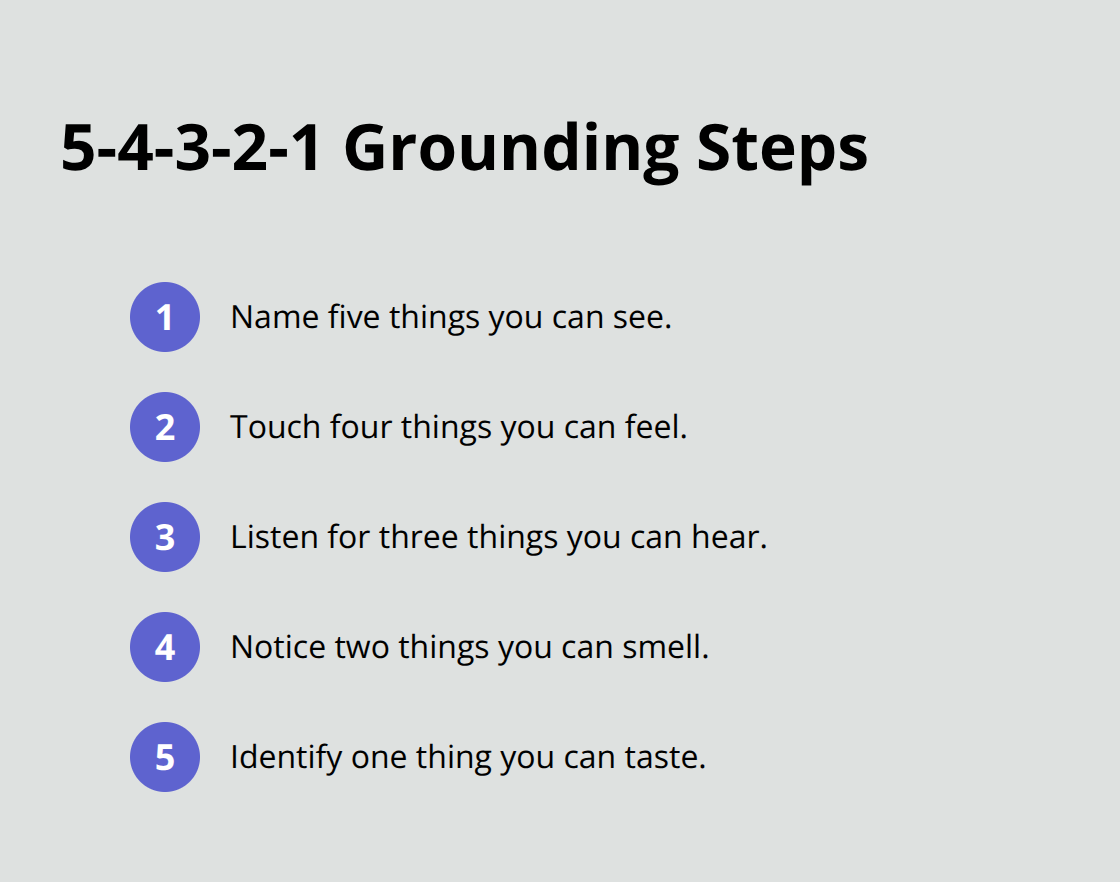
The 5-4-3-2-1 grounding exercise pulls attention away from anxious thoughts and into the present moment. Your teen identifies five things they see, four they can touch, three they hear, two they smell, and one they taste. This takes roughly three minutes and works especially well during panic or when racing thoughts take over. The sensory focus stops the spiral and returns control to the present.
Movement and Sleep as Anxiety Fighters
Physical activity genuinely reduces anxiety levels by lowering stress hormones and boosting mood. Regular movement-whether yoga, dancing, brisk walking, or sports-improves stress management and emotional awareness in adolescents. Try thirty minutes of moderate activity most days, but even a ten-minute walk shifts the nervous system toward calm. Sleep matters enormously because sleep deprivation intensifies anxiety; a teen receiving only six hours instead of eight to ten hours will experience noticeably sharper anxiety symptoms and worse emotional regulation. A consistent bedtime and morning routine, screens kept out of the bedroom an hour before sleep, and caffeine limited after noon directly improve sleep quality and reduce daytime anxiety.
Mindfulness and Journaling for Long-Term Change
Mindfulness means focusing fully on one activity-eating an orange slowly while noticing texture and taste, breathing while observing where air touches the body, or walking while scanning sensations from feet to head. These practices train the brain to notice thoughts without getting trapped by them. Your teen should start with just one minute daily and extend to five minutes as the practice feels easier; minds wander constantly, and that’s normal rather than failure. Journaling works through the Thought Record method: your teen writes the stressful situation, their automatic thought, the emotions that followed, evidence supporting and contradicting that thought, and a balanced reframe. If they think “I’ll fail the test and everyone will judge me,” they list evidence (I studied for two hours) and counter-evidence (I passed the last test, my friends care about me regardless), then reframe to “I feel nervous, but I prepared well and my worth isn’t determined by one grade.” Gratitude journaling shifts focus by having your teen list three good things daily with specific details about why they mattered. This rewires the brain toward noticing positives rather than defaulting to worry. Mood and thought tracking using a simple journal or app helps your teen spot patterns: logging emotions several times daily alongside what happened beforehand reveals triggers and shows progress over weeks.
These tools work best with consistent practice-anxiety management isn’t a one-time fix but a skill that improves with repetition and patience. Small wins matter, and celebrating them reinforces the effort. As your teen builds confidence with these daily strategies, deeper cognitive work becomes possible. The next section covers how to reshape the thought patterns that fuel anxiety in the first place.
Reshape Anxious Thoughts Before They Control Your Teen
Cognitive behavioral strategies work because they attack anxiety at its source: the thoughts that trigger physical panic. Your teen’s brain isn’t broken; it’s just running unhelpful patterns that can be retrained. Cognitive behavioral therapy, or CBT, helps teens identify and change negative thought patterns that drive anxiety. A standard CBT session lasts about one hour and is typically scheduled weekly or biweekly, depending on needs.
The Thought Record: Breaking Catastrophic Thinking
The Thought Record method forms the foundation of cognitive work. Your teen writes the stressful situation, the automatic negative thought, the emotions that followed, evidence supporting the thought, evidence against it, and a balanced reframe. If your teen thinks “I’ll bomb this presentation and everyone will think I’m incompetent,” they list concrete evidence: “I’ve presented before without disaster. My teacher gave me positive feedback last time. One bad presentation doesn’t define my abilities.” This written exercise breaks the grip of catastrophic thinking by forcing your teen to examine whether their fear actually matches reality.
The ABC Model and Behavioral Experiments
The ABC Model offers another practical tool: Activating Event (the presentation), Belief (“I’ll fail and be judged”), Consequences (intense anxiety and avoidance). Your teen identifies the belief driving the anxiety, then tests whether that belief actually holds up.
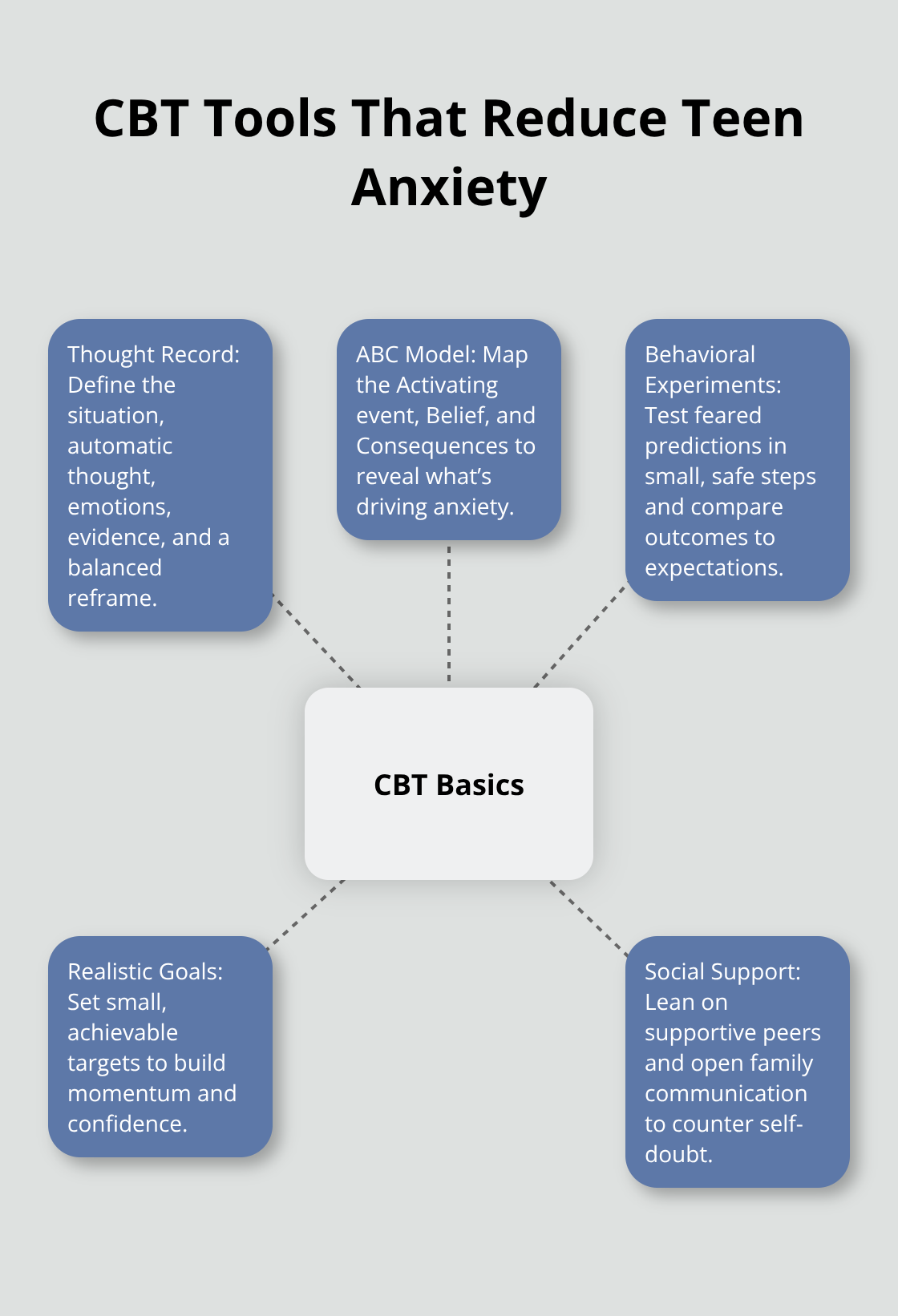
Behavioral experiments prove especially powerful here; instead of avoiding the feared situation, your teen faces it on purpose in small doses. If social anxiety keeps them silent in class, they commit to asking one question in the next lesson, then analyze what actually happened instead of what they feared would happen. Most teens discover their catastrophic predictions were wrong, which directly reduces future anxiety about that situation.
Social Support Buffers Self-Doubt
Isolation deepens anxiety, while supportive friendships buffer self-doubt and provide genuine perspective. Your teen needs peers who accept them without judgment, and if current friendships feel toxic or anxiety-driven, building new connections through clubs, sports, or volunteer work creates healthier peer relationships. Open communication at home matters equally; let your teen lead conversations using open-ended questions like “What’s been on your mind lately?” rather than interrogating them about their anxiety. Active listening means reflecting back their feelings: “You sound worried about the group project,” which validates their experience without dismissing it.
Realistic Goals Build Genuine Confidence
Setting realistic goals prevents the perfectionism that fuels anxiety in the first place. Instead of aiming to eliminate anxiety entirely or achieve perfect grades, your teen sets achievable targets: complete one homework assignment without checking social media, attend one social event without leaving early, or raise a hand in class twice this week. Breaking larger goals into manageable steps makes progress visible and prevents overwhelm. Celebrate effort, not just outcomes; praising your teen for trying despite anxiety matters more than praising a perfect result. Mood and thought tracking shows concrete progress over weeks as your teen spots patterns and notices improvements they might otherwise miss. This combination of cognitive work, social connection, and achievable goals builds genuine confidence because your teen experiences repeated success in managing anxiety rather than just reading about it.
Final Thoughts
Anxiety is manageable, and your teen has the power to reshape how they respond to it. The tools work because they’re practical and grounded in how the brain actually functions-breathing techniques lower cortisol in minutes, grounding exercises pull attention back to the present, cognitive reframing breaks the cycle of catastrophic thinking, and physical activity directly reduces anxiety symptoms. Progress happens incrementally, not overnight, and celebrating small wins reinforces the effort and builds genuine confidence.
When anxiety persists despite consistent practice, when it interferes with school or friendships, or when your teen feels overwhelmed and stuck, professional support becomes essential. A therapist helps identify triggers specific to your teen’s life, teaches advanced coping skills tailored to their needs, and provides the accountability that keeps progress moving forward. We at The Teen Center offer specialized, evidence-based mental health care for adolescents, including individual and family therapy, medication management, and crisis support both in person and via telehealth.
If your teen needs professional guidance for anxiety, reach out to The Teen Center to explore treatment options that fit your family’s needs. Your teen isn’t broken-their brain is doing exactly what brains do when facing perceived threat. With the right tools, support, and consistent practice, they’ll move forward with genuine confidence.