Anxiety affects roughly 1 in 3 teens, making it one of the most common mental health challenges young people face today. The good news is that effective anxiety resources for teens are available right now.
At The Teen Center, we’ve compiled the tools, hotlines, and professional support options that actually work. This guide shows you exactly where to find help and how to use it.
What Does Anxiety Actually Look Like in Teens?
Physical Symptoms Often Come First
Anxiety in teens shows up differently than most adults expect. It’s not always visible worry or panic attacks. Many teens experience physical symptoms first-stomachaches, headaches, or muscle tension that doctors can’t explain. Others become extremely withdrawn, refuse to go to school, or have sudden behavioral outbursts that seem disconnected from anxiety. Anxiety is the most common mental health disorder in children and adolescents, yet parents and educators frequently miss these early signs because they don’t match the stereotypical picture of anxiety.
A teen might claim they’re fine while their body tells a different story through physical complaints, sleep disruption, or avoidance of social situations. This disconnect between what teens say and what they show means anxiety often goes undetected for months or years, allowing the condition to worsen. The longer anxiety persists without intervention, the more it affects academic performance, friendships, and self-esteem. Recognizing anxiety early requires paying attention to behavioral changes, not just asking if a teen feels worried.
Why Early Detection Matters
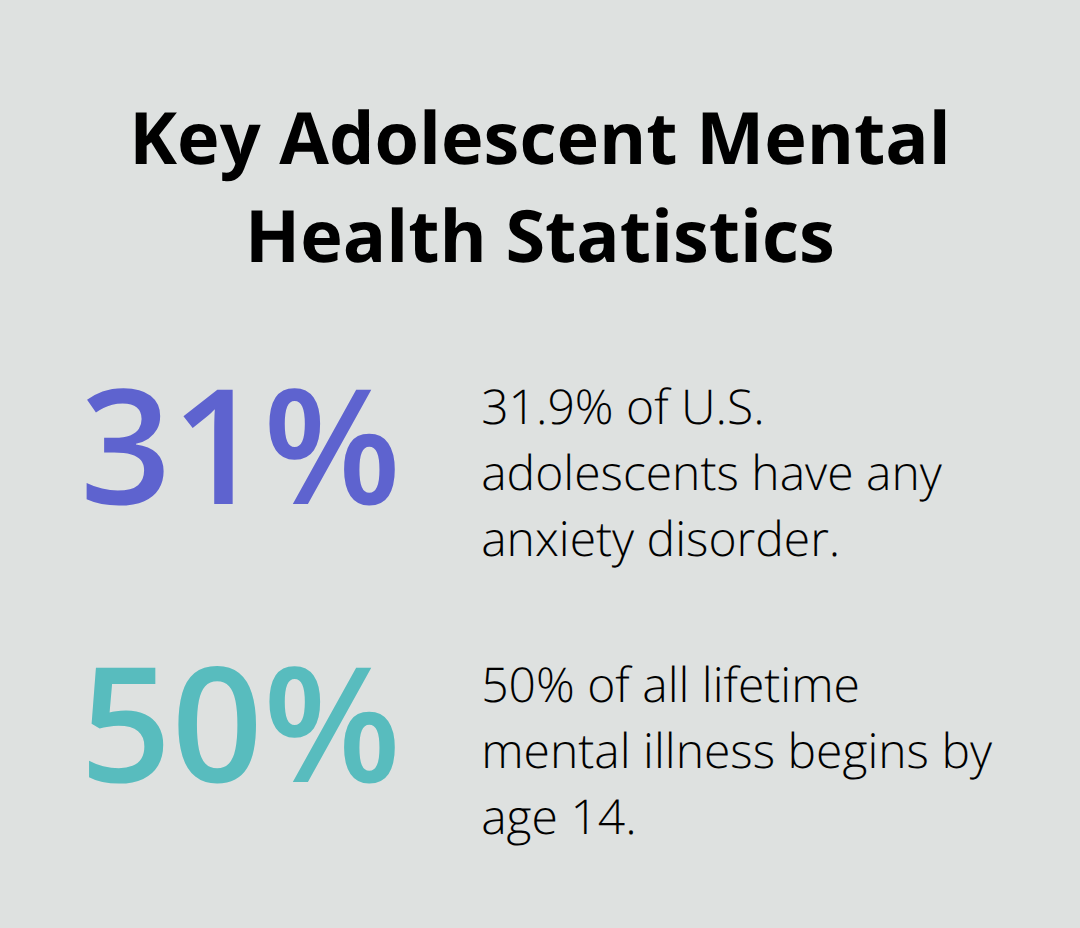
An estimated 31.9% of adolescents had any anxiety disorder, and 50% of all lifetime mental illness cases begin by age 14, according to research on adolescent mental health. The average delay between when anxiety symptoms start and when teens actually receive help is 8 to 10 years-a gap that allows anxiety to become deeply embedded in how teens think and act.
During adolescence, the brain is still developing, particularly the areas responsible for emotional regulation and decision-making, which means anxiety affects teens differently than adults. Teens need approaches designed specifically for their developmental stage, not watered-down adult treatments. This is why generic self-help resources fall short for many teens.
Treatment Works When It’s Tailored to Teens
Professional support that addresses both the teen’s individual needs and their family dynamics produces better outcomes. Behavioral therapy combined with active parental involvement significantly improves treatment results, according to clinical research on pediatric anxiety. Waiting for anxiety to resolve on its own isn’t a strategy-it’s a missed opportunity to help teens build the skills they need to manage anxiety before it shapes their entire adolescence.
Understanding what anxiety looks like in your teen is the first step. The next step is knowing which tools and resources can actually help them take action.
Tools That Actually Work for Teen Anxiety
Teens need practical strategies they can use immediately when anxiety hits, not complicated techniques they’ll abandon after day two. The most effective approach combines simple techniques teens can deploy anywhere with digital tools designed specifically for their age group.
Breathing and Grounding Techniques Work Fast
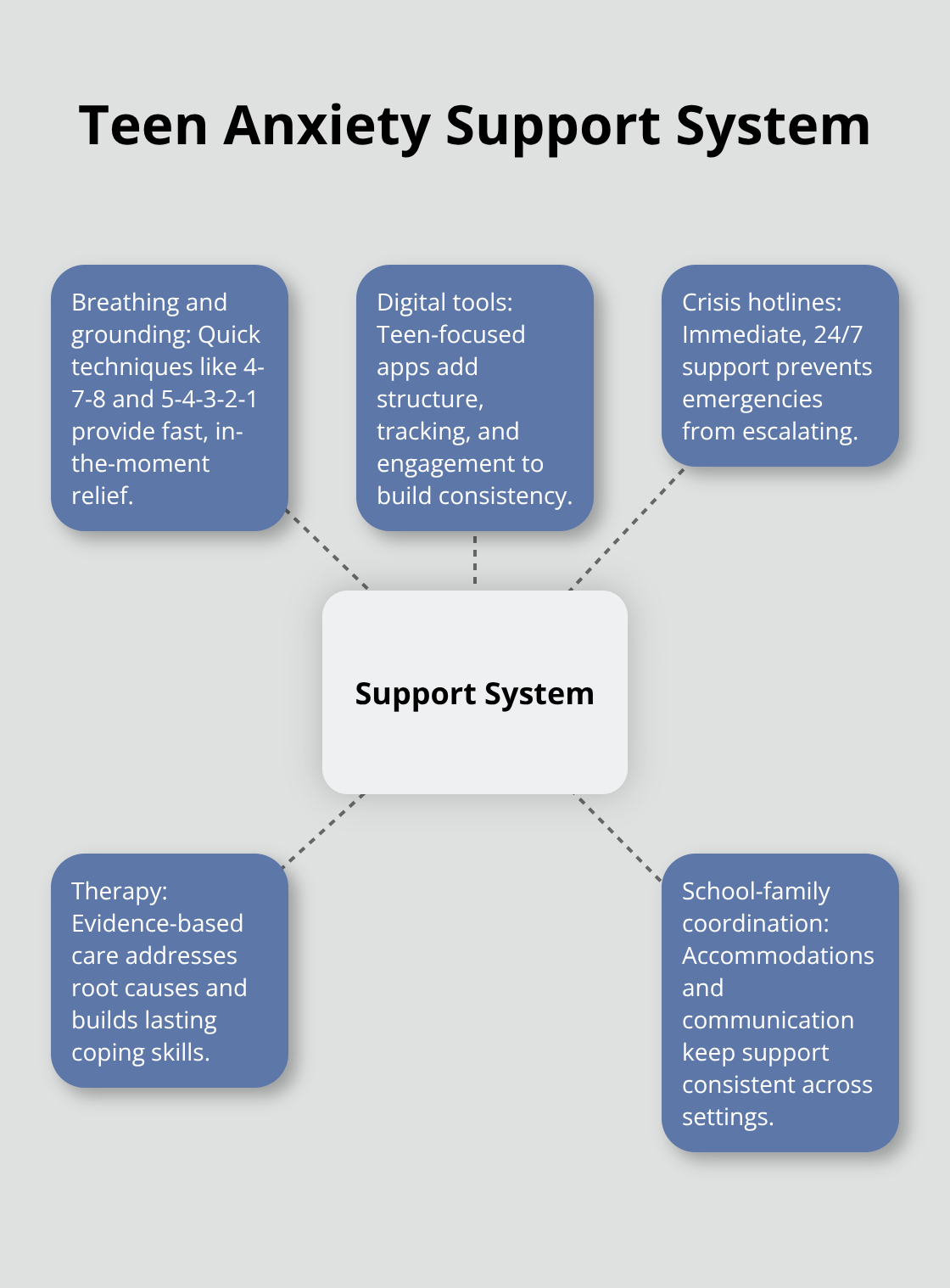
Breathing exercises interrupt the physical anxiety response, but only if they’re simple enough to remember under stress. The 4-7-8 technique-where teens breathe in for 4 counts, hold for 7, and exhale for 8-has research backing showing it activates the parasympathetic nervous system and reduces physical anxiety symptoms. Grounding techniques like the 5-4-3-2-1 method work by anchoring attention to the present moment instead of anxious thoughts about the future. Teens identify five things they see, four they can touch, three they hear, two they smell, and one they taste. These techniques take 2 to 5 minutes and require no equipment, making them genuinely usable when a teen sits in class or at home.
Digital Tools Extend What Breathing Alone Can Do
Digital tools provide structure and tracking that simple breathing exercises cannot. Apps like Insight Timer offer free guided meditations specifically for teens, and research shows that daily meditation can improve anxiety over eight weeks. Teens respond better to apps with progress tracking and streak counters because the gamification keeps them engaged longer than apps that simply offer content. Interactive anxiety management platforms that combine psychoeducation with practical exercises work better than passive video or text-based resources because they require active participation from the user.
When Self-Help Tools Stop Working
Anxiety that is severe enough to stop responding to self-help tools demands professional support rather than optional extras. Signs that a teen needs more than apps include school refusal, sleep disruption, or physical symptoms that interfere with daily functioning. The gap between self-help and professional care matters enormously, and waiting months to see if an app solves the problem often means missing the window when treatment is most effective. This is where hotlines, therapists, and crisis support become the next critical layer of help.
Hotlines, Crisis Support, and Professional Resources
Teen Listeners Understand What Teens Face
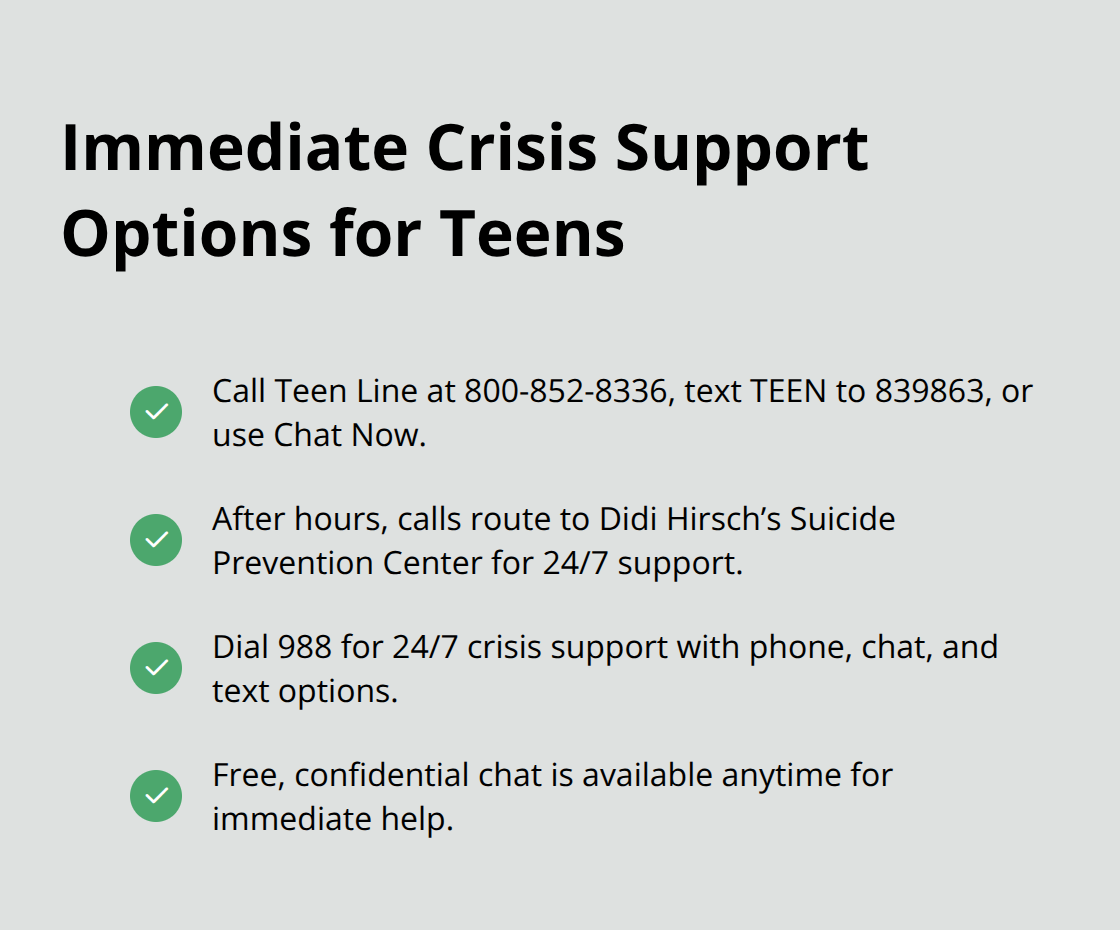
When a teen’s anxiety spirals beyond what apps and breathing exercises can handle, immediate access to trained listeners becomes non-negotiable. Teen Line provides support staffed entirely by teen listeners. This matters because teens often feel more comfortable talking to someone close to their age who genuinely understands what they’re experiencing rather than an adult authority figure. All conversations remain anonymous and confidential, with confidentiality only breached if imminent danger exists.
Teens can reach Teen Line at 800-852-8336, text TEEN to 839863, or use the Chat Now option for immediate support. Outside Teen Line hours, calls automatically route to Didi Hirsch’s Suicide Prevention Center for 24/7 crisis support. The 9-8-8 crisis line also provides 24/7 support with free, confidential chat available anytime. These services handle anxiety conversations alongside depression, relationships, school stress, family conflict, and suicidal thoughts-nothing is too big or too small to bring up.
Finding Therapists Requires More Than Crisis Lines
Crisis support stops the immediate emergency, but ongoing professional care prevents the next one. Therapist directories exist for major U.S. cities including New York, Los Angeles, and Chicago, helping teens and families locate experienced mental health professionals nearby. School counselors and pediatricians can provide referrals, though their recommendations vary in quality. The Teen Center delivers specialized, evidence-based mental health care for adolescents ages 12 to 17, offering intensive outpatient programs, individual and family therapy, medication management, and crisis support both in person and via telehealth.
The gap between crisis lines and therapist availability is where many teens fall through. Family involvement in treatment produces better outcomes, which is why insisting on family sessions matters even when a teen resists. Treatment plans that address both the teen’s individual needs and their family dynamics create lasting change rather than temporary relief.
Schools and Families Complete the Support System
School support systems function as the third pillar of effective anxiety treatment. Teachers who understand anxiety can implement classroom accommodations like extended test time or permission to step outside when overwhelmed, reducing the daily friction that worsens anxiety. Parents who communicate directly with schools about anxiety create consistency between home and academic environments. Without coordination between therapist, family, and school, a teen receives fragmented support that weakens treatment effectiveness.
Final Thoughts
Anxiety in teens is treatable, but only when the right support reaches them at the right time. The anxiety resources for teens outlined in this guide work because they match how adolescents actually live and think. Breathing techniques provide immediate relief, digital tools build consistency, crisis hotlines prevent emergencies from becoming tragedies, and therapists address the root causes that apps cannot touch.
The combination matters more than any single tool. A teen using the 4-7-8 breathing technique without professional support may feel temporary relief but never address why anxiety started in the first place. A teen in therapy without family involvement often struggles to apply what they learn at home. A teen with school accommodations but no crisis support remains vulnerable when anxiety spikes outside school hours.
The Teen Center provides the professional foundation that ties everything together. We deliver specialized, evidence-based mental health care for adolescents ages 12 to 17, offering intensive outpatient programs, individual and family therapy, medication management, and crisis support both in person and via telehealth. Whether you start with breathing exercises, download an app, call a hotline, or schedule an appointment with a therapist, movement matters more than perfection.