
School anxiety affects roughly 1 in 4 teens, disrupting sleep, grades, and friendships. At The Teen Center, we’ve seen firsthand how this stress can feel overwhelming for both students and their families.
The good news? Proven strategies exist that actually work. This guide gives you practical tools to manage anxiety and support the teens in your life.
What School Anxiety Actually Looks Like
Physical and Behavioral Signs
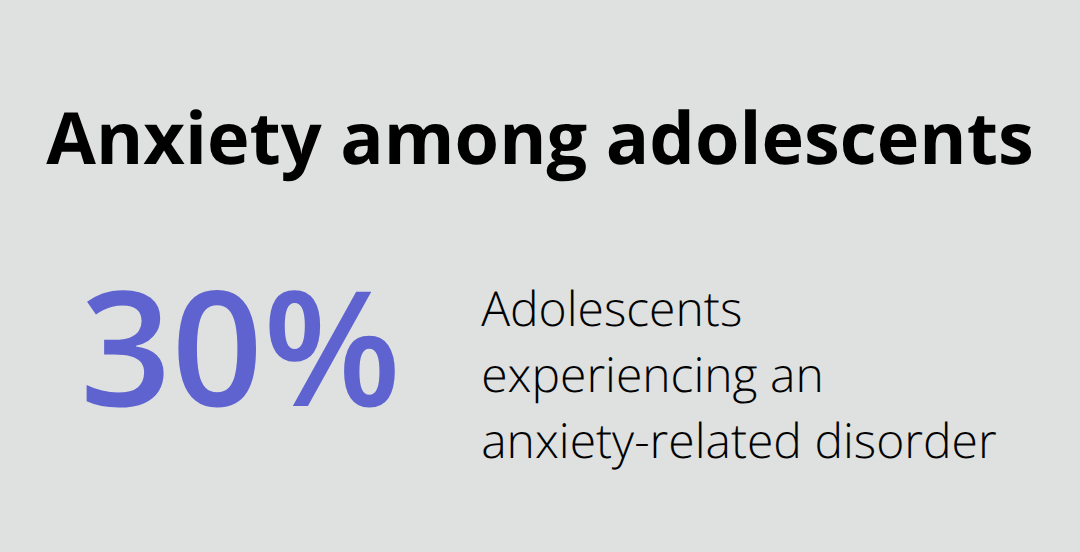
School anxiety in teens shows up in ways that often get mistaken for laziness or bad attitude. Physical and behavioral signs of school anxiety affect a significant portion of adolescents, with roughly 30% experiencing an anxiety-related disorder. Physical symptoms appear first for many teens: stomachaches before school, headaches during classes, or trouble sleeping the night before a test. Some teens wake up with genuine nausea or complain of chest tightness. Others become irritable, withdraw from friends, or suddenly lose interest in activities they once enjoyed.
When Anxiety Becomes School Avoidance
The real red flag appears when a teen starts avoiding school entirely-not because they’re skipping to hang out, but because the thought of walking through those doors triggers panic. This isn’t normal nervousness about a big test. This is their nervous system telling them that school feels unsafe, even when objectively it is. What makes school anxiety different from general worry is that it attaches itself to specific aspects of school life. A teen might panic about social rejection in the cafeteria but feel fine in math class. Another might dread transitions between classes or sitting in a crowded hallway.
Identifying the Root Causes
Common triggers include difficulty making friends, confusing lessons, academic pressure, strained relationships with teachers, and stress at home like grief or parental separation. Neurodiverse conditions (autism, ADHD, dyslexia, dyspraxia) make school days significantly harder for many teens. When anxiety takes hold, it damages grades quickly. A teen who previously earned B’s might drop to C’s or D’s because they can’t concentrate while anxious. Friendships suffer too. Anxious teens withdraw from social groups, skip lunch with friends, or avoid after-school activities.
The Cycle That Compounds
Over time, isolation feeds the anxiety, creating a cycle that becomes harder to break without intervention. Poor sleep leads to worse mood and concentration, which leads to worse grades, which increases anxiety further. This isn’t something that improves on its own with time or maturity. Understanding these patterns helps families and teens recognize when anxiety has moved beyond typical school stress and requires active intervention. The next section covers the evidence-based strategies that actually interrupt this cycle and help teens regain control.
Techniques That Stop Anxiety Before It Takes Over
Cognitive Restructuring: Rewiring Anxious Thoughts
Cognitive behavioral strategies work because they interrupt the thought patterns that fuel anxiety. Instead of waiting for panic to hit, teens practice these techniques daily so their brain learns a different response. The most effective approach teaches teens to identify the thought triggering their anxiety, then challenge it with evidence. A teen convinced everyone will judge them in the cafeteria can write down what actually happened last time: nobody stared, two friends waved, and the moment passed normally. This isn’t positive thinking or ignoring the worry. It’s replacing a false prediction with what reality shows.
Research on school-based anxiety programs like Cool Kids demonstrates that cognitive restructuring combined with gradual exposure reduces self-reported anxiety significantly compared to no treatment. Teens benefit from practicing this daily, not just when anxiety strikes. One practical tool-the thought record-helps cement this skill. Each morning or evening, a teen writes one worry about school, identifies the thought driving it, and writes one piece of evidence against that thought. Over weeks, this rewires how the brain processes school situations.
Breathing and Grounding: Immediate Calm in the Moment
The 4×4 breathing exercise provides immediate relief when anxiety spikes during the day. Inhale for 4 seconds, hold for 4, exhale for 4, hold for 4, then repeat five times. This activates the parasympathetic nervous system, physically calming the body. Teens should practice this exercise three times daily when calm, so it becomes automatic when panic arrives.
Grounding exercises anchor attention to the present moment, stopping the anxious mind from spiraling into worst-case scenarios. The 5-4-3-2-1 technique works quickly: name five things you see, four you can touch, three you hear, two you smell, one you taste.
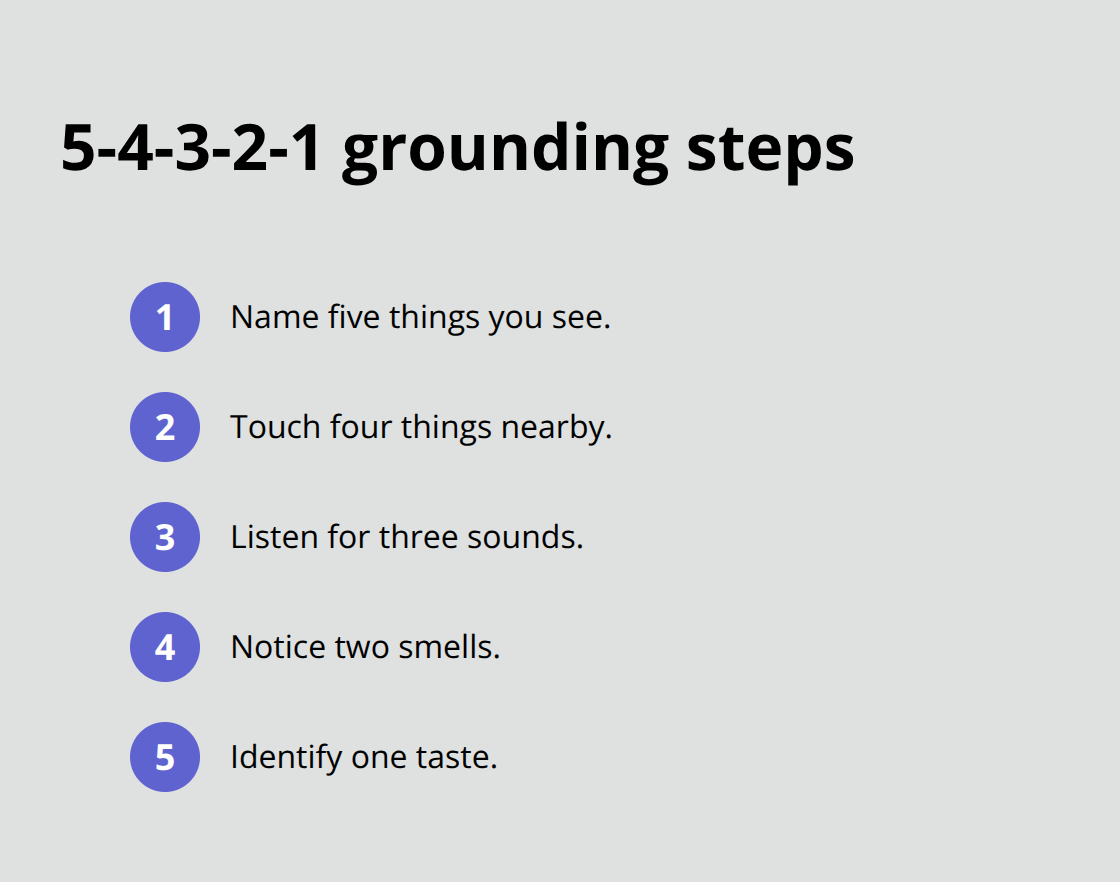
This takes 60 to 90 seconds and pulls the brain out of anxiety mode. Many teens find grounding more effective than breathing alone because it engages multiple senses.
Routines and Structure: Eliminating Uncertainty
Structured routines eliminate the uncertainty that feeds anxiety. A visual morning schedule posted on the bedroom wall removes decision-making and surprise. Wake time, breakfast, shower, getting dressed, and leaving happen in the same order every day. This predictability calms the anxious brain. Preparing the night before amplifies this effect: backpack packed, outfit chosen, lunch made. When morning arrives, the teen executes a plan rather than facing a blank slate.
Research consistently shows that sleep quality directly influences anxiety levels and academic performance. Teens need 8 to 10 hours nightly, so establishing a consistent bedtime routine matters as much as the morning one. Screen time stops 30 minutes before bed, the room stays cool and dark, and the same wind-down activities happen each night.
Managing the School Day: Breaking It Into Pieces
For school transitions, a now-next-then card helps anxious teens manage the day without feeling overwhelmed. It shows only the current task, the next task, and what comes after that, hiding the rest of the day from view. A teen worried about a difficult class at 2 p.m. doesn’t need to think about it at 8 a.m. The now-next-then structure keeps focus narrow and manageable. These daily strategies build a foundation, but family support determines whether teens actually stick with them and whether anxiety truly releases its grip.
How Families Support Anxious Teens
Structure Your Mornings to Reduce Panic
The home environment either accelerates anxiety or interrupts it. Families who reduce morning chaos, model calm responses to stress, and maintain consistent routines see measurable improvements in their teen’s school attendance and mood within weeks. This isn’t about creating a perfect household-it’s about removing the friction that amplifies anxiety.
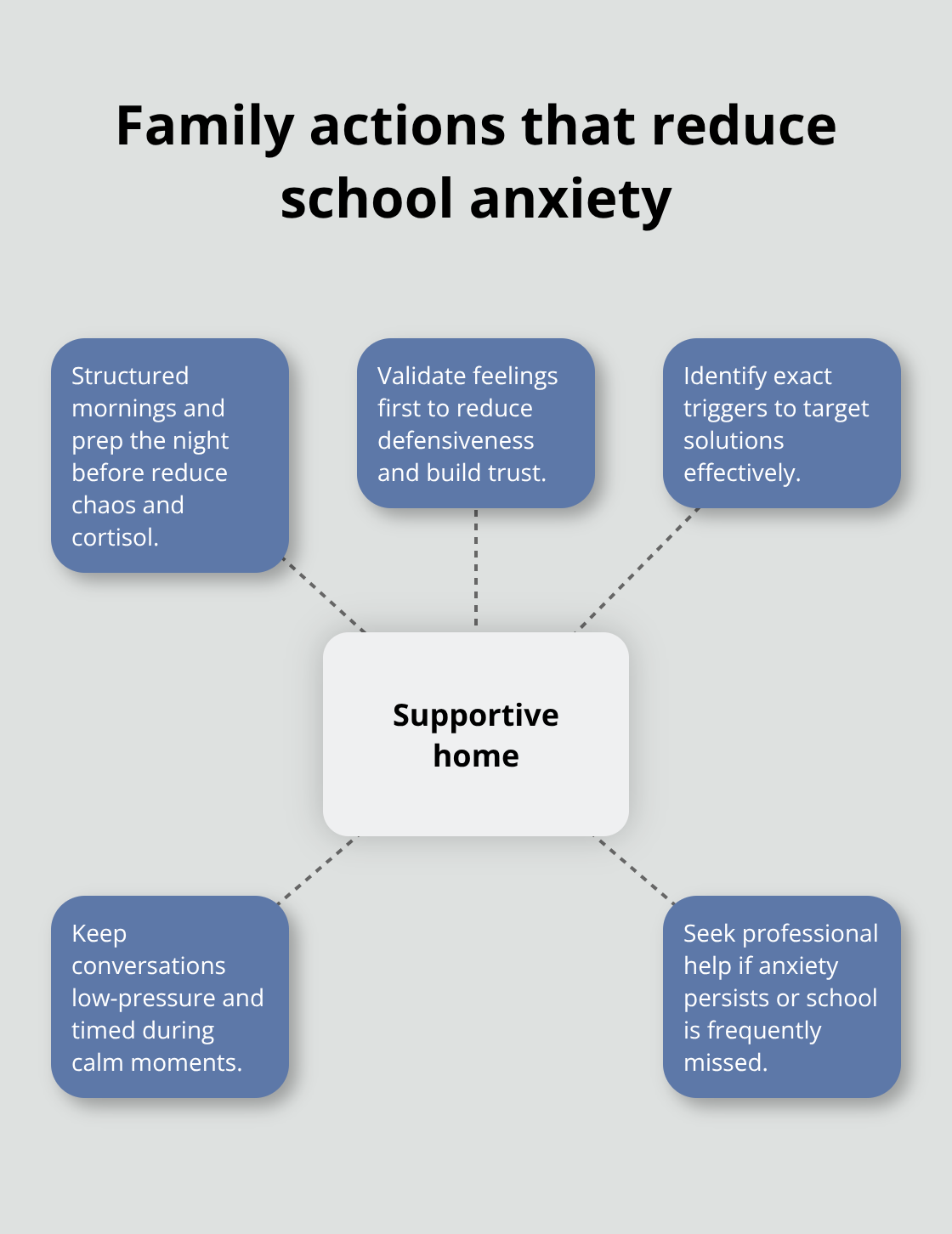
Start with mornings. Rushed mornings spike cortisol levels and set the entire day toward panic. When a teen wakes to yelling, searches for missing backpack items, or feels pressure to hurry, their nervous system activates before school even starts. A structured morning eliminates this entirely. Post a visual schedule showing wake time, breakfast, shower, getting dressed, and leaving. Prep everything the night before. This removes decisions and surprises, and a teen executing a known plan feels in control, which directly reduces anxiety.
Validate Feelings and Identify Exact Triggers
Communication with your teen matters far more than you probably think. Most parents try to reassure anxious teens by minimizing their worries-saying things like “it will be fine” or “everyone experiences this.” This backfires. Anxiety intensifies when teens feel misunderstood or dismissed.
Instead, validate the feeling first. Say “I see this is really hard for you” or “your worry matters to me.” Then ask specific questions about what exactly triggered the anxiety. Is it the cafeteria? A particular class? Social situations? Specific academic fears? Once you identify the exact trigger, you can help solve it rather than fighting the whole vague feeling of dread.
Use a conversation approach called the anxiety iceberg. Ask your teen to draw an iceberg with the visible anxiety symptoms on top and the hidden worries underneath. This reveals the real issue. A teen who seems fine about math class but dreads school might actually fear failing and disappointing you, not math itself. When you know the actual trigger, practical solutions emerge. You might arrange tutoring, request a seating change, or practice coping statements specifically for that situation.
Keep Conversations Low-Pressure and Supportive
Keep these conversations low-pressure. Don’t interrogate during stressful moments. Talk during calm times like a car ride or while doing something together. Most importantly, never force attendance on days when anxiety is severe. Forcing attendance teaches the teen that you don’t believe their anxiety is real and that panic is something to power through. This worsens anxiety long term.
Instead, acknowledge the difficulty and discuss small steps forward. Maybe they attend one class. Maybe they visit the building without staying.
Progress matters more than perfect attendance.
Seek Professional Help When Anxiety Persists
Professional help becomes necessary when anxiety persists beyond a few weeks or when your teen misses school frequently. If your teen falls into this range, contact your family doctor or a mental health provider who specializes in adolescents.
School-based anxiety programs like Cool Kids and SASS show significant anxiety reductions through structured group treatment, typically eight to twelve sessions delivered by trained clinicians. If your teen shows signs of depression alongside anxiety (such as hopelessness or thoughts of self-harm), seek help immediately rather than waiting. Early intervention prevents anxiety from developing into more serious mental health conditions.
Document what you’ve tried, what triggers the anxiety, and what calms your teen. Bring these notes to your first appointment. This information helps clinicians design treatment faster and more effectively.
Final Thoughts
School anxiety in teens is real, measurable, and treatable. The strategies in this guide work because they address anxiety at multiple levels: the thought patterns that fuel it, the physical panic response, and the daily routines that either amplify or reduce stress. Teens who practice cognitive restructuring, breathing exercises, and structured routines see genuine improvement within weeks, while families who validate feelings, identify exact triggers, and maintain calm home environments accelerate that progress significantly.
Anxiety responds to action, not avoidance. When your teen faces anxiety by practicing coping skills, attending school despite discomfort, and gradually building confidence, the nervous system learns that school is manageable. When anxiety is avoided through skipping school or staying home, it strengthens, so your role as a parent involves supporting brave steps forward while acknowledging how hard those steps feel.
If your teen’s anxiety persists beyond a few weeks or interferes with school attendance and friendships, professional support makes a real difference. We at The Teen Center specialize in school anxiety teen help through intensive outpatient programs, individual and family therapy, and medication management for adolescents ages 12 to 17. Contact The Teen Center to explore specialized treatment options available both in-person and through telehealth.