Adolescent depression is serious, and medication can be an effective part of treatment. But finding the right approach to medication management for adolescent depression requires careful planning and ongoing attention.
At The Teen Center, we know that parents and teens need clear, practical information about how antidepressants work, what side effects to watch for, and how to work with doctors to find the best treatment plan. This guide walks you through the key decisions you’ll face.
What Antidepressants Actually Work for Teens
FDA-Approved Options and Why They Matter
FDA-approved antidepressants for adolescents include fluoxetine and escitalopram, and this restriction exists for good reason. A network analysis of 15 randomized controlled trials involving 12,258 adolescents with major depressive disorder revealed critical differences in how these medications perform. Fluoxetine showed the strongest reduction in depression severity on the Children’s Depression Rating Scale, while escitalopram ranked highest for functional recovery and global improvement. Sertraline emerged as the fastest option for reducing clinician-rated severity in acute cases, but it lacks FDA approval for teens. This matters because the FDA approval process requires manufacturers to demonstrate safety and efficacy in the specific age group, and most antidepressants simply haven’t undergone that rigorous testing in adolescents.
FDA approval reflects the evidence available at the time a drug was studied, not necessarily superiority over all other options. Your doctor may still prescribe other SSRIs like sertraline or escitalopram off-label if fluoxetine doesn’t work, and this is standard practice supported by clinical guidelines. What you need to know is that fluoxetine typically starts at 10 mg daily, increasing to 20 mg after one week, with benefits often appearing within 2 to 6 weeks. If fluoxetine causes side effects or shows no improvement after 6 to 8 weeks, switching to another SSRI makes sense rather than increasing the dose further.
How the Adolescent Brain Responds Differently
The adolescent brain responds differently to antidepressants than the adult brain does, primarily because serotonin regulation continues developing through the late teenage years. SSRIs work by blocking the reuptake of serotonin, allowing more of this neurotransmitter to remain available in the brain’s synapses. However, the specific neural circuits involved in mood regulation are still maturing in adolescents.
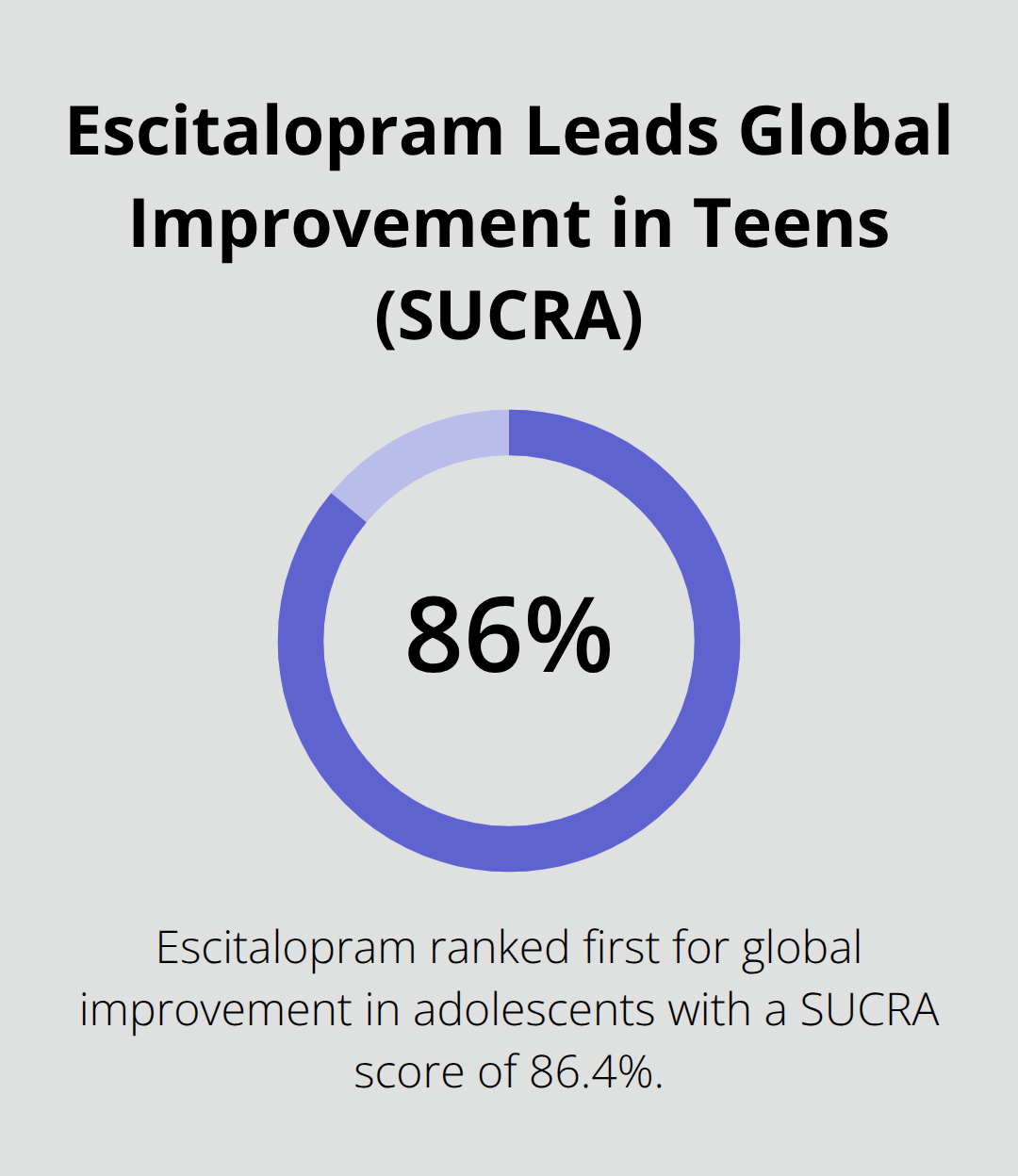
This developmental reality explains why escitalopram produces the greatest improvement in functional outcomes like school performance and social engagement, even though it’s not FDA-approved for teens. The network analysis showed escitalopram ranked first for global improvement with a SUCRA score of 86.4%, meaning it outperformed other medications in real-world functioning.
Venlafaxine, an SNRI that works on both serotonin and norepinephrine, showed little to no advantage over placebo in adolescents, making it a poor choice despite effectiveness in adults. Paroxetine, despite strong effects on older depression rating scales, carries anticholinergic side effects that limit its use in youth. Your teen’s medication works on brain systems still undergoing active development, which means responses vary widely and what works brilliantly for one teen may fail for another. This is precisely why combining medication with therapy produces better results than either treatment alone, and why close monitoring during the first 4 to 8 weeks matters enormously. Understanding these differences prepares you for the next phase: recognizing what side effects to watch for and how to communicate with your teen’s doctor about what you observe.
What Side Effects Should You Actually Worry About
Early Side Effects That Fade on Their Own
Antidepressant side effects in adolescents fall into two categories: early effects that fade within weeks, and persistent ones that may require a medication switch. During the first two weeks, mild gastrointestinal symptoms like nausea or stomach upset appear in some teens, along with transient insomnia if you dose the medication in the evening, and activation or jitteriness if the dose increases too rapidly. These early effects resolve by week 8 in most teens and you can minimize them by administering fluoxetine or escitalopram in the morning and increasing doses slowly rather than jumping to the target dose immediately. More concerning are persistent side effects like sexual dysfunction, weight gain, or emotional blunting that emerge after several weeks and do not improve on their own.
Understanding the Real Risk: Medication vs. Untreated Depression
The Canadian Medical Association Journal analysis of adolescent depression treatment emphasizes that while antidepressant exposure carries a modest increase in suicidality risk during early treatment weeks, untreated depression itself carries substantial suicide risk, making the decision to treat a net positive when monitored closely. The FDA black box warning on antidepressants in youth exists because clinical trials and post-market surveillance identified increased suicidal thoughts and behaviors in youth under 25, particularly during the first one to four weeks of treatment or after dose changes. This warning is not an argument against medication but a mandate for active monitoring. Your clinician should discuss both the risks of untreated depression and the modest medication-related risk with you and your teen before starting treatment, then schedule follow-up visits at two weeks, four weeks, and eight weeks minimum during the initial phase.
What to Track During the Critical First Weeks
Your role is straightforward: track what changes in your teen during weeks one through eight, document the timing and severity of any symptoms, and report this information at follow-up appointments rather than waiting for the next scheduled visit if side effects are significant. Between appointments, watch for sudden mood shifts, increased talk of death or hopelessness, agitation, sleep changes beyond the expected transient insomnia, or withdrawal from activities your teen previously enjoyed.
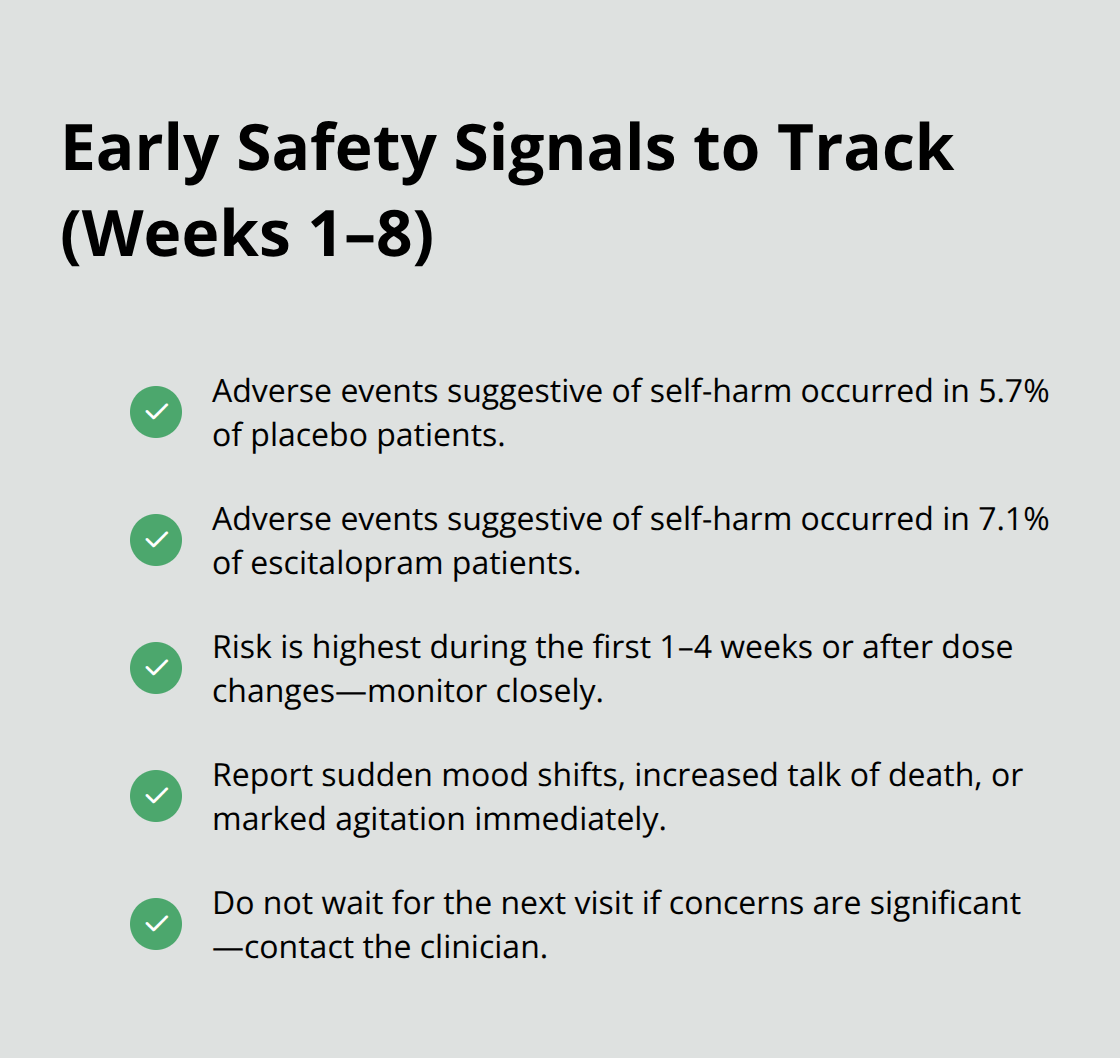
Escitalopram safety profile in pediatric populations shows adverse events suggestive of self-harm occurred in 5.7% and 7.1% of placebo and escitalopram patients respectively, while paroxetine’s anticholinergic effects make it problematic for teens despite its efficacy on some rating scales.
Blood Work and Ongoing Monitoring Requirements
Blood work requirements depend on the specific medication and your teen’s baseline health but typically include a complete blood count and thyroid function test before starting treatment to rule out medical causes of depression. Most SSRIs do not require ongoing blood monitoring once treatment is established, though some clinicians order repeat labs at three to six months to check for metabolic changes. Medication safety also requires limiting pill quantities dispensed at each refill and discussing secure storage with your teen and family, particularly in homes where suicide risk is elevated.
When to Switch Medications
If your teen shows no improvement after six to eight weeks on a therapeutic dose of fluoxetine, switching to another SSRI like sertraline or escitalopram is standard practice rather than increasing the dose indefinitely. The network analysis of adolescent trials showed that sertraline emerged as the fastest option for reducing clinician-rated severity in acute cases, while escitalopram ranked highest for functional recovery and global improvement. This variation in medication response means your teen’s doctor will likely recommend a different SSRI if the first one fails, and this adjustment process is normal and expected. Understanding how your teen responds to the initial medication sets the stage for the next critical decision: whether combining medication with therapy produces better outcomes than either treatment alone, and how to structure that combination for maximum benefit.
Finding the Right Medication and Dosage
Why One Medication Doesn’t Work for Everyone
Adolescent depression treatment requires matching the right medication to each teen’s specific biology and circumstances. Genetics, brain chemistry, body weight, other medications, and how quickly a teen’s liver metabolizes drugs all influence whether fluoxetine at 20 mg works brilliantly or causes intolerable side effects. The Canadian Medical Association Journal notes that more than 60% of adolescents with depression have at least one comorbidity like anxiety or ADHD, and these co-occurring conditions dramatically shift how medications perform. A teen with both depression and ADHD may respond better to sertraline than fluoxetine because sertraline has less activation risk during early weeks. Another teen with depression and social anxiety might benefit from escitalopram’s stronger functional recovery profile.
Your clinician gathers information about your teen’s specific presentation, family medication history, and baseline health, then makes an educated starting choice rather than defaulting to fluoxetine for everyone. If your teen’s doctor prescribes fluoxetine without discussing why that choice makes sense for your specific teen, ask directly what factors influenced that decision. A thoughtful clinician will explain whether they chose fluoxetine because it’s first-line, because your teen has no comorbidities that favor another SSRI, or because your family history suggests fluoxetine worked well for relatives.
Combining Medication with Therapy for Better Outcomes
The evidence strongly supports combining medication with therapy rather than using either approach alone. Psychotherapy options including cognitive behavioral therapy and interpersonal therapy produce documented improvements in adolescent depression, and research confirms that adding medication to therapy yields substantially better outcomes than therapy alone when depression is moderate to severe. Your clinician will help you decide whether your teen should start medication and therapy simultaneously or begin with therapy and add medication if progress stalls.
Most clinical guidelines recommend starting with psychotherapy and lifestyle changes, adding antidepressants if improvement is insufficient after four to six weeks. This approach lets you observe whether your teen responds to therapy alone, avoiding unnecessary medication exposure. However, if your teen’s depression is severe, includes suicidal thinking, or significantly impairs school functioning, starting both simultaneously makes sense because waiting weeks for therapy alone to work carries real risk.
Understanding the Timeline for Results
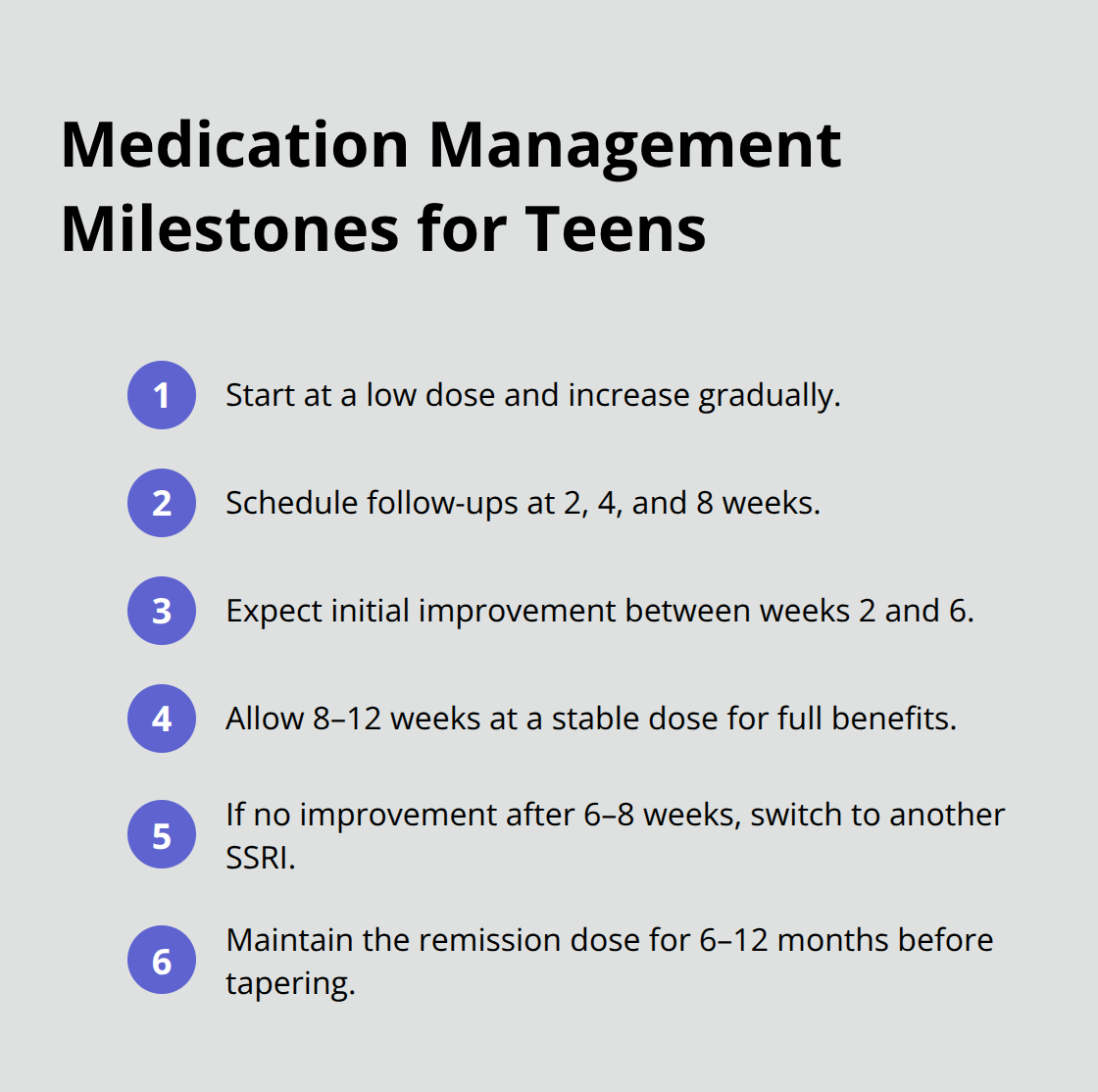
Improvement typically emerges gradually between weeks two and six once medication starts, with full benefits requiring eight to twelve weeks at a stable dose. Many parents expect dramatic change by week three and become discouraged, but research showed that meaningful symptom reduction on the Children’s Depression Rating Scale required eight to twelve weeks. Your role during this waiting period is documenting specific changes: Is your teen sleeping better? Attending school more consistently? Engaging with family activities? These functional improvements often appear before your teen reports feeling less sad.
After achieving full remission on an SSRI, continue that same therapeutic dose for at least six to twelve months before gradually tapering under medical supervision, because stopping too quickly significantly increases relapse risk. Your clinician will monitor your teen throughout this maintenance phase and guide the tapering process when the time comes.
Final Thoughts
Medication management for adolescent depression works best when you approach it as an ongoing partnership with your teen’s healthcare team rather than a one-time decision. The evidence shows that fluoxetine and escitalopram are FDA-approved options, but your teen’s specific situation-including comorbidities, family history, and how their brain responds to treatment-determines which medication actually makes sense. Starting at a low dose, increasing gradually, and waiting eight to twelve weeks for full effects requires patience, but rushing this process or abandoning medication too early based on early side effects costs your teen weeks or months of unnecessary suffering.
Your responsibility during treatment centers on three concrete actions. First, track what changes in your teen during the critical first four to eight weeks and report these observations at follow-up appointments rather than waiting for scheduled visits if concerns arise. Second, confirm that your teen takes medication consistently and discuss secure storage to reduce self-harm risk if suicidal thinking emerges. Third, combine medication with therapy and lifestyle changes rather than relying on pills alone, because research consistently shows this combination produces better outcomes than either approach independently.
Contact your teen’s doctor immediately if suicidal thoughts, increased agitation, or severe side effects appear during the first weeks of treatment. Schedule a medication adjustment conversation if your teen shows no improvement after six to eight weeks on a therapeutic dose, because switching to a different SSRI is standard practice and often effective. We at The Teen Center provide specialized, evidence-based care including medication management, individual and family therapy, and crisis support both in person and via telehealth, helping teens build the tools to work through depression and achieve emotional stability.