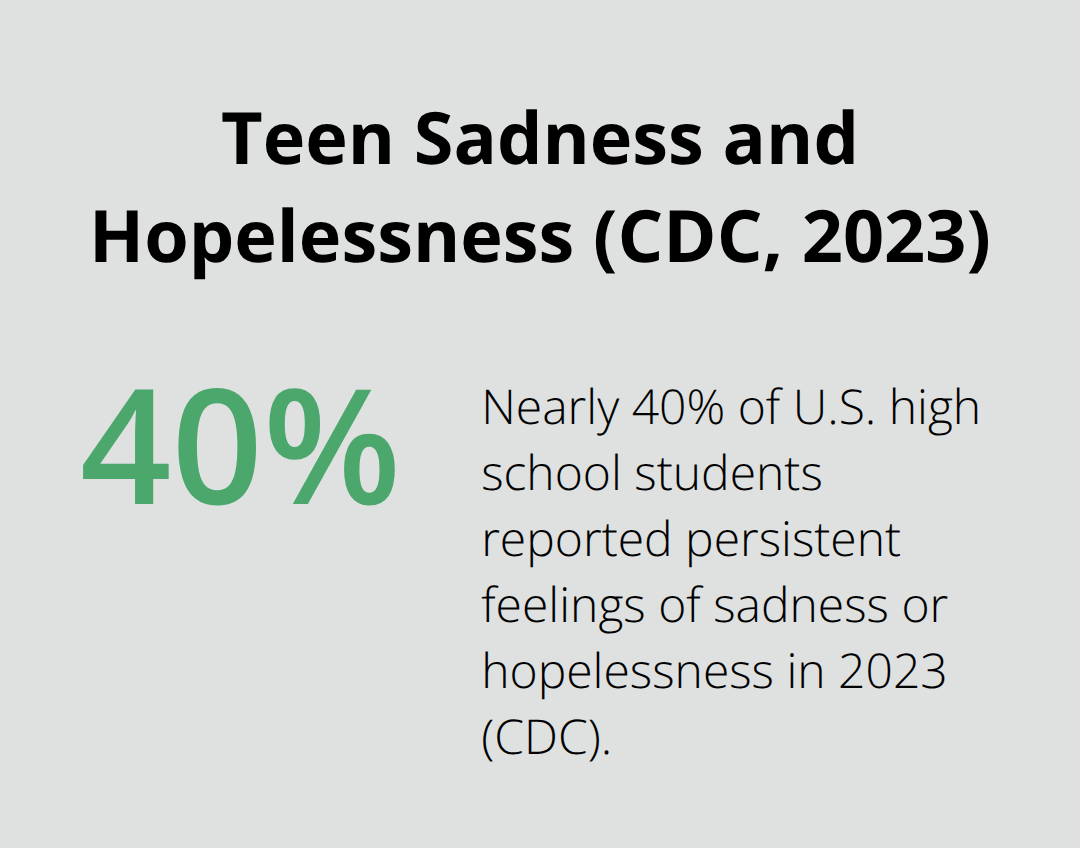
Teen mental health struggles are hitting harder than ever. According to the CDC, nearly 40% of high school students reported persistent feelings of sadness or hopelessness in 2023.
At The Teen Center, we know that parents are often the first line of defense. Spotting warning signs early and knowing how to respond can make a real difference in your teen’s wellbeing. This guide gives you the practical tools to support your teen and connect them with the right help when needed.
Warning Signs of Teen Mental Health Issues
Sleep Disruption and Appetite Changes Signal Internal Distress
Sleep disruption and appetite shifts are among the most concrete warning signs that something has shifted. A teen who suddenly sleeps 12 hours on weekends or cannot fall asleep until 3 a.m. sends a signal. Similarly, skipping meals, dramatic weight changes, or losing interest in foods they once loved often correlate with emerging mental health concerns. These are not character flaws or phases-they are physiological responses to internal distress. If you notice your teen’s sleep or eating patterns have noticeably changed over two weeks or more, that warrants attention.
Start by asking direct questions in a calm moment: What keeps you awake? Are you feeling less hungry? Listen without judgment.
Many parents miss these signs because they assume teens are just being moody or lazy, but consistent changes in basic functions like sleep and eating are red flags worth taking seriously.
Social Withdrawal Reveals Hidden Struggles
Withdrawal from friends and activities is often the most telling indicator that a teen struggles internally. A social teenager who suddenly stops attending soccer practice, cancels plans with friends, or spends entire weekends in their room communicates distress through behavior. This withdrawal frequently signals depression, anxiety, or both. A teen who once enjoyed group activities but now isolates themselves is experiencing something significant beneath the surface.
Behavioral changes often accompany this withdrawal. You may notice increased irritability, arguments over small things, excessive screen time, mood swings, or sudden shifts in how they dress or present themselves. Some teens mask deeper struggles with high achievement initially, so subtle declines in engagement or energy matter as much as obvious ones.
Academic Decline and Concentration Problems
Academic performance often declines when mental health struggles emerge-not always dramatically, but noticeably. A teen maintaining a B average who drops to Cs, or one who suddenly cannot focus on assignments despite having the ability, likely battles concentration issues tied to mental health. These changes in school performance reflect what happens internally when anxiety, depression, or other conditions take hold.
The most actionable step is to connect these observations into a pattern rather than viewing each one in isolation. If you notice your teen withdrawing socially, struggling academically, and showing mood changes simultaneously over several weeks, professional evaluation becomes important rather than optional. These interconnected warning signs point toward the need for support, which leads to understanding what kind of help actually works.
How Parents Can Start Conversations About Teen Mental Health
Timing and Setting Matter More Than You Think
Starting a conversation about mental health with your teen requires timing, directness, and a willingness to sit with discomfort. The worst time to talk is when emotions are already high or when your teen is busy, rushed, or defensive. Instead, choose moments that feel natural and low-pressure: during a car ride, while doing chores together, or during a quiet evening at home. These settings remove the intensity of face-to-face confrontation and give your teen space to open up without feeling cornered.
When you initiate the conversation, use specific observations rather than accusations. Instead of saying your teen seems depressed, say something like: I’ve noticed you’re staying up until 3 a.m. most nights and skipping meals. That concerns me.
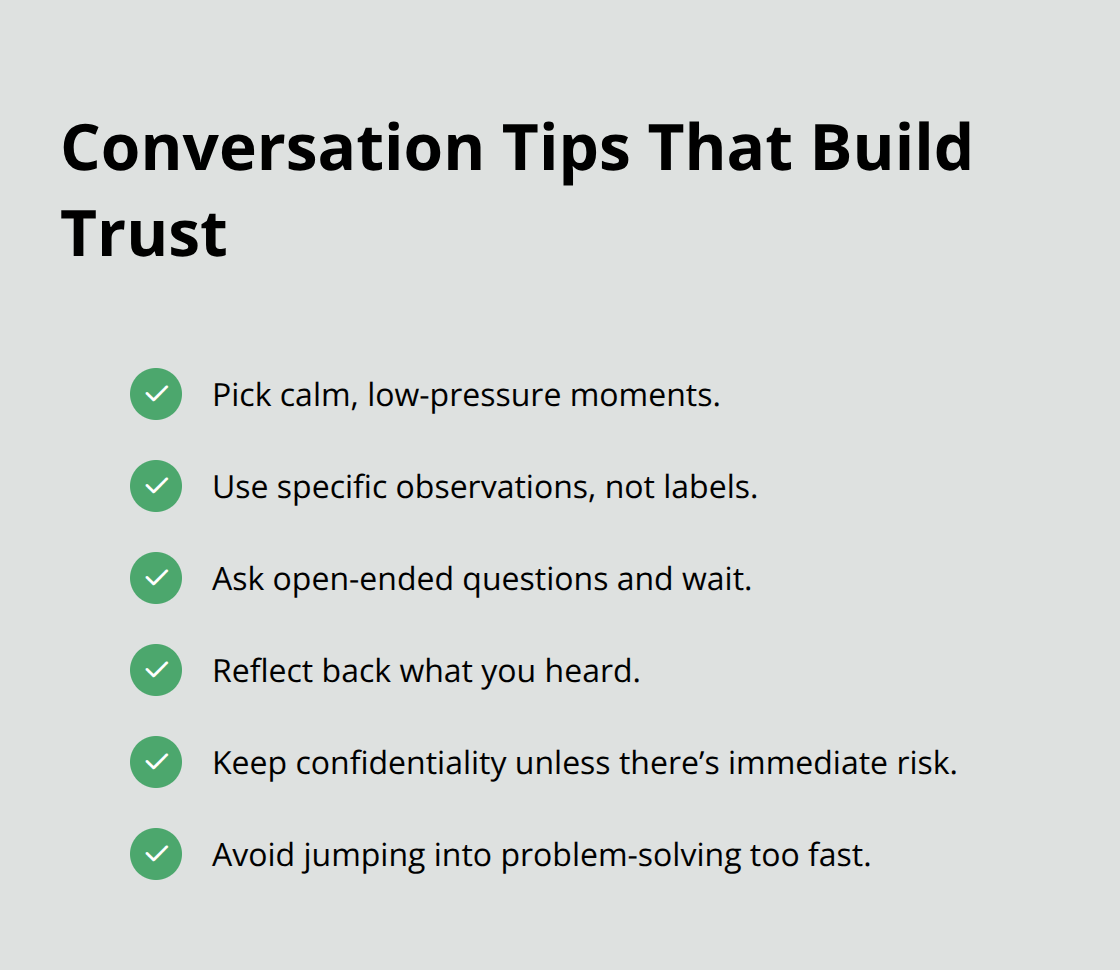
I want to understand what’s happening. This approach keeps the focus on behavior you’ve witnessed rather than on judgment or diagnosis, which teens often resist.
Listen Without Solving
Active listening means you listen fully without interrupting, planning your response, or minimizing what your teen shares. Many parents shift into problem-solving mode immediately, offering advice before their teen finishes speaking. This shuts down communication fast. Instead, ask open-ended questions: What do you think would help you feel better? What do you need from me right now? Then wait. Silence is uncomfortable, but it signals that you genuinely want to hear their answer.
If your teen resists talking or becomes defensive, that is normal and does not mean you’ve failed. Return to listening, restate what you’ve heard to show you understand, and offer to revisit the conversation later. Confidentiality matters enormously for maintaining trust, so commit to keeping what they share private unless there is immediate risk of self-harm or suicide.
Validate Feelings Without Judgment
When you learn something difficult, validate their feelings without agreeing or disagreeing with their thoughts. Saying something like that sounds really painful rather than you shouldn’t feel that way keeps the door open. Your teen needs to know that their experience is real and that you take it seriously, even if you don’t fully understand what they’re experiencing.
Move to Professional Support When Needed
If your teen mentions suicidal thoughts, self-harm, or severe symptoms, move directly to professional support. Call the 988 Suicide and Crisis Lifeline for guidance, contact your teen’s pediatrician, or reach out to a mental health provider immediately. Waiting for your teen to feel ready or hoping the issue resolves on its own creates unnecessary risk and delays treatment that actually works. Once you’ve identified that professional help is needed, the next step involves understanding what types of treatment exist and how to find the right fit for your teen’s specific situation.
Finding the Right Treatment for Your Teen
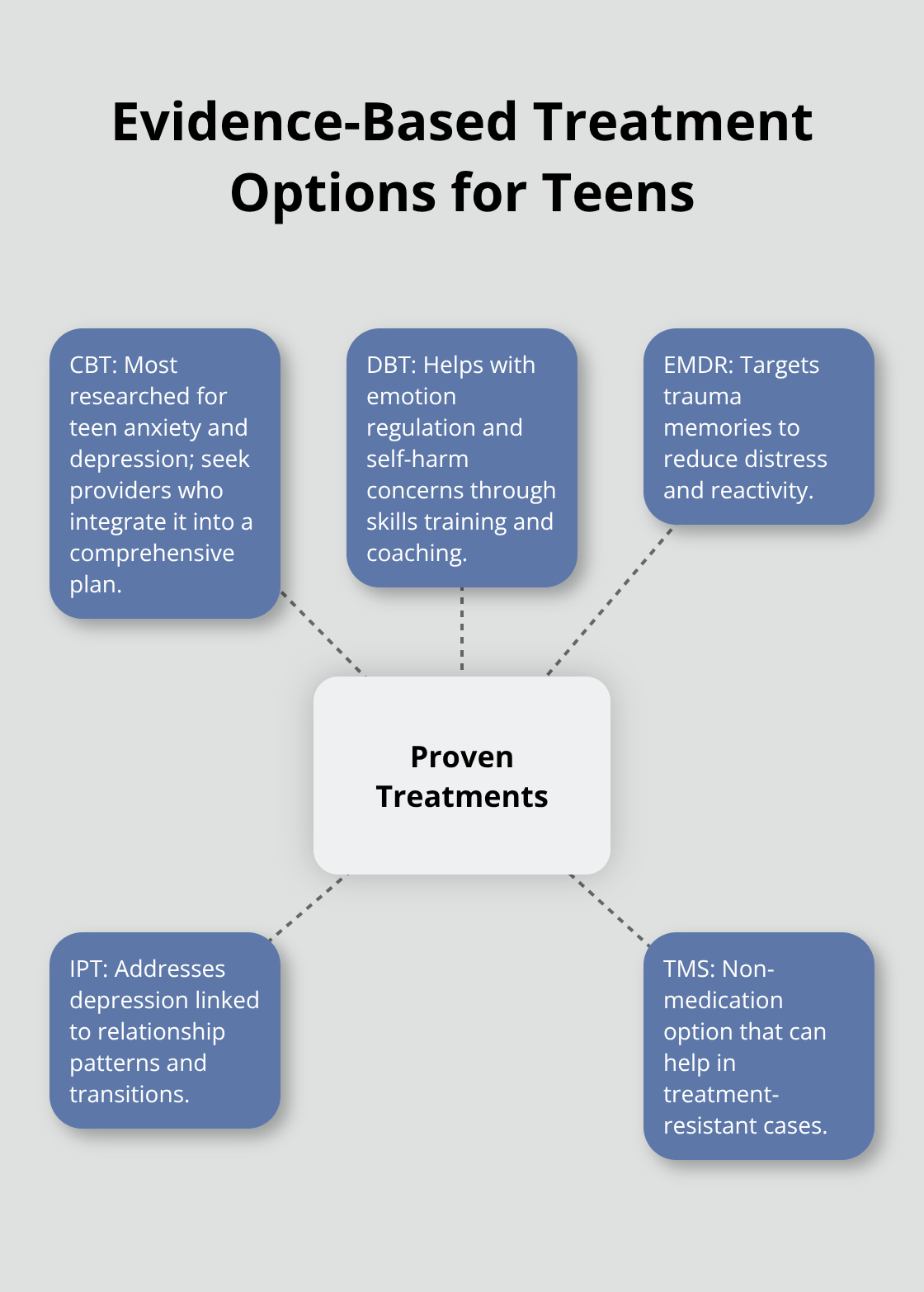
Once you’ve identified that your teen needs professional support, the next decision involves understanding what treatment options actually exist and which ones match your teen’s specific situation. Cognitive Behavioral Therapy (CBT) stands as the most researched and effective approach for teen anxiety and depression. However, CBT works best when paired with therapy rather than medication in isolation, so look for providers who offer both options. Other evidence-based therapies include Dialectical Behavior Therapy (DBT) for emotional regulation and self-harm concerns, Eye Movement Desensitization and Reprocessing (EMDR) for trauma processing, and Interpersonal Therapy (IPT) for relationship-based depression. If your teen has tried standard therapies without improvement, Transcranial Magnetic Stimulation (TMS) offers a non-medication option that shows effectiveness for treatment-resistant cases. When evaluating providers, ask directly what therapies they specialize in and whether they have specific experience treating your teen’s diagnosed condition rather than accepting vague answers about general mental health counseling.
Understanding Medication as Part of Treatment
If a provider recommends medication, understand that it works most effectively when combined with therapy, not as a standalone solution. Many parents worry medication will change their teen’s personality or create dependency, but SSRIs address neurotransmitter imbalances rather than altering who your teen is. The medication conversation should include specific timelines for seeing improvement (usually 4–6 weeks), potential side effects your teen might experience, and a plan for monitoring effectiveness. If your teen tries one medication and it doesn’t work, switching to another option is normal and expected rather than a sign of failure. Never accept a prescription without understanding why this particular medication was chosen for your teen’s specific symptoms and history.
Choosing Between Telehealth and In-Person Care
Telehealth removes transportation barriers and wait times that often delay care, making it practical for families in rural areas or with limited availability. However, some teens benefit from in-person sessions where a therapist can observe body language, manage crisis moments more directly, and build rapport in a physical space. Different teens and families have different needs, so start with what removes the biggest barrier to your family accessing care consistently. If transportation is the obstacle, telehealth works. If your teen responds better to in-person connection or needs more intensive support, in-person programs including Intensive Outpatient Programs (IOP) or Partial Hospitalization Programs (PHP) provide structured treatment with multiple sessions weekly. The worst choice is no treatment because you’re waiting for the perfect format. Start somewhere, then adjust based on how your teen actually responds.
Final Thoughts
Early action prevents escalation, and this parents guide to teen mental health rests on that single truth. A teen struggling with anxiety who receives CBT within weeks of recognizing symptoms has a dramatically different trajectory than one who waits months or years. Your role as a parent is not to diagnose or treat, but to notice, respond, and connect your teen with qualified professionals who can.
Building long-term wellness means staying attuned to your teen’s emotional and academic life, maintaining open communication even when conversations feel awkward, and treating mental health with the same seriousness you would a physical health concern. Family involvement strengthens treatment outcomes significantly, so when your teen enters therapy or begins medication, your participation matters. Ask what you can do to support their progress and show up consistently.
If you are ready to take the next step, visit The Teen Center to learn how we support your family’s journey toward lasting wellness. We offer individualized treatment plans that combine clinical expertise with family involvement to help your teen build resilience and achieve emotional and academic stability.