Teen anxiety isn’t something to ignore. It’s affecting more young people than ever, and the signs often go unnoticed until they become serious problems.
At The Teen Center, we’ve created this guide to help you spot anxiety early and take real action. Managing teen anxiety symptoms starts with understanding what you’re looking for, then knowing exactly what to do about it.
What Anxiety Actually Looks Like in Teens
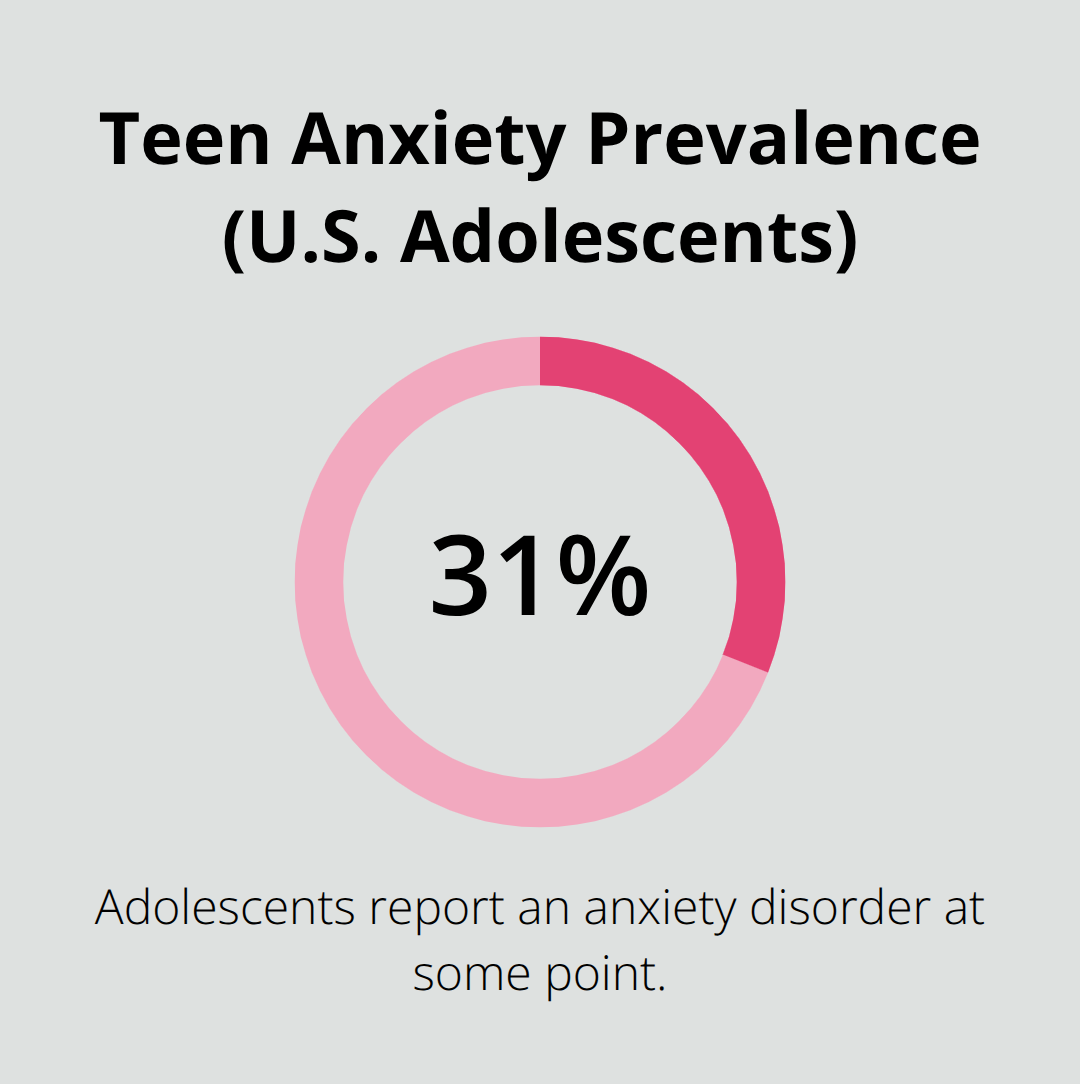
Anxiety in teens shows up differently than you might expect. An estimated 31.9% of adolescents experience an anxiety disorder-meaning nearly one in three teens in your home or classroom faces this challenge. The problem is that teens hide their true feelings well.
They won’t always tell you they’re anxious, and the signs aren’t always obvious. A teen might seem irritable or withdrawn when their body is actually in overdrive.
Physical Symptoms That Get Missed
Rapid heartbeat, sweating, muscle tension, stomachaches, and headaches are common physical responses to anxiety. These symptoms often get mistaken for something else entirely (a stomach bug, growing pains, or just a bad attitude). The Child Mind Institute notes that anxiety also shows up as trouble concentrating, sleep problems, and constant reassurance-seeking behavior. What makes this tricky is that anxiety in teens focuses on self-related worries: how peers perceive them, their academic performance, and body changes around puberty.
You might notice fidgeting, restlessness, or difficulty sitting still. A teen who was previously calm might become noticeably more irritable or snap at family members over minor things. Some develop muscle tension, particularly in the neck and shoulders. Others experience sleep disruption-either insomnia or sleeping far more than usual. School refusal is a major red flag. If your teen suddenly doesn’t want to go to school and shows signs of panic or extreme dread about attending, anxiety could be the underlying cause. Dr. Jerry Bubrick, PhD, notes that teens with school anxiety often fear panic in class, making mistakes, or looking foolish in front of peers. These fears feel real to them, even when objectively the risk is low.
When Anxiety Disrupts Daily Life
A teen experiencing anxiety might suddenly refuse to go to school, avoid social situations, or show a dramatic drop in grades. This isn’t laziness or lack of motivation-anxiety actively interferes with their ability to function. The real indicator that anxiety needs attention is when it interferes with daily functioning. A drop in grades, withdrawal from friends and activities, or persistent school refusal signals that anxiety has crossed from normal stress into something more serious.
Untreated anxiety contributes to depressive symptoms, and isolation worsens depression further. Heavy social media use is linked to higher risk of mental health problems among teens. Research from the Lancet Child & Adolescent Health shows that cyberbullying and disrupted sleep on social platforms directly worsen teen anxiety.
Why Early Recognition Matters
Early recognition makes all the difference. Catching anxiety early and taking action prevents it from cascading into more serious mental health issues and keeps teens engaged in school, relationships, and activities that matter to them. The next step is understanding why teen anxiety has become so widespread and what specific pressures drive it in today’s environment.
What’s Driving Teen Anxiety Right Now
Social Media Creates Constant Comparison
Social media has transformed from a distraction into a primary driver of teen mental health decline. Teens spending more than three hours daily on social platforms face significantly higher risks of anxiety and depression. The problem isn’t scrolling itself; it’s the constant comparison, cyberbullying, and sleep disruption that accompany it. A teen sees curated highlight reels of peers’ lives and measures their own worth against filtered versions of reality. When a post doesn’t get enough likes or a comment section turns hostile, anxiety spikes immediately. Research from the Lancet Child & Adolescent Health shows that cyberbullying and disrupted sleep patterns directly worsen anxiety symptoms. Teens can’t simply log off-their social lives happen online now. Missing group chats or not responding quickly enough creates real social consequences, making the pressure feel inescapable.
Academic Pressure Reaches Unrealistic Levels
Academic expectations have climbed to heights that harm teen mental health. Parents and schools push for straight A’s, perfect test scores, and resumes packed with extracurriculars before age sixteen. Dr. Jerry Bubrick, PhD, identifies perfectionism and pressure for academic excellence as key drivers of teen anxiety. A teen might understand logically that one B won’t derail their future, but the emotional weight of disappointing parents or falling behind peers feels catastrophic. This perfectionism often masks deeper anxiety-the teen isn’t just worried about grades; they’re terrified of being perceived as inadequate.
Peer Comparison Intensifies Self-Consciousness
Peer pressure amplifies academic stress significantly. Teens compare their academic standing, athletic abilities, and social status constantly. Early or late puberty, body changes, and physical development differences intensify self-consciousness and anxiety about how peers perceive them.
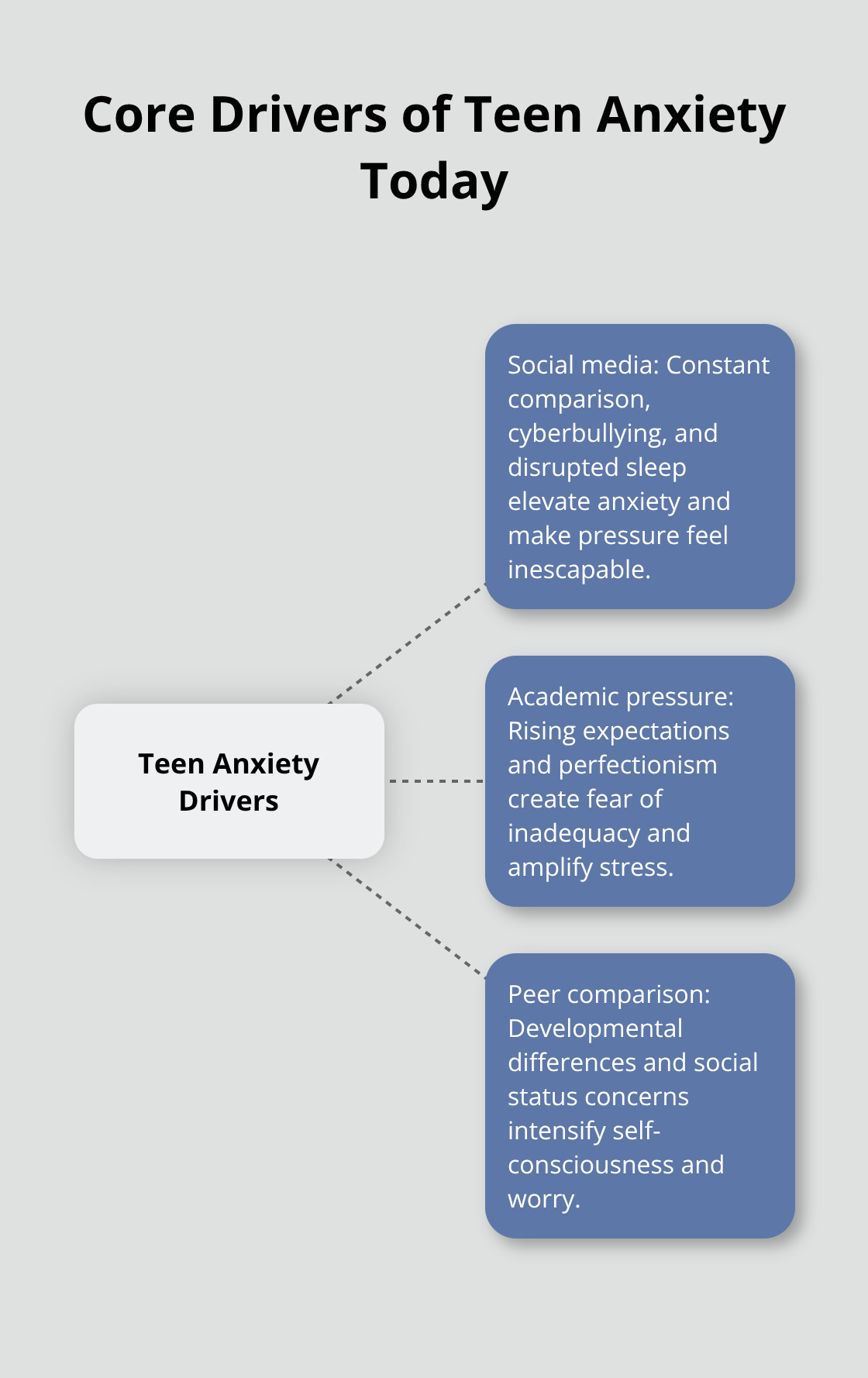
When a teen feels isolated or excluded, anxiety deepens and can progress into depression without intervention. The combination of social media pressure, academic intensity, and peer comparison creates a perfect storm where anxiety becomes the default emotional state rather than an occasional response to stress. Understanding these drivers is essential before moving forward with concrete strategies to manage and reduce anxiety symptoms.
How to Actually Treat Teen Anxiety
Cognitive Behavioral Therapy: The Gold Standard
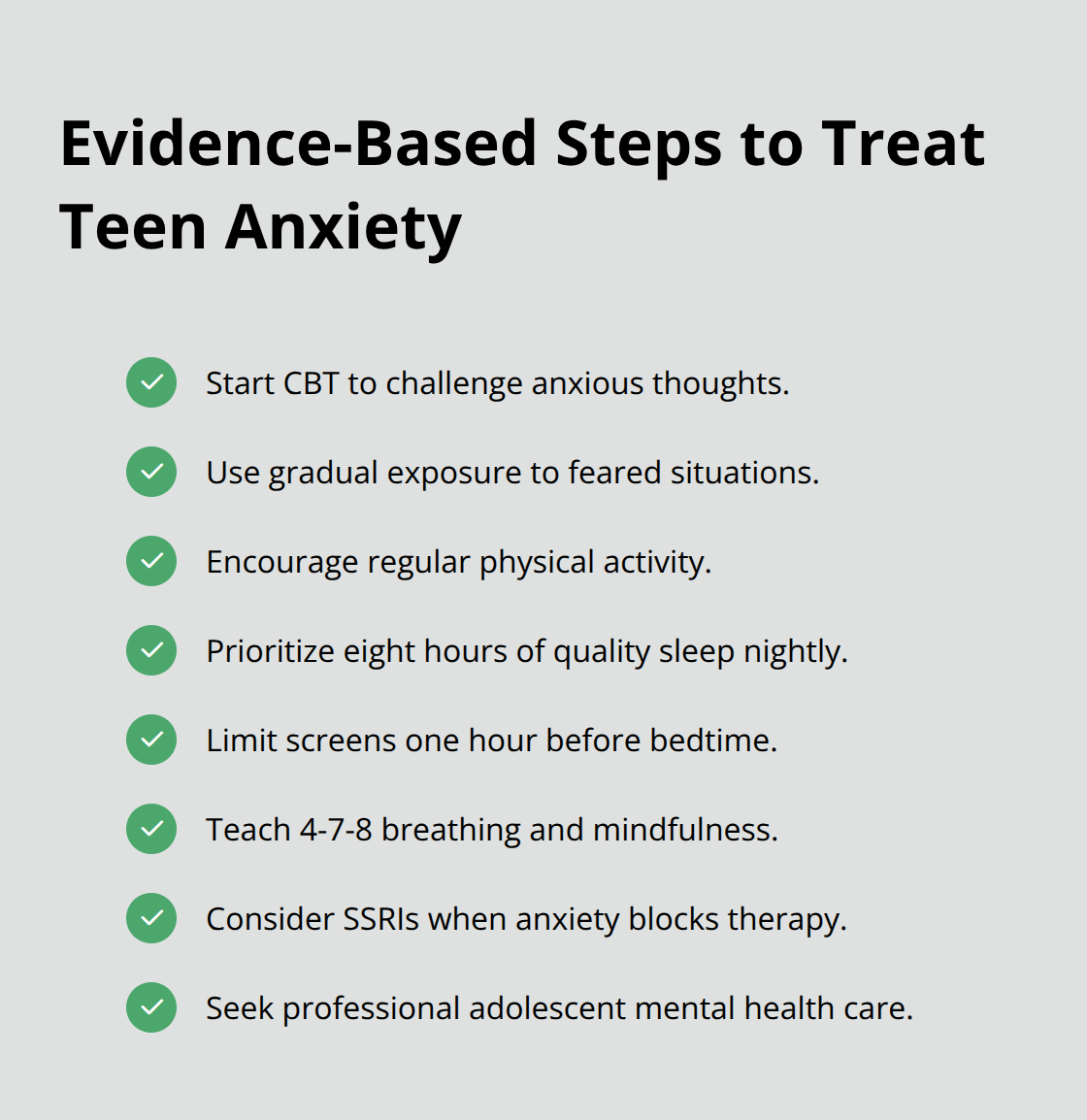
Cognitive behavioral therapy stands as the most effective treatment for teen anxiety, and the data backs this up. The Child Mind Institute confirms that CBT helps teens face anxiety directly and realize it often diminishes over time rather than spiraling. This isn’t about positive thinking or ignoring feelings-it’s about teaching your teen to recognize anxious thoughts, question whether they’re accurate, and respond differently. A teen might think: I’ll fail this test and everyone will judge me. CBT teaches them to examine that thought.
What evidence supports this? What evidence contradicts it? What would happen if the feared outcome actually occurred? This process rewires how the brain responds to anxiety triggers.
Exposure therapy, a core CBT technique, involves confronting feared situations instead of avoiding them. Start small-if your teen fears speaking in class, they might first practice speaking in front of you, then a trusted friend, then volunteer an answer once in class. Each small exposure proves that the feared outcome doesn’t happen, and anxiety naturally decreases. Research shows that teens who engage in exposure therapy experience measurable reductions in anxiety symptoms within weeks, not months.
Physical Activity and Sleep: Non-Negotiable Foundations
Lifestyle changes work alongside therapy because anxiety lives in both the mind and body. Physical activity matters tremendously-teens who exercise regularly show significantly lower anxiety levels than sedentary peers. Team sports provide double benefit: exercise plus social connection and belonging. Sleep affects anxiety more than most parents realize; a teen sleeping six hours instead of eight experiences amplified anxiety and worse emotional regulation. Establish a screen-free bedroom policy one hour before sleep, as blue light disrupts melatonin production and prevents quality rest.
Immediate Calming Techniques
Deep breathing techniques like the 4-7-8 method (inhale for four counts, hold for seven, exhale for eight) activate the parasympathetic nervous system and calm acute anxiety within minutes. Meditation and body scans teach teens to notice physical tension without judgment. Creative outlets-art, music, writing-provide nonverbal ways to process emotions when talking feels impossible.
When Medication Becomes Necessary
When anxiety becomes severe enough that your teen can’t engage in therapy effectively, SSRIs selective serotonin reuptake inhibitors like sertraline work as a medication option. These antidepressants don’t mask anxiety; they reduce the underlying neurological intensity so therapy can actually work. Dr. Jerry Bubrick notes that combining medication with CBT produces better long-term outcomes than either approach alone.
Professional Evaluation and Support
If your teen shows persistent anxiety lasting weeks, school refusal, or physical symptoms like chronic headaches, professional evaluation is essential. A psychiatrist or therapist trained in adolescent mental health can determine whether therapy alone suffices or medication is warranted. The Teen Center delivers specialized, evidence-based mental health care for adolescents, offering intensive outpatient programs, individual and family therapy, medication management, and crisis support both in person and via telehealth. Early professional intervention prevents anxiety from deepening into depression and keeps your teen functioning across school, relationships, and activities.
Final Thoughts
Managing teen anxiety symptoms requires action, not hope. You now understand what anxiety looks like, why it’s spreading, and what actually works. Recognize the signs early, implement evidence-based strategies, and seek professional help when needed.
For parents, stay alert to physical symptoms like stomachaches and sleep problems, emotional shifts like irritability, and behavioral changes like school refusal. Listen without judgment, validate your teen’s feelings, and model healthy stress management yourself. For teens, understanding that anxiety is treatable and that facing fears reduces them over time changes everything. Small exposures, consistent breathing techniques, regular exercise, and quality sleep form the foundation of recovery.
If your teen’s anxiety persists beyond a few weeks, interferes with school or social life, or shows signs of school refusal, professional evaluation is the next step. Cognitive behavioral therapy works. Medication, when appropriate, works. The combination works best. We at The Teen Center offer specialized, evidence-based mental health care for adolescents ages 12 to 17, with intensive outpatient programs, individual and family therapy, medication management, and crisis support both in person and via telehealth.