
Teen mental health struggles often go unresolved because treatment focuses only on the individual. When families aren’t involved and different providers don’t communicate, teens miss out on the support they actually need.
At The Teen Center, we’ve built our approach around integrated care for teens and families-bringing together therapy, family involvement, and school coordination into one unified plan. This isn’t just better in theory; it works because it addresses what’s really going on in a teen’s life.
Why Integrated Care Actually Works
Family Involvement Changes Treatment Outcomes
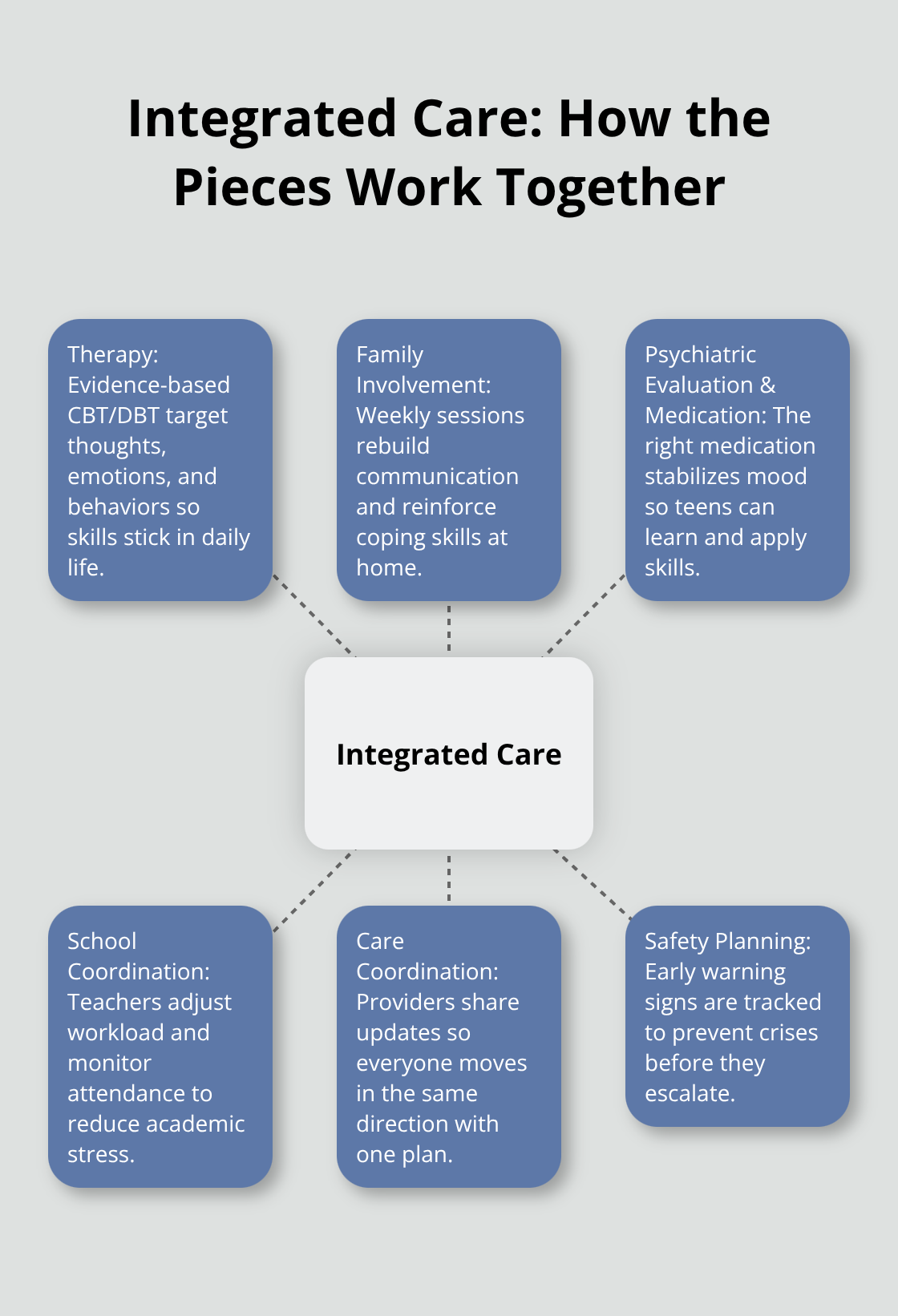
Family involvement in teen mental health treatment isn’t optional-it’s the difference between temporary relief and lasting change. When parents and guardians understand what happens in therapy and actively participate in treatment, teens are far more likely to stick with it and see real results. A landmark trial from Kaiser Permanente Washington found that teens receiving collaborative care, which included family coordination alongside medication management and therapy, were over twice as likely to achieve depression remission at one year compared to standard care. This matters because many teens struggle with depression and anxiety simultaneously, and when families aren’t informed about both conditions, they can’t recognize warning signs or reinforce coping skills at home.
When parents attend family therapy sessions and learn about their teen’s specific treatment plan, medication adherence improves dramatically and crisis situations decrease. Coordinated care between therapists, prescribers, and families eliminates the gaps that allow problems to worsen.
Coordinated Care Prevents Treatment Fragmentation
Too often, a therapist works on emotion regulation skills while a psychiatrist manages medication separately, and parents have no idea what either provider does. This fragmentation means a teen might struggle with a medication side effect for weeks without telling anyone, or they might learn a coping skill in therapy but never practice it because nobody at home knows it exists. When providers communicate directly with each other and with the family, everyone moves in the same direction.
Addressing Root Causes Stops the Downward Spiral
What actually drives a teen’s behavior matters far more than simply treating the symptoms they show. Many teens develop anxiety or depression because of specific problems-academic pressure, social conflict, family stress, trauma-and medication alone won’t resolve these root issues. Evidence-based therapies like cognitive behavioral therapy help teens identify the thoughts and situations fueling their distress, while family therapy addresses communication breakdowns and relationship patterns that contribute to mental health struggles. When a teen learns to manage negative thoughts in therapy, attends family sessions where everyone practices better communication, takes medication that stabilizes their mood, and has parents who understand and support the whole plan, change happens.
School coordination adds another critical layer because academic stress often triggers or worsens depression and anxiety. When providers coordinate with teachers and school counselors, they can adjust academic expectations during intensive treatment phases, monitor attendance patterns that signal declining mental health, and prevent the teen from falling further behind academically while focusing on recovery. This unified approach interrupts the common pattern where a struggling teen falls further behind in school, which then increases anxiety and depression, creating a downward spiral that integrated care stops from the start.
Understanding how integrated care works sets the foundation for what effective treatment actually looks like in practice.
How We Deliver Integrated Care
Individualized Treatment Plans Match Each Teen’s Actual Needs
Each teen arrives with a completely different set of circumstances. One struggles with depression triggered by social rejection and academic pressure, while another battles anxiety rooted in family conflict and perfectionism. Generic treatment plans fail because they ignore these differences. Comprehensive psychiatric evaluation identifies not just diagnosis but the specific triggers, strengths, and environmental factors affecting each teen. Within the first two weeks, a teen and their family meet with their core treatment team-psychiatrist, therapist, and care coordinator-to establish clear goals. The psychiatrist determines whether medication is appropriate and which class might work best based on the teen’s specific symptoms and medical history. The therapist selects evidence-based approaches like cognitive behavioral therapy or dialectical behavior therapy depending on whether the teen struggles primarily with thought patterns, emotion regulation, or relationship skills. This isn’t a one-size-fits-all process; it’s a deliberate matching of treatment modality to the individual’s actual needs. Assessment of academic functioning from day one reveals how severe mental health struggles have become and where intervention is most urgent.

Family Therapy Sessions Rebuild Communication and Safety
Family therapy sessions happen weekly during intensive phases because communication breakdowns between parents and teens fuel most relationship-based mental health issues. When a parent doesn’t understand why their teen withdrew socially or started isolating, they often respond with criticism or pressure that worsens the teen’s depression. In family sessions, therapists teach specific communication techniques-how to ask about feelings without judgment, how to listen without immediately offering solutions, how to set boundaries that feel safe rather than punitive. Parents learn to recognize early warning signs their teen might be declining so they can alert providers before a crisis develops. This direct instruction in communication skills transforms how families interact during the most vulnerable moments of treatment.
School Coordination Prevents Academic Collapse During Recovery
Providers coordinate directly with schools by requesting permission to speak with guidance counselors and teachers about the teen’s treatment plan. This allows educators to adjust expectations during intensive treatment phases and monitor attendance patterns that signal mental health deterioration. Three-way coordination between home, clinic, and school prevents the isolation that typically deepens teen mental health struggles. When a teen focuses on recovery without falling catastrophically behind academically, they maintain hope and momentum toward stability.
The specific therapies and medication strategies that support these coordinated efforts determine whether a teen actually moves forward or simply goes through the motions of treatment.
Real-World Impact of Unified Mental Health Support
Teens Stabilize Faster When Treatment Addresses All Sides of Their Struggle
Integrated care produces measurable shifts in how teens function because it targets the actual sources of their struggle rather than isolated symptoms. When a teen receives coordinated psychiatric evaluation, evidence-based therapy, family involvement, and academic support simultaneously, their brain chemistry stabilizes faster and their behavior changes stick. Research demonstrates that integrated care approaches produce greater reductions in depressive symptoms compared to standard treatment within the initial months of care. This isn’t marginal improvement-it’s the difference between a teen who feels hopeless and one who can envision a future.
Coping Skills Take Root When Medication and Therapy Work Together
Teens in integrated programs develop concrete coping skills because therapists teach specific techniques while psychiatrists ensure medication supports the brain’s ability to learn and apply those skills. When cognitive behavioral therapy targets negative thought patterns and a teen’s mood stabilizes through medication, they can actually practice the skills they learn instead of being too depressed or anxious to try. Family members simultaneously learn to recognize the early warning signs of relapse, which means a small dip in mood receives attention within days rather than spiraling into crisis. Schools see attendance improve because academic pressure no longer compounds mental health struggles when providers coordinate with teachers to adjust expectations during intensive treatment phases.
Academic Performance and Family Relationships Shift Together
Teens who receive integrated care show fewer school absences because they no longer use school avoidance as a symptom of untreated anxiety or depression. Their grades typically rebound within two to three months of starting coordinated treatment because they can concentrate again and don’t fall catastrophically behind while managing their mental health. Parents report substantial shifts in communication patterns after weekly family therapy sessions teach them to listen without judgment and set boundaries that feel safe rather than punitive. These changes compound over time: a teen who maintains consistent school attendance while developing emotion regulation skills builds genuine confidence, which reduces the anxiety that originally triggered their mental health crisis.
Crisis Cycles Break When Care Stays Coordinated
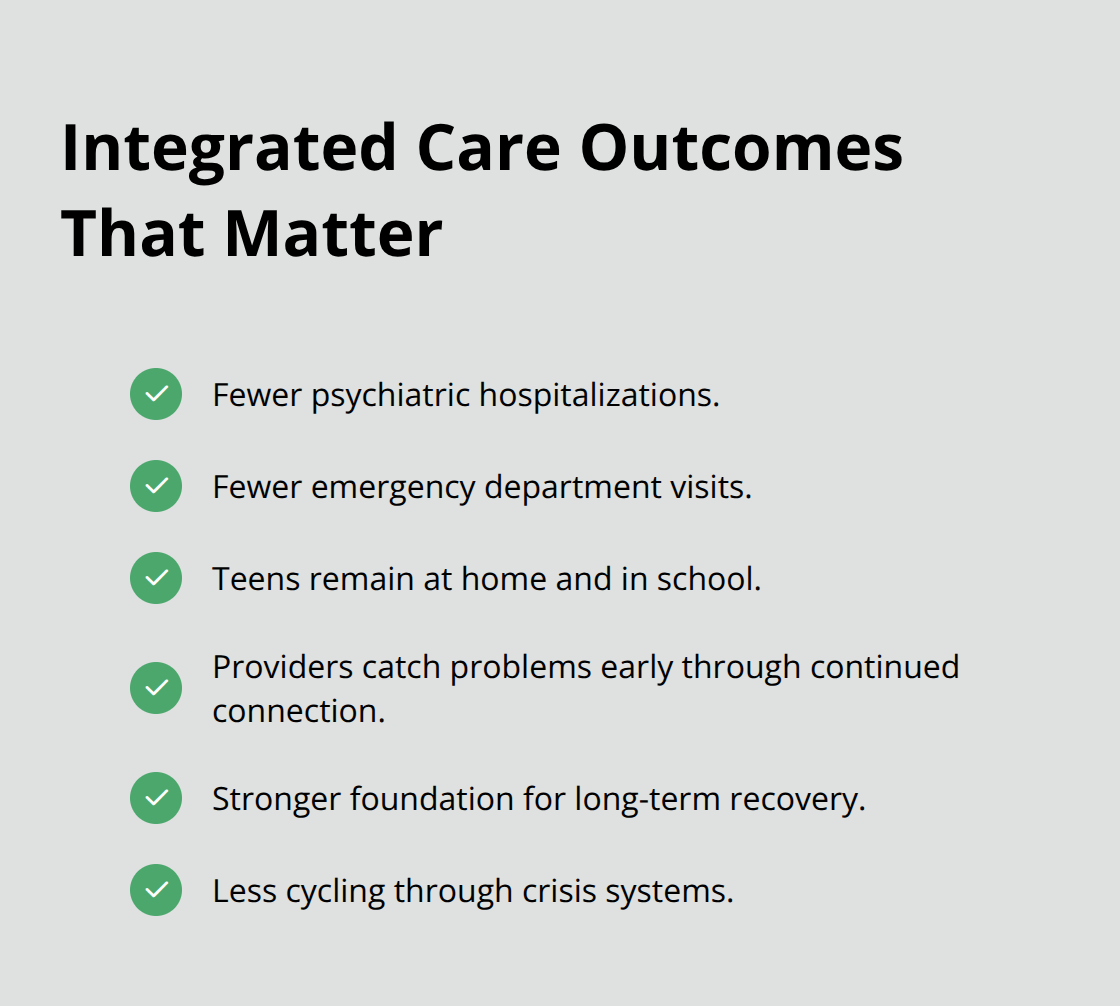
The research on collaborative care models shows that integrated treatment reduces psychiatric hospitalizations and emergency department visits, which means teens stay in their homes and schools rather than cycling through crisis systems. When you combine stabilized mood, working relationships with family members, consistent school engagement, and concrete coping skills, you create the foundation for long-term recovery that lasts years beyond the initial treatment phase. Teens who move through integrated care maintain the progress they make because they’ve learned skills that work, families understand how to support them, and providers remain connected to catch problems early.
Final Thoughts
Integrated care for teens and families works because it treats the whole person, not just isolated symptoms. When psychiatrists, therapists, families, and schools move in the same direction, teens stabilize faster, develop skills that actually stick, and break the crisis cycles that derail their futures. The research is clear: teens receiving coordinated treatment achieve depression remission at twice the rate of those in standard care, maintain better school attendance, and experience lasting improvements in family relationships that support recovery long after treatment ends.
The foundation for lasting change requires psychiatrists, therapists, families, and schools to work together, with providers communicating directly with each other and parents understanding what their teen learns in therapy. Schools adjust expectations so academic pressure does not compound mental health struggles during recovery, and families practice the skills their teen develops in treatment at home. This is what integrated care for teens and families actually means in practice.
Starting integrated care today means your teen does not navigate mental health treatment fragmented across multiple providers who do not talk to each other, your family learns concrete skills to support recovery at home, and your teen stays connected to school and friends instead of isolating during vulnerable moments. We at The Teen Center deliver specialized, evidence-based mental health care for adolescents ages 12 through 17, combining individualized treatment plans, family involvement, and statewide telehealth access to help teens build resilience and achieve emotional and academic stability. Contact us today to learn how integrated treatment coordinated across all these elements creates the stronger foundation that leads to better long-term outcomes.