Mood disorders affect roughly 15% of teenagers, yet many go undiagnosed and untreated. At The Teen Center, we know that adolescent mood disorder care starts with understanding what’s happening and why early action matters.
This guide walks you through the foundations of teen mental health-from recognizing the signs to building lasting stability. You’ll learn what treatments actually work and how to support recovery at home and school.
What Teen Mood Disorders Actually Look Like
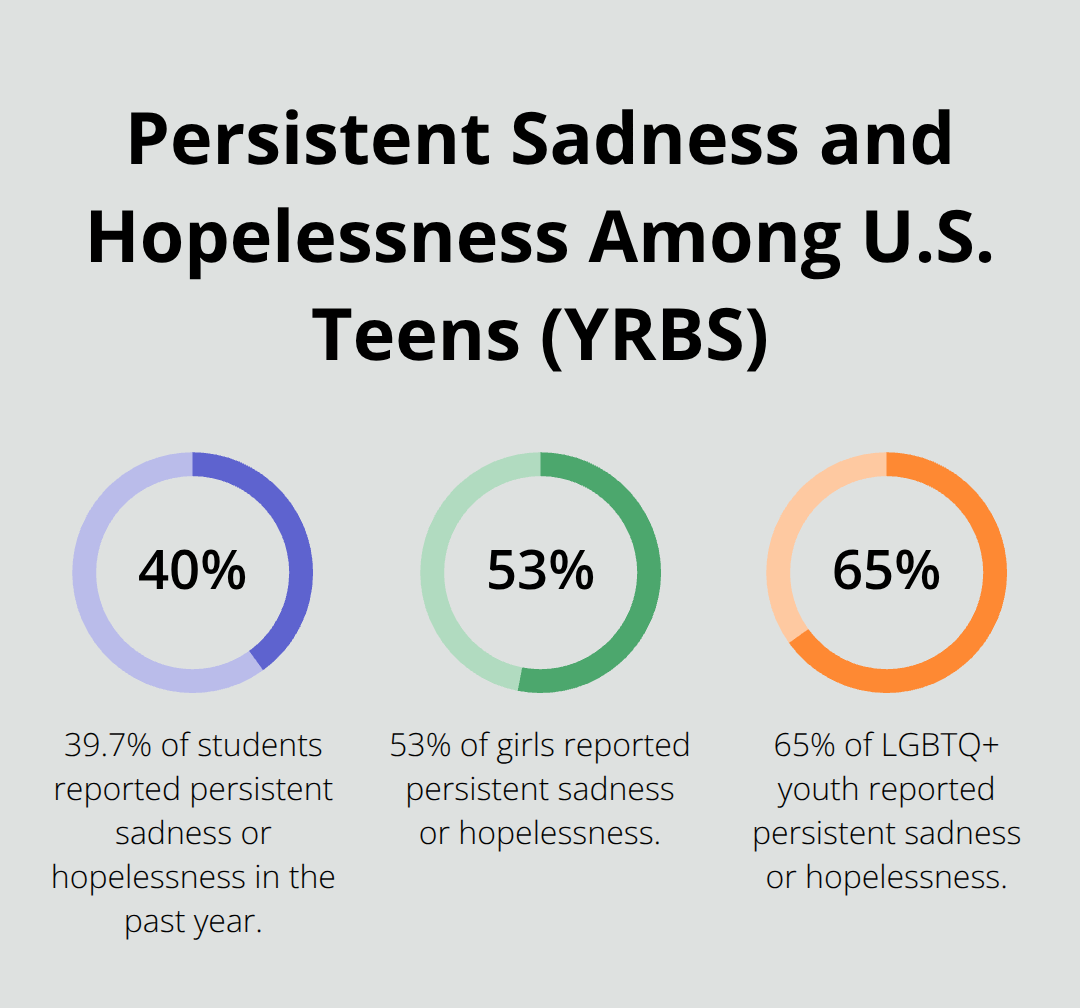
Adolescent mood disorders are not bad moods that pass in a few days. According to the National Survey of Children’s Health, adolescents experience mental, emotional, developmental, or behavioral problems. Among these, 18% had at least one major depressive episode in the past year. The Youth Risk Behavior Survey found that 39.7% of students experienced persistent sadness or hopelessness, with rates climbing to 53% for girls and 65% for LGBTQ+ youth. These numbers reveal a crisis that extends far beyond statistics: real teens struggle with mood conditions that fundamentally alter how they think, feel, and function.
The Most Common Mood Disorders in Teens
Major depressive disorder, persistent depressive disorder (dysthymia), bipolar disorder, and disruptive mood dysregulation disorder affect teenagers most frequently. Girls are at least twice as likely as boys to develop depression, while bipolar disorder occurs with similar frequency across genders. Neurotransmitter imbalances, genetic predisposition, and environmental stressors combine to create mood disorders. A teen with a family history of depression faces higher risk, especially when combined with significant life stress such as parental job loss, divorce, or peer conflict.
Why Mood Disorders Look Different in Teens
Adolescent mood disorders present differently than adult depression, which makes them particularly dangerous. A teen with major depression might show intense irritability rather than sadness, causing parents and teachers to miss the warning signs entirely. Sleep disruption, appetite changes, loss of interest in activities once enjoyed, difficulty concentrating, and persistent fatigue are red flags that demand attention. High-achieving teens sometimes mask their struggles with irritability or perfectionism, making the underlying mood disorder invisible to adults who assume stress is normal for successful students.
The Impact on School Performance
Mood disorders destroy academic performance with alarming speed. When a teen experiences depression or another mood condition, concentration becomes nearly impossible, homework feels insurmountable, and attending school feels pointless. Grades plummet not because a teen lacks ability but because the disorder has compromised their capacity to engage. Teachers often attribute poor performance to laziness or lack of motivation, when in fact a treatable medical condition is responsible.
The Damage to Relationships and Safety
The damage extends into friendships and family relationships. A teen in the grip of a mood disorder withdraws from peers, cancels plans repeatedly, and may lash out at family members without understanding why. This isolation deepens the disorder itself, creating a vicious cycle where social withdrawal worsens depression and depression intensifies isolation. The stakes are high: 20.4% of U.S. high school students seriously considered attempting suicide according to the Youth Risk Behavior Survey. These numbers demand immediate recognition and treatment.
Early intervention genuinely changes outcomes. When a teen receives proper evaluation and treatment quickly, symptoms reduce significantly, episodes become less frequent, and the teen regains the ability to function at home, in school, and with peers. Understanding what mood disorders look like in your teen is the first step toward connecting them with the right care-and that’s where evidence-based treatment approaches make all the difference.
Evidence-Based Treatment Approaches for Teen Mental Health
Individual Therapy That Actually Changes Outcomes
Treating adolescent mood disorders requires moving past generic talk therapy and into evidence-based interventions tailored to each teen’s specific condition. Cognitive Behavioral Therapy for adolescent depression and anxiety stands as the gold standard for teen depression and anxiety. Research shows CBT directly targets the distorted thinking patterns that fuel mood disorders, teaching teens to recognize when their brain is lying to them and to replace catastrophic thoughts with realistic ones. A teen convinced they’re worthless learns to examine the actual evidence and challenge that belief systematically.
Dialectical Behavior Therapy for emotional dysregulation and suicidal ideation in adolescents works differently and proves especially effective for teens with emotional dysregulation and suicidal thoughts. DBT combines individual therapy with skills training in distress tolerance, emotion regulation, mindfulness, and interpersonal effectiveness. Teens practicing DBT learn concrete techniques they can deploy immediately when emotions feel unmanageable. Internal Family Systems therapy takes another approach, helping teens understand that different parts of their psyche have different needs and that internal conflict drives suffering.
The specific therapy matters less than finding a qualified therapist trained in evidence-based methods who understands adolescent development. Many teens improve significantly within 12 to 16 weeks when matched with the right therapeutic approach and a clinician who actively monitors progress and adjusts strategy when needed.
Family Involvement as a Treatment Essential
Family involvement in treatment separates successful outcomes from prolonged struggle. Parents who participate in therapy sessions learn to recognize warning signs earlier, avoid accidentally reinforcing avoidance behaviors, and provide the structure teens need while respecting growing independence. When families engage actively in the treatment process, teens internalize new skills faster and apply them more consistently across different settings.
Medication Management That Requires Precision
Medication management demands equal precision and commitment. SSRIs like fluoxetine, sertraline, and escitalopram address the neurotransmitter imbalances driving many mood disorders, but they work best when combined with therapy rather than prescribed alone. Starting an SSRI requires patience: teens typically need 4 to 6 weeks to feel meaningful improvement, and dosage adjustments may follow. A psychiatrist or psychiatric nurse practitioner must monitor side effects closely and schedule regular follow-up appointments.
The medication itself doesn’t fix the problem; it stabilizes brain chemistry enough that therapy can work effectively. Without therapy, medication alone leaves the underlying patterns untouched.
When Residential Treatment Becomes Necessary
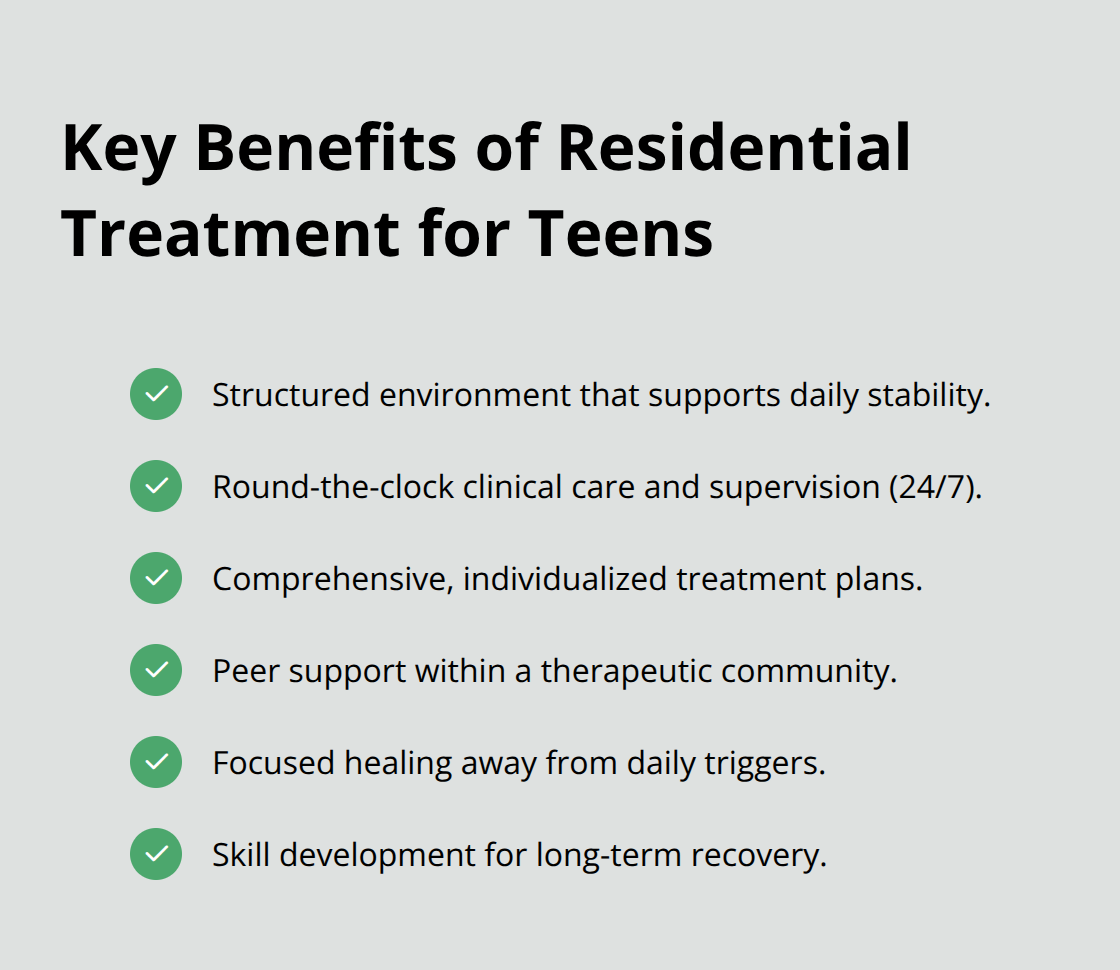
Residential treatment becomes necessary when a teen poses immediate danger to themselves, shows severe functional decline across multiple settings, or fails to improve through outpatient care. Residential programs provide 24/7 clinical oversight, structured daily routines, peer community, and intensive therapy in an environment designed specifically for healing. These programs offer six key benefits: a structured environment, round-the-clock care, comprehensive individualized plans, peer support, focused healing, and skill development.
Coordinating Care Across School and Crisis Support
School coordination matters throughout any treatment approach. A teen receiving therapy and medication while attending a school that doesn’t understand their diagnosis will struggle to apply new skills and may relapse. Connecting with school counselors, requesting formal accommodations through a 504 plan or Individualized Education Plan, and ensuring teachers understand the teen’s condition creates consistency between clinical work and daily life. The 988 Suicide and Crisis Lifeline provides immediate support when crisis strikes, offering trained counselors available 24/7 who can de-escalate acute distress and connect families to emergency resources. When a teen receives proper evaluation and treatment quickly, symptoms reduce significantly, episodes become less frequent, and the teen regains the ability to function at home, in school, and with peers. The next step involves building the specific coping skills and support systems that allow teens to maintain progress long-term and navigate future challenges with confidence.
Building Resilience Through Concrete Skills and Support Systems
Developing Emotional Regulation Skills That Work
Therapy and medication create the foundation, but lasting recovery depends on teens developing concrete skills they can deploy when emotions spike or old patterns resurface. The gap between understanding a problem and actually changing behavior is where most teens struggle, which is why deliberate skill-building matters more than insight alone. Emotional regulation-the ability to recognize an emotion rising and intervene before it overwhelms decision-making-separates teens who relapse from those who maintain progress.
DBT skills like the TIPP technique (Temperature, Intense exercise, Paced breathing, Paired muscle relaxation) help prevent impulsive or harmful behaviors and are used as a first-line intervention during times of crisis or extreme distress. A teen practices these skills repeatedly in therapy, then applies them at home when frustration builds. Progressive muscle relaxation, where a teen systematically tenses and releases muscle groups, physically interrupts the stress response and creates measurable calm within minutes.
Mindfulness-based cognitive therapy teaches teens to notice thoughts and feelings without believing them or acting on them-a critical skill for anyone prone to catastrophic thinking or emotional spirals. The specificity matters: vague advice to manage stress fails consistently, while teaching a teen exactly which breathing pattern calms their nervous system or which physical activity reliably improves mood creates actionable change.
Finding the Right Outlets for Each Teen
Journaling works for some teens because writing forces the brain to organize chaotic emotions into words, revealing patterns invisible in thought alone. Others need creative outlets like art or music because their brain processes emotion through creation rather than language. Identifying which specific strategies actually work for each individual teen, then drilling those strategies until they become automatic, transforms treatment from clinical intervention into lived capability.
Strengthening Family Involvement in Recovery
Support systems determine whether skills stick or fade once therapy ends. A teen with a parent who actively participates in treatment sessions-learning the same skills, understanding the teen’s triggers, and modeling emotional regulation-internalizes change far faster than a teen whose family remains uninvolved. When a parent recognizes early warning signs like sleep disruption or social withdrawal and intervenes calmly rather than with alarm, the teen feels supported rather than judged.
Coordinating Care Across School Settings
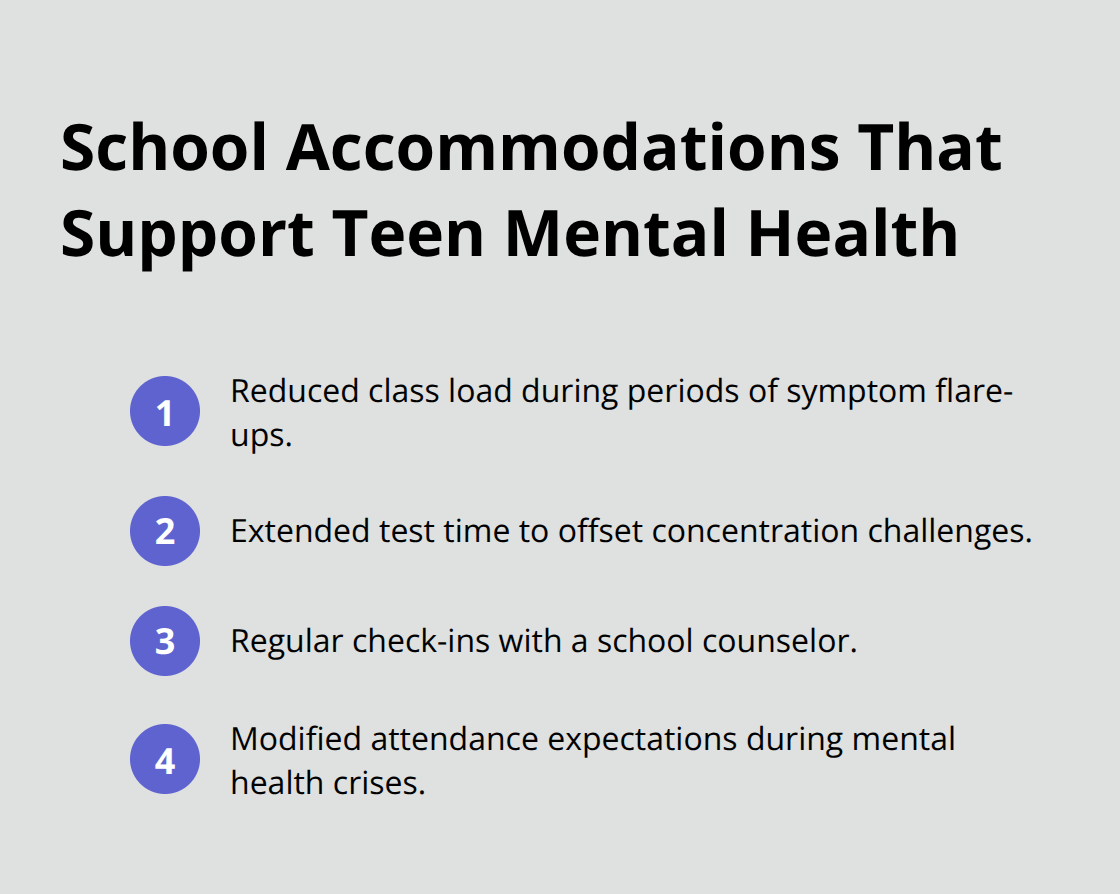
School coordination amplifies support dramatically: a teen receiving therapy on Tuesday afternoon then returning to a school environment that understands their diagnosis, provides appropriate accommodations, and doesn’t trigger the same stressors that fueled the mood disorder experiences consistency that accelerates healing. A 504 plan or IEP ensures the school provides documented support-reduced class load, extended test time, check-ins with a counselor, or modified attendance expectations when mental health crises occur. Without school coordination, a teen manages their mood disorder in isolation during the hours they spend in the environment causing the most stress.
Measuring Progress With Actual Data
Progress tracking through structured measurement-not just subjective feeling but actual data-reveals whether current treatment works or needs adjustment. A psychiatrist who checks in monthly but never measures baseline symptoms, tracks mood ratings, or monitors functional improvement is guessing rather than managing. A teen and parent who rate mood, sleep quality, and social engagement on a simple scale weekly can show a clinician exactly what’s working and what isn’t, enabling faster treatment adjustments rather than waiting months to realize a medication isn’t helping or a therapy approach has plateaued.
Final Thoughts
Adolescent mood disorder care works when families, schools, and clinicians act quickly and collaborate effectively. Early intervention reduces symptom severity, prevents episodes from worsening, and allows teens to reclaim their academic performance, friendships, and sense of purpose. Waiting for a teen to outgrow depression or hoping anxiety resolves on its own costs months or years of unnecessary suffering and functional decline.
The path forward starts with recognizing that mood disorders are medical conditions requiring professional evaluation, not character flaws or phases. A teen showing persistent sadness, irritability, sleep disruption, or withdrawal needs assessment by a mental health professional, not reassurance that everything will be fine. Once diagnosis happens, evidence-based treatment combining therapy and medication when appropriate, family involvement, school coordination, and concrete skill-building creates the conditions for lasting recovery.
Your teen doesn’t have to navigate this alone, and neither do you. We at The Teen Center deliver specialized, evidence-based mental health care for adolescents ages 12 through 17, offering intensive outpatient programs, individual and family therapy, medication management, and crisis support both in person and via telehealth. The foundation for lasting teen health exists right now-it requires recognizing the problem, seeking professional help immediately, and committing to the treatment process even when progress feels slow.