
Getting your teen to mental health appointments shouldn’t feel like solving a puzzle. Between school, sports, and social commitments, finding time for care is genuinely hard for most families.
At The Teen Center, we’ve seen how telehealth scheduling for teens removes real obstacles that keep families from getting support. When appointments fit into your life instead of disrupting it, teens actually show up and get the help they need.
Why Telehealth Scheduling Removes Real Barriers to Teen Mental Health
Transportation Stops Being the Problem
Transportation is one of the biggest reasons families skip mental health appointments. Transportation as a major obstacle to accessing care affects a significant portion of the population, according to research on healthcare barriers. When your teen needs an appointment, you’re not just scheduling the visit itself-you’re carving out 30 to 90 minutes for commuting, often during work hours or school time. Telehealth eliminates that entirely. Your teen logs in from home, and the appointment happens without anyone leaving the house.
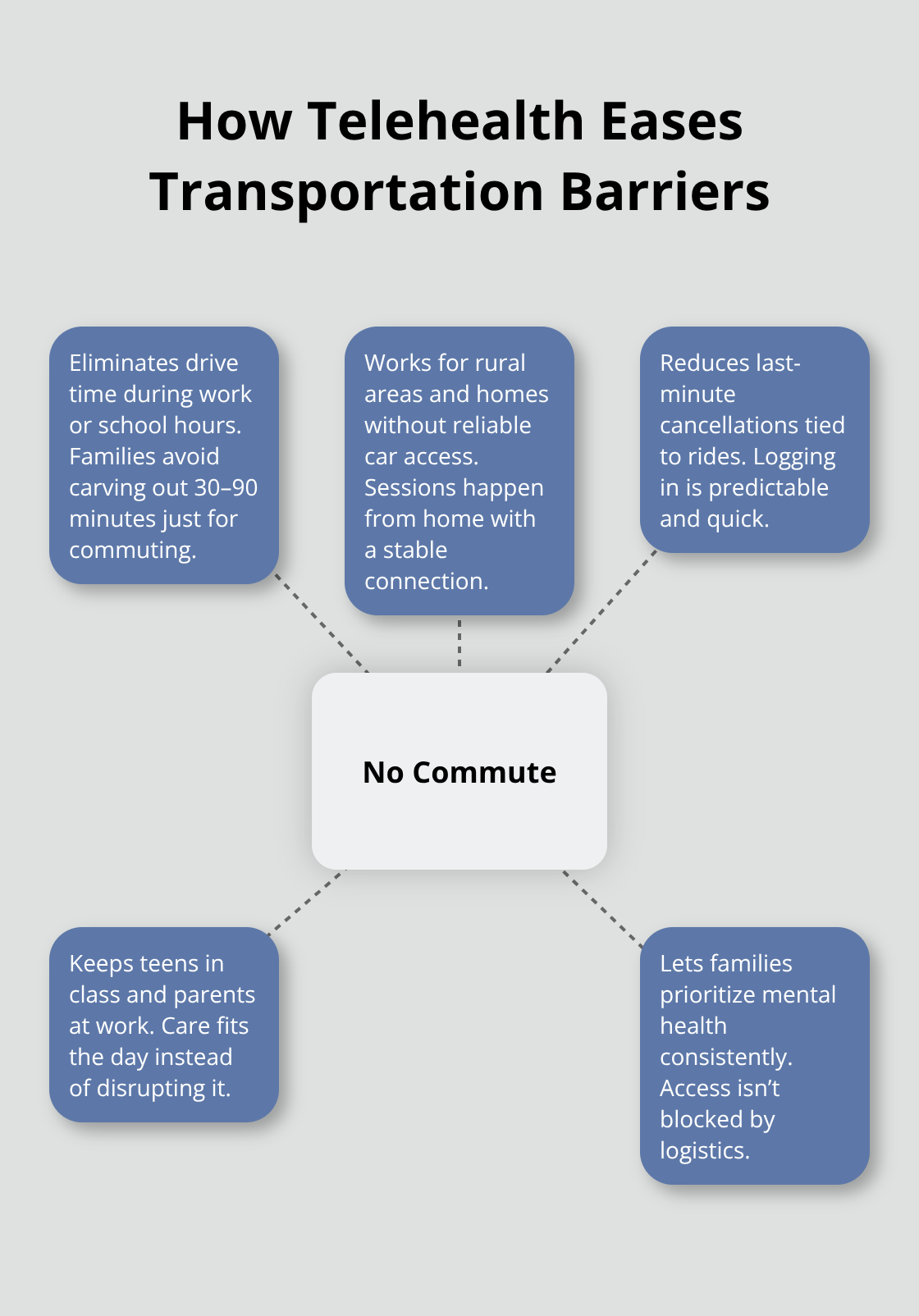
For families in rural areas or those without reliable car access, this changes everything. The virtual format means you can prioritize mental health care without sacrificing work schedules or pulling your teen out of class.
Mental Health Fits Into Real Schedules
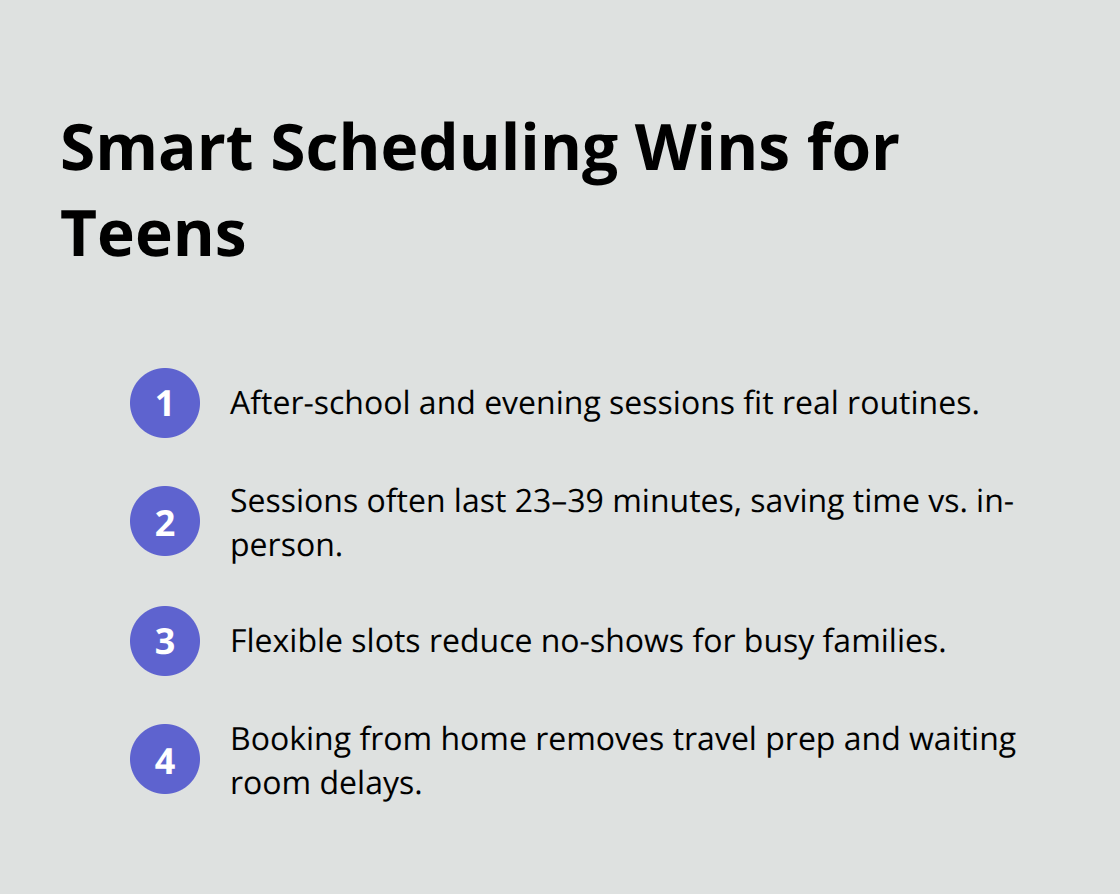
Teens today have packed schedules that would exhaust most adults. School runs until 3pm, sports practice until 6pm, homework until 8pm, and then there’s dinner and sleep. Traditional mental health clinics operate during standard business hours, typically 9am to 5pm, which means you’re asking your teen to miss class or asking yourself to leave work early. Telehealth platforms that offer after-school and evening slots change this dynamic completely. Your teen can attend a session at 4:30pm from home before heading to practice, or at 7pm after dinner when their mind is clearer. Studies on autism assessments delivered via telehealth found that sessions typically lasted 23 to 39 minutes, which is far more efficient than the hour-plus commitment of in-person visits when you factor in travel time. Flexible scheduling also reduces no-show rates because appointments actually fit into family life instead of working against it.
Anxiety Shrinks in a Familiar Space
Many teens experience appointment anxiety before they even arrive at a mental health office. The clinic setting itself-the waiting room, the unfamiliar space, the formal environment-can heighten stress for a teenager who’s already struggling. When a session happens from home, your teen sits in a familiar, controlled environment where they feel safer. Research shows that caregivers were satisfied with virtual mental health services, partly because the home setting reduces that barrier to opening up about difficult topics. Your teen can sit on their own bed, have a pet nearby for comfort, or feel the security of being at home while discussing anxiety, depression, or trauma. The privacy of home also matters for sensitive conversations about relationships, substance use, or body image that teens often hesitate to discuss in a clinic. When your teen feels less anxious about the appointment itself, they engage more honestly with their provider and actually benefit from the session.
What Comes Next: Choosing the Right Platform
The real power of telehealth scheduling emerges when you select a platform that actually works for your family’s life. Not all scheduling systems are created equal, and the difference between a clunky booking process and a smooth one can determine whether your teen actually shows up for care.
How to Choose a Telehealth Platform with Smart Scheduling
User-Friendly Booking Systems Save Time and Frustration
The scheduling system itself matters more than most families realize. A platform that requires five clicks to book an appointment and three more to cancel will frustrate you and your teen before the first session even happens. Look for platforms that let your teen book their own appointment in under two minutes, without forcing you to call anyone or wait for email confirmations. The best systems show available time slots immediately, let you filter by provider or time of day, and confirm the appointment instantly. Test the booking process yourself before committing-if it feels clunky to you, it will feel worse to your teen when they’re trying to schedule independently.
Cancellation Policies That Reduce Stress
Some platforms charge cancellation fees if you don’t cancel 24 hours ahead, which creates stress rather than removing it. Verify the exact cancellation policy before you sign up. A platform that allows free cancellations up to 12 hours before an appointment gives your family breathing room when your teen’s schedule shifts unexpectedly or when they’re having a tough day and need to reschedule. This flexibility matters because teens’ mental health needs don’t follow rigid timelines.
Calendar Integration and Reminders That Actually Work
Integration with your family’s existing calendar system matters more than it sounds. When a telehealth appointment automatically syncs to your phone’s calendar app and sends reminders, attendance rates improve significantly. Your teen should receive a reminder 24 hours before the appointment and another one hour before it starts, with a direct link to join the session. Some platforms send reminders only by email, which your teen might miss. The best ones use text messages or push notifications on the app itself.
If the platform integrates with Google Calendar, Apple Calendar, or Outlook, your entire family stays coordinated without managing separate systems. This eliminates the excuse of forgetting an appointment and keeps mental health care from falling through the cracks when life gets hectic. The scheduling features that seem minor-automatic reminders, calendar syncing, one-click session access-actually determine whether your teen shows up ready to engage or scrambles to find the login link five minutes after the appointment was supposed to start.
Setting Up Your Home for Telehealth Success
Create a Private Space That Works for Your Teen
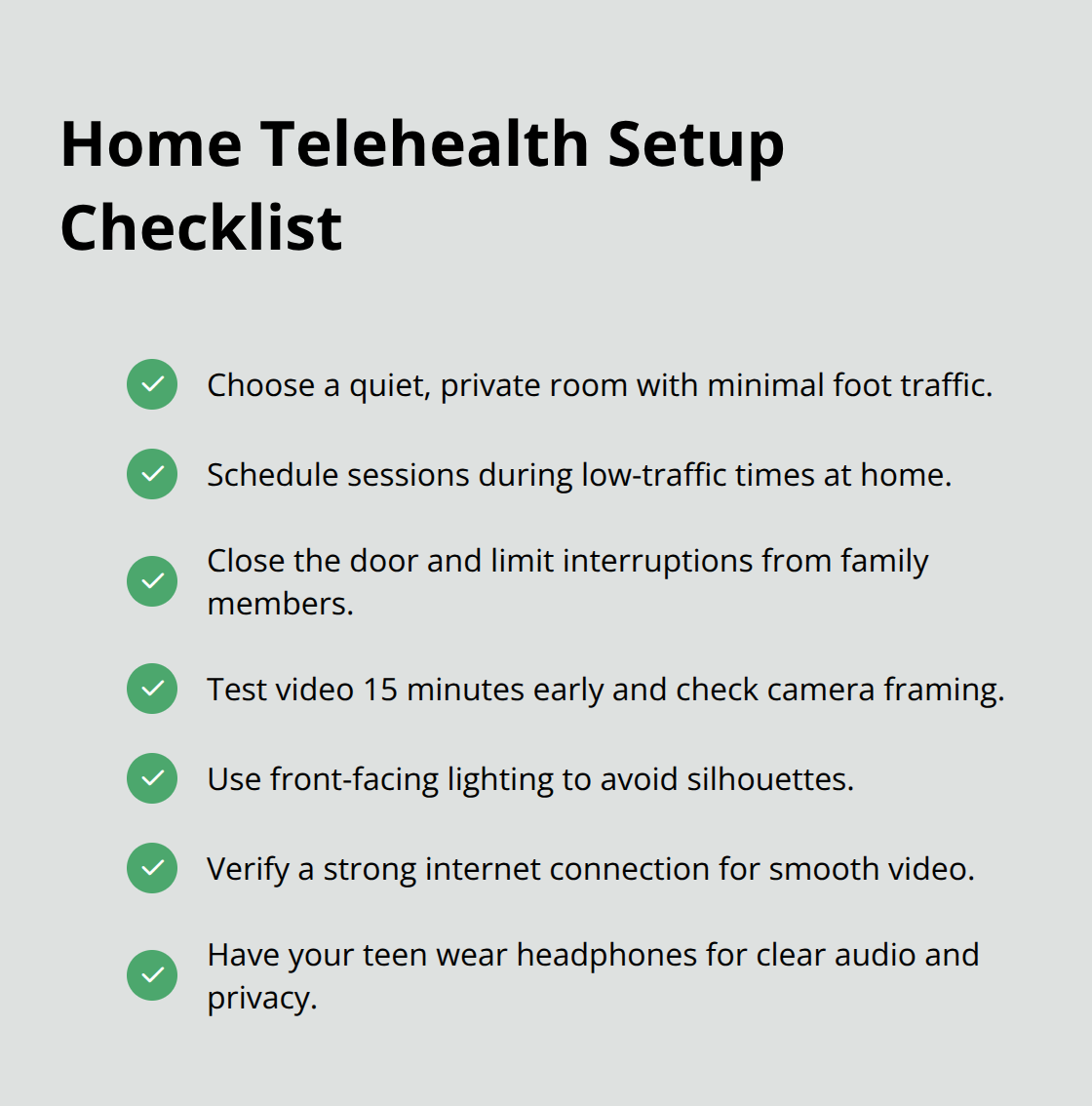
Your physical environment during a telehealth appointment affects how well your teen can focus and engage with their provider. Identify a quiet room in your home where your teen can have a private conversation without siblings interrupting or family members walking through camera view. This doesn’t need to be a fancy office-a bedroom, home office, or even a corner of a living room works if you can close a door and minimize distractions. Test the setup 15 minutes before the appointment: check that the camera angle shows your teen’s face clearly without looking down their nose or up at the ceiling, ensure the lighting comes from in front rather than behind them (which creates a silhouette), and verify that the internet connection is strong enough for video.
If your home has multiple people and limited private spaces, schedule appointments when household traffic is lowest-early morning before school or right after your teen gets home, before dinner chaos hits. One practical step many families skip is testing the audio: have your teen wear headphones during the session so background noise doesn’t bleed into the conversation and so they can hear their provider clearly without turning up volume.
Organize Insurance and Medical Information Before the First Session
Insurance paperwork and medical history should be ready before the first appointment, not scrambled together five minutes before the session starts. Create a digital folder on your phone or computer with copies of your insurance card (front and back), your teen’s ID, any previous mental health assessments or diagnoses, current medications with dosages, and a list of any allergies or medical conditions. Most telehealth platforms request this information during registration, so having it ready means the appointment starts on time rather than getting delayed while you hunt for details.
If your teen is old enough to manage their own schedule, walk them through the appointment process once so they understand how to log in, where to find the session link, and how to troubleshoot if the video doesn’t work. This independence teaches your teen to manage their own healthcare-a skill they’ll need as they get older.
Build a Family Calendar System That Sticks
Create a shared family calendar that includes all telehealth appointments, not just in your phone but in a system everyone checks regularly, whether that’s Google Calendar shared across devices or a paper calendar on the kitchen wall. When mental health appointments sit in the same calendar system as soccer practice and school events, they stop feeling like something separate to track and become part of your family’s regular routine. Set calendar reminders for 24 hours before and again 2 hours before each appointment, which gives your teen time to wrap up homework or other activities and transition into the right headspace for the session.
Final Thoughts
Telehealth scheduling for teens works because it removes the real obstacles that keep families from getting mental health support. Transportation stops being a barrier, packed schedules stop being an excuse, and appointment anxiety shrinks when your teen sits in a familiar space at home. These aren’t minor conveniences-they’re the difference between your teen getting care and your teen going without it.
A platform with smart booking, calendar integration, and automatic reminders means your teen actually shows up prepared to engage. A quiet space at home means they talk honestly with their provider, and organized insurance information means appointments start on time instead of getting derailed by paperwork. These small details compound into real results that matter for your teen’s mental health.
We at The Teen Center offer specialized, evidence-based mental health care for adolescents ages 12–17, including intensive outpatient programs, individual and family therapy, medication management, and crisis support-all available both in person and via telehealth. Our statewide telehealth access means your teen can get the support they need without the scheduling headaches that typically get in the way. Reach out today and book that first appointment.