
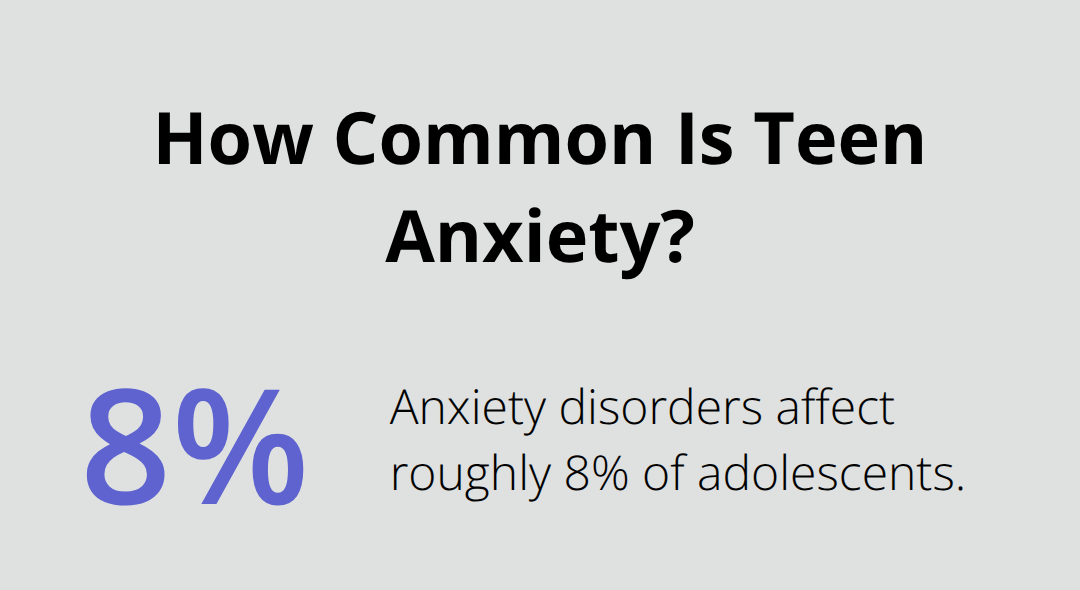
Anxiety in teenagers has become harder to ignore. The American Psychological Association reports that anxiety disorders affect roughly 8% of adolescents, and many more experience significant worry that impacts their daily lives.
At The Teen Center, we know that adolescent anxiety management skills aren’t just about feeling calmer in the moment-they’re about building the foundation for a more resilient future. This guide walks you through practical strategies, professional support options, and real ways to help teens take control of their anxiety.
What’s Actually Driving Anxiety in Teens Right Now
Anxiety in teens isn’t random. School pressure, social media comparisons, and shifting friendships create specific, measurable stressors that compound daily. Teens spending more than three hours daily on social platforms report significantly higher anxiety levels than those with limited screen time. College admissions anxiety starts earlier than ever, with some teens worried about their futures as early as middle school. Family transitions like divorce or moving to a new school spike anxiety, as do broader concerns about climate change and global instability that teens absorb from constant news exposure. These factors explain why anxiety disorders now affect roughly 8% of adolescents, with many more experiencing substantial worry that disrupts their daily functioning.
How Anxiety Shows Up in Everyday Life
Anxiety in teens rarely looks like what adults expect. Physical symptoms dominate: headaches, stomachaches, muscle tension, and sleep disruption often appear before a teen even recognizes they feel anxious. Some teens experience racing hearts or difficulty breathing during panic moments. Behaviorally, anxious teens withdraw from friends, avoid situations that trigger worry (like presentations or social events), become irritable over small frustrations, and feel overwhelmed by tasks that once seemed manageable. Academic performance drops because anxiety hijacks focus and memory. A teen might spend hours on homework yet retain nothing, or freeze during tests despite knowing the material. Parents often miss these signs because teens hide anxiety behind irritability or sudden disinterest in activities they previously enjoyed. Normal teen nervousness fades after the trigger passes, while clinical anxiety lingers, intensifies, and spreads to new situations.
Why Academic and Social Life Suffer
Anxiety directly sabotages both domains simultaneously. In academics, anxiety impairs concentration, reduces working memory capacity, and triggers test anxiety that prevents teens from demonstrating actual knowledge. A teen with anxiety might study effectively but blank during exams. Socially, anxiety creates avoidance patterns: a teen worried about judgment stops attending lunch with peers, skips social events, and gradually isolates. This isolation reinforces anxiety because fewer positive social experiences mean fewer opportunities to build confidence and belonging. Teens with strong peer relationships and supportive adults demonstrate higher resilience and fewer depressive symptoms, yet anxiety actively blocks those connections. The cycle worsens when academic struggles fuel social shame, making teens less likely to participate in school or community activities where they’d naturally build competence and connection.
These patterns reveal why anxiety demands more than surface-level fixes. Teens need concrete tools to interrupt the cycle, starting with strategies they can use immediately when anxiety strikes.
Tools That Actually Work When Anxiety Hits
The gap between knowing anxiety is a problem and having concrete ways to handle it in the moment is where most teens struggle. When panic strikes during a test or social situation, a teen needs something they can do immediately-not advice to think differently or wait for therapy.
Grounding Techniques Stop Panic Fast
Grounding techniques work because they interrupt the physical panic response by anchoring attention to the present moment. The 5-4-3-2-1 method forces focus: identify five things you see, four you can touch, three you hear, two you smell, one you taste. This takes roughly 60 seconds and shifts the brain away from threat detection. Box breathing-inhale for four counts, hold for four, exhale for four, hold for four-directly calms the nervous system by slowing heart rate and lowering cortisol. Teens should practice these when calm so they become automatic during panic.
Cognitive Approaches Challenge Anxious Thoughts
Anxious thoughts thrive in abstraction, which is why cognitive approaches work so directly. Instead of fighting the thought “I’m going to fail this test,” a teen writes down the thought, examines evidence for and against it, and develops a realistic alternative: “I studied for this test and understand most of the material; if I struggle, I can ask the teacher for help.” This isn’t positive thinking-it’s accurate thinking. Teens resistant to therapy often respond to this because it’s logical, not motivational.
Physical Activity and Sleep Create the Foundation
Physical activity reduces anxiety more reliably than many interventions. Research shows that moderate-intensity exercise decreases anxiety symptoms measurably. Teens don’t need to join sports teams; walking, cycling, dancing to music, or even vigorous yard work counts. Sleep is non-negotiable because sleep deprivation intensifies anxiety sensitivity. A teen sleeping six hours instead of eight will feel more anxious about the same stressor. Consistent sleep timing (same bedtime and wake time on weekdays) matters more than occasionally sleeping longer. Limiting screens an hour before bed and keeping phones out of bedrooms helps because blue light and late-night notifications spike alertness.
How These Tools Work Together
These three approaches-grounding, cognitive restructuring, and lifestyle foundations-work together to interrupt anxiety at different points. A teen using grounding stops immediate panic. Cognitive work prevents the panic from returning tomorrow. Physical activity and sleep ensure the brain isn’t primed to panic in the first place.
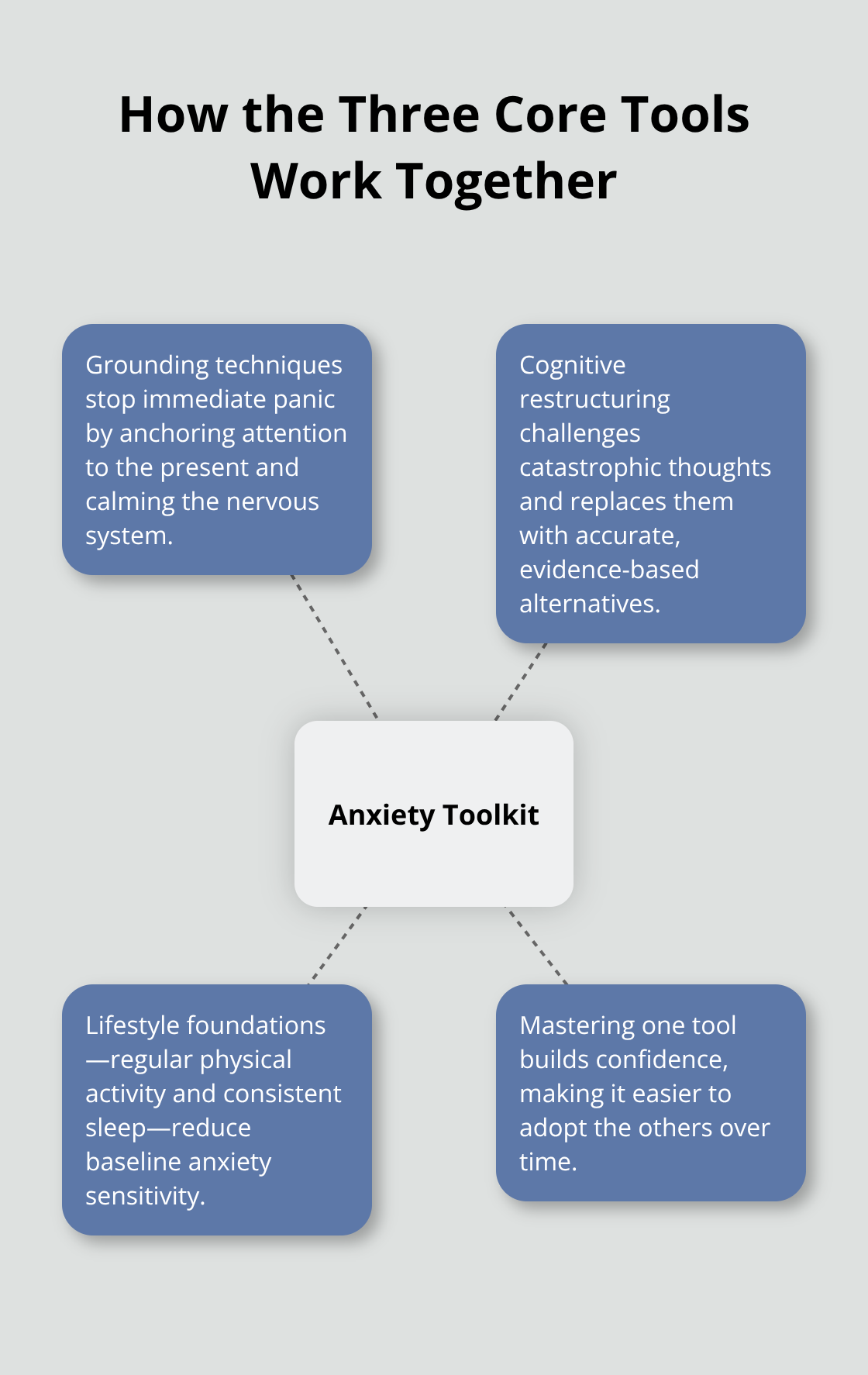
Teens who master one tool gain confidence to try others. A teen can practice box breathing alone at 11 p.m. when anxiety strikes before a presentation tomorrow. That independence matters because it shifts power from anxiety to the teen.
Yet even with these tools in place, many teens hit a wall where anxiety persists despite their best efforts. That’s when professional support becomes the difference between managing anxiety and actually resolving it.
Building Resilience Through Professional Support
How Family Involvement Transforms Anxiety Recovery
Family involvement fundamentally changes how teens respond to therapy and medication management. Research consistently shows that teens with strong parental relationships and family support demonstrate higher resilience and fewer anxiety symptoms. Parents who criticize a teen for feeling anxious or push them to handle it alone actively worsen outcomes. Instead, effective family involvement means parents learn to recognize anxiety triggers specific to their teen, respond with calm reassurance rather than alarm, and adjust family routines to support recovery.
For example, if a teen’s anxiety spikes during family dinners, parents might temporarily eat separately while the teen practices grounding techniques, then gradually reintroduce shared meals as coping improves. Parents also need to manage their own stress because parental anxiety directly transmits to teens. A parent who catastrophizes about their teen’s future fuels the exact thinking patterns that drive adolescent anxiety. Family therapy teaches parents concrete communication skills: asking open questions instead of offering solutions, validating feelings without validating avoidance, and celebrating small wins like attending one class after days of school refusal. This shift in family dynamics often produces faster anxiety reduction than individual therapy alone because the teen practices new skills in the actual environment where anxiety occurs daily.
Matching Therapy Approaches to Each Teen’s Needs
Therapy works best when matched to the teen’s specific anxiety presentation and learning style. Cognitive behavioral therapy stands as the gold standard for adolescent anxiety because it directly addresses the thought-behavior-emotion cycle that sustains worry. A therapist helps a teen identify catastrophic thinking (I’ll embarrass myself and everyone will hate me) and test it against reality through small, planned exposures. A teen might practice one minute of eye contact with a peer, then reflect on whether the predicted disaster actually occurred. Over weeks, this builds evidence that anxious predictions are usually wrong, gradually reducing the compulsion to avoid.
Dialectical behavior therapy works particularly well for teens whose anxiety manifests as emotional dysregulation and self-harm urges. DBT teaches distress tolerance skills like the TIPP technique (temperature, intense exercise, paced breathing, progressive muscle relaxation) that interrupt the urge to harm when emotions spike. Acceptance and commitment therapy helps teens who ruminate endlessly by teaching them to notice anxious thoughts without fighting them, then redirect attention to valued actions.
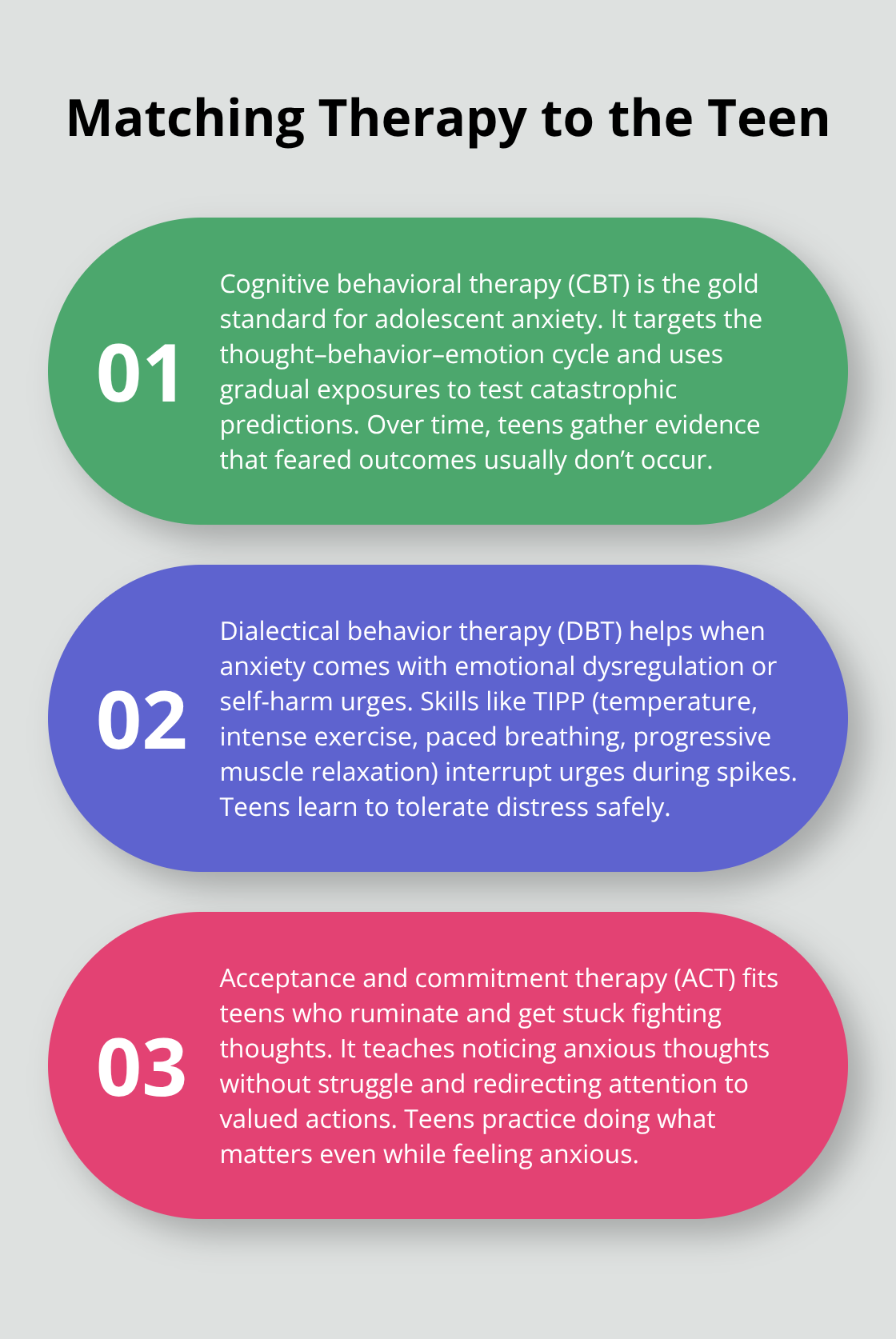
A teen might continue feeling anxious while attending soccer practice because the value of friendship and competence matters more than temporary discomfort. The therapist choice matters immensely because a mismatched approach wastes months. A teen resistant to talk therapy might respond better to somatic approaches where the therapist teaches body-based anxiety interruption before exploring thoughts.
When Medication Becomes Part of the Treatment Plan
Medication enters the picture when anxiety significantly impairs functioning despite consistent therapy and coping skill practice, or when the teen cannot access therapy benefits because anxiety is too severe. Selective serotonin reuptake inhibitors like sertraline and fluoxetine are first-line medications for adolescent anxiety and carry strong evidence supporting their use. These medications don’t sedate or create dependence; they reduce the baseline anxiety intensity so a teen can actually engage with therapy and coping strategies.
A teen on medication plus therapy shows better outcomes than either approach alone according to research on combined treatment. Medication management requires a prescriber who monitors side effects closely, adjusts dosing based on response, and communicates regularly with the therapist about progress. The combination matters because medication creates the window for behavioral change, but therapy teaches the skills that create lasting improvement. A teen stopping medication without developing underlying resilience often relapses because the anxiety drivers remain unchanged. Conversely, therapy alone sometimes stalls if neurochemical factors prevent the teen from retaining what they learn. Parents often fear medication will change their teen’s personality or create addiction; accurate information from the prescriber directly counters these myths and improves medication adherence.
Final Thoughts
Adolescent anxiety management skills develop over time, not overnight, and that’s precisely why consistent practice matters. The strategies in this guide-grounding techniques, cognitive restructuring, physical activity, and sleep consistency-equip teens with immediate tools to interrupt anxiety when it strikes, while family support and professional guidance create the foundation for lasting change. When anxiety persists despite consistent effort with coping strategies, when it prevents your teen from attending school or maintaining friendships, or when physical symptoms like chronic headaches or sleep disruption appear, professional evaluation becomes necessary rather than optional.
We at The Teen Center combine individual therapy, family involvement, and medication management when needed to address adolescent anxiety at its roots. Our clinicians specialize in adolescent mental health and offer both in-person and telehealth options because access matters for your teen’s recovery. We also coordinate with schools to support academic stability while anxiety treatment progresses, ensuring your teen receives consistent support across all environments.
The teens who recover most completely aren’t those with the least anxiety-they’re the ones who access support early and stick with treatment long enough for real change to take hold. That support might start with you recognizing the signs, continue through consistent coping practice at home, and deepen through professional care tailored to your teen’s specific needs. If your teen needs that next step, contact The Teen Center to schedule an evaluation and begin building the resilience that transforms anxiety from a daily obstacle into something your teen actually knows how to handle.