
Mental health care for teens shouldn’t depend on where they live or how much money their family has. Yet geographic barriers, provider shortages, and insurance gaps keep millions of young people from getting the help they need.
Statewide teen teletherapy services are changing this reality by bringing qualified mental health professionals directly to teens’ homes. We at The Teen Center believe this shift is essential for closing access gaps and supporting adolescent wellbeing across entire states.
Why Teens in Rural Areas and Underserved Communities Struggle to Find Mental Health Care
The Mental Health Crisis Among Adolescents
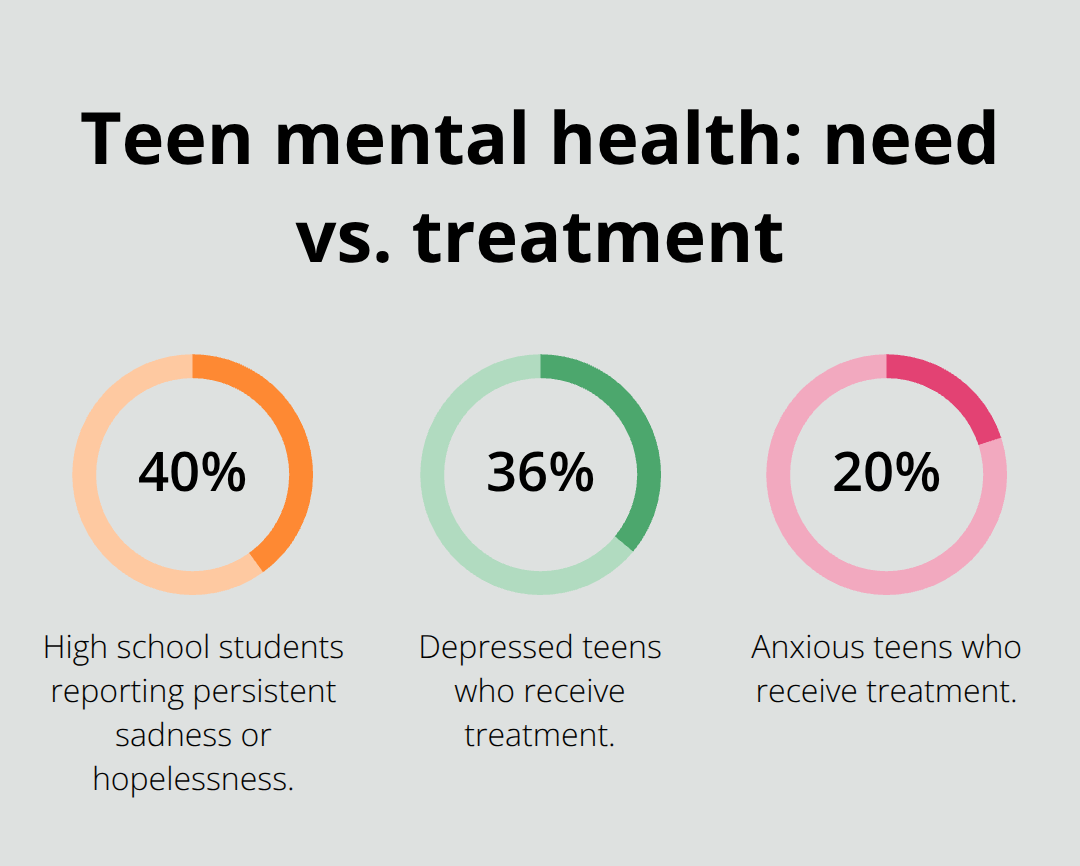
Nearly 40 percent of high school students report persistent sadness or hopelessness, according to the 2023 CDC Youth Risk Behavior Survey. Yet only 36 percent of depressed teens and 20 percent of anxious teens actually receive treatment. This gap between need and access isn’t random-it follows clear geographic and economic lines.
Geographic Barriers That Keep Teens From Care
Rural teens face the steepest obstacles. They contend with limited service availability, longer distances to providers, and fewer specialists trained in adolescent mental health. Research from rural New England involving 39 teens and community professionals found that transportation difficulties, internet connectivity issues, and lack of information about available services kept young people from seeking help. Rural youth access specialist services far less often than their urban peers, instead relying almost entirely on school-based counselors who are already stretched thin. In some regions, a single school counselor manages 400 to 600 students, making meaningful individual therapy impossible.
The Provider Shortage Crisis
Specialized adolescent mental health professionals remain concentrated in urban centers, leaving entire regions without access to therapists trained in teen-specific treatment. A 2024 federal study found that more than one-third of Americans live in areas with insufficient mental health professionals. This shortage hits rural communities hardest. Rural teens also experience higher baseline mental health risk, with rural-urban suicide disparities widening during and after the pandemic.
Financial Barriers and Insurance Gaps
Cost and insurance gaps widen access problems further. For families without adequate insurance coverage or those paying out-of-pocket, the financial barrier becomes insurmountable. Even when insurance covers therapy, deductibles and copays deter families from seeking care. These financial obstacles eliminate treatment options for many adolescents, regardless of how much they need help.
The Role of Trusted Adults in Connecting Teens to Care
Trusted adults-teachers, coaches, family members-remain critical connectors to care, yet they often lack pathways to connect teens with available help, particularly in areas where specialized services simply do not exist. The combination of greater need, fewer resources, and structural barriers creates a mental health crisis that traditional in-person services cannot solve alone. Statewide teletherapy services offer a pathway to bridge these gaps and reach teens where traditional systems fail.
How Statewide Teletherapy Connects Teens to Care Across State Lines
Eliminating Geographic Barriers to Specialist Access
Statewide teletherapy services eliminate the geographic lottery that currently determines whether a teen receives mental health treatment. Virginia Beach City Public Schools launched a program through Uwill that serves approximately 35,000 students in grades 6–12 with unlimited teletherapy access after school, at night, on weekends, and during school breaks. The program employs more than 100 Virginia-licensed therapists directly, meaning students connect with stable providers rather than rotating through available clinicians. In crisis situations, a licensed trauma-trained clinician connects within 30 seconds.
This matters because rural teens and those in underserved urban areas previously had limited access to specialized adolescent providers. Now they access the same licensed professionals as teens in wealthy suburbs. Virginia ranks 48th in the nation for youth access to mental health care, which is precisely why this statewide infrastructure addresses a real gap. Maryland followed with similar expansion through Hazel Health, investing 2.75 million dollars in Prince George’s County and 1.5 million dollars in Baltimore City. Hazel’s therapists hold Maryland licenses and approximately 40 percent speak a language other than English, directly matching community demographics. These programs serve tens of thousands of real students who previously had limited treatment options.
Reducing Wait Times Through Distributed Provider Networks
Wait times disappear when therapists work across state systems rather than managing only local caseloads. Traditional in-person counseling creates bottlenecks: a school counselor managing 400 to 600 students cannot schedule follow-up appointments for weeks. Teletherapy platforms allow same-day sessions and recurring appointments with unlimited access, meaning a teen experiencing suicidal thoughts receives help immediately rather than waiting for the next available slot two months out.
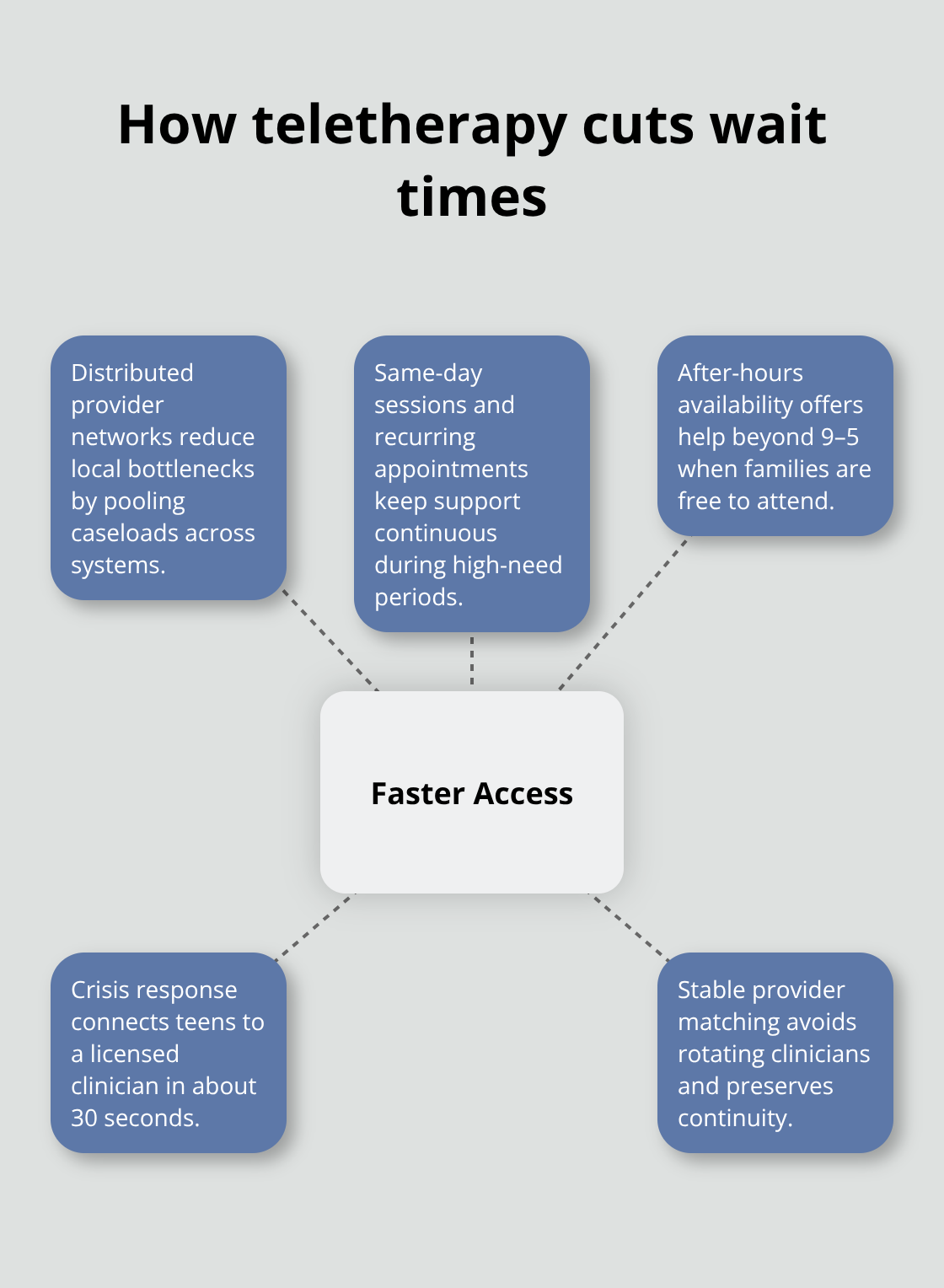
California’s BrightLife Kids and Soluna apps, funded through four-year contracts totaling approximately 498 million dollars as part of Governor Newsom’s 4.7 billion dollar master plan for youth mental health, offer immediate access outside standard business hours. This scheduling flexibility directly addresses a core barrier: families cannot rearrange work schedules around rigid 9-to-5 appointment windows, and teens refuse to miss school for therapy. Teletherapy eliminates this constraint entirely.
Removing Transportation as a Barrier to Care
Teletherapy eliminates transportation as an excuse or barrier to treatment. A student in a rural county no longer needs a parent to drive 90 minutes to reach the nearest adolescent psychiatrist. Sessions happen from home, from school, or from any location with internet access. This removes the transportation burden that kept rural youth from specialist care.
For families without reliable transportation or those managing multiple jobs, this shift transforms access to mental health support. The next section examines how statewide teletherapy services actually improve teen outcomes once they engage with treatment.
Does Teletherapy Actually Improve Teen Mental Health Outcomes
Online Interventions Produce Real Reductions in Anxiety and Depression
Teletherapy works because teens actually show up and stay engaged. A 2024 NIH study found that online mental health interventions produce meaningful reductions in anxiety and depression symptoms while improving social functioning in youth. This matters far more than theoretical access-real engagement determines real outcomes. Virginia Beach’s Uwill program demonstrates this through unlimited session access, meaning students schedule recurring appointments without fighting insurance limitations or waiting lists. When a teen can access a therapist the same day a crisis hits, or schedule weekly check-ins without transportation obstacles, treatment adherence skyrockets compared to traditional models requiring monthly in-person visits.
The program’s direct employment of over 100 Virginia-licensed therapists ensures consistency, preventing the rotating provider problem that disrupts therapeutic relationships. Maryland’s Hazel Health reports similar patterns, with students in Prince George’s County and Baltimore City maintaining ongoing treatment through video sessions accessible from home or school. This consistency transforms therapy from a sporadic intervention into sustained support that actually changes behavior and thought patterns.
Academic Performance Improves When Teens Receive Consistent Mental Health Support
Academic performance improves measurably when teens receive consistent mental health treatment. Depression and anxiety directly interfere with concentration, attendance, and academic engagement-CDC data showing 40 percent of high school students experiencing persistent sadness explains why untreated mental health issues predict poor school outcomes. Teletherapy removes the false choice between missing school for appointments and skipping treatment entirely.
Students in programs like Virginia Beach’s service access sessions after school, at night, and on weekends, eliminating the attendance penalty that previously forced families to choose between mental health and academics. This scheduling flexibility allows teens to maintain school stability while receiving the mental health support they need.
Family Involvement Amplifies Treatment Gains Across the Household
Family involvement amplifies these gains significantly. Integrated family therapy through teletherapy platforms allows parents and guardians to participate in sessions from their own homes, addressing household dynamics and parenting strategies that directly impact teen mental health. Research from rural New England involving 39 teens and community professionals confirmed that family support and trusted adult involvement are critical facilitators of sustained help-seeking behavior.
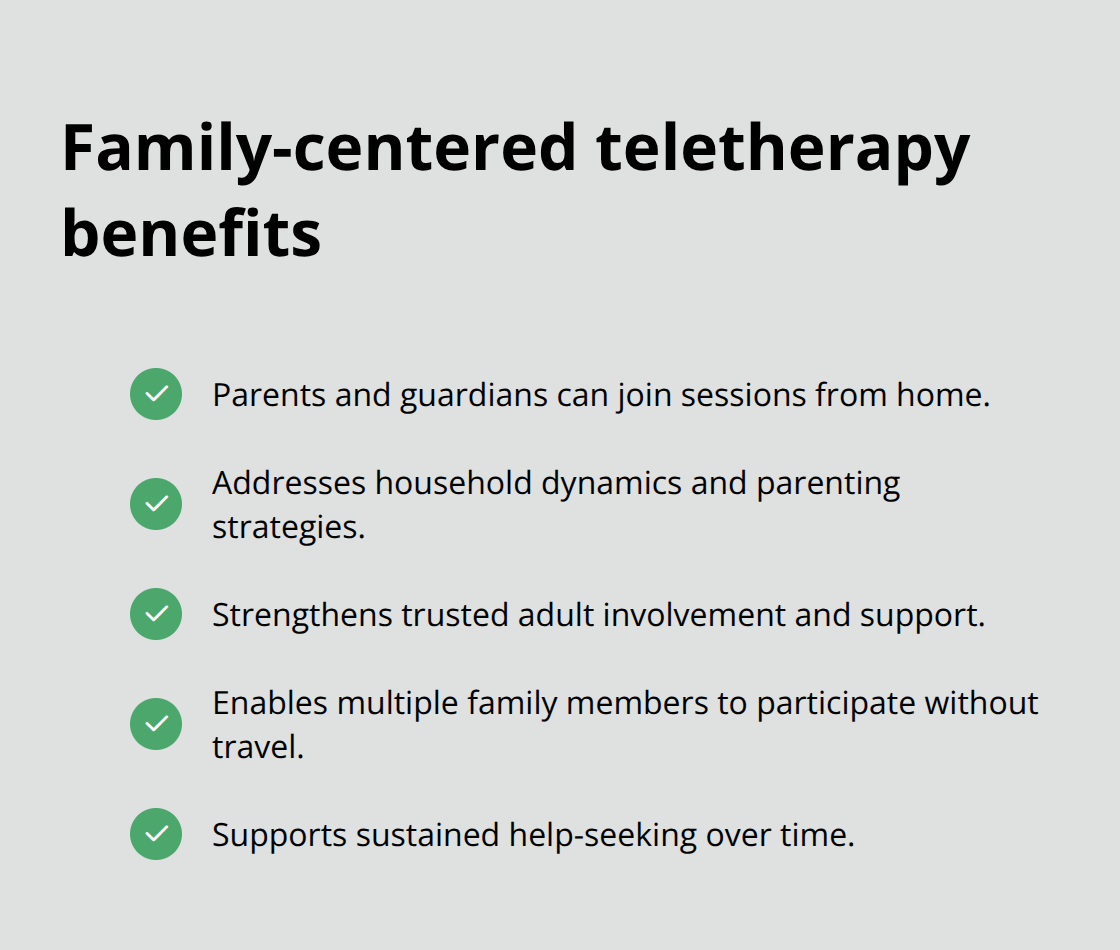
When parents understand their teen’s treatment goals and learn specific strategies to reinforce therapeutic progress, the entire family system shifts toward stability. Teletherapy enables this family-centered approach at scale across entire states, rather than limiting intensive family work to the handful of teens who can access specialized providers in person. The ability to involve multiple family members simultaneously (without requiring everyone to travel to a physical office) transforms how treatment addresses the root causes of adolescent mental health struggles.
Final Thoughts
Statewide teen teletherapy services eliminate the geographic lottery that currently determines whether a teen receives mental health treatment. Virginia Beach’s Uwill program, Maryland’s Hazel Health expansion, and California’s statewide apps demonstrate that technology connects tens of thousands of young people to licensed therapists within seconds, not months. Teens maintain consistent treatment relationships instead of cycling through rotating providers, schedule sessions without missing school, and access crisis intervention in 30 seconds rather than through emergency room visits.
Access alone is insufficient without integration into school-based services, family involvement, and community support systems. Trusted adults-teachers, coaches, counselors, parents-remain essential connectors who encourage teens to seek help and sustain engagement over time. Statewide infrastructure amplifies their impact by providing the specialized resources they cannot deliver alone.
The teens who benefit most from statewide teen teletherapy services are those who previously had no options at all. Rural adolescents, underserved urban youth, and families without transportation or financial resources now access the same quality care as their peers in wealthy communities. The Teen Center combines telehealth access with intensive outpatient programs, individual and family therapy, medication management, and crisis support to help adolescents build resilience and achieve emotional and academic stability.