Adolescent depression doesn’t exist in a vacuum. It ripples through families, affecting how teens communicate, connect, and cope with daily challenges.
At The Teen Center, we’ve seen firsthand that family therapy for adolescent depression works where individual treatment alone often stalls. When families learn to break negative patterns and support each other, teens recover faster and build lasting resilience.
How Depression Shows Up and Why Family Matters
What Depression Actually Looks Like in Your Teen
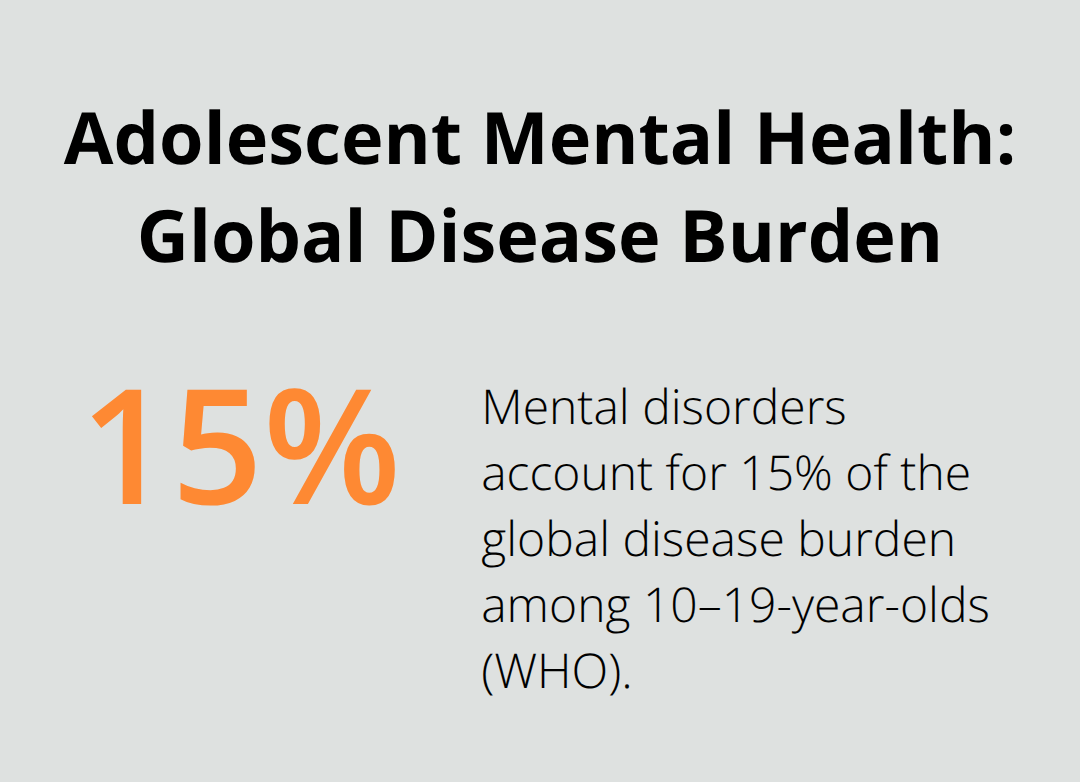
Depression in adolescents shows up differently than most parents expect. The World Health Organization reports that globally, one in seven 10-19-year-olds experiences a mental disorder, accounting for 15% of the global burden of disease in this age group, yet many cases go unrecognized because teens don’t always display sadness. Instead, you might notice irritability, withdrawal from activities they once enjoyed, changes in sleep or appetite, difficulty concentrating at school, or sudden drops in grades. Some teens mask depression with anger or reckless behavior, making it harder to spot.
The critical point is this: waiting for your teen to tell you they’re depressed often means waiting too long. Depression progresses quietly in many cases, and once a teen acknowledges the problem, family relationships have often deteriorated significantly. This deterioration matters because research shows that when family functioning is healthy, recovery from major depressive episodes tends to be faster and more complete. Conversely, families caught in conflict, poor communication, or disconnection inadvertently reinforce the depression.
Family Dynamics Shape Depression Risk and Recovery
Family dynamics don’t just influence depression-they actively shape whether a teen develops it in the first place and whether treatment works. The biopsychosocial model, supported by the American Academy of Child and Adolescent Psychiatry, establishes that family environment is the most important social factor shaping child development and mental health outcomes. Secure attachments, effective parenting, and emotionally nurturing environments protect against depression, while negative family processes (parental conflict, inconsistent discipline, emotional coldness, or unresolved parental trauma) increase risk substantially.
Individual therapy alone misses this reality. A teen might work through cognitive patterns in weekly sessions, only to return home to the same family system that triggers those patterns repeatedly. Research shows that integrated care approaches for youth produce measurable improvements in depressive symptoms compared with treatment as usual. The difference isn’t marginal; it’s measurable and real.
Why Family Participation Changes Everything
When families participate actively in treatment-learning communication skills, addressing their own stress, and understanding how their interactions affect their teen-the teen has tools to apply at home, not just in a therapist’s office. This active involvement transforms what happens between sessions. The teen practices new ways of talking with parents, parents learn to recognize and respond to warning signs, and the entire system shifts toward health rather than staying locked in old patterns. This is where family therapy becomes non-negotiable rather than optional, and it sets the stage for understanding how family-centered approaches actually work to interrupt depression at its source.
How Family Therapy Interrupts Depression
Family Therapy Targets the System, Not Just the Individual
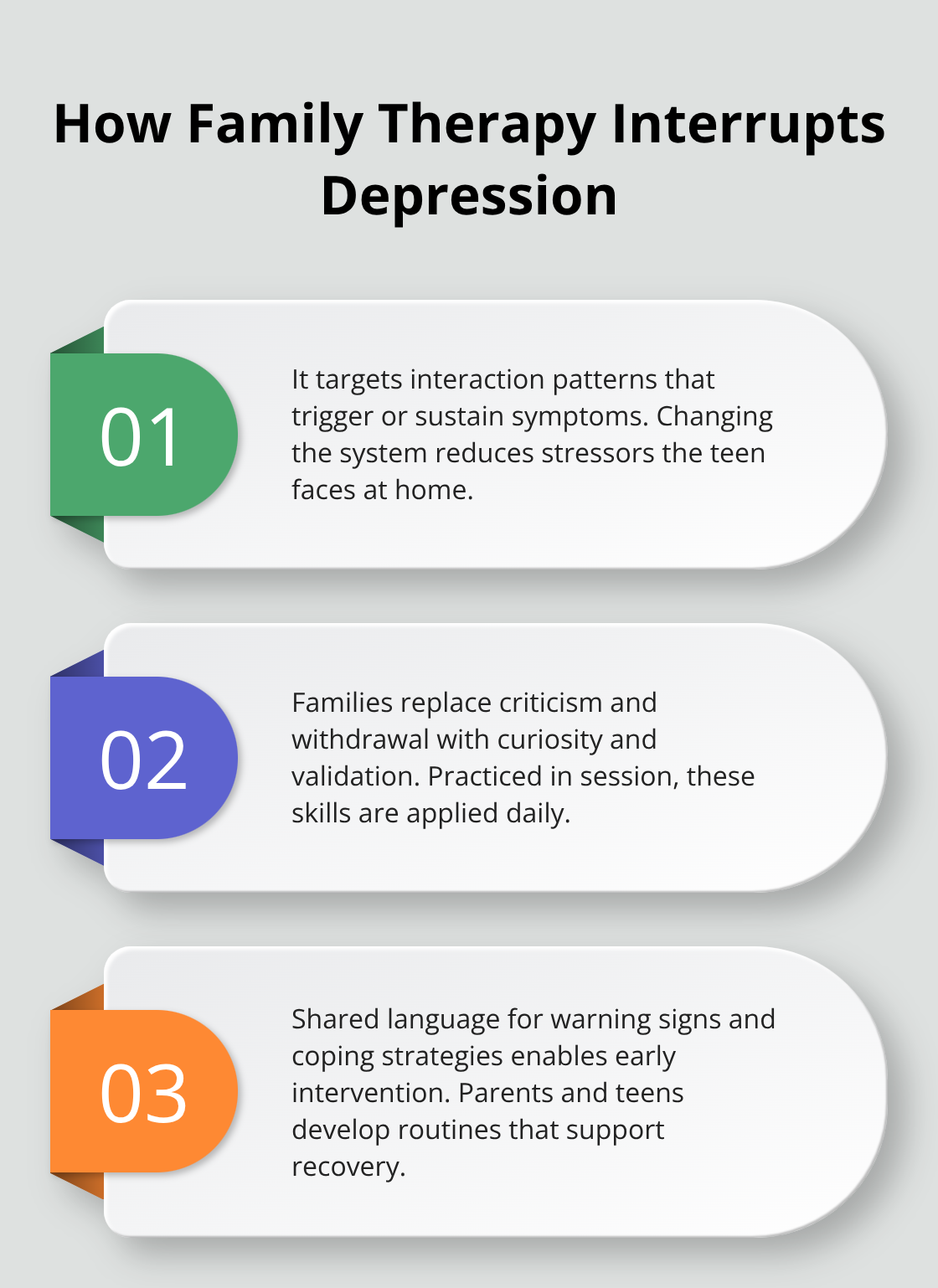
Family therapy works because it targets the system that either triggers or sustains a teen’s depression. Unlike individual therapy, which focuses on the teen’s thoughts and behaviors in isolation, family therapy recognizes that depression doesn’t exist separately from how family members interact. Research from 12 randomized controlled trials examining family-based therapies for adolescents found that compared with active treatments like cognitive behavioral therapy, family-based approaches produced comparable outcomes for reducing depressive symptoms. More importantly, family therapy showed a significant advantage for reducing suicidal ideation, with an effect size of 0.34 compared with other active treatments. This matters because suicidal ideation predicts recurrent episodes and ongoing risk into adulthood.
The most frequently studied model, Attachment-Based Family Therapy, combines attachment theory with family systems approaches to rebuild secure connections between parents and teens. The mechanism is straightforward: when parents understand how their own stress, unresolved trauma, or conflict with each other affects their teen, they can change their behavior. When teens see their parents making genuine efforts to communicate differently and manage their own emotional health, the teen’s neurological stress response actually decreases. This isn’t theoretical-it’s measurable in how quickly symptoms improve once the family system shifts.
Breaking Negative Communication Patterns Through Concrete Skills
Negative communication patterns are the specific target that makes family therapy practical and actionable. Many families stuck in depression cycles communicate through criticism, defensiveness, or complete shutdown. Parents might say things like “you never tell me anything” or “you’re just being dramatic,” while teens respond with anger or silence, creating a feedback loop that reinforces isolation and hopelessness. Family therapists teach concrete skills: how to express concerns without blame, how to listen without immediately trying to fix or dismiss, how to ask clarifying questions instead of making assumptions.
These aren’t abstract concepts-therapists practice them in session through role-playing and then assign them as homework. One parent learns to say “I’ve noticed you seem withdrawn, and I’m concerned about you” instead of “you’re always in your room doing nothing.” A teen practices saying “I’m struggling with anxiety about school” instead of leaving parents to guess. When multidisciplinary teams including mental health clinicians work with families using shared treatment plans and standardized protocols, teens show measurable reductions in depressive symptoms. The integration matters because when a parent understands the teen’s treatment plan, attends sessions, and practices the same communication approach the therapist uses, the teen’s environment becomes therapeutic rather than adversarial.
Building Resilience When Families Participate Actively
Families actively participate in teaching emotional regulation, problem-solving, and stress management rather than leaving that work to a therapist alone. Families learn to identify early warning signs together-what withdrawal looks like for this specific teen, what triggers irritability, what helps them calm down. This shared language and awareness means parents can intervene early instead of waiting for a crisis.
When families understand depression as a condition affecting the whole system, not a personal failure, they stop blaming and start supporting. This shift in perspective opens the door to the next critical piece: coordinating family therapy with medication management and academic support to create a truly integrated treatment plan that addresses every part of a teen’s life.
Medication, Family Conversations, and Academic Success Working Together
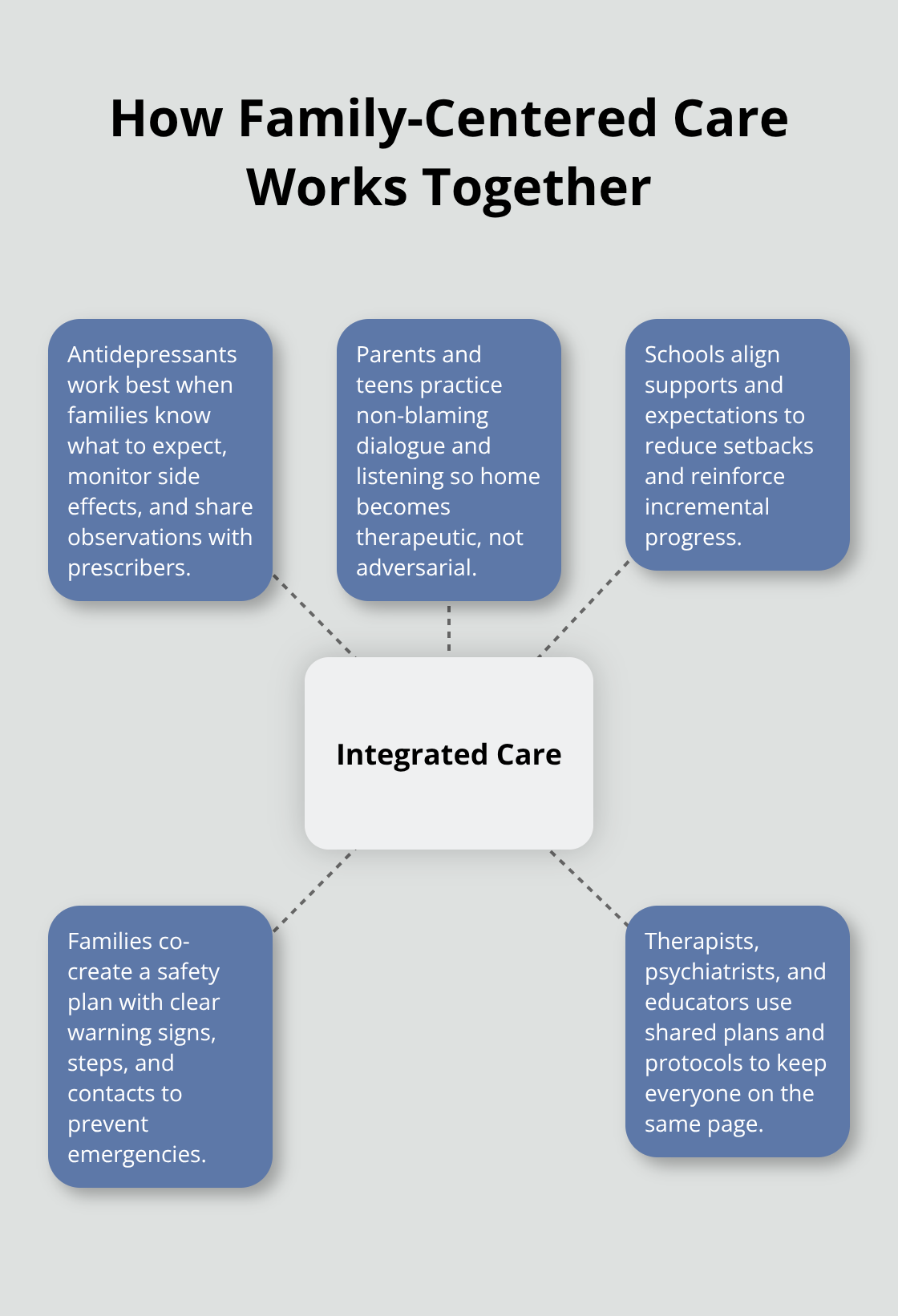
Family therapy becomes exponentially more effective when combined with medication management, academic support, and crisis planning-not because each piece is groundbreaking alone, but because they coordinate through shared treatment planning and consistent communication. When a teen starts an antidepressant, that medication works best when family members understand what to expect, recognize early warning signs of side effects or worsening symptoms, and know how to monitor for suicidality in the critical first weeks. Research on integrated care for youth aged 12–25 shows that multidisciplinary teams using shared treatment plans and standardized protocols achieve measurable reductions in depressive symptoms compared with fragmented care. The practical difference lies in coordination: a psychiatrist prescribes medication, the family therapist reinforces coping strategies at home, parents learn what behavioral changes signal that the medication is working, and everyone operates from the same playbook rather than isolated professional silos.
How Medication Monitoring Works Within Family Context
Medication monitoring within a family context transforms parents into informed observers rather than passive bystanders. They attend appointments where the psychiatrist explains the medication timeline-that antidepressants typically take around two weeks to show effect, that initial side effects like sleep changes or nausea often resolve within days, and that dosage adjustments are normal. The therapist then uses family sessions to address the parent’s anxiety about medication and the teen’s concerns about side effects, transforming what could be a source of conflict into shared understanding. Parents learn to recognize specific warning signs that indicate the medication is working or that adjustments are needed, and they communicate these observations back to the prescriber. This feedback loop ensures that medication decisions reflect real-world experience rather than clinical impressions alone.
Academic Coordination Prevents Depression From Derailing School Performance
Academic coordination prevents depression from derailing school performance through a separate pathway. When school counselors, teachers, and parents receive information about the teen’s treatment plan (with appropriate confidentiality protections), they can adjust expectations during acute phases, recognize when the teen is struggling cognitively versus behaviorally, and celebrate incremental improvements in attendance or assignment completion. A teen recovering from depression does not suddenly become an A student; they might progress from failing to turning in half their work, and that shift matters. Teachers who understand this trajectory provide appropriate support rather than punishment, and parents who see it happening can reinforce effort instead of fixating on grades.
This coordinated approach prevents academic failure from compounding the depression and allows the teen to experience success in manageable increments.
Crisis Planning With Family Input Creates a Safety Net
Crisis planning with family input creates a safety net that prevents emergency department visits or hospitalizations when possible. Families work with the treatment team to identify specific warning signs this particular teen displays-not generic depression symptoms, but the exact behaviors that precede crisis for this individual. They develop a written plan that specifies who to call, what to say, where to go, and how to keep the teen safe at home during high-risk periods. Parents learn to recognize the difference between a bad day and a psychiatric emergency, reducing unnecessary crisis visits while ensuring they do not miss genuine danger. This integration transforms family therapy from weekly conversation into comprehensive care where every component reinforces the others and families hold the central coordinating role rather than receiving information secondhand.
Final Thoughts
Family therapy for adolescent depression works because it addresses the system that sustains the depression, not just the symptoms themselves. When families actively participate in treatment, teens recover faster, experience fewer relapses, and develop genuine resilience that extends far beyond the therapy room. Integrated care that combines family therapy with medication management, academic coordination, and crisis planning produces measurable improvements in depressive symptoms and, critically, reduces suicidal ideation in ways that isolated treatments cannot match.
A teen sitting in a therapist’s office once a week cannot undo the patterns they experience at home five other days. When parents learn to communicate differently, recognize warning signs, and understand their own role in the family system, the teen’s entire environment becomes therapeutic. When medication is monitored with family input, when teachers understand the treatment plan, and when a crisis protocol exists before it’s needed, the teen has genuine support rather than fragmented services.
Taking the next step toward family-based treatment means finding a provider who understands that adolescent depression is a family issue, not just an individual problem. The Teen Center delivers specialized, evidence-based mental health care for adolescents, offering intensive outpatient programs, individual and family therapy, medication management, crisis support, and academic coordination both in person and via telehealth. If your teen is struggling with family therapy for adolescent depression, the path forward starts with recognizing that family participation isn’t supplementary-it’s essential.