
Adolescents today face a mental health crisis. According to the CDC, nearly 40% of high school students reported persistent feelings of sadness or hopelessness in 2023, yet access to care remains severely limited.
Telehealth for adolescent care is changing this reality. At The Teen Center, we’ve seen firsthand how virtual mental health services remove geographic barriers, reduce wait times, and meet teens where they are-literally and figuratively.
Why Telehealth Matters for Teen Mental Health
The Mental Health Crisis Adolescents Face
The numbers are stark. Nearly 40% of high school students reported persistent feelings of sadness or hopelessness in 2023, according to the CDC, yet fewer than 3,000 school-based health centers exist nationwide to address this crisis. Even worse, many of those centers lack mental health services entirely. This gap between demand and supply creates a system where adolescents wait months for care that may never arrive.
Geographic and Transportation Barriers
Rural teens face the worst outcomes: geographic isolation means waiting months for an appointment with a therapist, if one exists within a reasonable distance at all. Transportation barriers affect roughly 67% of people seeking mental health care, according to research on access challenges. For adolescents juggling school, part-time jobs, and family responsibilities, traveling 30 minutes to an appointment becomes impossible. Telehealth removes this obstacle entirely.
How Reimbursement Changes Enabled Virtual Care
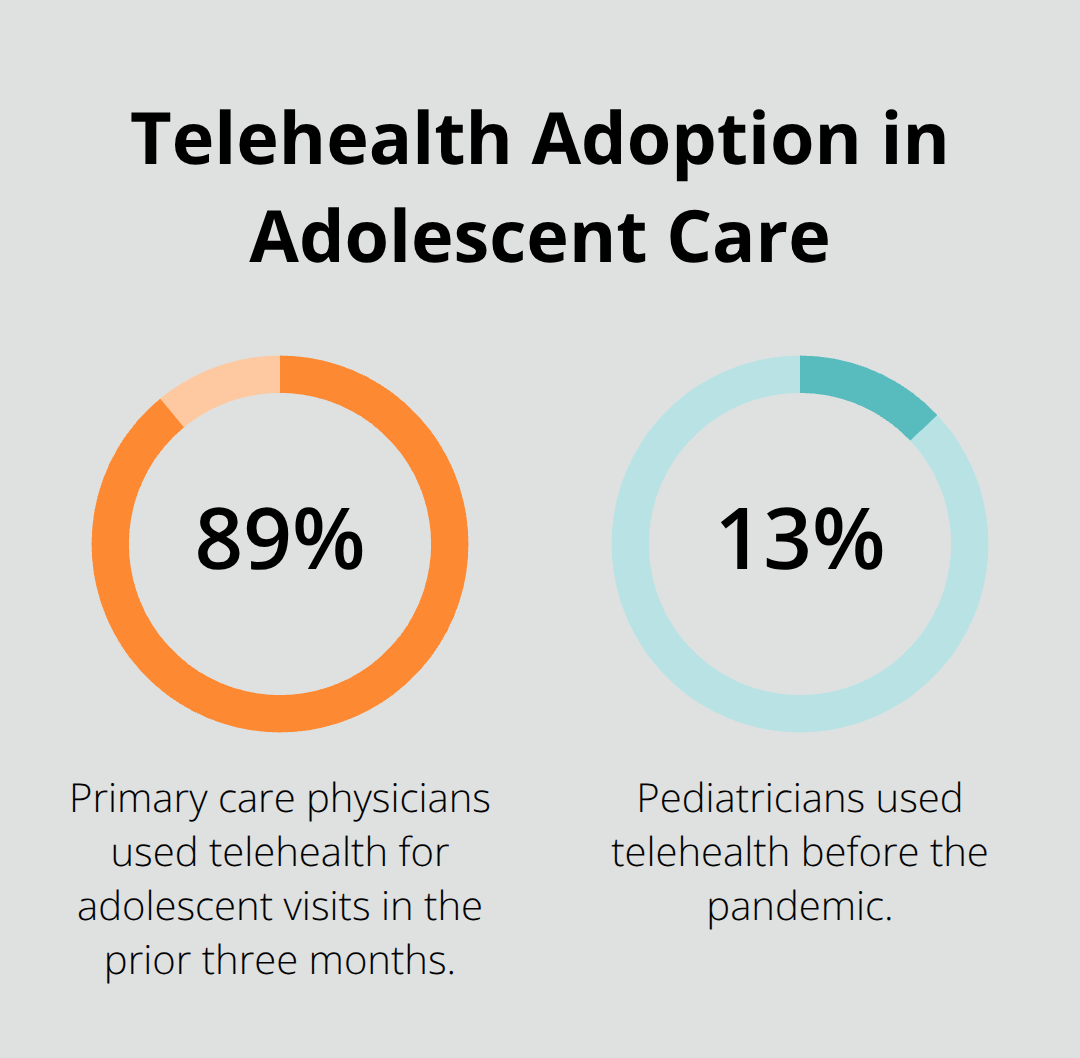
Primary care physicians used telehealth to see adolescents in 89% of cases in the prior three months, with mental and behavioral health ranking among the top three reasons for virtual visits alongside chronic disease management and acute care. The shift happened fast: before the pandemic, pediatricians used telehealth in only about 13% of cases. Reimbursement policies loosened during COVID-19, making virtual care financially viable for providers and families.
Insurance companies now cover telehealth at rates equivalent to in-person visits in many states, removing a major financial barrier that previously kept families from accessing remote mental health services.
Why Adolescents Prefer Virtual Mental Health Sessions
What makes telehealth genuinely different for adolescents is confidentiality and convenience working together. Teens talk to a therapist from their bedroom without a parent overhearing sensitive conversations, which increases honesty about substance use, sexual health, and self-harm concerns. Telehealth also works year-round, eliminating the summer gap when school-based services shut down and many teens go without support during high-risk months. Research from the American Psychiatric Association confirms that telehealth works as effectively as in-person care for psychiatric evaluations, therapy, and medication management. Some teens actually prefer it: those with anxiety disorders, autism spectrum disorders, or physical limitations often find virtual sessions less overwhelming than sitting in a waiting room.
Flexibility That Fits Teen Life
The flexibility matters enormously. A teen attends a session during lunch, after school, or early morning without missing class or asking for transportation. Families with multiple children, unpredictable work schedules, or caregiving responsibilities benefit from this flexibility. This is not a temporary solution born from pandemic necessity. Virtual mental health care represents how adolescent mental health services should function going forward, which is why understanding how to implement telehealth effectively becomes the next critical step.
How Telehealth Reduces Wait Times and Builds Consistency
Virtual Providers Eliminate Geographic Scheduling Constraints
Telehealth shrinks appointment wait times dramatically because virtual providers don’t face the same scheduling constraints as in-person clinicians. A therapist offering virtual sessions can see adolescents across multiple counties without travel time between appointments, which means more available slots per day. Research from primary care physicians shows that 89% now use telehealth for adolescent care, and mental and behavioral health ranks as one of the top three reasons for these virtual visits. An adolescent struggling with suicidal ideation or acute anxiety can access a first appointment within days rather than weeks. Rural families no longer wait three months for a psychiatric evaluation that exists 90 minutes away. Instead, they connect with a licensed provider within a week.
Year-Round Care Eliminates the Summer Gap
Telehealth also eliminates the summer gap problem. School-based services shut down, teens lose access, and crisis calls spike during high-risk months. Virtual providers operate year-round, so consistent care continues even when school ends. An adolescent receiving therapy in May doesn’t have a three-month interruption before August. Continuity compounds the therapeutic benefit: therapists see progress because teens don’t restart treatment after long breaks, family dynamics remain stable in the therapist’s understanding, and medication management stays consistent without gaps that trigger symptom relapse.
Flexible Scheduling Reduces Missed Appointments
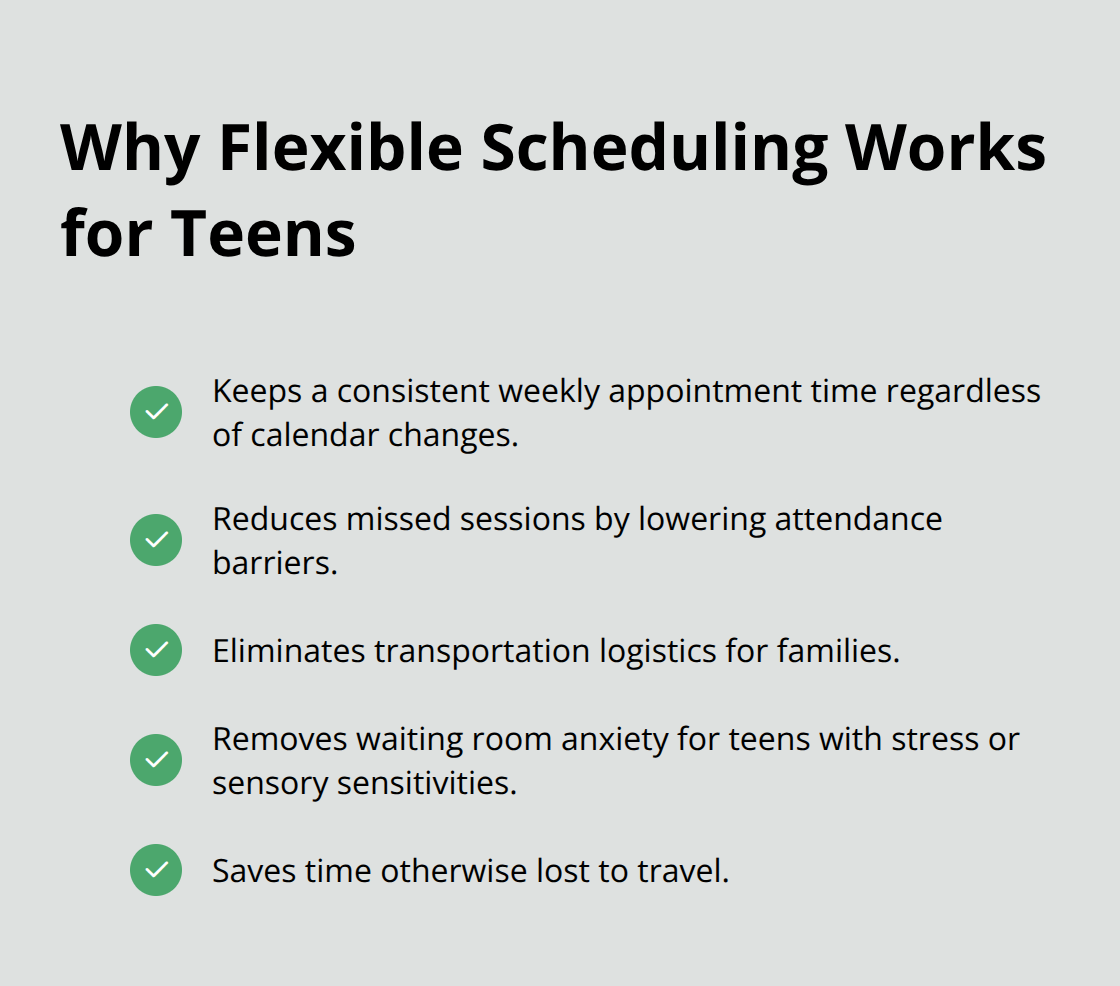
The flexibility built into telehealth scheduling creates another layer of consistency that in-person care struggles to match. A teen attends sessions at 3 p.m. on Tuesday and maintains that same slot regardless of school calendar changes, family vacations, or work schedule shifts. Therapists report that adolescents miss fewer virtual appointments because the barrier to attendance is genuinely lower-no transportation logistics, no waiting room anxiety, no time lost to travel.
Consistency Builds Trust and Accelerates Progress
This sustained demand reflects real outcomes: adolescents complete treatment courses at higher rates when telehealth removes friction from the scheduling process. When a therapist works with a teen on trauma processing, substance use patterns, or academic anxiety, the consistency of weekly sessions at the same time, in the same virtual space, builds the trust and predictability that adolescent brains need to make behavioral change. Gaps in care interrupt this momentum. Telehealth eliminates those gaps, which means therapists can focus on what matters most-helping teens develop the tools to work through their challenges. The next step involves creating the right environment for these sessions to actually work.
Making Telehealth Work for Adolescents
Creating private spaces for honest conversations
Privacy concerns stop many families from trying telehealth, yet research shows they rank far below technical barriers in actual importance. Only about 28% of primary care physicians reported offering confidential time with adolescents always or often during telehealth visits, according to data from JMIR, which reveals the real problem: providers fail to consistently create private spaces for teens to talk openly about sensitive topics like substance use, sexual health, and self-harm. The solution is straightforward. Adolescents need a closed door, headphones, and explicit agreement that parents won’t listen in. A therapist can start each session by asking a teen to confirm they’re in a private space and suggest using earphones to prevent family members from overhearing conversations. This simple practice shifts the dynamic from feeling surveilled to feeling genuinely heard. Schools can support this by designating a private counselor’s office for telehealth sessions during the school day, which eliminates the home privacy problem entirely.
Addressing Real Technical Barriers
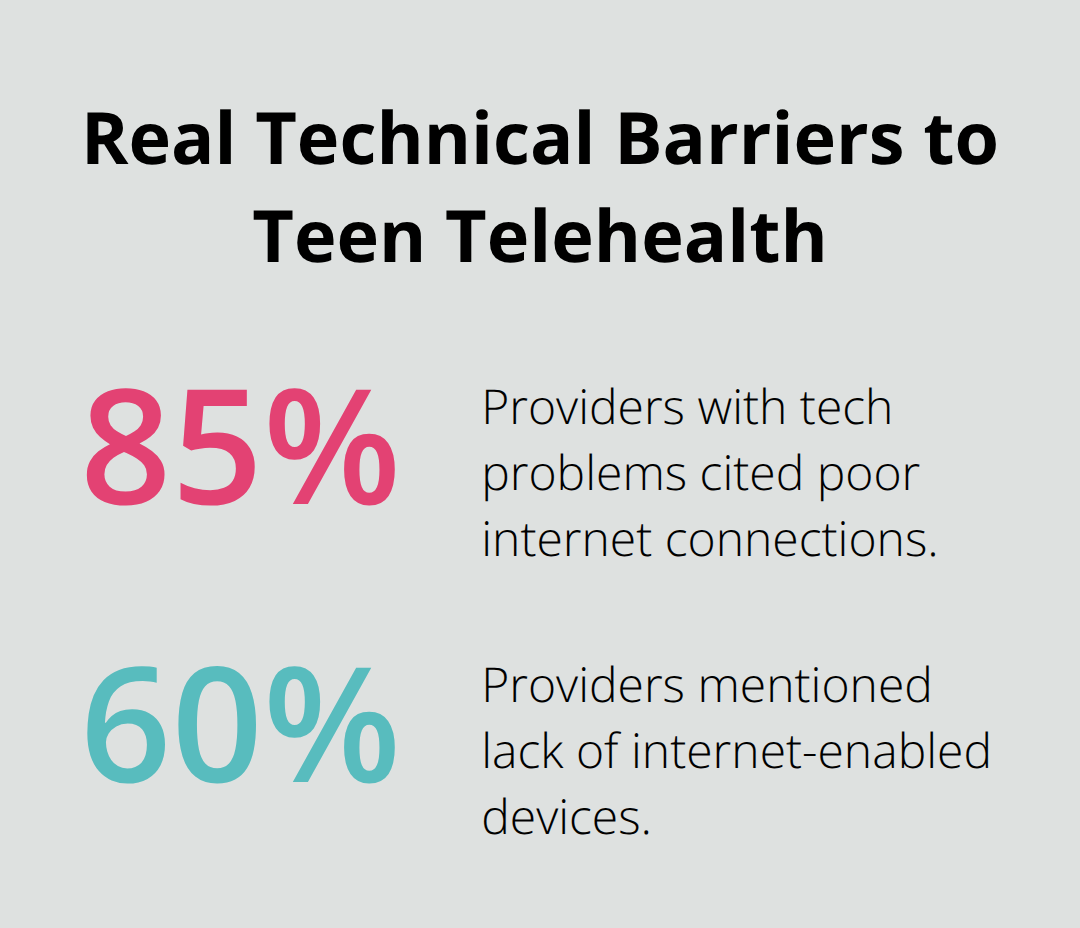
The real barriers are technical, not privacy-related. Eighty-five percent of providers reporting technology problems cited poor internet connections, and 60% mentioned lack of internet-enabled devices as obstacles. Rural families particularly struggle, and solving this requires concrete action.
Schools and community health centers can provide devices and hotspot access specifically for mental health appointments. Some states now fund broadband programs through Medicaid that cover internet costs for low-income families, making this a legitimate reimbursable expense worth investigating during intake conversations.
Mastering Webside Manner for Teen Engagement
Building genuine connection through a screen demands different skills than in-person therapy, yet most providers receive no training in webside manner. An adolescent with anxiety watches a therapist’s facial expressions differently on video, notices lag time during responses, and interprets silence as disconnection rather than reflection. Providers who succeed with teen telehealth practice specific techniques: maintain consistent eye contact by looking directly at the camera rather than the screen, speak slightly slower to account for processing delays, and explicitly name what you observe about the teen’s emotional state rather than assume understanding.
Coordinating Care Across School and Mental Health Systems
Schools coordinating with mental health providers should establish clear communication channels about what works and what doesn’t for each adolescent. A teen might tell their school counselor that sessions feel rushed or disconnected, information that never reaches the telehealth therapist without intentional coordination. The American Academy of Pediatrics emphasizes that telehealth works best within a medical home model where primary care, school services, and mental health providers actively share information. This means the school nurse knows about a teen’s medication changes, the therapist understands academic accommodations, and the pediatrician follows treatment progress. This coordination model ensures that each adolescent’s telehealth experience connects to their full support system rather than existing in isolation.
Final Thoughts
Telehealth for adolescent care represents a proven, scalable solution to the mental health crisis affecting nearly 40% of high school students. Virtual mental health services reduce wait times, eliminate geographic barriers, and meet adolescents where they actually are, which means providers who implement telehealth effectively see higher engagement rates, better treatment completion, and stronger therapeutic outcomes. The evidence is clear, and the infrastructure exists-what’s needed now is commitment to implementation.
Schools can provide devices and internet access to overcome technology gaps in rural and low-income communities, while providers can learn the specific skills that build trust through a screen and establish communication protocols that connect adolescents to coordinated care. Rural teens, those with transportation barriers, and adolescents managing anxiety or autism spectrum disorders often experience the greatest relief from virtual sessions, so start by assessing your current capacity and identifying which adolescents would benefit most from telehealth access. Build privacy practices into every appointment and partner with schools to create seamless referral pathways that support what’s working.
We at The Teen Center recognize that adolescents deserve access to specialized, evidence-based mental health care regardless of where they live or what their family’s schedule looks like. Learn more about how we integrate telehealth across our practice to expand mental health access for the adolescents in your community.