
One in five teens struggles with mental health issues, yet many never receive treatment. Geographic distance, transportation challenges, and long waitlists keep countless adolescents from getting the care they need.
Telehealth care for adolescents is changing this reality. At The Teen Center, we’ve seen firsthand how virtual mental health services remove barriers and connect teens with qualified providers, no matter where they live.
Why Telehealth Matters for Teen Mental Health Right Now
The mental health crisis among adolescents is no longer theoretical. COVID-19 has intensified mental health issues in children and adolescents, with documented increases in anxiety, depression, and post-traumatic stress disorder. One in five teens struggles with a mental health condition, yet the system designed to help them is fundamentally broken. Long waitlists stretch for months, therapists in rural areas are scarce, and transportation barriers keep families from accessing care even when providers exist nearby. For hourly workers and low-income families, taking time off work to drive to an appointment isn’t a minor inconvenience-it’s an impossible choice that forces teens to go without treatment.
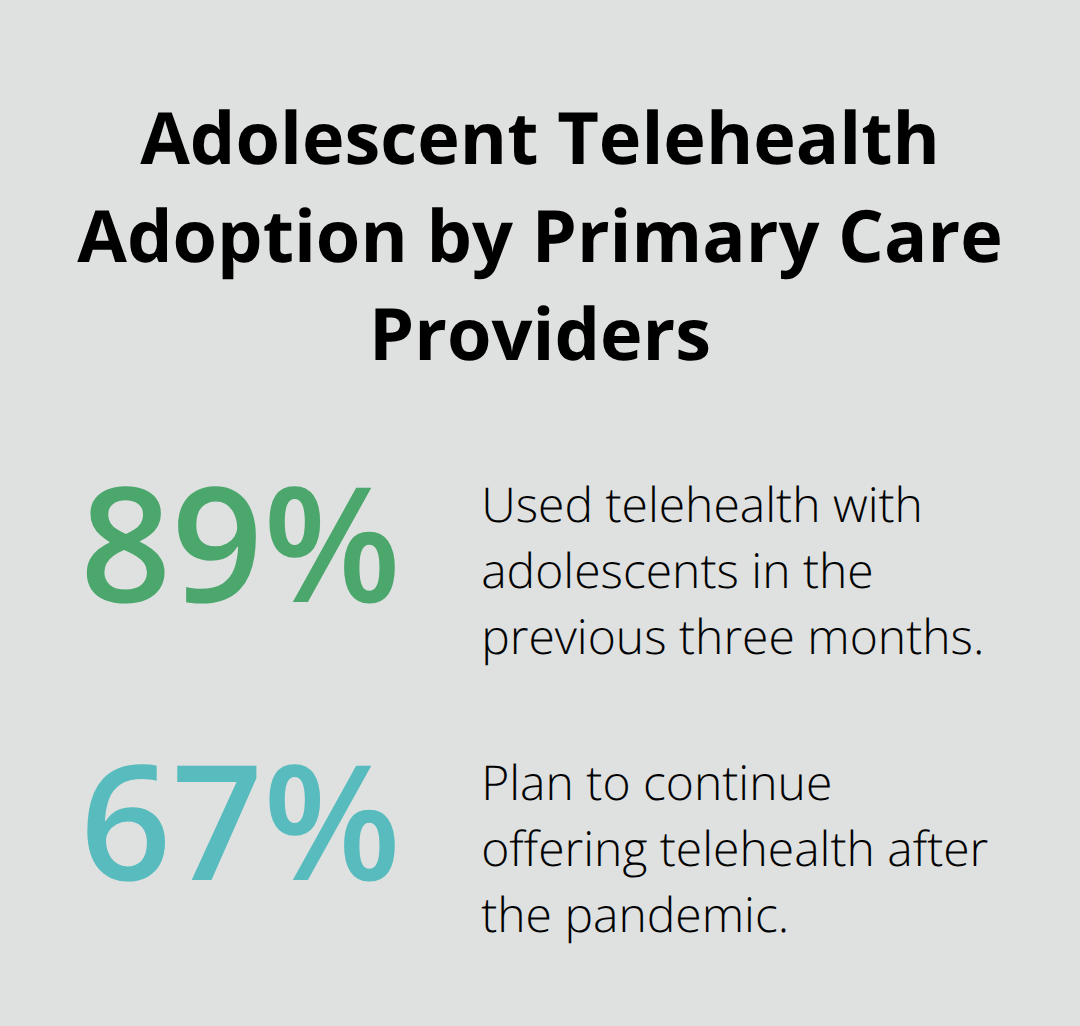
Telehealth directly addresses these friction points. A 1,047-provider survey revealed that 89 percent of primary care professionals used telehealth with adolescents within the previous three months, and 67 percent want to continue offering it after the pandemic.
The American Psychiatric Association notes that telemental health delivers outcomes equal to in-person care in engagement, quality of care, and clinical outcomes. For certain populations-adolescents with anxiety disorders, autism spectrum disorders, or physical limitations-telehealth is actually preferable to traditional in-person visits.
Transportation and Geography Stop Being Obstacles
Telehealth eliminates the transportation burden entirely. Roughly 67 percent of patients face transportation barriers that prevent them from accessing care, and for working families, the time cost of traveling to appointments compounds the problem. An adolescent in a rural area no longer waits months for a specialist who may not exist within a hundred miles. A teen whose family shares one vehicle can attend therapy from home. The flexibility also matters: providers report greater flexibility with telehealth, which enables shorter-interval follow-ups and year-round school-based mental health access beyond traditional office hours.
Privacy and Reduced Stigma Change Everything
Telehealth reduces stigma linked to seeking mental health care because adolescents receive services in a private, familiar setting rather than sitting in a waiting room where peers might see them. This matters more than many people realize-adolescents are far more likely to forgo care if they fear judgment or exposure. When a teen accesses mental health support from home (or another private location), the decision to seek help feels less public and less threatening. Providers who view the adolescent in their home environment also assess family dynamics, safety, and real-world functioning more accurately, which informs treatment decisions and helps identify potential risks that might remain hidden in a clinical office.
What Happens Next in Your Teen’s Care
Understanding how telehealth mental health services actually work-from that first assessment through ongoing treatment-helps families feel more confident about taking the next step.
Does Telehealth Actually Work for Teen Mental Health?
The American Psychiatric Association confirms that telemental health produces outcomes equal to in-person care in engagement, quality of care, and clinical outcomes. This isn’t a compromise or a temporary workaround-it’s proven effectiveness. What matters more is what happens inside the virtual session.
How the Home Environment Changes Treatment
Adolescents open up differently on a screen than they do in a waiting room. The home environment removes the clinical formality that makes some teens shut down. Providers see real life: the bedroom where a teen struggles to sleep, the kitchen where family meals happen, the space where anxiety actually lives. This visibility changes treatment. A clinician can assess whether a teen has a safe place to study, whether parents are present and supportive, whether the home itself contributes to stress. Teens with anxiety disorders, autism spectrum disorder, or physical limitations often find telehealth preferable because it removes the sensory overwhelm of traveling to an office and sitting in a waiting room. The session becomes about conversation and connection, not logistics.
Building Trust in Virtual Sessions
Building genuine trust in a virtual session requires intentional practice. Providers who succeed with telehealth adolescents start by setting clear expectations: explaining how long the session lasts, confirming whether the teen will have private time to speak alone, and establishing what happens if the internet cuts out. The strengths-based approach works better than jumping into problems. A clinician might start by asking what the teen enjoys, what helps them cope, or what they’re good at-this builds rapport before addressing depression, anxiety, or trauma.
Managing Medications and Psychiatric Care
For medication management and psychiatric care, telehealth works efficiently. A provider can review symptoms, adjust dosages, monitor side effects, and coordinate lab work without requiring the teen to sit in an office. Many providers use secure patient portals to collect pre-visit screening information about mood, sleep, suicidal thoughts, and substance use, which streamlines the telehealth appointment and ensures nothing gets missed. When prescriptions are needed, clinicians can adjust notification preferences to avoid exposing confidential information to caregivers and can facilitate home delivery or coordinate with local pharmacies.
Hybrid Models Offer Flexibility
The hybrid model-combining telehealth visits with occasional in-person appointments for physical assessments or medication monitoring-gives families flexibility while maintaining continuity of care across months and years. This approach works especially well for adolescents who need both virtual convenience and periodic in-person evaluation. The next step is understanding what actually happens during these sessions, from the moment a teen schedules that first appointment through the ongoing support that follows.
What Happens During Your Teen’s First Telehealth Visit
The initial telehealth appointment sets the foundation for everything that follows, and knowing what to expect removes anxiety for both teens and parents. Before the first session, office staff contact your family to update contact information, confirm platform access, and send pre-visit questionnaires about mood, sleep, substance use, and suicidal thoughts. These questionnaires streamline the appointment and help clinicians identify critical information that might otherwise surface late in treatment.
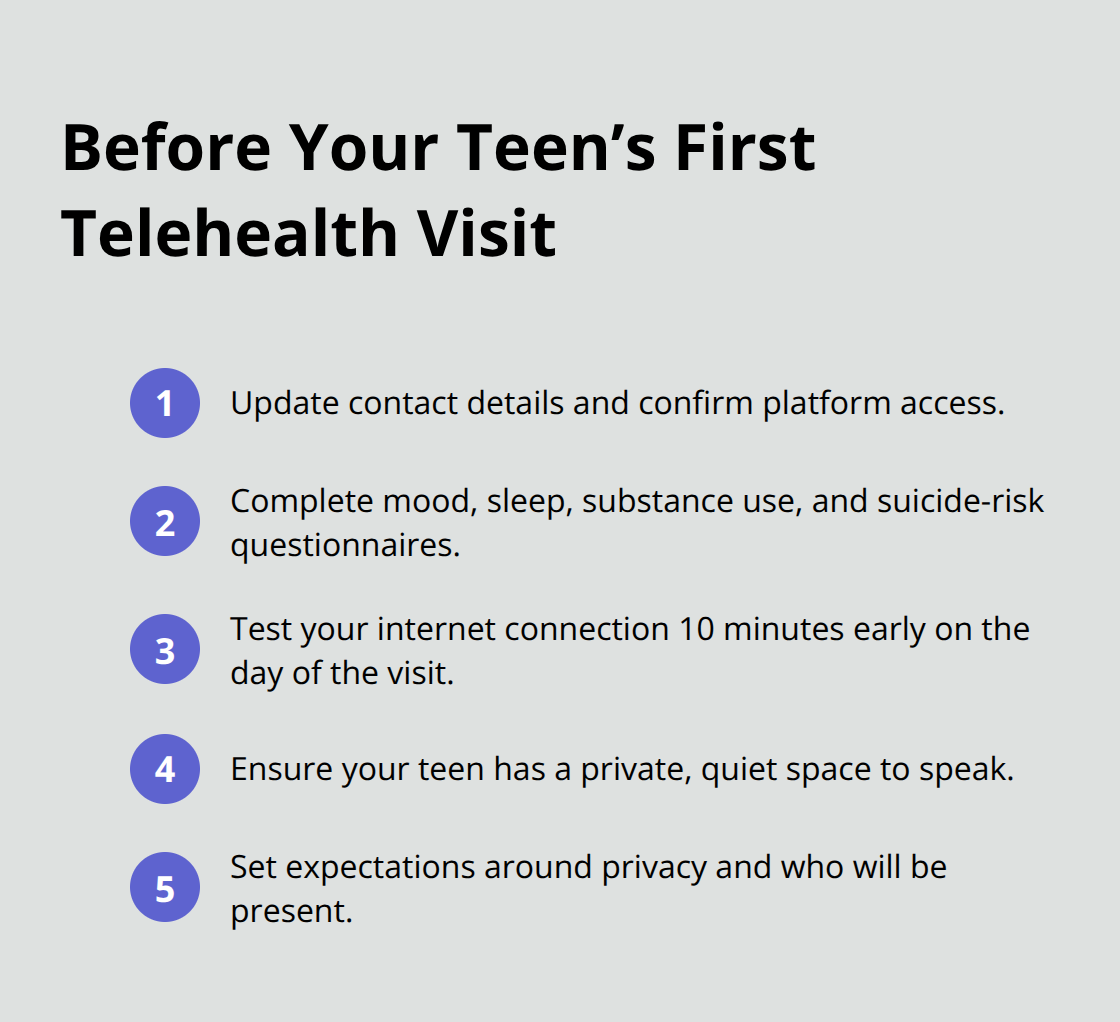
On the day of the visit, arrive 10 minutes early to test your internet connection and confirm your teen has a private space to speak confidentially. This matters intensely. Privacy during telehealth versus in-person visits is a key concern for families, so setting clear expectations upfront prevents awkward moments when a parent should step out of the room.
Setting Expectations and Building Safety
The clinician explains the session length, confirms whether your teen will have time alone to discuss sensitive topics like sexual health or substance use, and establishes what happens if the connection drops. During the assessment, the provider asks about your teen’s history, current stressors, sleep patterns, appetite changes, academic performance, and relationships. A strengths-based approach works better than jumping straight into problems-the clinician might ask what your teen enjoys or what helps them cope before addressing depression or anxiety. This builds genuine rapport and prevents the teen from shutting down. The clinician also assesses whether the home environment contributes to stress, whether your teen has a safe space to study, and whether parents are available and supportive. This visibility into real life informs treatment decisions in ways that office-based visits cannot.
Ongoing Sessions and Between-Visit Support
Ongoing therapy happens on a regular schedule-typically weekly or biweekly depending on severity-and the rhythm of consistent contact matters more than the format. Between sessions, many clinicians use secure patient portals to check in on mood, medication side effects, or homework assignments from therapy, which prevents small problems from becoming crises. If your teen struggles during the week, they can message their provider through the portal rather than waiting until the next scheduled appointment. This asynchronous communication reduces the pressure that some adolescents feel in live sessions and gives them time to articulate what’s happening.
Crisis Support and Emergency Response
Crisis support operates differently and must be immediate. Telehealth providers offer crisis protocols that specify how to reach an on-call clinician outside regular hours, what happens if your teen is in immediate danger, and when to call 911 versus contacting the provider. Many clinicians provide a direct line or emergency contact information at the first visit so families know exactly who to call.
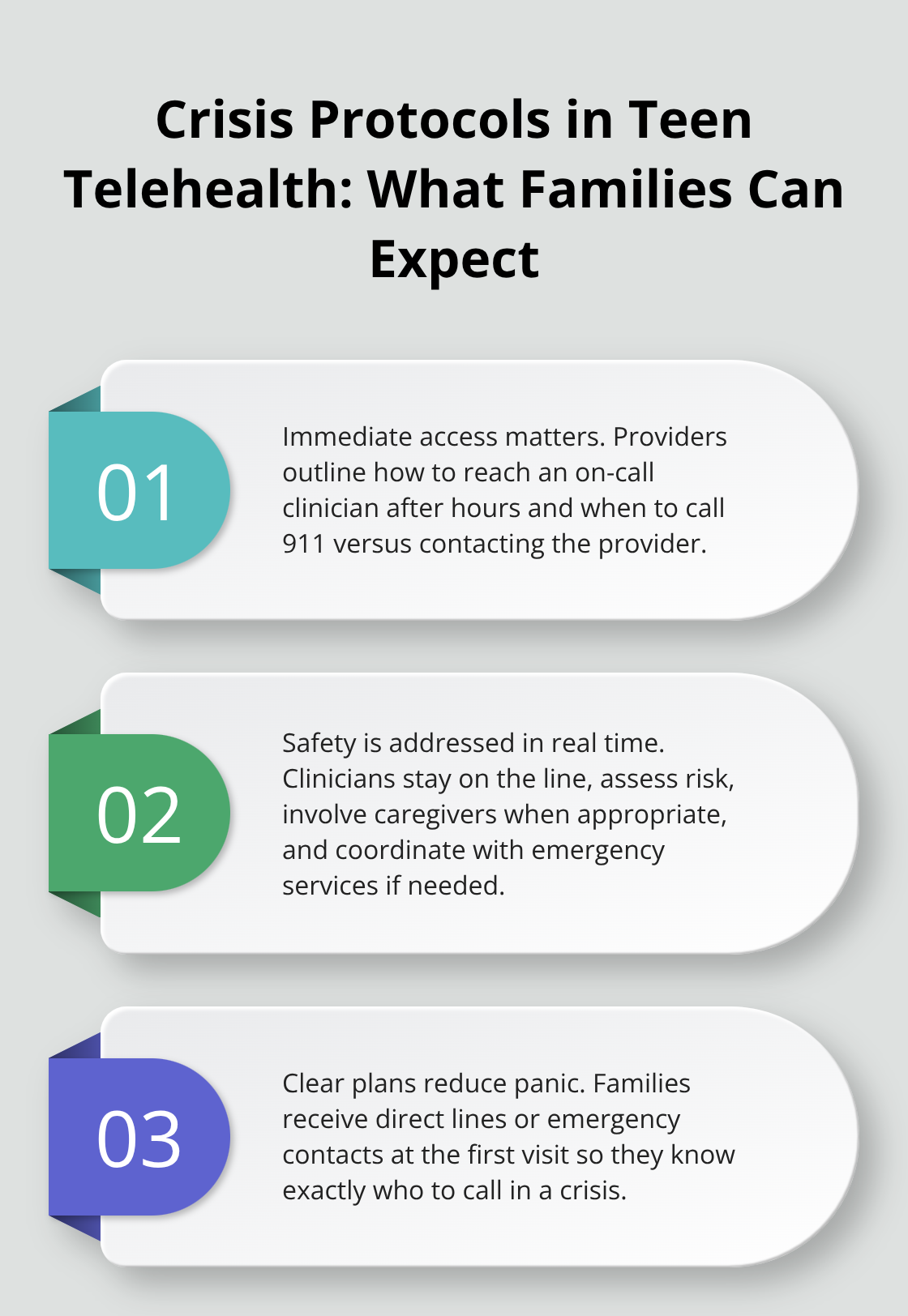
If your teen expresses suicidal thoughts during a session, the clinician does not end the call-they stay engaged, assess safety, involve parents if appropriate, and coordinate with emergency services if needed.
Hybrid Care Models for Flexibility
Some providers use hybrid approaches, combining telehealth check-ins with occasional in-person visits for medication monitoring or when a clinician needs to conduct a more thorough physical assessment. This flexibility works especially well for adolescents who benefit from consistent virtual contact but need periodic in-person evaluation. Your teen should know the schedule, understand how to reach their clinician between sessions, and have clear instructions about what to do if a crisis emerges. This predictability and accessibility transform telehealth from a convenience into a genuine safety net.
Final Thoughts
Telehealth care for adolescents has removed the barriers that once kept teens from treatment-distance, transportation, time, and stigma no longer have to stand in the way. Virtual mental health services deliver outcomes equal to in-person care while offering flexibility that works for real families with real constraints. A teen in a rural area accesses a specialist, a working family avoids the impossible choice between a paycheck and their child’s mental health, and an adolescent who fears judgment seeks help from home.
Taking the first step feels daunting, and your concerns about whether your teen will open up to a provider or whether virtual sessions will actually help are valid. Waiting, however, does not make these worries disappear-the longer an adolescent struggles without support, the deeper the patterns become. Reaching out now to a qualified provider gives your teen access to someone trained to help them move forward.
We at The Teen Center support adolescents ages 12 through 17 with specialized, evidence-based mental health care that combines individualized treatment plans, family involvement, and statewide telehealth access. Visit The Teen Center to learn more about how we support adolescents and to schedule that first appointment.