
Depression affects roughly 15% of teens in the United States, yet many cases go undetected. Early screening can make the difference between a teen struggling silently and one getting the help they need.
At The Teen Center, we’ve created this guide to help parents navigate teen depression screening resources and understand what to expect. Whether you’re noticing changes in your teen’s mood or want to be proactive, knowing where to start matters.
What Does Teen Depression Actually Look Like
How Depression Shows Up Differently in Teens
Depression in teens manifests differently than most parents expect. An estimated 20.1% of adolescents experience at least one major depressive episode, yet the symptoms often hide in plain sight. Many parents watch for sadness, but that represents only part of the picture. Girls typically show withdrawn behavior, persistent sadness, and loss of interest in activities they once enjoyed. Boys more frequently display irritability, anger outbursts, or increased risk-taking rather than obvious sadness.

Some teens mask depression through overachievement, maintaining grades while internally struggling.
Physical and Behavioral Warning Signs
Physical complaints matter more than many parents realize. Unexplained headaches, stomachaches, or chronic fatigue that doesn’t improve with rest can signal depression. Sleep disruption goes both directions: some teens sleep excessively while others develop insomnia. Appetite changes, difficulty concentrating in school despite capable intellect, and sudden social withdrawal from friends all warrant attention. The critical threshold is timing-if several of these signs persist daily for at least two weeks and noticeably disrupt your teen’s functioning, depression screening becomes necessary rather than optional.
Why Professional Assessment Prevents Misdiagnosis
Professional assessment after screening prevents misdiagnosis, which happens more often than parents realize. A comprehensive psychiatric evaluation looks beyond depression symptoms to rule out bipolar disorder, which presents similarly but requires entirely different treatment. The clinician gathers medical history, reviews whether physical conditions like thyroid problems could explain symptoms, and assesses suicide risk through direct conversation. This evaluation incorporates your observations as a parent alongside your teen’s self-report and clinical observation.
The Screening Process and What Comes Next
Screening for major depressive disorder is recommended in adolescents aged 12 to 18 years during annual checkups regardless of whether you’ve noticed warning signs. Screening takes approximately five minutes-a brief questionnaire about hopelessness, energy levels, sleep, appetite, and concentration. If screening indicates potential depression, the comprehensive evaluation determines whether treatment involves therapy, medication, both, or neither. This layered approach catches cases that informal observation misses while protecting against over-treating temporary mood fluctuations that all adolescents experience. Once you understand what screening reveals about your teen’s mental health, the next critical step involves knowing where to access these screening services and which options work best for your family’s situation.
Which Depression Screening Tools Should You Actually Use
Validated instruments clinicians use
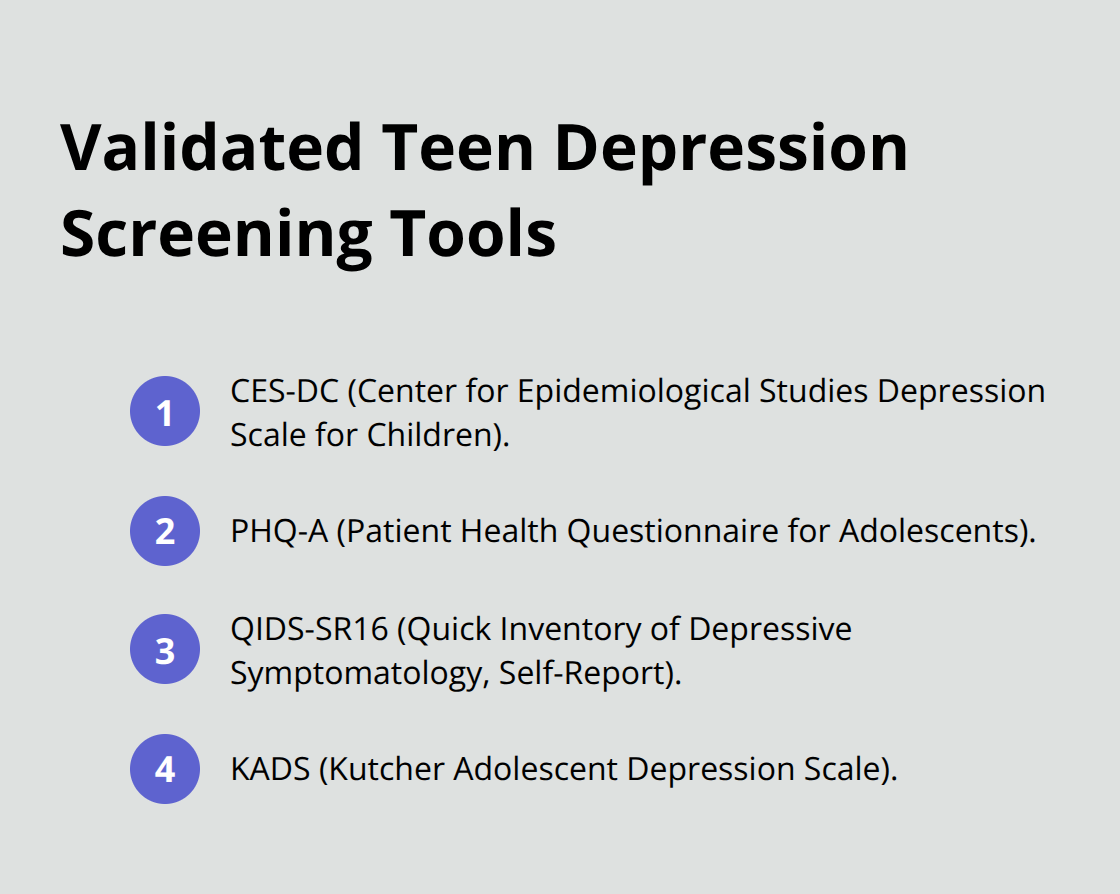
Clinicians rely on validated instruments when screening adolescents for depression, including the CES-DC, PHQ-A, QIDS-SR16, and KADS. The QIDS-SR16, developed at the University of Pittsburgh, asks teens to report on symptoms from the past seven days across domains like sleep, mood, appetite, concentration, energy, self-worth, and interest in activities. These tools take roughly five minutes to complete and categorize results into five severity levels ranging from no major symptoms to very significant symptoms. The advantage of validated instruments lies in their consistency-they measure the same constructs across different clinics and settings, making results comparable and reliable.
What a Positive Screen Actually Means
A positive screen from any of these tools does not diagnose depression; it signals that a comprehensive psychiatric evaluation is necessary to confirm diagnosis and rule out conditions like bipolar disorder that mimic depression but require different treatment. Your teen’s primary care doctor can administer these during a routine visit, which means screening often costs nothing beyond your regular copay since most insurance plans cover depression screening as preventive care under the Affordable Care Act. This accessibility removes a major barrier that prevents many families from taking that first step toward answers.
The Real Limitations of Online Screening Tools
Online screening tools like those offered through Mental Health America provide educational value but carry real limitations parents should understand. These free tools give your teen immediate feedback about symptom severity and next steps, which can lower barriers to seeking help and spark conversations about mental health at home. However, online screenings lack the clinical judgment that prevents false positives and false negatives-a teen could score high due to temporary stress from exams rather than clinical depression, or conversely, might minimize symptoms and score low despite experiencing significant distress.
Why Comprehensive Evaluation Goes Beyond Questionnaires
A comprehensive evaluation incorporates detailed medical and developmental history, direct assessment of suicide risk, observation of how your teen presents during the session, and collaboration with your family to understand context that no form can capture. This multi-layered approach identifies not just whether depression exists but also what’s driving it, whether other conditions are present, and which specific treatments will help your particular teen rather than a generalized approach. Understanding which screening tool your doctor uses and what its results actually mean prepares you for the conversation about where to access these services and how to move forward with confidence.
Finding the Right Place to Get Your Teen Screened
Primary Care Doctors Offer the Fastest Path to Screening
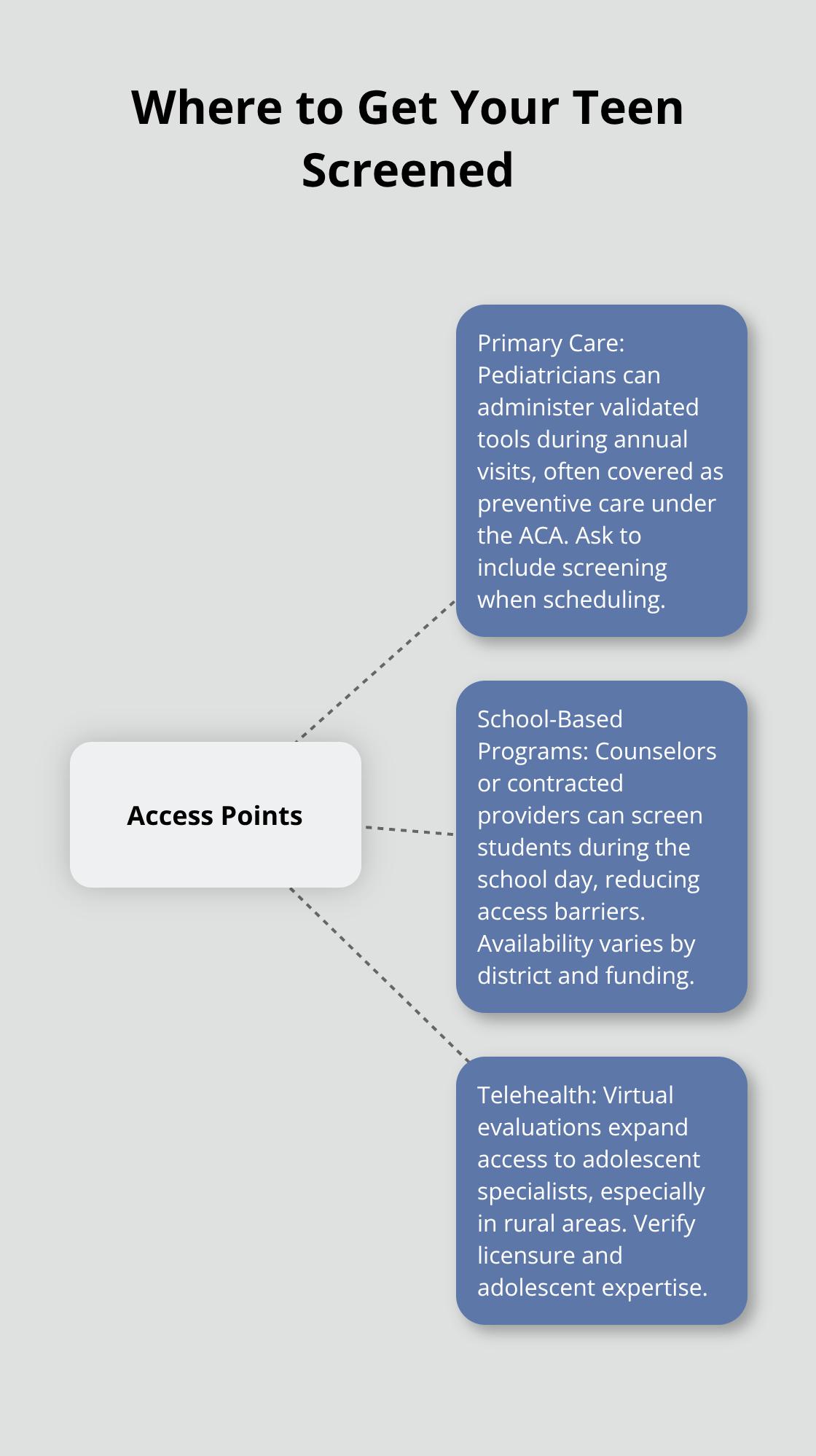
Your primary care doctor remains the fastest entry point for depression screening, and this matters because most pediatricians can administer validated screening tools during annual wellness visits at no additional cost thanks to Affordable Care Act coverage of preventive mental health services. When you call to schedule your teen’s checkup, explicitly mention that you want depression screening included in the visit. This prevents the appointment from running over and ensures the doctor allocates time for the assessment rather than rushing through it. Many pediatricians use the PHQ-A or similar validated tools they can score and interpret immediately, then discuss results with you and your teen before the visit ends.
If your pediatrician lacks experience with adolescent depression screening, ask directly whether they conduct these assessments or can refer you to someone who does. Some primary care practices partner with school-based mental health coordinators, creating a coordinated pathway that strengthens outcomes.
School-Based Programs Reduce Access Barriers
School-based mental health programs offer screening access without requiring parents to navigate the healthcare system independently, which matters for families juggling work schedules or lacking reliable transportation. Many schools employ counselors or contracted mental health providers who can screen students during the school day, reducing barriers that prevent screening from happening at all. However, school-based screening varies dramatically by district and state funding levels. Some well-resourced districts conduct universal depression screening for all students annually, while others respond only when parents request it or when teachers flag concerning behavior.
Contact your teen’s school counselor to ask whether depression screening is available and what the referral process looks like. This conversation often reveals whether your district has established protocols or whether you need to advocate for screening access.
Telehealth Expands Options for Specialized Evaluation
Telehealth has transformed access to specialized mental health evaluation, particularly for families in rural areas or those seeking clinicians with specific expertise in adolescent depression. The Teen Center delivers specialized, evidence-based mental health care for adolescents through both in-person and telehealth options, offering comprehensive evaluations that go beyond basic screening to create individualized treatment plans with family involvement. Other telehealth providers also offer initial evaluations, though quality and clinician training vary significantly.
When selecting any telehealth option, verify that the clinician holds appropriate licensure in your state and has documented experience with adolescent depression rather than assuming all virtual providers offer equivalent expertise. This verification step protects your teen from receiving care from providers without adequate training in adolescent mental health.
Moving Forward After Screening
A positive depression screening result means your teen needs a comprehensive psychiatric evaluation to confirm diagnosis and determine the best treatment path. During this evaluation, a clinician will review the screening results with you and your teen, explain what the findings indicate, and discuss whether therapy, medication, both, or other interventions make sense for your specific situation. This conversation should address your questions directly-ask about the clinician’s recommended approach, expected timeline for improvement, and how you’ll monitor progress over time.
Treatment for adolescent depression typically involves evidence-based approaches like cognitive-behavioral therapy, which teaches teens practical skills to manage negative thought patterns and build coping strategies. Some teens benefit from medication alongside therapy, while others respond well to therapy alone. The key is matching treatment to your teen’s needs rather than applying a one-size-fits-all approach. Your teen’s clinician should involve your family in treatment planning because parental support significantly improves outcomes.
We at The Teen Center provide specialized, evidence-based mental health care for adolescents through individualized treatment plans that involve your family and combine therapy, medication management when appropriate, and crisis support. Whether you choose our services or another provider, the critical step is moving from screening to action. Your teen’s mental health matters, and professional support after screening gives them the tools to build resilience and achieve emotional stability.