Anxiety in teens is climbing fast. According to the National Institute of Mental Health, nearly one in three adolescents experience an anxiety disorder, yet many cases go unrecognized because parents and teens don’t know what to look for.
At The Teen Center, we believe teen anxiety symptom awareness is the first step toward getting help. When you understand the physical, behavioral, and emotional signs early, you can intervene before anxiety takes hold of school, friendships, and daily life.
Physical Signs of Teen Anxiety
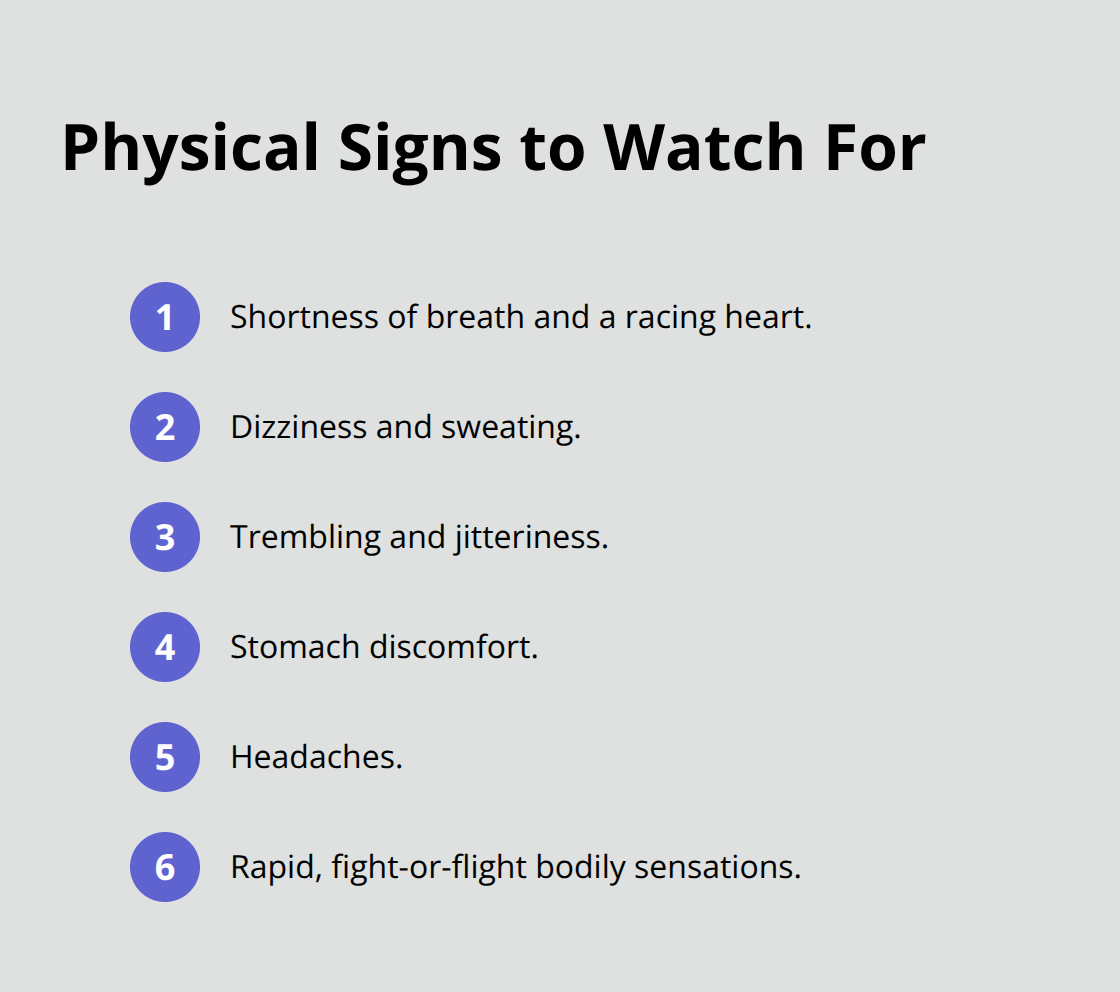
Anxiety shows up physically before your teen even realizes they’re worried. Shortness of breath and racing heart, dizziness, sweating, trembling, stomach discomfort, headaches, and jitteriness signal that anxiety has triggered their fight-or-flight response. According to Healthdirect Australia, these physical symptoms are real and measurable, not something your teen is imagining or exaggerating. The key is spotting them early, because many parents mistake these signs for other health issues and miss the anxiety underneath.
Sleep Problems and Fatigue
Sleep disruption and fatigue stands as one of the most reliable indicators of teen anxiety. Your teen might struggle to fall asleep because their mind won’t stop racing, or they wake multiple times during the night. When sleep becomes fragmented, fatigue follows, leaving them exhausted during the day and unable to concentrate in class or complete assignments. Watch for patterns where your teen sleeps more than usual but still feels tired, or where they’re wired at night but crash during the day. Chronic sleep problems in anxious teens can persist for weeks or months, creating a vicious cycle where poor sleep amplifies anxiety and anxiety worsens sleep quality.
Appetite and Digestive Changes
Anxiety directly affects the digestive system. Your teen might lose interest in food, skip meals, or complain that food tastes different. Others eat more as a coping mechanism. Chronic stomachaches and headaches occur frequently in anxious teens (according to the Child Mind Institute), and these symptoms often have no clear medical cause. The stomach-brain connection is powerful, so digestive complaints that doctors can’t explain medically should prompt a conversation about stress and worry levels. Pay attention if your teen suddenly changes eating patterns or frequently mentions stomach pain before school or social events-these shifts often signal underlying anxiety that needs attention.
Behavioral and Emotional Warning Signs
Social Withdrawal and Isolation
When anxiety takes root, your teen’s behavior shifts in ways that are hard to miss if you know what to watch for. Social withdrawal and isolation becomes one of the most telling signs. Your teen stops attending events they once enjoyed, declines invitations from friends, or spends excessive time alone in their room. This isn’t typical teenage moodiness; anxious teens actively avoid situations where they fear judgment or embarrassment. They may also become hypersensitive to criticism, interpreting neutral comments as personal attacks. According to the Child Mind Institute, teens with anxiety worry intensely about how others perceive them, which drives them to isolate rather than risk social interaction.
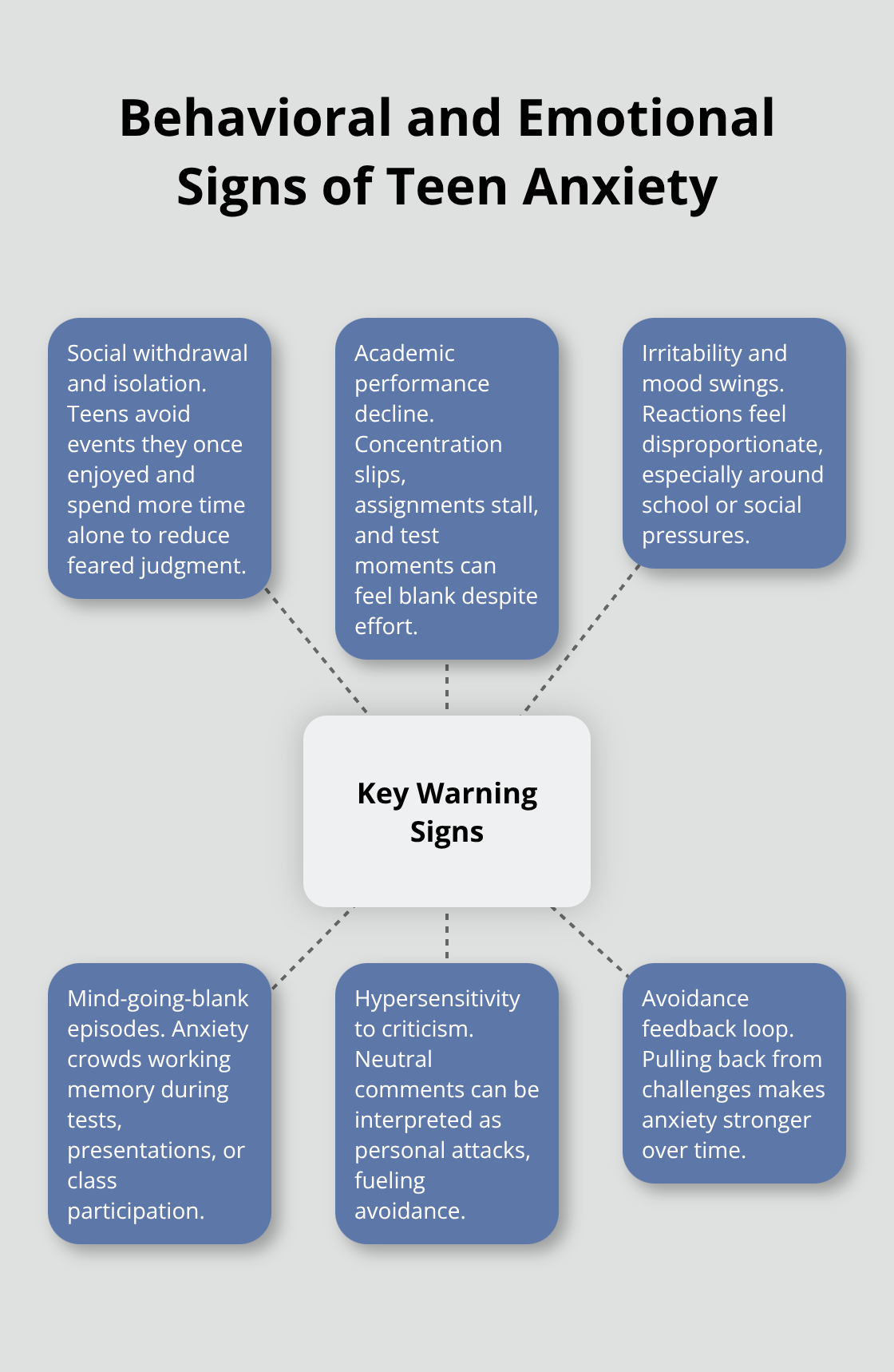
The critical insight: isolation reinforces anxiety, creating a feedback loop where avoidance makes anxiety worse over time. If your teen suddenly cancels plans, stops participating in clubs or sports they cared about, or shows extreme self-consciousness in group settings, anxiety likely plays a role.
Academic Performance Decline
Academic performance decline frequently accompanies behavioral anxiety in teens. Your teen struggles to concentrate during class, has difficulty starting or finishing assignments, or shows sudden drops in grades despite apparent effort. This happens because anxiety floods the brain with worry, leaving little mental space for learning. Concentration problems appear as mind-going-blank moments, especially during tests or presentations. Your teen’s grades may plummet even when they study hard, signaling that anxiety-not lack of ability-blocks their performance.
Irritability and Mood Changes
Irritability and mood swings intensify when anxiety escalates. Your teen snaps at family members over minor issues, seems perpetually frustrated, or displays emotional volatility that feels disproportionate to the situation. These mood changes often peak in the afternoon or evening as daily stress accumulates. The distinction that matters most: anxious irritability typically links to specific situations (school, social events, performance demands), whereas mood swings from other causes tend to be more random. Johns Hopkins Medicine emphasizes that when you notice these behavioral patterns persisting for weeks and interfering with school attendance or friendships, professional evaluation becomes necessary rather than optional. These warning signs point toward a larger truth about teen anxiety-early recognition opens the door to effective treatment before anxiety deepens its grip on your teen’s life.
Why Early Detection Changes Everything
Anxiety disorders that go unrecognized in early adolescence frequently intensify into severe conditions that disrupt entire developmental periods. The data is clear: adolescent anxiety cases rose from 650 million to 1.28 billion between 1990 and 2019, according to the Global Burden of Disease Study. What matters more is what happens when anxiety remains untreated. Generalized Anxiety Disorder in teens correlates directly with higher risk of depression later in life, meaning early intervention now prevents compounding mental health struggles years ahead.
The Cost of Waiting
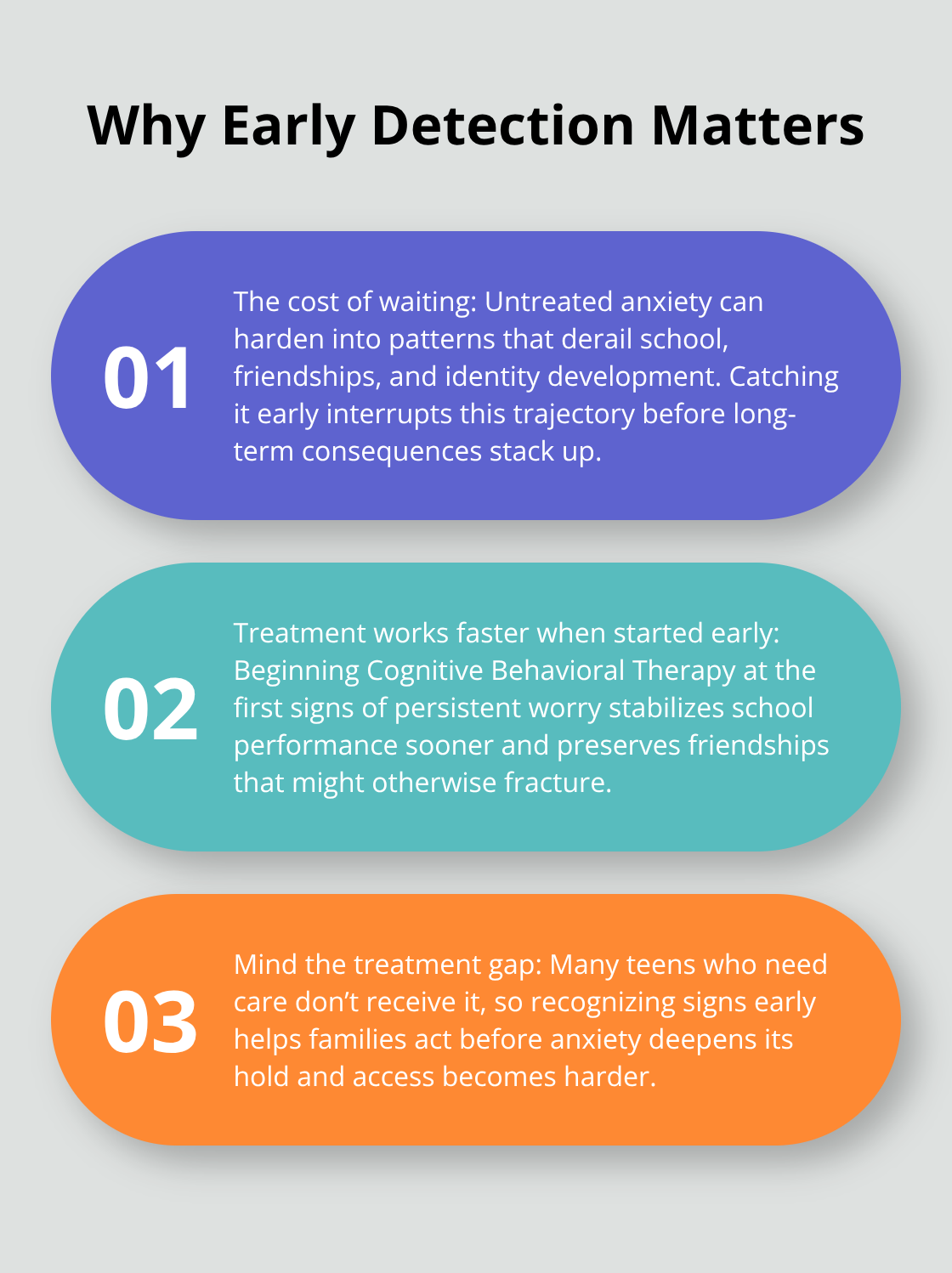
Untreated anxiety limits the developmental experiences that shape teen identity and confidence, potentially increasing risk of later suicidal thoughts. When you catch anxiety early, you interrupt this trajectory before it hardens into a pattern your teen carries into adulthood. The window for intervention matters enormously-a teen treated at the first sign of sleep disruption and concentration problems returns to normal functioning within months, whereas a teen whose anxiety escalates unchecked may spend years catching up academically and socially.
Treatment Works Faster When Started Early
Cognitive Behavioral Therapy, the gold standard for teen anxiety, works significantly faster when started at the first sign of persistent worry rather than months or years later. Early intervention means your teen spends weeks in therapy building coping skills instead of spending years managing an entrenched condition. School performance stabilizes faster when anxiety treatment begins before your teen falls behind academically. The social connections your teen maintains or rebuilds during early treatment preserve friendships that would otherwise fracture through prolonged isolation.
The Treatment Gap Reality
Research shows that even in high-income countries, only about 44.2% of children with mental disorders receive any healthcare service, meaning many teens suffer needlessly when treatment exists. This gap between those who need help and those who receive it underscores why early detection matters-once you recognize the signs, you can act before anxiety deepens its hold. Your role in noticing these early signs directly determines whether your teen experiences anxiety as a manageable challenge or as a defining feature of their teenage years.
Final Thoughts
The physical signs of teen anxiety-racing heart, sleep disruption, stomach problems-combined with behavioral shifts like social withdrawal, academic decline, and irritability paint a clear picture when you know what to watch for. Teen anxiety symptom awareness starts with recognizing these patterns early, before they solidify into years of struggle. Your attention to these warning signs matters because early detection directly changes your teen’s trajectory.
Professional support transforms how your teen experiences anxiety through personalized treatment plans that address specific triggers and symptoms rather than applying generic approaches. Cognitive Behavioral Therapy produces measurable results within weeks when started at the first sign of persistent worry, not months later when anxiety has already damaged friendships and academic standing. Family involvement strengthens this progress, as parents who understand anxiety can support their teen’s recovery at home and reinforce what happens in therapy sessions.
Talk with your teen’s doctor, school counselor, or a mental health professional about what you’ve observed, focusing on concrete details like sleep problems, social withdrawal, and concentration difficulties. The Teen Center offers evidence-based mental health care for adolescents ages 12–17 through intensive outpatient programs, individual and family therapy, medication management, and crisis support both in person and via telehealth. Reaching out for professional support now prevents anxiety from deepening its hold on your teen’s life.