
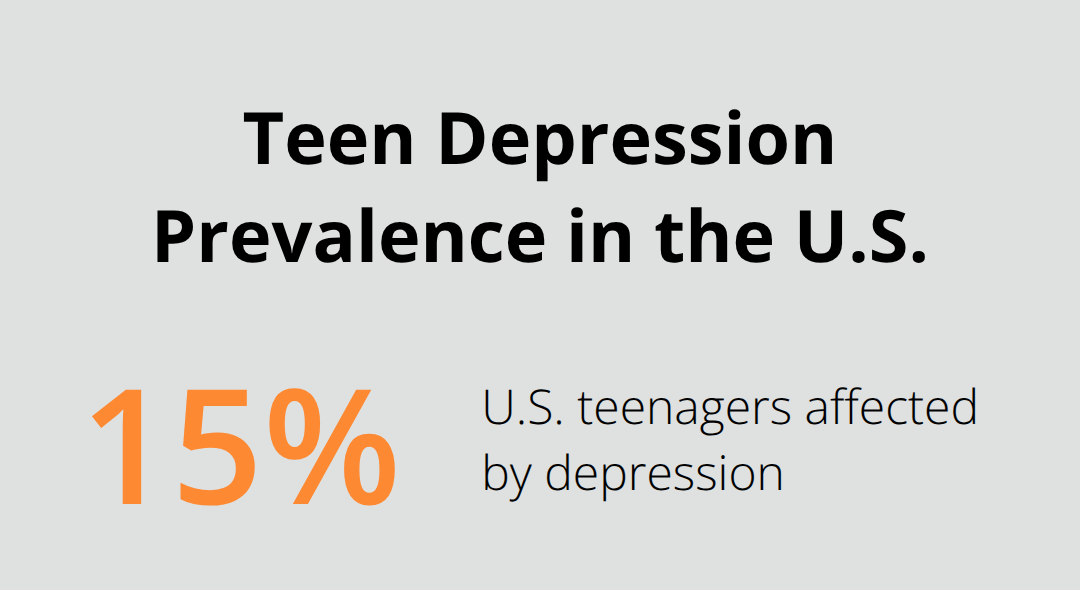
Depression affects roughly 15% of teenagers in the United States, yet many parents miss the warning signs. At The Teen Center, we’ve created this guide to help you recognize what’s happening and take action.
Managing adolescent depression symptoms requires understanding both what to look for and how to respond. This guide walks you through practical steps, from spotting early warning signs to finding the right professional support for your teen.
What Depression Actually Looks Like in Your Teen
Depression in teenagers shows up differently than most parents expect. Your teen won’t necessarily sit around looking sad-they’re more likely to become irritable, angry, or withdrawn. According to the National Institute of Mental Health, about 1 in 5 adolescents experiences depression during the teen years, and irritability or anger often appears as the primary mood rather than sadness. You might notice your teen snapping at you over small things, complaining about unexplained aches or pains, or becoming extremely sensitive to criticism. This behavioral shift signals that something has changed.
Sleep, Appetite, and Energy Collapse
Sleep patterns typically become chaotic during depression. Your teen might sleep 12 hours straight and still struggle to get out of bed, or they might lie awake for hours despite feeling exhausted. Appetite changes follow a similar unpredictable pattern-some teens lose weight without trying, while others gain it rapidly. Energy levels crash, making even simple tasks feel overwhelming. Academic performance drops noticeably because concentration becomes nearly impossible. Your teen might spend hours on homework that used to take 30 minutes, or they might stop turning in assignments altogether. School attendance often suffers too, with your teen finding reasons to stay home.
The Social Withdrawal That Isolates Them
Social withdrawal stands as one of the most telling signs of adolescent depression. Your teen stops making plans with friends, declines invitations, or spends entire weekends in their room. This isolation happens because depression makes social interaction feel exhausting and pointless. They might say things like nobody understands them or they have nothing in common with friends anymore. This withdrawal accelerates depression because reduced social contact removes one of the strongest protective factors against mood disorders.
Physical activity drops significantly-sports they played, walks they took, or activities they enjoyed simply stop happening.
The Language of Hopelessness
The combination of isolation, inactivity, and rumination creates a feedback loop that deepens depression. Your teen’s language becomes more self-critical and hopeless too. They express feelings of worthlessness, excessive guilt over minor things, or persistent negative thoughts about themselves and their future. Loss of interest in activities they once loved is particularly striking. If your teen suddenly quits band, stops gaming, or abandons hobbies they’ve had for years, that’s a concrete signal something is wrong. These changes often develop gradually over weeks or months, which is why many parents miss them until the depression becomes severe. Once you recognize these patterns, the next step involves understanding how to respond-and that starts with creating the kind of environment where your teen feels safe enough to talk about what they’re experiencing.
How to Start the Conversation and Take Action
Starting a conversation about depression with your teen requires abandoning the lecture approach entirely. Most parents wait for the perfect moment or rehearse what they want to say, but that usually backfires because teens sense the setup immediately. Instead, initiate conversations during low-pressure activities where you’re side-by-side rather than face-to-face. Driving to school, cooking together, or taking a walk creates natural openings without the intensity of sitting down for a serious talk. Express specific observations rather than broad accusations: instead of saying you seem depressed, try I noticed you haven’t gone to soccer practice in three weeks, and I’m concerned about you. This approach avoids putting your teen on the defensive while showing you’re paying attention.
Listen Without Trying to Fix Everything
Listen without jumping to solutions or minimizing their experience. When your teen shares something difficult, resist the urge to immediately offer advice or tell them everything will be fine. Active listening without lecturing builds trust, which is essential for your teen to stay open with you. Many parents make the mistake of treating depression as something a teen can simply think their way out of, which damages the relationship and makes your teen less likely to accept help. Your teen needs to feel heard first before they’ll accept any guidance about treatment or change.
Connect with a Professional Quickly
Contact your teen’s primary care doctor first once you notice persistent symptoms lasting more than two weeks. Your doctor can rule out physical causes like thyroid issues or vitamin deficiencies that sometimes mimic depression, and they can provide referrals to qualified therapists. If your teen is experiencing suicidal thoughts or talking about self-harm, call the 988 Suicide & Crisis Lifeline immediately rather than waiting for an appointment. When you do find a therapist, involve your teen in choosing one because treatment engagement depends heavily on whether they feel heard by their provider.
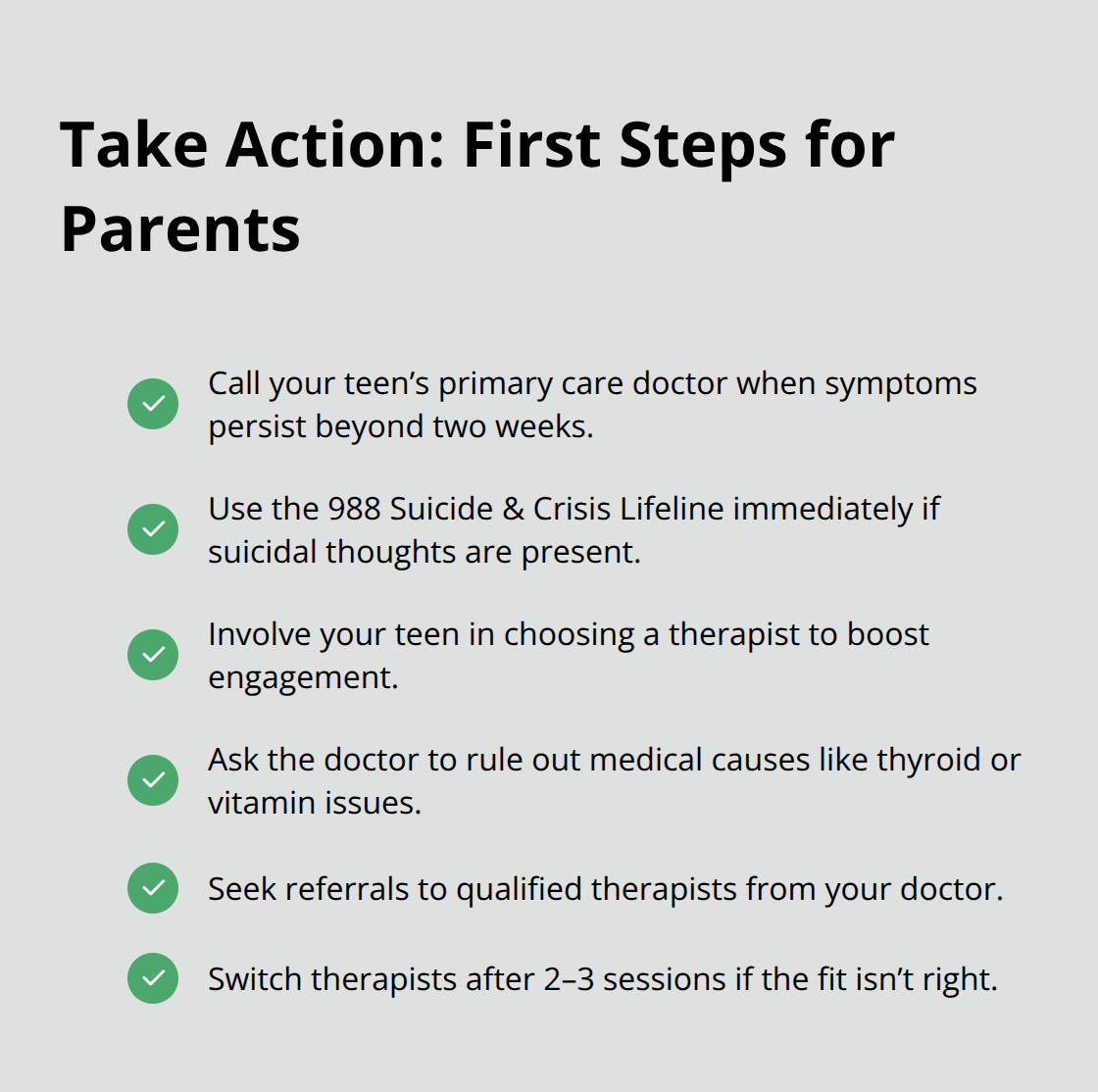
If the first therapist isn’t a good fit after two or three sessions, switch to someone else without guilt.
Build Structure Through Daily Routines
Establishing healthy daily structure matters just as much as therapy. Try one hour of physical activity daily since research shows exercise has a positive effect on adolescent mood, even when depression makes motivation nearly impossible. Set realistic expectations about screen time rather than banning phones entirely, which creates conflict without addressing the underlying depression. Ensure your teen sleeps 8–10 hours nightly by establishing a consistent bedtime and removing devices from the bedroom an hour before sleep. Regular meals with adequate nutrition support mood stability better than skipping meals or relying on processed foods. These routines provide scaffolding that depression tries to dismantle, and maintaining them signals to your teen that you’re taking this seriously while reducing the shame they often feel about their condition.
Know When Professional Treatment Becomes Necessary
Your teen’s symptoms will determine what level of care works best. Mild to moderate depression often responds well to therapy alone, while more severe cases may require medication, intensive outpatient programs, or a combination of approaches. A mental health professional will assess your teen’s specific situation and recommend the right treatment path. The next section walks you through the different evidence-based treatment options available and what each one involves.
Treatment Approaches That Actually Work
Therapy alone resolves many cases of adolescent depression, particularly when symptoms are mild to moderate. Cognitive Behavioral Therapy (CBT) and Dialectical Behavior Therapy (DBT) stand out as the most effective individual approaches according to research. CBT helps your teen identify negative thought patterns and replace them with more realistic thinking, while DBT focuses on emotional regulation and distress tolerance skills. These aren’t vague talk sessions-your teen learns concrete techniques they practice between appointments. Family therapy addresses communication breakdowns and relationship patterns that often fuel depression, making it especially valuable when family conflict contributes to your teen’s symptoms.

Some therapists combine multiple approaches depending on what your teen needs. The key is finding a provider who explains what they’re doing and why, so your teen understands the process rather than feeling like they’re just sitting in an office talking.
When Medication Becomes Part of Treatment
Medication enters the picture when depression is moderate to severe or when therapy alone isn’t producing results within 8 to 12 weeks. Antidepressants like SSRIs can be effective, but the FDA warns they carry risks in adolescents, including increased suicidal thoughts early in treatment. This doesn’t mean medication is off the table-it means close monitoring matters enormously. Your teen’s doctor should see them within one week of starting medication, then every two weeks for the first month, watching specifically for agitation, restlessness, insomnia, or worsened suicidal thoughts. Most improvement takes 4 to 6 weeks, so patience is required.
Intensive Outpatient Programs for Severe Depression
For severe depression that doesn’t respond to outpatient treatment, intensive outpatient programs provide structured care with multiple therapy sessions weekly, psychiatric oversight, and academic support without requiring hospitalization. These programs combine individualized treatment plans with family involvement, helping teens build the tools to work through their depression while maintaining school engagement. Your teen’s psychiatrist or therapist will recommend the right intensity based on symptom severity and how quickly they’re improving.
Final Thoughts on Your Teen’s Recovery
Treatment for adolescent depression symptoms isn’t a straight line, and your teen will experience good days alongside setbacks. Change happens slowly during the first few weeks of therapy or medication, which often feels discouraging when parents expect immediate improvement. Your role shifts from problem-solver to consistent supporter who shows up, listens, and reinforces the work your teen completes in treatment.
As symptoms improve, help your teen identify what actually helps-whether that’s morning runs, time with specific friends, creative projects, or quiet time alone. Research shows that teens who stay connected to activities they enjoy and maintain strong relationships recover better and experience fewer relapses. Celebrate small wins openly, whether that’s attending school after weeks of absence, reaching out to a friend, or completing homework without a meltdown.
Crisis resources remain important even after your teen improves, so keep the 988 Suicide & Crisis Lifeline number visible on your phone and your teen’s phone. If your teen mentions self-harm or suicide again, that signals the need to increase support immediately rather than indicating treatment failure. Contact The Teen Center to learn how evidence-based treatment combining individual therapy, family involvement, and medication management when needed can support your family’s recovery journey.