
One in five teens experiences a mental health condition each year, yet many cases go undetected during routine pediatric visits. Pediatricians are often the first medical professionals to spot warning signs like mood changes, academic struggles, or social withdrawal.
At The Teen Center, we know that coordinated care between pediatricians and mental health specialists transforms outcomes for at-risk teens. This guide shows how to build effective communication channels, share information securely, and connect families with the right support systems.
Spotting the Real Warning Signs
Pediatricians encounter teens at their most vulnerable moments, yet the signs of mental health struggles often hide in plain sight. Mood swings are normal in adolescence, but persistent irritability, emotional numbness, or sudden anger outbursts that disrupt daily life signal something deeper. According to the WHO, anxiety disorders affect 5.3% of teens aged 15–19, and depression impacts 3.4% in the same age group. Look for shifts in sleep patterns, appetite changes, or complaints of fatigue that don’t match their activity level. A teen who once enjoyed time with friends but now spends entire weekends isolated in their room, or one whose grades plummet from As to Cs within a semester, needs assessment. Academic decline often reflects anxiety, depression, or concentration problems like ADHD, which affects about 2.2% of adolescents aged 15–19. The Israeli Delphi study found 92% consensus among experts that pediatricians should recognize these warning signs during routine visits. Social withdrawal stands out as particularly telling: a teen who stops attending sports, quits the debate team, or avoids family gatherings may experience depression or anxiety. Pay attention when a parent mentions their teen has stopped texting friends or deleted social media accounts-these changes matter as much as any physical symptom.
Direct Questions That Work
Direct questions yield better information than waiting for teens to volunteer concerns. Ask about sleep quality and duration, school attendance, friendships, and whether they’ve noticed changes in mood or energy. Inquire about substance use, self-harm, or thoughts of suicide without assuming the answer. Research shows that asking about suicidality does not plant ideas; it opens conversation. If a teen reports academic struggles, ask whether concentration problems, anxiety, or lack of motivation caused them. The first-visit duration for teen mental health concerns averages 36 minutes according to Israeli health policy research, so allocate adequate time for these conversations.
Screening Tools That Pediatricians Trust
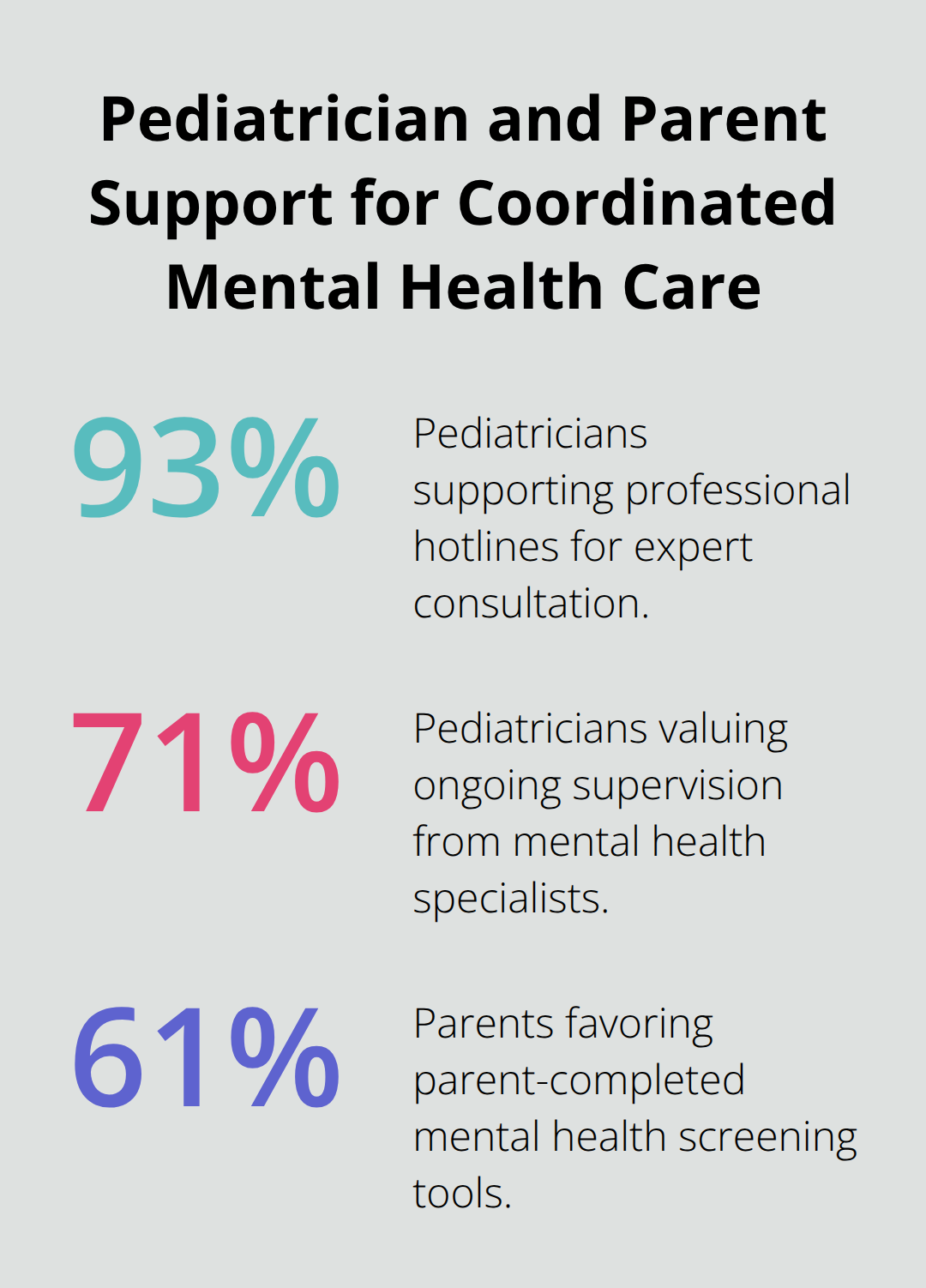
Use parent-completed screening tools rather than child-completed ones, as parents rated them favorably at 61% in expert consensus studies, while child self-screening was less favored at 34–38%. A simple two-question screener-asking about depressed mood and anhedonia over the past two weeks-catches most cases of depression. These tools help structure conversations and document concerns in the medical record.
Moving Forward With Referrals
When warning signs emerge, coordinate immediately with a mental health professional rather than delaying referral. This step determines whether teens receive timely care and begin treatment before conditions worsen.
How Pediatricians Can Coordinate Care with Mental Health Specialists
Set Up a Dedicated Referral System
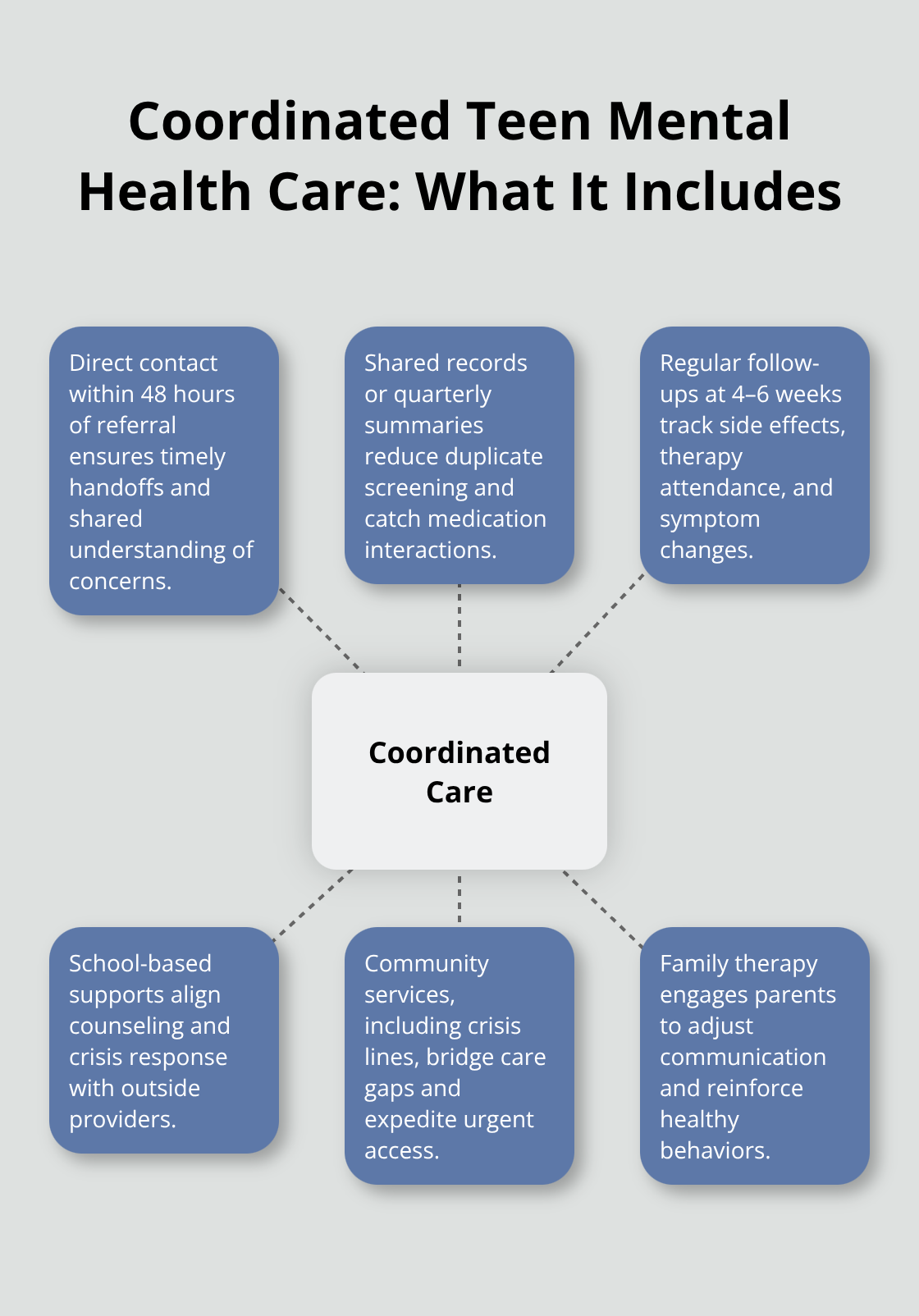
Coordinated care fails without structured communication. Establish a dedicated contact person at your clinic who manages mental health referrals and tracks specialist responses. This person should initiate contact with the mental health provider within 48 hours of the referral, confirming receipt and clarifying the teen’s presenting concerns. Israeli health policy research showed that 93% of pediatricians supported professional hotlines for expert consultation, and 71% valued ongoing supervision from mental health specialists. Create a simple template for your referral letter that includes current symptoms, medications, relevant medical history, and specific questions you need answered.
Request that the mental health provider send you a brief summary after the initial assessment, typically within two weeks, outlining the diagnosis, recommended treatment approach, and medication if applicable. Share your clinic’s direct fax or secure email address and ask the specialist to use it consistently. This removes the burden of tracking down reports through generic office lines.
Request Shared Medical Records
Request shared access to the mental health provider’s treatment notes or establish a protocol where you receive quarterly summaries. If the specialist uses an electronic health record system, ask whether your clinic can access it directly. Shared records eliminate duplicate screening and reduce the risk of missed medication interactions. When a teen shows progress, communicate this back to the specialist; when they plateau or decline, contact the provider immediately rather than waiting for the next scheduled appointment. This responsiveness signals to families that their teen’s care matters and prevents gaps where problems escalate silently.
Schedule Regular Follow-Up Conversations
Schedule a follow-up conversation with the teen and their family four to six weeks after the mental health referral, even if treatment continues with a specialist. Ask directly about medication side effects, whether therapy sessions happen as scheduled, and whether the teen notices any improvement. If a teen takes psychiatric medication, you remain responsible for monitoring physical health markers like weight, blood pressure, and metabolic changes. Research shows integrated care models with measurement-based outcomes produce measurable improvements in depressive symptoms. This structured approach (combining direct contact, shared records, and regular check-ins) transforms how pediatricians and specialists work together. As you strengthen these communication channels, the next step involves connecting families with the broader support systems that reinforce treatment and help teens build lasting resilience.
Resources and Support Systems for At-Risk Teens
School-Based Mental Health Programs
Schools serve as the most accessible entry point for many teens, yet school-based mental health programs vary dramatically in quality and availability. Some districts employ full-time counselors; others rely on part-time staff managing 500+ students each. Contact the school counselor directly rather than assuming your referral will land on the right desk. Ask specifically what mental health services the school offers-whether that’s brief counseling, crisis intervention, or coordination with outside providers. Many schools now participate in integrated care models that connect students with community mental health services, reducing gaps between school and clinical settings. Research on integrated youth mental health care shows that coordinated programs produce measurable improvements in depressive symptoms across studies, with every trial measuring access finding higher engagement when care integrates across settings.
Community Mental Health Services and Wait Times
Community mental health services fill critical gaps, but wait times in many regions stretch months. Israeli data reveals a pronounced shortage of child and adolescent mental health professionals, creating access barriers especially for families in remote areas. When you identify a teen needing urgent care, bypass the standard referral queue by contacting the clinic director or intake coordinator directly-mention the teen’s risk level and request expedited scheduling. Some communities offer crisis hotlines staffed by trained counselors who can provide immediate support and connect families to emergency services if needed.
Family Therapy as Core Treatment
Family therapy stands apart because it addresses the environment where teens actually live. Individual therapy helps a teen process anxiety or trauma, but family sessions teach parents to recognize warning signs, adjust communication patterns, and remove reinforcement for avoidance behaviors. Family support programs aim to improve parent wellbeing and parenting as well as adolescent mental and behavioral health by addressing the needs of parents. When referring for family therapy, explicitly request this component and explain to families that their participation directly improves outcomes-not as optional support but as core treatment.
Specialized Adolescent Mental Health Programs
The Teen Center delivers specialized, evidence-based mental health care for adolescents (ages 12–17), offering intensive outpatient programs, individual and family therapy, medication management, crisis support, and academic coordination both in person and via telehealth. This combination of individualized treatment plans, family involvement, and statewide telehealth access helps teens build resilience and develop the tools to work through trauma and adversity.
Final Thoughts
Coordinated care between pediatricians and mental health specialists produces measurable improvements in teen outcomes. Research on integrated youth mental health care demonstrates that teens receiving coordinated treatment show greater reductions in depressive symptoms and higher engagement with mental health services compared to those receiving fragmented care. When you establish clear communication channels, share medical records, and maintain regular follow-up conversations with specialists, you create a safety net that catches warning signs early and prevents conditions from escalating.
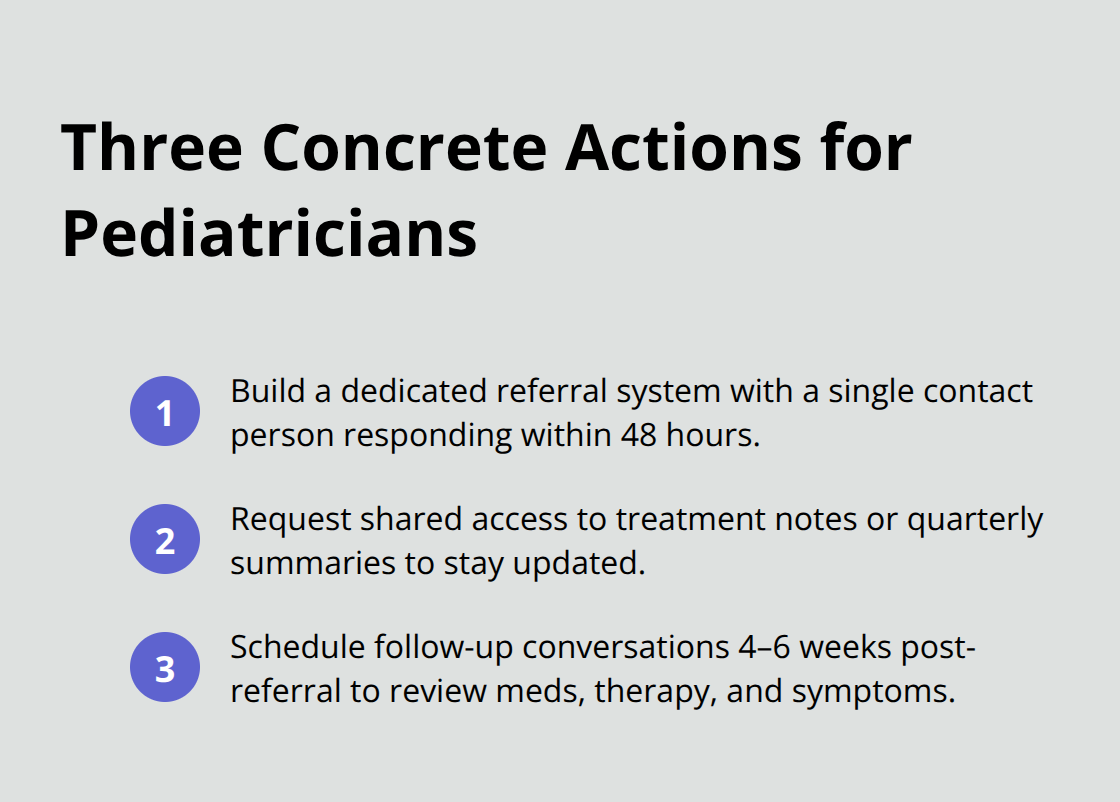
The pediatrician teen mental health approach outlined in this guide rests on three concrete actions: build a dedicated referral system with a single contact person managing mental health referrals and tracking specialist responses within 48 hours; request shared access to treatment notes or quarterly summaries so you remain informed about medication changes, therapy progress, and emerging concerns; and schedule follow-up conversations four to six weeks after referral to monitor medication side effects, therapy attendance, and symptom improvement. You monitor physical health markers for teens on psychiatric medications, reinforce treatment recommendations, and serve as the consistent medical voice in a teen’s care network.
When school-based programs, community mental health services, and family therapy work in parallel rather than isolation, teens receive reinforcement across every environment where they spend time.
Start by identifying one mental health provider in your area and establishing a direct communication channel, then create a simple referral template and request shared records. For teens requiring intensive, specialized care, The Teen Center delivers evidence-based mental health treatment for adolescents ages 12–17, combining individualized treatment plans, family involvement, and statewide telehealth access to help teens build resilience and achieve emotional and academic stability. Your coordination ensures no teen falls through gaps in care.