
When your teen struggles with mental health, the gap between home and school can make treatment harder. At The Teen Center, we know that parents need a clear guide for adolescent care that bridges these two worlds.
This guide walks you through how to talk with teachers, share treatment information, and build consistent support everywhere your teen spends time. You’ll find practical steps to coordinate care and strengthen your family’s approach.
Understanding Your Teen’s Mental Health Needs
Recognizing Common Mental Health Challenges in Adolescents
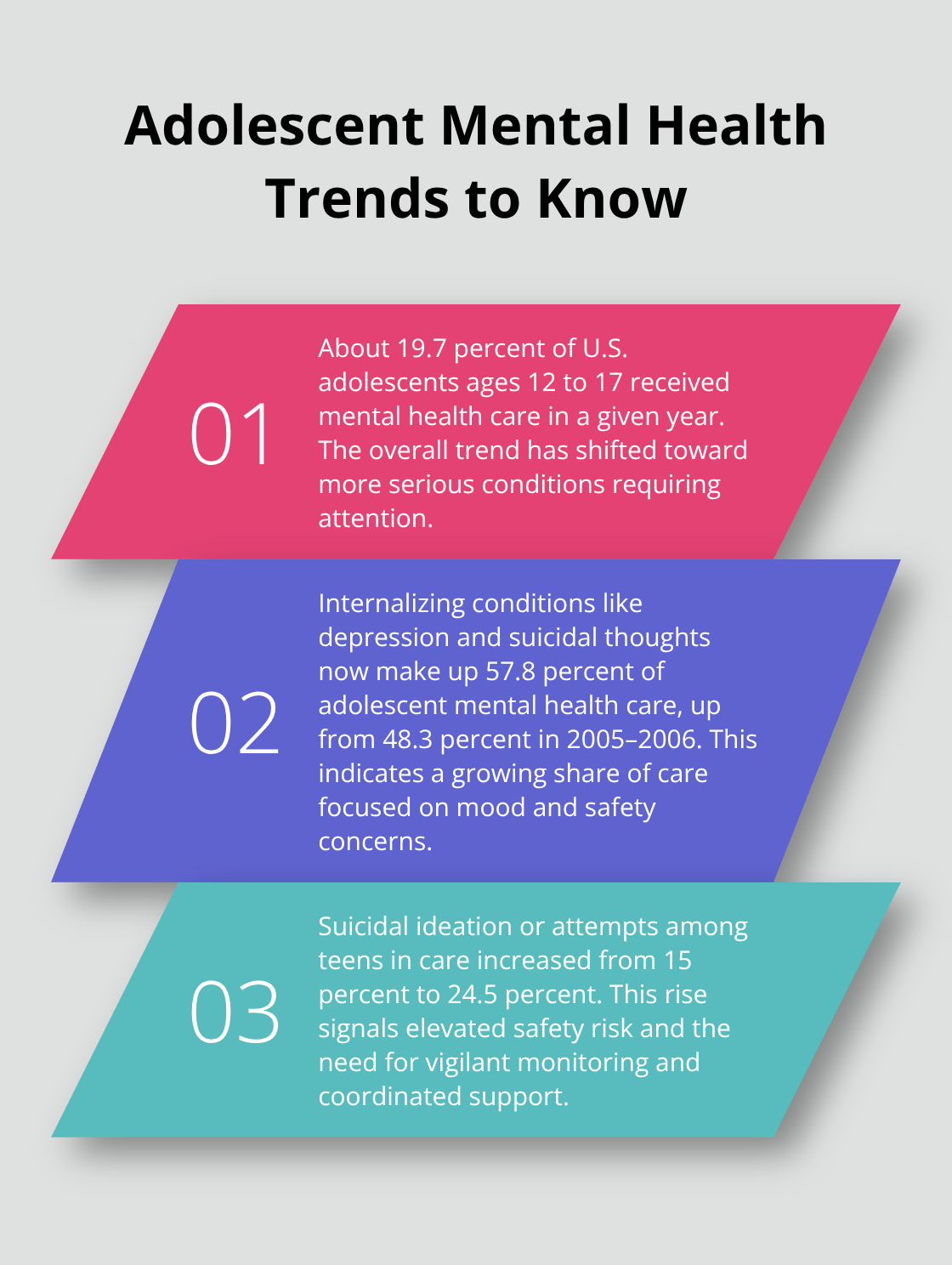
Adolescents face real mental health challenges that show up differently than adult struggles. According to JAMA Psychiatry research spanning 2005 to 2018, about 19.7 percent of US adolescents aged 12 to 17 received mental health care in a given year, and the trend is shifting toward more serious conditions. Internalizing problems like depression and suicidal thoughts now account for 57.8 percent of adolescent mental health care, up from 48.3 percent in 2005 to 2006. Even more striking, suicidal ideation or attempts jumped from 15 percent to 24.5 percent among teens receiving care, signaling that the teens entering treatment face genuine safety risks.
You’re not overreacting if your teen shows persistent sadness, withdrawal from friends, or mentions of self-harm. These aren’t phases to wait out-they warrant attention and professional assessment.
How School Performance Links to Emotional Wellbeing
School performance often reflects what’s happening emotionally. When a previously engaged student stops participating in class, grades drop sharply, or attendance becomes inconsistent, mental health struggles frequently cause the shift. Teachers see this pattern regularly and notice when a teen’s engagement changes.
Your teen might not tell you directly that anxiety makes it hard to focus or that depression drains their motivation. Instead, you’ll see the evidence in their report card or hear from school staff about changed behavior. This connection between emotional wellbeing and academic function is why coordinating between home and school matters so much. You need information from teachers about what they’re observing, and teachers need to understand what’s happening at home.
When to Seek Professional Support
Knowing when to seek professional support requires watching for specific warning signs rather than waiting for a crisis. Escalating risky behaviors, persistent severe depression or anxiety, self-harm, dangerous outbursts, or declining school functioning all point toward the need for professional intervention. If your teen has struggled for more than two weeks, if their mood or behavior affects relationships or school, or if they mention thoughts of harming themselves, that’s your signal to contact a mental health provider.
Documented workforce shortages mean long wait times for child and adolescent psychiatrists, so reach out early rather than waiting for a referral to open up. Most families start with outpatient therapy or intensive outpatient programs before considering higher levels of care. Research shows that about 70 percent of adolescents use a single service setting, which is why having one clear primary contact to coordinate care across home and school is essential.
Your teen’s capacity to participate in treatment decisions varies depending on their condition, but many adolescents have clear preferences about how they want to be treated and who they want to work with. Involving them in these conversations, even when they’re struggling, actually improves their engagement and willingness to continue treatment. This shift toward shared decision-making sets the foundation for the coordinated approach you’ll build between home and school in the next section.
Bridging the Gap Between Home and School
Getting your teen’s school and home on the same page is not optional-it’s the foundation of effective treatment. JAMA Psychiatry data shows that most adolescents use a single service setting, which means your teen is likely getting support from either a clinician or a school counselor, but not both working together. This fragmentation happens because administrative pressures, privacy laws, and lack of coordination mechanisms create real barriers between systems. The result is that teachers don’t know what’s happening in therapy, clinicians don’t know what triggered a meltdown at school, and your teen receives mixed messages about expectations and progress. You need to be the connector, and that starts with deliberate communication.
Start with Written Consent and Clear Goals
Before sharing anything, you need written consent to discuss your teen’s mental health with school staff. HIPAA and FERPA regulations require this, and the process takes time, so initiate it early rather than waiting for a crisis. When you sign consent forms, be specific about what information you authorize the school to receive-not just mental health status, but specific treatment goals, medication effects you’re monitoring, and behavioral strategies the school can reinforce. Meet with your teen’s therapist or psychiatrist and ask directly what information the school needs to support your teen effectively. This conversation clarifies what matters most. A therapist might say your teen is working on managing anxiety triggers, which means teachers should know to allow brief breaks when anxiety rises. A psychiatrist might note that a new medication takes four weeks to show full effect, so don’t interpret early behavior as treatment failure. Write these specifics into your consent forms so the school receives actionable information, not vague mental health status updates. This approach prevents schools from making assumptions and gives teachers concrete ways to participate in your teen’s recovery.
Establish Regular Communication Channels
One email to a school counselor once per semester won’t coordinate care. You need structured, regular contact. Schedule a brief check-in call or email with your teen’s school counselor every two to four weeks, timed to align with therapy sessions or medication monitoring appointments. Send a short update about what’s working at home, what challenges you’re seeing, and what your clinician recommends. Ask the counselor what they’re observing-specific behaviors, social interactions, academic engagement. If your teen is working on anxiety management, ask whether the breathing techniques they’re practicing in therapy are being used when needed at school.
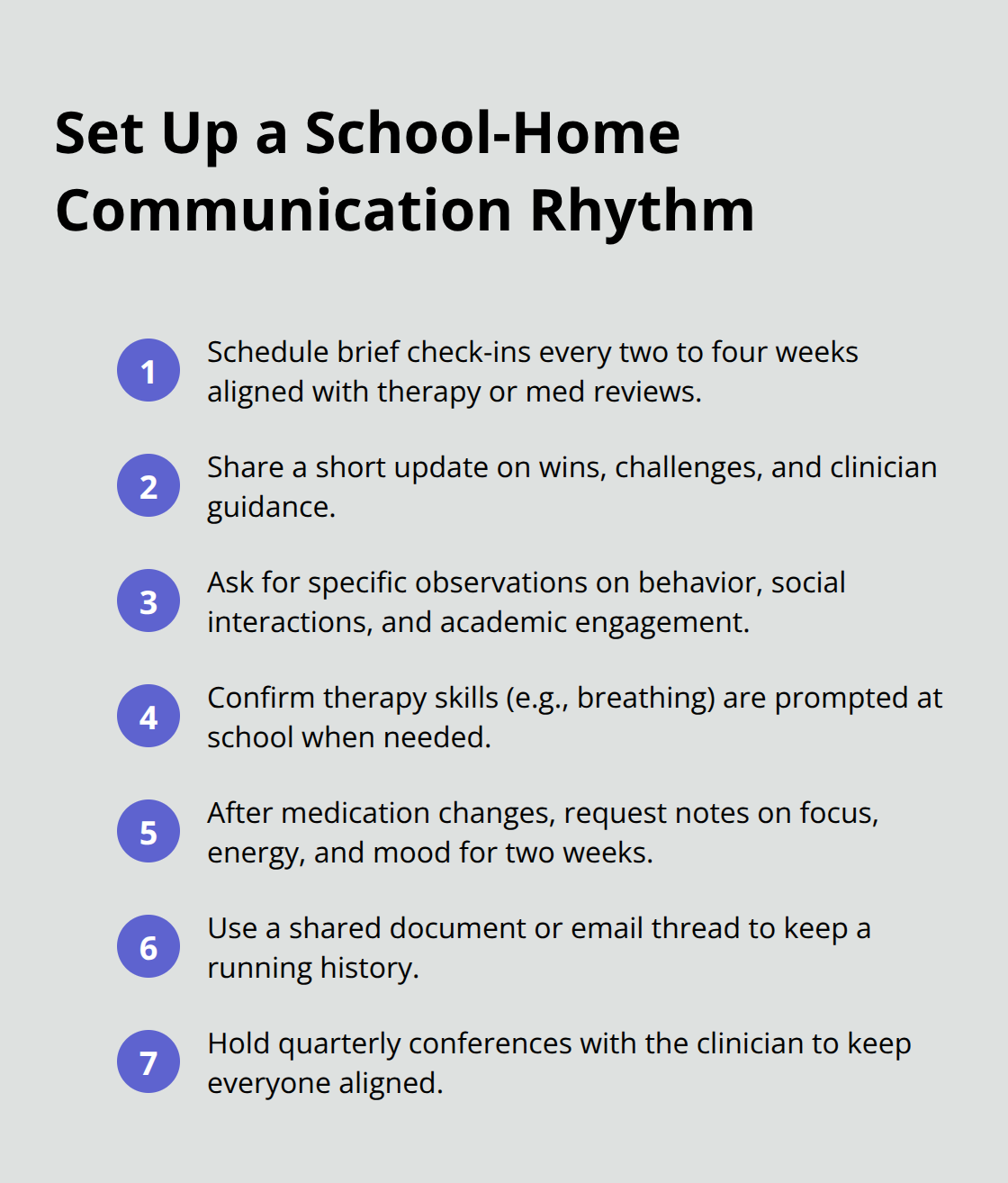
If medication changes happen, ask the school to watch for changes in focus, energy, or mood over the next two weeks and report back. This rhythm of communication creates accountability and catches problems early. Some families use a shared document or email thread so all parties can see the conversation history. Others schedule quarterly family-school conferences with the clinician present, which is more formal but ensures everyone hears the same information. The key is that communication happens regularly and includes specific observations, not just general updates.
Align Expectations and Consequences Across Settings
Inconsistent rules between home and school confuse teens and undermine treatment. If your clinician recommends clear boundaries around social media because your teen’s anxiety spikes with constant notifications, that boundary needs to exist at home and at school. If the school allows your teen to opt out of presentations due to social anxiety, but you’re at home pushing them to do presentations anyway, you’re working against the therapeutic plan. Talk with your teen’s clinician about what behavioral expectations should be, what accommodations make sense, and what consequences fit the situation. A school might agree to allow your teen to step out of a crowded hallway during passing periods if anxiety escalates, but only if they know this is part of the treatment plan, not avoidance being enabled. Consistent expectations across settings reduce teen anxiety because they know what to expect and that the adults in their life are coordinated. This consistency also makes treatment more effective because your teen practices the same coping strategies everywhere, not just in the therapist’s office.
Document Progress and Adjust as Needed
Keep a simple record of what you’re observing at home and what the school reports back to you. Note when your teen uses coping strategies successfully, when they struggle, and how medication or therapy changes affect their behavior. Share this record with your clinician at appointments so they see the full picture across both settings. When something isn’t working-your teen still avoids school presentations despite anxiety management practice, or their mood dips despite medication adjustments-that information helps your clinician modify the treatment plan. Schools also benefit from knowing what adjustments your clinician makes, so they can shift their approach accordingly. This feedback loop prevents your teen from falling through the cracks and ensures that home, school, and clinical care all move in the same direction. The next section focuses on what you can do at home to strengthen this coordinated approach and support your teen’s mental health directly.
Building a Strong Support System at Home
The routines you establish at home matter more than you probably think. When your teen receives treatment, their brain works hard to process emotions, practice new coping skills, and manage symptoms. Routines reduce cognitive load by removing daily decisions and create predictability, which directly supports mental health recovery. Start with sleep, because adolescent brains need 8 to 10 hours nightly, and sleep deprivation worsens depression, anxiety, and emotional regulation. Set a consistent bedtime and wake time even on weekends, remove phones from bedrooms one hour before sleep, and keep screens off during that wind-down period. This isn’t punishment-it’s treatment. Your clinician likely mentioned this, and school staff need to know you’re enforcing it so they understand why your teen might be more engaged or focused on certain days.
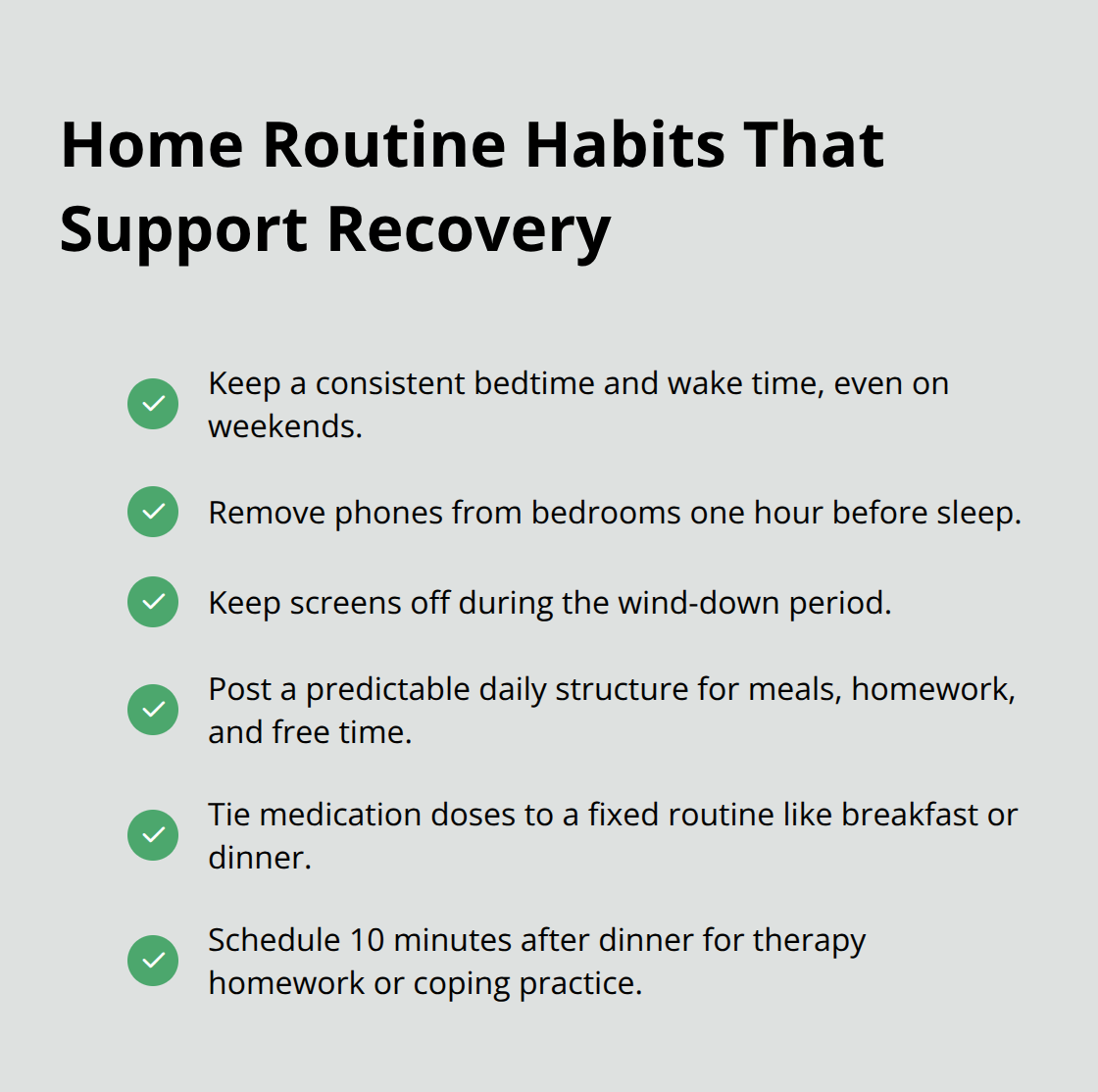
Beyond sleep, establish a predictable structure around meals, homework time, and free time. Teens whose schedules shift wildly struggle more with mood stability. If your teen takes medication, tie it to a specific routine like breakfast or dinner so doses never get missed. If therapy homework involves practicing anxiety management techniques, schedule 10 minutes after dinner specifically for this work so it becomes automatic rather than something you have to negotiate daily.
Research on adolescent development shows that teens benefit from knowing what comes next, which reduces anxiety about uncertainty. Post the daily structure visibly so your teen sees it and can plan accordingly. Rigid, punitive routines backfire. Your teen needs structure, but structure with flexibility. If they’re having a hard day, the routine can bend. If they need a mental health day, that’s different from skipping school to avoid something. The distinction matters, and your teen can learn it when you explain the difference rather than apply rules robotically.
Talk With Your Teen About Treatment and Progress
Talking with your teen about their treatment and progress requires a specific approach. Many parents fall into two traps: either avoid the topic to protect their teen’s feelings, or push too hard with questions that feel like interrogation. Neither works. Instead, create low-pressure moments where conversation can happen naturally. Research on adolescent involvement in mental health care shows that teens who feel heard and included in decisions about their treatment stay engaged longer and experience better outcomes. Ask open-ended questions without judgment: What was hard this week? What helped you feel better? Did anything your therapist said stick with you? These questions invite real answers rather than yes-or-no responses that shut conversation down.
When your teen shares something difficult, validate the feeling first before offering advice. If they say they had a panic attack at school, saying “I hear you, that sounds really scary” is more effective than immediately suggesting breathing exercises. Validation builds trust; jumping to solutions feels dismissive. Talk with your clinician about what your teen works on in therapy so you can reference it naturally at home. If they practice graded exposure for social anxiety, you might ask how it felt to sit with the anxiety during lunch rather than escape to the bathroom. This shows you understand their treatment and reinforces the work happening in sessions. Tell your teen specifically what you notice improving. Instead of general praise, say “I noticed you got to school on time all week even though mornings are still hard for you, and that took real effort.” Specific observation makes feedback credible and motivates continued work.
Expect resistance and silence sometimes-that’s adolescent normal, not treatment failure. Teens shut down when they feel judged or pressured, so keep conversations brief, choose calm moments, and accept that some days they won’t talk. That’s okay. The consistency of you showing up and asking matters more than getting detailed answers every time.
Manage Your Own Stress and Burnout
Parenting a teen in mental health treatment is genuinely exhausting. You manage appointments, coordinate with school, monitor symptoms, enforce routines, and worry about whether you’re doing enough. That stress is real and valid. Research shows that caregiver stress directly affects treatment outcomes because teens pick up on parental anxiety and it can trigger their own. Taking care of yourself isn’t selfish-it’s necessary for your teen’s recovery.
Identify one specific stress-management practice you’ll actually do, not one you think you should do. If meditation feels fake to you, don’t force it. If exercise feels like another obligation, skip it. Instead, pick something genuinely restorative: a weekly call with a friend, 30 minutes alone with a book, a walk without your phone. Do it consistently so your nervous system gets a break. Many parents benefit from support groups like Al-Anon or NAMI where you hear from others managing similar situations. Hearing that another parent also feels guilty, frustrated, or overwhelmed normalizes the experience and reduces isolation. If parenting stress affects your own mental health significantly, therapy for yourself is legitimate and often makes you more effective with your teen (you cannot pour from an empty cup, and your teen needs you stable more than they need you perfect).
Finally, set boundaries with your teen about what you can reasonably manage. You can support their treatment, attend family sessions, and coordinate with school. You cannot fix their mental health or take responsibility for their choices. That distinction protects both of you from unhealthy dynamics that undermine treatment progress.
Final Thoughts
Coordinating adolescent mental health care across home and school requires intentional effort, but the payoff is real. When you establish clear communication with teachers, align expectations consistently, and create supportive routines at home, your teen receives reinforced treatment everywhere they spend time. This coordination prevents the fragmentation that leaves teens confused about what’s expected and clinicians guessing about what’s actually happening in daily life.
The parents guide to adolescent care approach rests on three foundations: written consent and specific goals so school staff understand exactly what they’re supporting, regular communication every two to four weeks that keeps everyone informed and catches problems early, and consistent expectations across settings that reduce your teen’s anxiety. At home, predictable routines support recovery, conversations validate your teen’s experience, and honest attention to your own stress protects your capacity to help. Your teen’s brain works hard to process emotions and practice new skills, and routines reduce the cognitive load that interferes with that work.
Supporting your teen’s mental health journey means you don’t do this alone. The Teen Center delivers specialized, evidence-based mental health care for adolescents ages 12 to 17, offering intensive outpatient programs, individual and family therapy, medication management, and crisis support both in person and via telehealth. Reach out to a mental health provider who can partner with you and your teen’s school to build the coordinated care your teen needs.