When your teen struggles with depression, the weight falls on you too. At The Teen Center, we know that parent support for teen depression isn’t just about helping your child-it’s about keeping yourself steady while you do.
This guide gives you concrete tools to recognize warning signs, build a home where healing happens, and protect your own wellbeing. You’re not alone in this.
What Does Teen Depression Actually Look Like
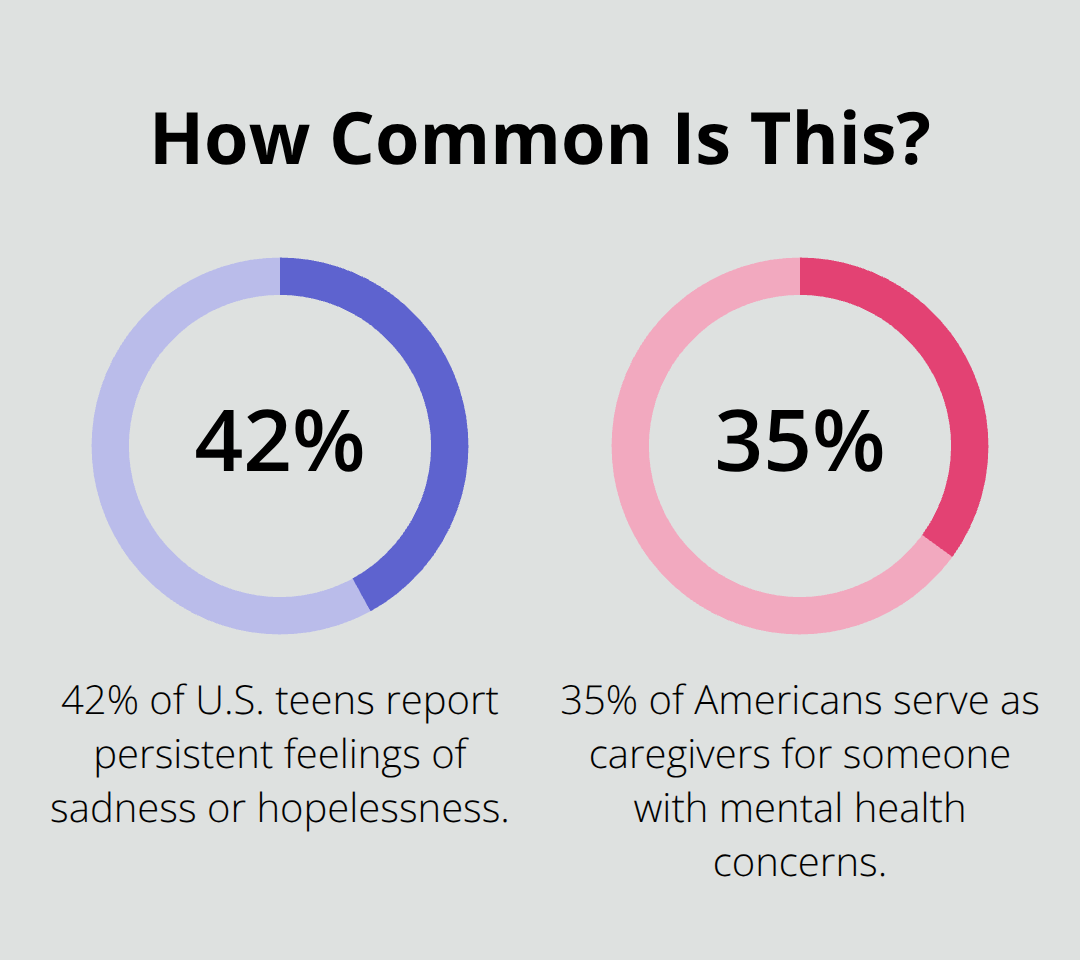
Teen depression rarely announces itself the way adults expect. According to the American Psychological Association, depression in teens often shows up as irritability rather than sadness, which is why parents frequently miss it or mistake it for typical moodiness. About 1 in 5 adolescents will experience depression at some point during their teen years, and the Journal of Pediatrics reports that early recognition dramatically improves outcomes. The warning signs cluster around three observable shifts: disrupted sleep and appetite, withdrawal from friends and activities, and declining school performance paired with heightened irritability. None of these happens in isolation, and that matters. A teen who sleeps poorly and loses interest in soccer isn’t just having a bad week-these changes together signal something worth taking seriously. Girls experience depression at higher rates than boys, with roughly 3 in 5 teen girls reporting persistent sadness for at least two weeks, according to recent data. The CDC also found that 42% of teens experience persistent feelings of sadness or hopelessness, making this not rare but remarkably common.
Sleep and appetite shifts signal deeper trouble
When your teen suddenly sleeps 12 hours on weekends or can’t fall asleep until 2 a.m., that’s not laziness. Poor sleep and depression work both ways-depression disrupts sleep, and disrupted sleep worsens depression. Appetite changes matter equally: a teen who stops eating lunch or raids the fridge constantly shows a physical manifestation of depression, not a passing phase. If these changes persist beyond two weeks, they warrant professional evaluation.
Social withdrawal and lost interest in activities
A teen who quits the soccer team, stops texting friends, or declines invitations has likely disconnected from the activities that once gave life meaning. This withdrawal is especially telling because it represents a loss of mastery and purpose, not just avoidance. Watch for resistance when you suggest getting together with friends-teens with depression often experience social anxiety alongside withdrawal, making reconnection feel impossible rather than appealing.
Academic decline paired with irritability
Grades dropping while irritability climbs is a signature combination. Your teen snaps at small comments, seems perpetually frustrated, and can’t focus on homework. The irritability isn’t attitude; it’s a symptom. This combination matters because it often overlaps with school-based stress, so parents sometimes attribute the change to college pressure or course difficulty rather than recognizing depression underneath.
These three warning signs-sleep disruption, social withdrawal, and academic decline-rarely appear in isolation. When you spot two or more of these shifts in your teen, the next step is to move beyond observation and into action. Understanding what you’re seeing prepares you to create the kind of home environment where your teen feels safe enough to heal.
How to Build a Home Where Your Teen Feels Safe Enough to Heal
The moment you recognize depression in your teen, your instinct is often to fix it immediately. That urgency is understandable, but the most powerful thing you can do first is change the environment where your teen lives. Depression thrives in isolation and judgment; it retreats when a teen feels genuinely heard and when daily life includes structure that prevents the spiral of inactivity and rumination.
Talk Without Judgment
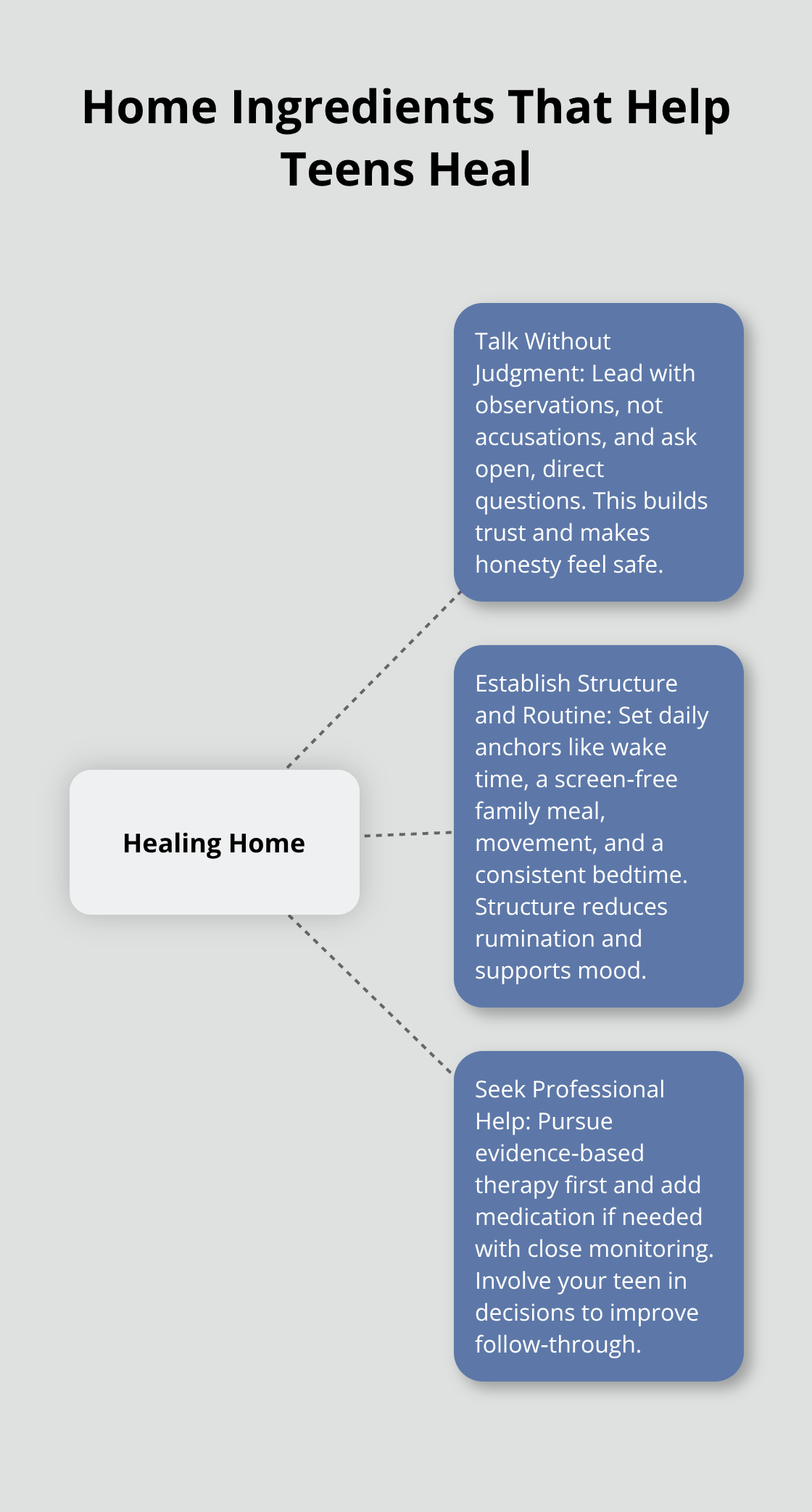
Start with how you talk to your teen. Stop asking questions that invite defensiveness like “What’s wrong with you?” or “Why won’t you just go out with friends?” Instead, name what you observe without attaching blame: “I’ve noticed you’ve been staying in your room more, and I’m wondering how you’re doing.” This approach removes the accusation and creates space for honesty.
Many parents fear that asking directly about suicide will plant the idea, but the opposite is true. If you suspect your teen is considering self-harm, ask plainly: “Are you thinking about hurting yourself?” Direct questions reduce shame and signal that the topic isn’t forbidden.
When your teen does open up, resist the urge to problem-solve immediately or lecture about why things will get better. Active listening means sitting with discomfort, asking follow-up questions, and reflecting back what you hear. This takes practice, and it feels slower than jumping to solutions, but it builds the trust that makes everything else possible.
Establish Structure and Routine
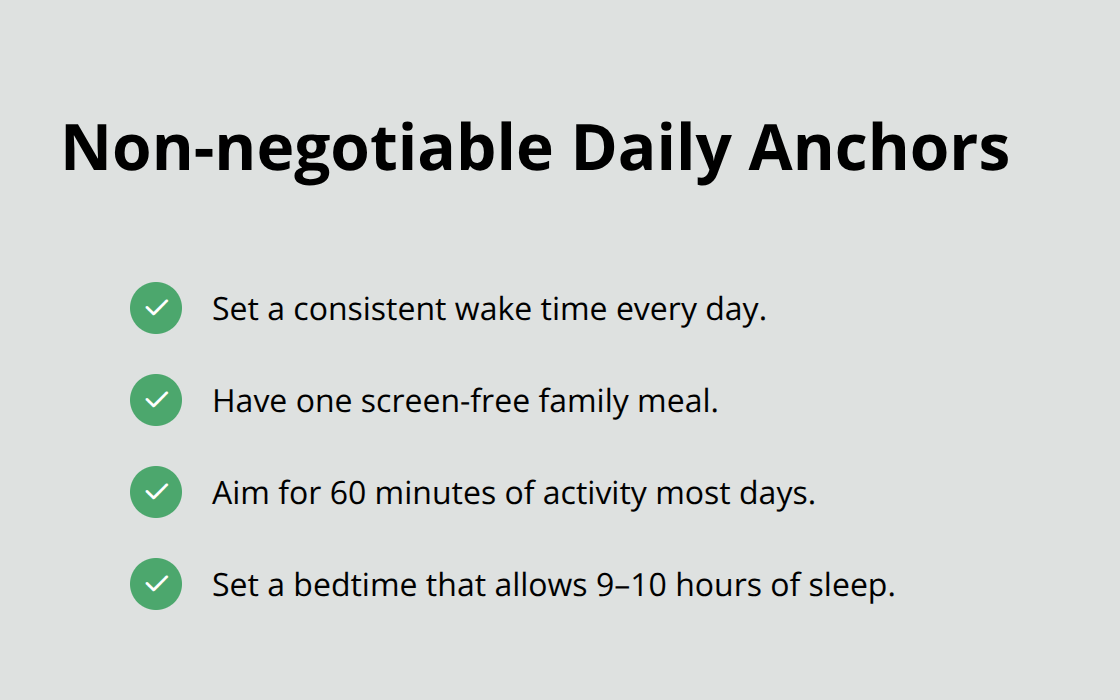
Structure and routine matter more than motivation. A teen with depression lacks the energy to decide what comes next, so you provide the framework. This doesn’t mean rigid control; it means establishing non-negotiable anchors: a consistent wake time, a family meal without screens, 60 minutes of activity most days (which can be a walk, not a sport), and a bedtime that allows 9 to 10 hours of sleep. These elements shape behavioral risk factors including physical activity and sleep, which directly support mental health.
Seek Professional Help
Once you’ve stabilized the home environment, professional help becomes the next priority. Therapy serves as the first-line treatment for mild to moderate depression, and research shows that many teens benefit significantly from it. Your pediatrician, school counselor, or your insurance provider can recommend a therapist trained in evidence-based approaches like cognitive behavioral therapy.
If therapy alone doesn’t shift things after 8 to 12 weeks, medication becomes worth discussing. Antidepressants can help, but they require careful monitoring, especially in the first weeks. Watch for new or worsening suicidal thoughts, agitation, insomnia, or increased irritability; if these appear, contact your provider immediately.
The most important detail: involve your teen in these decisions. Ask what kind of help feels manageable, whether they prefer telehealth or in-person sessions, and what their concerns are about medication. Teens who participate in choosing their treatment are far more likely to stick with it. This collaborative approach to treatment sets the stage for the next critical piece of the recovery puzzle-protecting your own wellbeing so you can sustain the support your teen needs.
Your Mental Health Matters Too
Supporting a teen with depression is relentless work, and many caregivers discover they’re running on empty before they realize it. About 35% of Americans serve as caregivers for someone with mental health concerns, yet most receive no formal training in how to sustain themselves while doing this work. The reality is blunt: if you burn out, your teen loses their steadiest support. Stress from caregiving isn’t weakness or failure; it’s a predictable response to an unpredictable situation. In Australia, caregivers provide roughly 40 hours per week on average caring for someone with mental health challenges, and in the UK that ranges from 9 to 50 hours weekly. You’re not managing a simple problem with a simple timeline. Your nervous system stays activated by worry, your sleep gets disrupted by concern, and your own stress hormones remain elevated. This state affects how you show up for your teen, how clearly you think, and how long you can sustain patience.
Stop Treating Your Wellbeing as Optional
The first actionable step is to stop treating your wellbeing as optional. Schedule one concrete self-care activity each week that isn’t negotiable-a 20-minute walk alone, a therapy session, coffee with a friend, or time on a hobby. Not someday. This week. Track it like you’d track your teen’s therapy appointments. Your pediatrician or your insurance company can connect you to a therapist who specializes in caregiver stress; this isn’t indulgent, it’s maintenance.
Build a Support Network That Holds Weight
Building a support network isn’t about finding people who fix the problem; it’s about finding people who sit with the weight of it. Identify three people you can text when things are hard-a friend, a family member, a parent in a similar situation, or a support group like S-Anon or caregiver groups through organizations like NAMI. These connections reduce isolation, which is where caregiver burnout deepens. Many caregivers isolate because they feel ashamed or fear burdening others, but research shows that caregivers who maintain social connection have better health outcomes and greater resilience.
Set Boundaries That Preserve Your Capacity
Set specific, limited boundaries with your teen that preserve your capacity to help long-term. This means you don’t answer texts at 11 p.m., you don’t cancel your own plans every time your teen feels bad, and you don’t take responsibility for their mood or recovery-that’s shared work with their therapist. Boundaries feel selfish when your teen is struggling, but they’re actually the most generous thing you can offer: a parent who stays functional and present rather than one who collapses under the pressure. If your teen expresses suicidal thoughts or immediate crisis, call 988 or seek emergency care; that’s not a boundary, that’s safety. Everything else-the daily frustration, the slow progress, the setbacks-can be managed with structure, support, and the firm knowledge that protecting yourself isn’t abandoning your teen, it’s making sure you’re able to stay.
Final Thoughts
Supporting a teen through depression is not a sprint with a finish line-it’s a sustained commitment that requires you to recognize warning signs, build safety at home, and protect your own capacity to show up. The work you do matters profoundly, even when progress feels invisible. Parent support for teen depression rests on three pillars: you learn to see depression clearly as a medical condition, you create an environment where your teen feels safe enough to heal through judgment-free conversation and professional treatment, and you refuse to sacrifice your own wellbeing because a burned-out parent cannot sustain the steady presence a depressed teen needs.
Recovery isn’t linear, and your teen will have days that feel like progress and days that feel like collapse-both are normal. What matters is that you stay connected, keep professional support in place, and trust that many teens move through depression toward genuine stability and purpose when they have consistent caregiver involvement and evidence-based care. If you’re navigating this alone or feeling overwhelmed, call 988 if your teen is in crisis, contact your pediatrician or school counselor for therapy referrals, or connect with caregiver support groups through NAMI or similar organizations.
The Teen Center offers intensive outpatient programs, family therapy, medication management, and crisis support designed specifically for adolescents ages 12–17, available both in person and via telehealth. You don’t have to figure this out by yourself, and your teen’s recovery is possible. Your commitment to both their healing and your own stability is exactly what they need.