Depression affects roughly 15% of adolescents each year, yet many teens and their families don’t know where to turn when a crisis hits. At The Teen Center, we’ve created this guide to help you recognize warning signs and access adolescent depression crisis resources fast.
When a young person is struggling, every moment counts. This resource walks you through immediate support options, professional treatment paths, and how families can help during recovery.
What Adolescent Depression Actually Looks Like
Recognizing the Pattern, Not Just a Bad Day
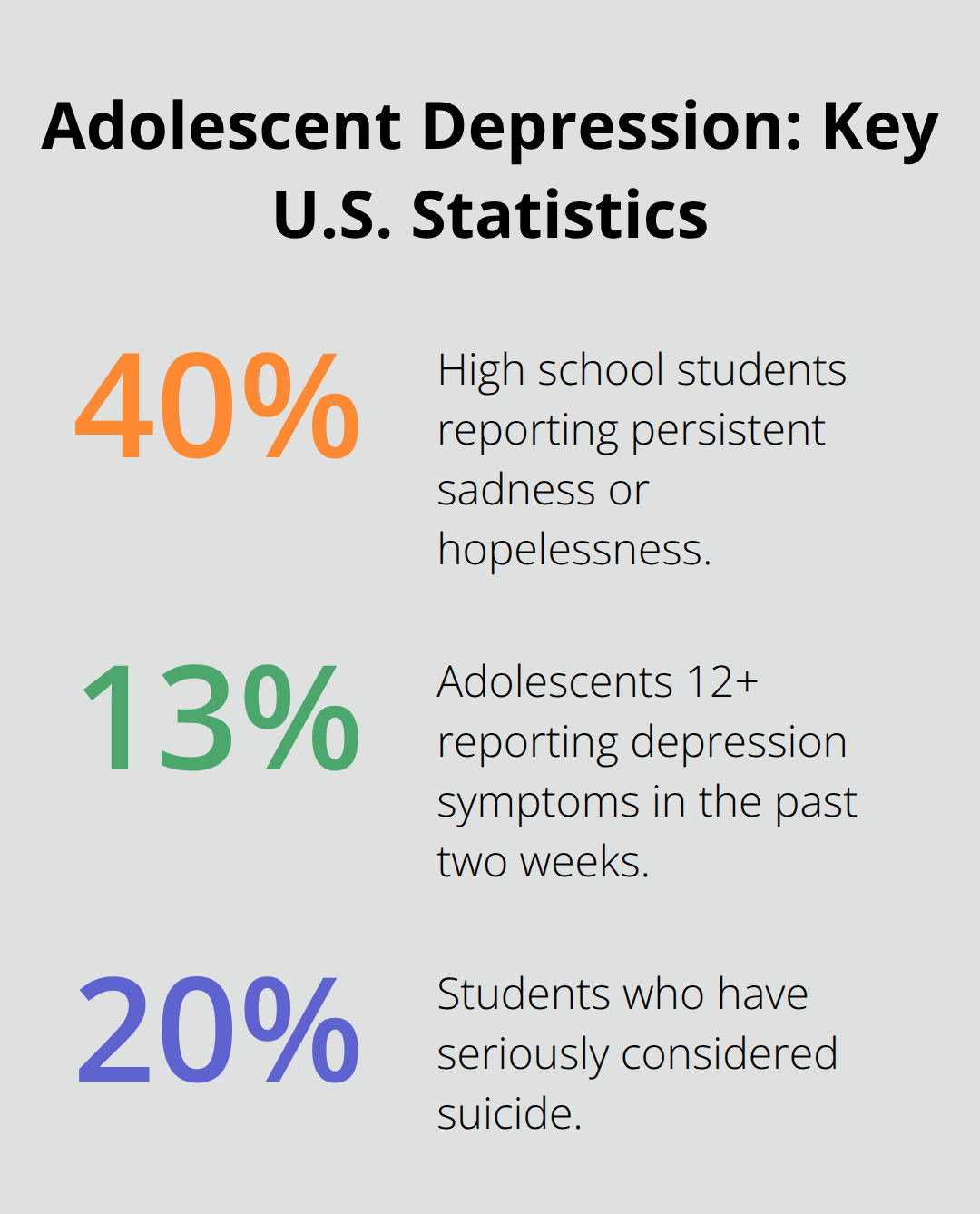
Adolescent depression shows up differently than sadness after a bad day. According to CDC data, 40% of high school students reported persistent sadness or hopelessness, and 13.1% of adolescents aged 12 and older reported depression symptoms in the past two weeks. The real warning sign isn’t a single bad mood-it’s a pattern of behavior that lasts weeks or months.
A teen who withdraws from friends, stops attending social events they used to enjoy, or becomes unusually irritable at home is showing something serious. This withdrawal often happens quietly, and parents and teachers might notice the teen sitting alone at lunch, declining invitations, or communicating less than usual.
Emotional Flatness and Social Withdrawal
The emotional flatness stands out most-not dramatic crying, but a kind of emptiness where interest and energy used to be. A depressed teen may isolate from peers, stop texting friends, or avoid activities they once loved. This isn’t laziness or typical teenage moodiness. It’s a shift in what motivates them, and it matters. The withdrawal happens because depression alters how the brain processes reward and connection, making social interaction feel exhausting rather than enjoyable.
Physical Changes You Can Track
Sleep and appetite changes are concrete, measurable shifts you can actually track. A depressed teen might sleep 12 hours and still feel exhausted, or they might lie awake for hours despite being tired. Some lose their appetite entirely; others eat more as a way to cope. These physical changes happen because depression affects the brain’s regulation of hunger and sleep hormones. Academic performance typically drops noticeably-grades slip, assignments don’t get turned in, and a previously engaged student stops participating in class.
Academic Decline and Loss of Interest
Loss of interest in activities the teen once loved is especially telling. If your teen quit soccer, stopped texting friends, or abandoned hobbies they spent hours on before, that’s a red flag worth taking seriously. This shift in motivation (rather than simple tiredness or laziness) signals that something deeper is affecting them. The combination of emotional, physical, and behavioral changes happening together over time-not just one isolated symptom-is what defines adolescent depression and points toward the need for professional assessment and support.
Where to Get Help Right Now
Act Within Minutes, Not Hours
When a teen faces a crisis, you must act within minutes, not hours. The 988 Suicide and Crisis Lifeline serves as the fastest entry point for immediate support. Call or text 988, and trained crisis counselors answer within seconds to assess what’s happening and connect your teen to the right level of care. This service is free, confidential, and available 24/7 in English and Spanish. If your teen prefers texting, that option works just as well as calling. Crisis Text Line offers the same 24/7 support by texting HOME to 741741, with counselors responding within minutes.
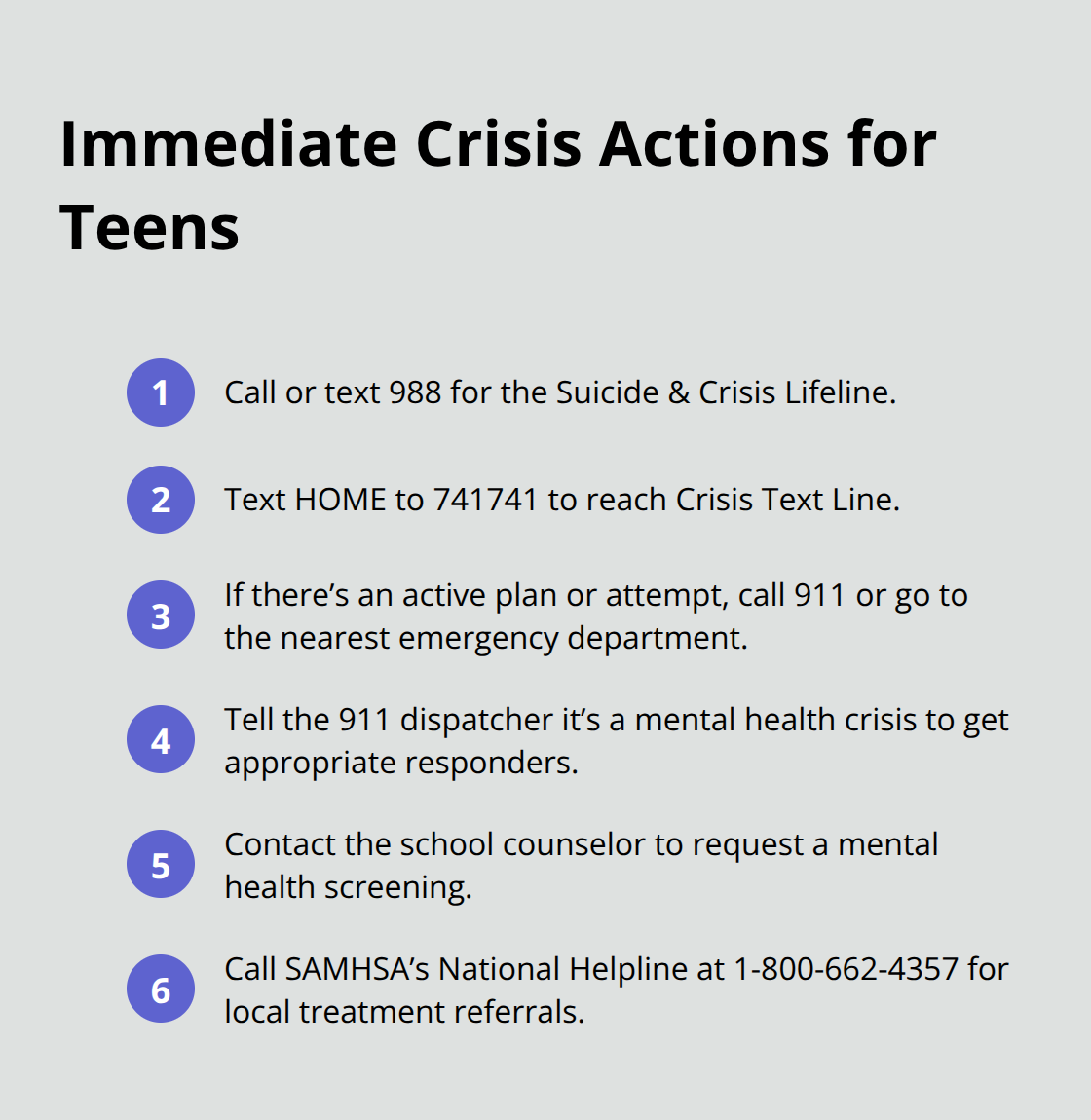
Both services handle active suicidal thoughts, self-harm urges, and severe emotional distress.
Choosing Between Phone, Text, and Emergency Care
The difference between these two comes down to preference: some teens will call, others will text, and having both options available matters because a teen in crisis will use whichever feels least threatening. If your teen has already expressed a specific plan to harm themselves or is actively attempting self-harm, skip the hotline and call 911 or drive to the nearest emergency department. Emergency departments have psychiatric teams trained in adolescent crisis assessment and can provide immediate stabilization, medication if needed, and a safety plan before discharge. This is not overkill-it’s the appropriate response when immediate danger exists. Tell the 911 dispatcher that your teen is having a mental health crisis so they send the right responders.
School Staff and Community Mental Health Connections
School counselors and the school nurse are often the first adults to notice warning signs because they see your teen daily. If you suspect depression, contact the counselor directly and ask for a mental health screening. Many schools have partnerships with community mental health providers who can do assessments on campus. This matters because some teens open up to school staff before they’ll talk to parents, and an assessment started at school removes a barrier to care. For ongoing crisis support beyond the hotline, SAMHSA’s National Helpline at 1-800-662-4357 provides free referrals to local treatment facilities and helps you locate a psychiatrist, therapist, or intensive outpatient program in your area.
Finding a Provider and Starting Treatment
If your teen is already working with a therapist or psychiatrist, contact them immediately when a crisis hits-most practices have emergency protocols and after-hours numbers. If your teen has no current provider, use FindTreatment.gov to search for available mental health professionals near you, filtering by insurance, age group, and availability. The goal is not to find the perfect provider during a crisis-it’s to find someone available now who can start an assessment and stabilize your teen’s condition. Once you’ve connected with immediate crisis support, the next step involves understanding what treatment options exist and how to build a long-term plan that actually works for your teen’s specific situation.
Building a Treatment Plans That Work for Your Teen
Assessment First, Treatment Second
After crisis stabilization, your teen needs a structured treatment approach tailored to their specific symptoms and circumstances. Depression in adolescents responds best to a combination of therapy and, often, medication-not one or the other alone. According to the National Institute of Mental Health, the most effective treatment varies by individual, but early identification and access to care significantly improve outcomes. Your first task involves finding a provider who will conduct a thorough assessment rather than jumping to assumptions about what your teen needs. A proper assessment takes 60 to 90 minutes and covers depression severity, suicide risk, family history, trauma exposure, substance use, and how depression affects school and relationships. Avoid providers who diagnose and prescribe in a single 20-minute visit.
Therapy Approaches That Show Results
Cognitive behavioral therapy stands out as the most researched and effective talk therapy for adolescent depression-it teaches teens specific skills to identify negative thought patterns and change behavioral responses. Interpersonal therapy helps teens address relationship conflicts and role transitions that may trigger or worsen depression. If your teen has experienced trauma, trauma-focused cognitive behavioral therapy or exposure therapy may be necessary. The National Institute of Mental Health confirms that these evidence-based approaches produce measurable improvements when providers implement them correctly.
Medication Management and Monitoring
Medication management matters when therapy alone isn’t sufficient. About 16% of youth took prescription medications to help with emotions, concentration, or behavior in the past year according to CDC data, and SSRIs like sertraline or fluoxetine are typically the first-line choice for adolescent depression because they have the strongest evidence base and lower side effect profiles than older antidepressants. A psychiatrist should monitor your teen every two to four weeks during the first three months to assess whether the medication is working and adjust dosages if needed. This frequent monitoring is not optional-it’s how providers catch medication side effects early and determine if a different medication would work better.
Family Involvement and School Coordination
Family involvement transforms treatment outcomes in ways that therapy alone cannot achieve. Research consistently shows that teens whose parents attend therapy sessions and learn depression-specific skills at home recover faster and have lower relapse rates than teens in individual therapy only. Your role involves learning to recognize depression symptoms before they escalate, understanding how your own stress affects your teen’s mental health, and practicing communication strategies that reduce conflict without minimizing your teen’s feelings.
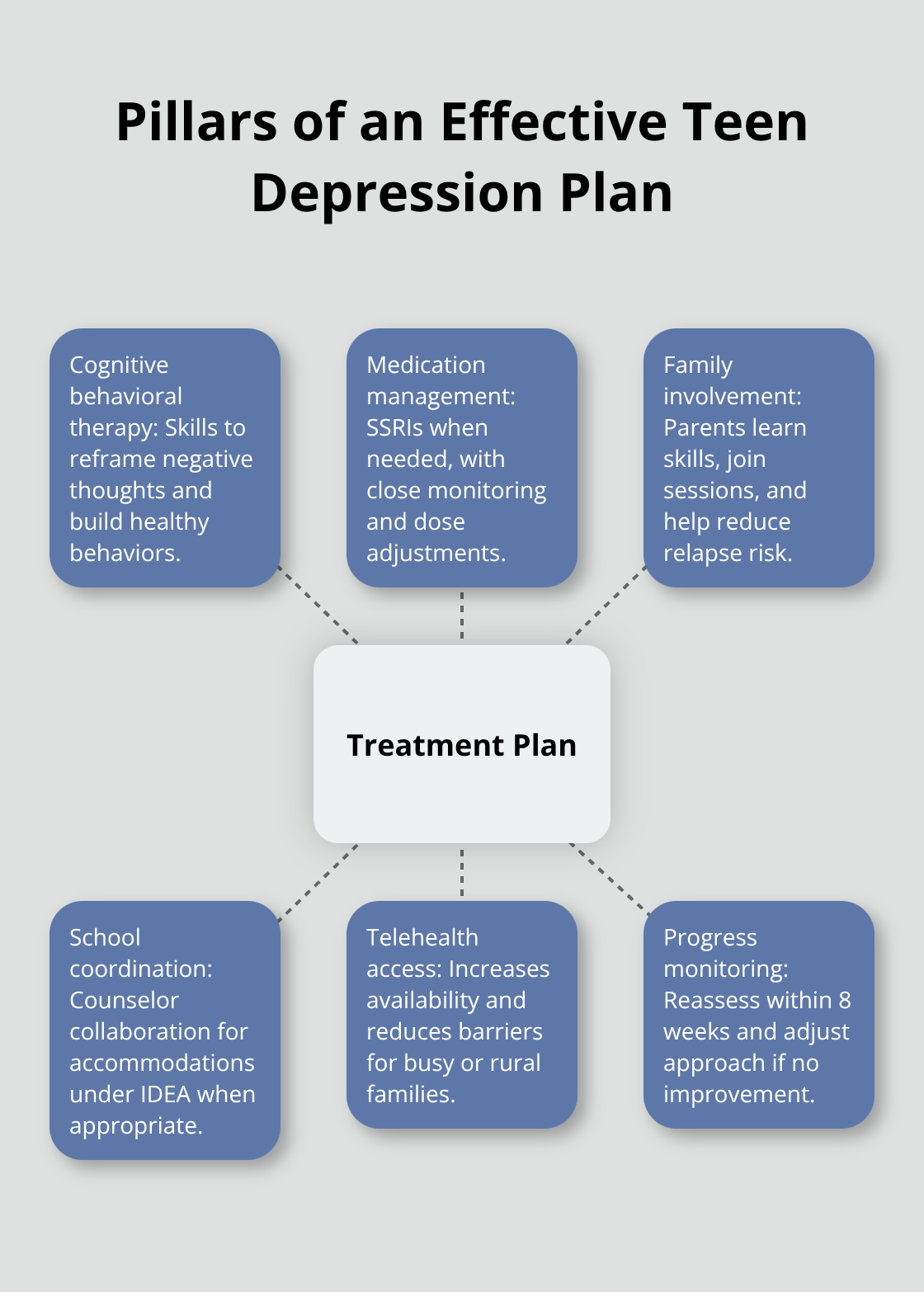
Many intensive outpatient programs require parent participation as a condition of enrollment because the evidence supporting family-based treatment is that strong. School coordination matters equally-your teen’s therapist or psychiatrist should communicate with the school counselor to ensure academic accommodations are in place if depression is affecting grades or attendance. Under the IDEA, students with mental health conditions may qualify for an Individualized Education Plan that provides extra time on tests, reduced course load, or modified assignments. Do not wait for your teen to fail classes before requesting an evaluation.
Access and Timeline for Improvement
Telehealth expands access significantly, particularly if you live in a rural area or your teen’s schedule makes in-person appointments difficult. Treatment typically takes three to six months before you see stable improvement, so patience matters alongside persistence. If your teen shows no progress after eight weeks with a therapist, that’s a signal to switch providers or add medication rather than continuing the same approach.
Final Thoughts
Recognizing adolescent depression and acting fast saves lives. The warning signs-persistent sadness, social withdrawal, sleep changes, and academic decline-matter only if you respond to them. Waiting for your teen to snap out of it or hoping the mood passes on its own delays treatment and allows depression to deepen. The data is clear: 40% of high school students report persistent sadness, and 20% have seriously considered suicide.
Professional help isn’t optional when depression reaches crisis level. A therapist or psychiatrist provides the structured assessment and evidence-based treatment that actually works-cognitive behavioral therapy, medication management, or both combined. Treatment typically takes three to six months, which means starting now matters more than finding the perfect provider later. If your teen shows no improvement after eight weeks, switch approaches rather than waiting longer.
The adolescent depression crisis resources outlined in this guide-988, Crisis Text Line, emergency departments, school counselors, and FindTreatment.gov-exist specifically for moments like this. Family involvement transforms outcomes in ways individual therapy cannot match, and school coordination ensures your teen gets academic accommodations under IDEA protections so depression doesn’t derail their education while they’re healing. The Teen Center delivers specialized mental health care for adolescents ages 12 to 17, combining individual and family therapy, medication management, and academic coordination both in person and via telehealth.