
Getting your teen the mental health care they need shouldn’t mean juggling transportation schedules or missing work. Scheduling telehealth for adolescents removes these barriers and makes consistent care actually possible for busy families.
At The Teen Center, we’ve seen how the right appointment time and a few simple preparation steps transform telehealth from convenient to genuinely effective. This guide walks you through exactly how to make it work.
Why Telehealth Actually Works for Teen Mental Health
Transportation Stops Being the Barrier
Telehealth removes a real obstacle that keeps families from getting consistent care. Transportation isn’t just inconvenient-it’s a deal-breaker for many families. A teen in crisis at 3 p.m. on a school day can’t wait until after school, and a parent working full-time can’t necessarily leave their job to drive across town. Telehealth eliminates this friction entirely. Your teen receives care from your home, and you avoid the 30-minute drive that would otherwise derail the appointment.
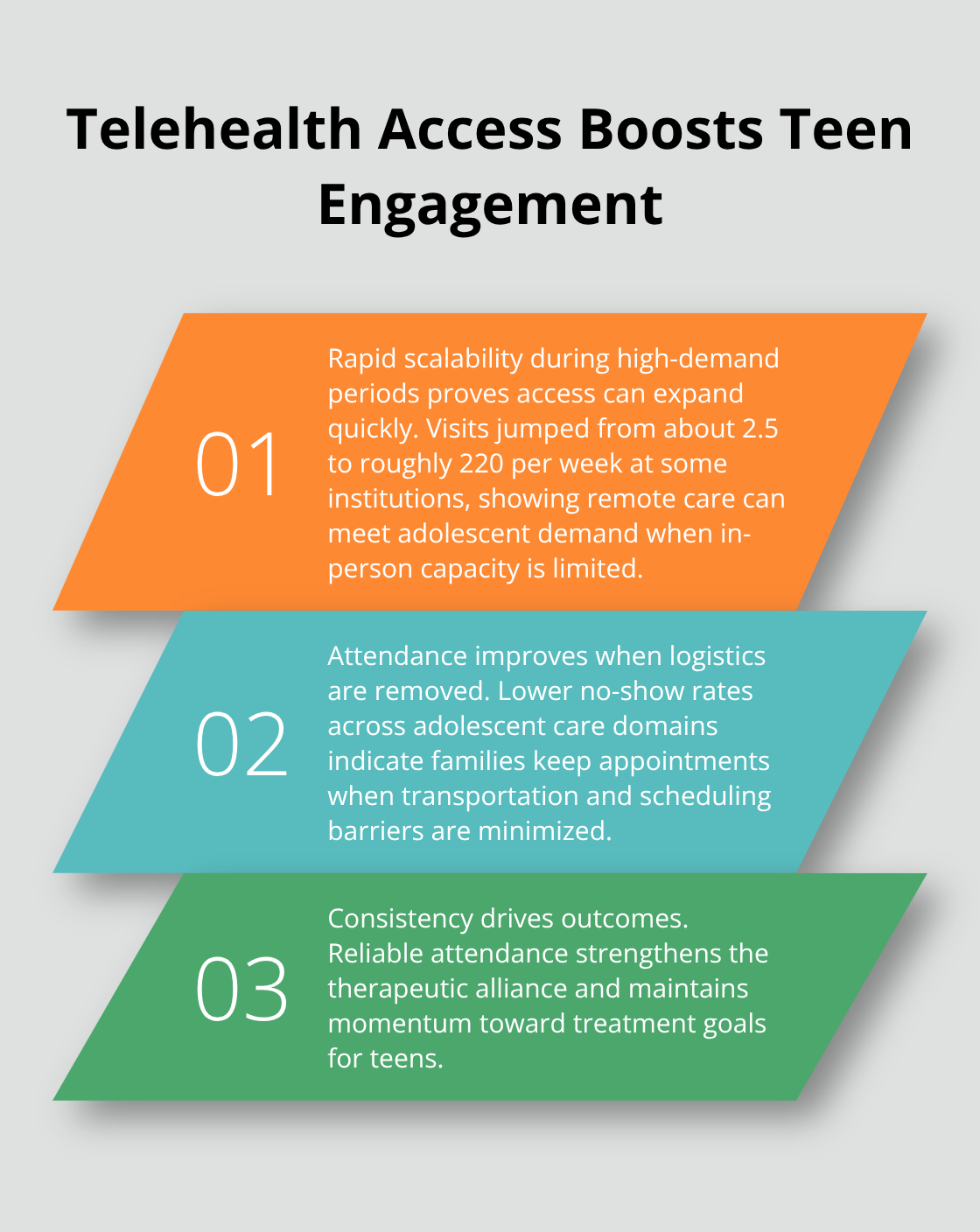
This matters because consistency in mental health treatment directly affects outcomes. During the pandemic surge, telehealth visits rose from about 2.5 per week to roughly 220 per week at some institutions, and no-show rates dropped significantly across eating disorders, mental health, gender-affirming care, and substance use treatment. When families can actually keep appointments without logistical chaos, teens stay engaged with their treatment.
Flexibility Transforms Your Schedule
Flexibility is where telehealth becomes genuinely different from traditional in-person care. Scheduling around school, sports, work, and family obligations stops being the impossible puzzle it once was. A session at 4 p.m. on a Tuesday fits between school pickup and dinner prep. A Friday morning appointment works before your teen’s shift at their part-time job.
Weekend availability (Saturdays and Sundays) accommodates families who can’t squeeze in weekday appointments, and sessions can happen during lunch breaks or before school starts. This scheduling flexibility matters because consistent care is what actually changes outcomes for adolescents struggling with anxiety, depression, or trauma. Research shows that telehealth demonstrated lower no-show rates across multiple adolescent health domains, meaning that when families can schedule around their actual lives, teens show up and receive the treatment they need.
Preparation Pays Off in Better Outcomes
Small preparation steps directly support better clinical outcomes because your teen arrives ready to engage rather than stressed about logistics. Test your internet connection beforehand, find a quiet space, and make a list of topics to discuss. These actions take minimal time but create the conditions for your teen to open up and work effectively with their clinician.
When you move forward with scheduling, knowing exactly what to prepare makes the difference between a rushed, awkward first session and one where your teen actually connects with their provider. The next section walks you through the specific steps to find the right appointment time and set up your space.
Scheduling Your Teen’s Telehealth Appointment
Match the Appointment Time to Your Teen’s Energy and Your Family’s Reality
Finding the right appointment slot requires thinking about your teen’s actual rhythm, not just open calendar spaces. Morning sessions work well for teens who are alert and focused early but struggle with afternoon energy crashes. Afternoon slots between 3 and 5 p.m. catch your teen after school but before dinner prep chaos, though this window competes with sports, jobs, and other activities. Evening appointments after 6 p.m. work if your teen is a night person, but clinicians often have limited availability then. Weekend mornings eliminate school and work conflicts entirely, which is why many busy families prefer Saturday or Sunday slots.
The key is matching the appointment time to when your teen is most likely to engage honestly and when you can actually be present without rushing. If your teen sees multiple providers or coordinates care with their school, schedule around existing commitments rather than chasing the theoretically perfect time. One practical step: ask your provider what times have the shortest wait between booking and the first appointment, since waiting weeks for care defeats the purpose of telehealth’s accessibility.
Prepare Your Physical Space for Confidential Conversations
Before your teen’s first session, test your internet connection on the exact device you’ll use at least 24 hours in advance. Slow wifi or unreliable connections damage the therapeutic relationship faster than almost anything else. Position your setup in a room where your teen can close the door and talk without siblings, parents, or housemates overhearing. This isn’t optional for adolescent mental health care-research shows many teens will skip treatment entirely if they cannot guarantee confidential, private conversations with their clinician.
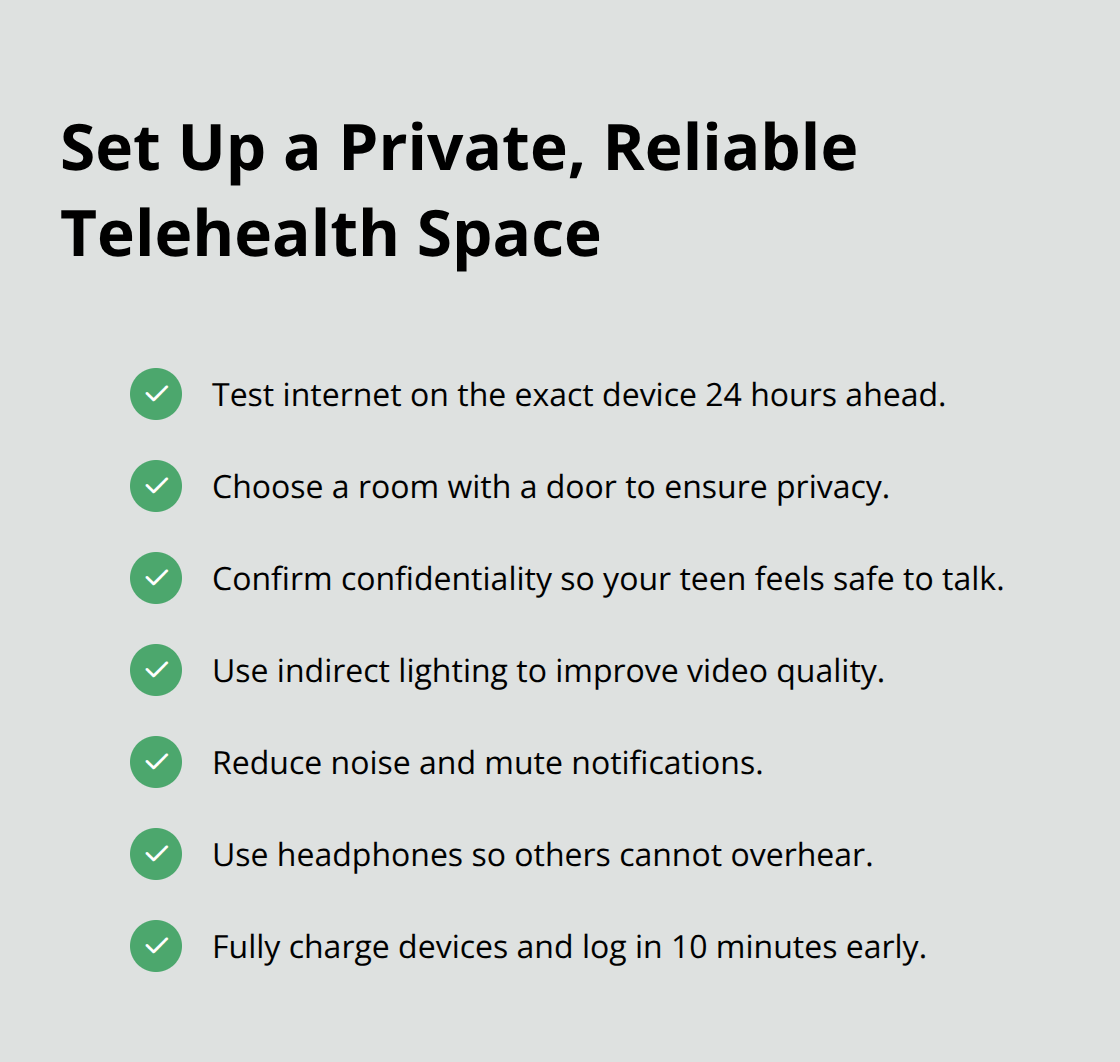
Indirect lighting (avoid harsh overhead lights or backlighting from windows) improves video clarity and makes your teen feel less like they’re in an interrogation. Minimize background noise by closing windows, muting notifications, and using headphones so others in your home cannot hear the session. Charge all devices fully and have your login information ready 10 minutes early.
Clarify Boundaries and Prepare Your Teen for the Session
Prepare a short list of topics your teen wants to discuss so the session doesn’t start with awkward silence. Know whether your teen will have time alone with the clinician or if you’ll participate in part of the session. Clarify with the provider in advance whether a parent should be present during the entire appointment, part of it, or not at all-this boundary matters enormously for adolescent trust and engagement.
These preparation steps transform your teen’s first telehealth experience from uncertain to focused. With logistics handled and expectations clear, your teen arrives ready to work with their clinician on what actually matters. The next section covers how to establish routines that keep your teen engaged throughout their treatment.
Making Telehealth Stick: Consistency and Connection
Telehealth only works if your teen actually shows up and engages, which means establishing habits around sessions rather than treating them as one-off appointments. Set a consistent day and time each week-same Tuesday at 4 p.m., every other Thursday morning, whatever fits your schedule-because predictability matters enormously for adolescent mental health. Your teen’s brain benefits from knowing exactly when their session happens; the routine itself becomes part of the treatment.
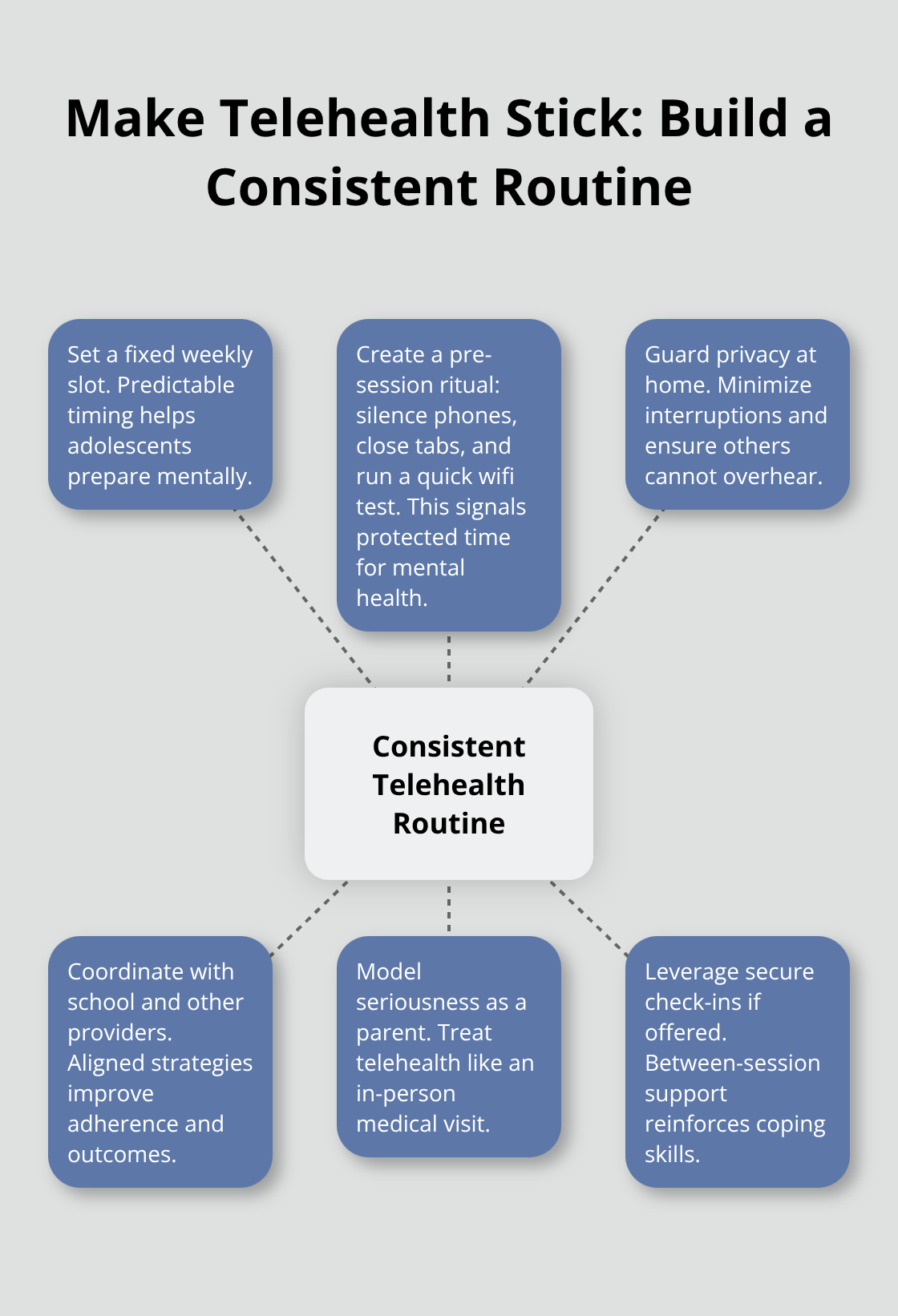
Thirty minutes before the appointment, put phones on silent, close unnecessary browser tabs, and run a quick wifi test. This small ritual signals to your teen that the next hour is protected time for their mental health, not something squeezed between other tasks. When your teen sees you treating telehealth with the same seriousness as an in-person doctor appointment, they internalize that their mental health deserves that same weight.
Creating Space for Honest Conversations Online
Adolescents are more likely to open up about sensitive topics in telehealth sessions than in traditional office settings. Your teen may actually find it easier to discuss anxiety, relationship problems, or trauma from their bedroom than sitting across a desk from a clinician in a clinical office. This happens partly because the home environment feels safer and partly because the screen creates a subtle psychological distance that can make vulnerability feel less exposing. Your role involves protecting that openness by ensuring nobody interrupts or overhears. If siblings share your home, negotiate specific times when they wear headphones or stay in another area. If you’re present during part of the session, sit where you cannot see the screen. Most clinicians will explicitly ask your teen at the start whether they have privacy and feel comfortable speaking freely-take that seriously and step away if your presence inhibits honesty.
Connecting Your Teen’s Care Across Multiple Support Systems
Telehealth becomes most powerful when your teen’s clinician coordinates with their school counselor, teachers, or other providers handling their academic and social life. Before your teen’s second or third session, ask the clinician how they can share relevant information with the school (with your written permission, since HIPAA protects these records). If your teen is working with a school-based counselor on anxiety management, the telehealth clinician should know about those specific techniques so they reinforce rather than contradict them. Some clinicians use secure messaging between sessions to check in about homework assignments or coping strategies your teen is practicing. Ask directly whether your provider offers this asynchronous support and how it works-some include it, others charge extra, and some don’t offer it at all. The clinicians who actively coordinate with schools and other providers see better treatment adherence and faster symptom improvement because your teen receives consistent messaging across every adult in their life.
Final Thoughts
Scheduling telehealth for adolescents removes the logistical barriers that have historically kept families from accessing consistent mental health care. When transportation stops being an obstacle and appointments fit into your actual schedule, your teen receives the ongoing support that genuinely changes outcomes. Testing your internet connection, securing a private space, and establishing a consistent appointment routine signal to your teen that their mental health matters.
Small actions compound into real results. These preparation steps directly support better treatment adherence, more honest conversations, and faster progress toward the emotional stability your teen deserves. Your teen’s brain benefits from knowing exactly when their session happens; the routine itself becomes part of the treatment.
Visit The Teen Center to learn more about our programs and schedule your teen’s first appointment. Our clinicians are ready to help your teen build resilience and achieve lasting emotional and academic stability through both telehealth and in-person care options.