
When depression hits a teenager, it doesn’t just affect their mood-it tanks their grades, kills their focus, and sends them spiraling away from school. The problem gets worse when treatment and academics operate in separate silos, with therapists and teachers working blind to each other’s efforts.
At The Teen Center, we’ve seen firsthand how academic coordination for adolescent depression transforms outcomes. When schools and treatment providers align their strategies, teens actually recover faster and perform better academically.
How Depression Destroys Teen Academic Performance
The Brain Under Depression
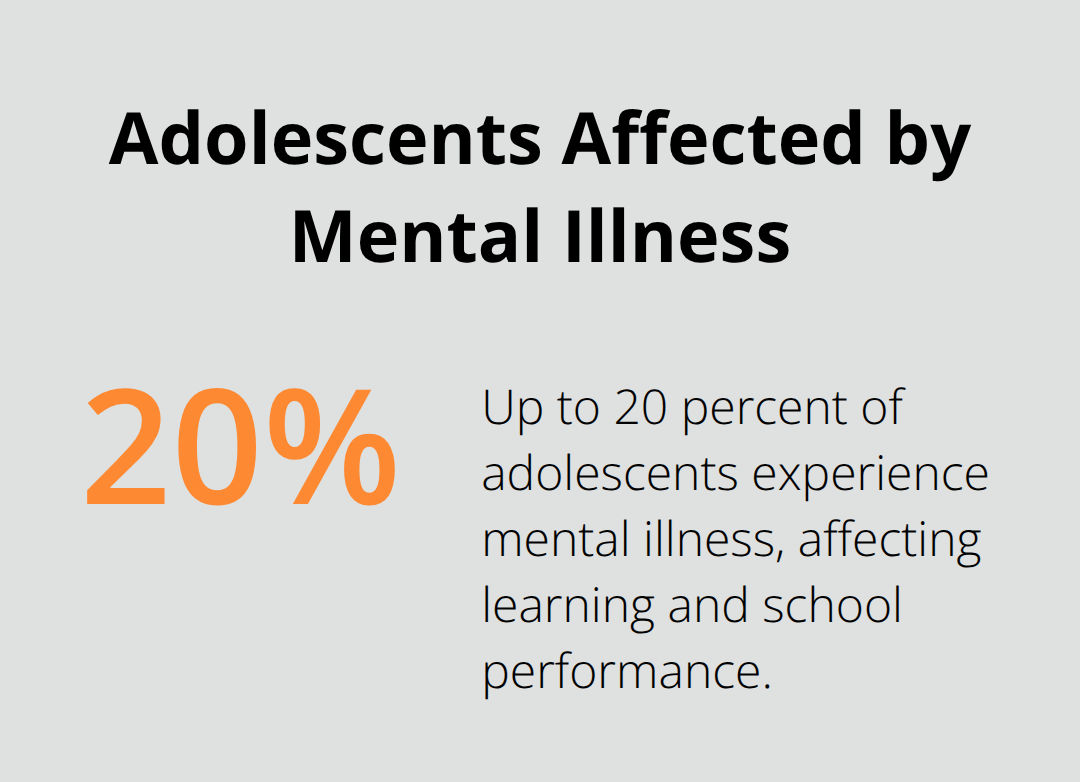
Depression doesn’t just make teenagers feel sad-it systematically dismantles their ability to function in school. Research shows that up to 20 percent of adolescents experience mental illness, and depression specifically attacks the neurological processes required for learning. When a teen is depressed, their prefrontal cortex-the part of the brain responsible for focus, decision-making, and working memory-operates at reduced capacity. This isn’t laziness or lack of effort.
It’s a biological reality that makes concentrating on algebra or reading comprehension feel impossible.
The teen’s brain struggles to process information at all. Teachers often interpret this as disengagement or apathy, but the neurological reality is far different. Attention span collapses, reading retention plummets, and even simple tasks require exhausting mental effort. A student who once breezed through homework now stares at the same page for thirty minutes without absorbing a single sentence.
Absenteeism and the Downward Spiral
Concentration problems lead almost inevitably to absenteeism. Depressed teens experience overwhelming fatigue, morning dread, and social anxiety that makes getting to school feel insurmountable. Schools report that depressed adolescents miss significantly more classes than their peers, and each absence compounds the academic damage by creating gaps in instruction and missing assignments.
The motivation to catch up disappears because depression strips away hope and future-orientation. Grades fall not because the teen lacks intelligence but because depression has made the effort required to succeed feel pointless. Parents watch their previously engaged student transform into someone who refuses to open their backpack, skips classes, and stops caring about report cards.
How Academic Failure Deepens Depression
This academic collapse often triggers family conflict and shame, which deepens the depression further. The cycle becomes self-reinforcing: depression causes academic failure, academic failure increases depression, and both spiral downward together unless intervention breaks the pattern. A teen trapped in this cycle needs more than therapy alone or academic tutoring alone-they need coordinated support that addresses both mental health and school performance simultaneously. This is why the next section explores how treatment providers and schools can work together to interrupt this destructive pattern and help teens rebuild both their mental health and their academic function at the same time.
Coordinating Treatment Plans with School Systems
Establish Legal Authorization and a Single Point of Contact
The therapist knows the teen is making progress in sessions, but the teacher has no idea. The teacher sees improved attendance, but the therapist doesn’t know about the recent test failure that triggered a relapse. This disconnect is exactly why teens with depression often fail to sustain their gains. Schools and treatment providers operate independently because nobody has established a formal pathway for communication. Time constraints, unclear roles, and reimbursement confusion create barriers that feel insurmountable, but they’re not.
The first step is recognizing that therapists and teachers are not natural collaborators-they need structure, clear expectations, and a specific plan to coordinate. Have a parent or guardian sign a release of information form that explicitly authorizes your treatment provider to contact school staff. This single document removes the legal barrier. Then, identify one specific person at school-usually the school counselor or special education coordinator-who will serve as your primary contact. Don’t try to coordinate with five different teachers. One coordinated point of contact prevents information from getting lost and reduces the burden on school staff.
Schedule Focused Communication Before Crisis Strikes
Schedule a 20-minute call or in-person meeting before crisis happens, not after. During this conversation, share only what’s relevant: current depression symptoms that affect learning, the specific academic accommodations being implemented, and how to recognize warning signs that the teen is deteriorating. Teachers don’t need the full clinical history; they need actionable information.
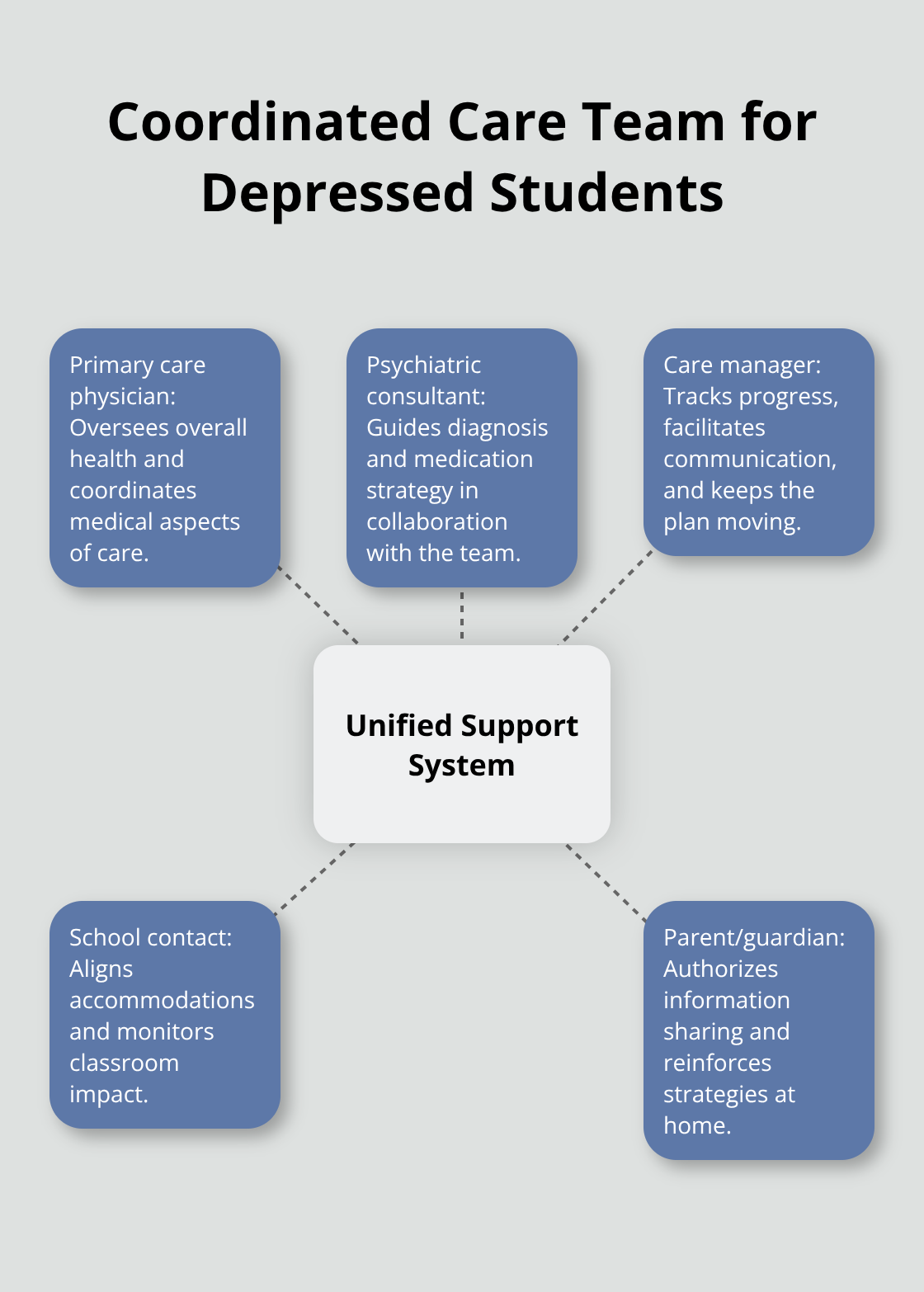
According to the American Academy of Child and Adolescent Psychiatry, the strongest coordinated care model involves a primary care physician, a psychiatric consultant and care manager working as a team to identify and provide support-where mental health and academic support operate as a unified system rather than parallel tracks. This means your treatment provider and school staff explicitly agree on shared goals before they become separate initiatives.
Align Therapy Goals with Academic Accommodations
The shared goals framework works like this: therapy focuses on reducing depression symptoms and building coping skills, while school accommodations remove barriers created by those symptoms. If the teen’s depression causes severe morning fatigue, the shared goal isn’t just to treat the fatigue-it’s to implement a late start to the school day while treatment progresses. If concentration problems make test-taking impossible, the shared goal includes both cognitive-behavioral therapy to improve focus and extended testing time as a formal accommodation. This dual approach accelerates recovery because the teen isn’t fighting both untreated depression and impossible academic expectations simultaneously.
Formalize Accommodations Through Legal Documentation
Formalize these accommodations through either a 504 Plan or IEP. A 504 Plan works for any disability that interferes with learning and requires minimal documentation-it’s faster but less comprehensive. An IEP is available if the teen qualifies under 13 disability categories including emotional disturbance, and it provides more intensive support including specialized instruction. Both require written documentation, not just informal teacher agreements. The written plan prevents accommodation drift, where teachers gradually stop implementing support as the teen appears to improve.
Specific accommodations matter more than vague support. Instead of noting that the teen needs help with anxiety, write that the student receives five-minute breaks between classes to practice grounding techniques. Instead of stating the student needs academic support, specify that the student completes two core subjects through independent study at a partner accredited program while receiving one-on-one tutoring during treatment, maintaining credit-earning capacity. This specificity means every staff member knows exactly what to do and why. With these formal structures in place, the next section explores the practical tools that parents, schools, and treatment providers use to monitor progress and sustain coordination over time.
Tracking Progress Across Treatment and School
Measure What Matters: Depression Symptoms and Academic Metrics
Progress monitoring reveals what informal check-ins miss. A teen might tell their therapist that school is going better, while their teacher records three missed assignments that week. Parents assume grades will improve once medication takes effect, but nobody tracks whether concentration actually improves during study sessions. The solution is establishing a simple measurement system that captures both mental health and academic data on the same timeline. Integrated, multidisciplinary team-based care yields better clinical outcomes and higher patient satisfaction, which means the treatment provider, school staff, and parents need to monitor the same metrics weekly, not monthly or when crisis erupts.
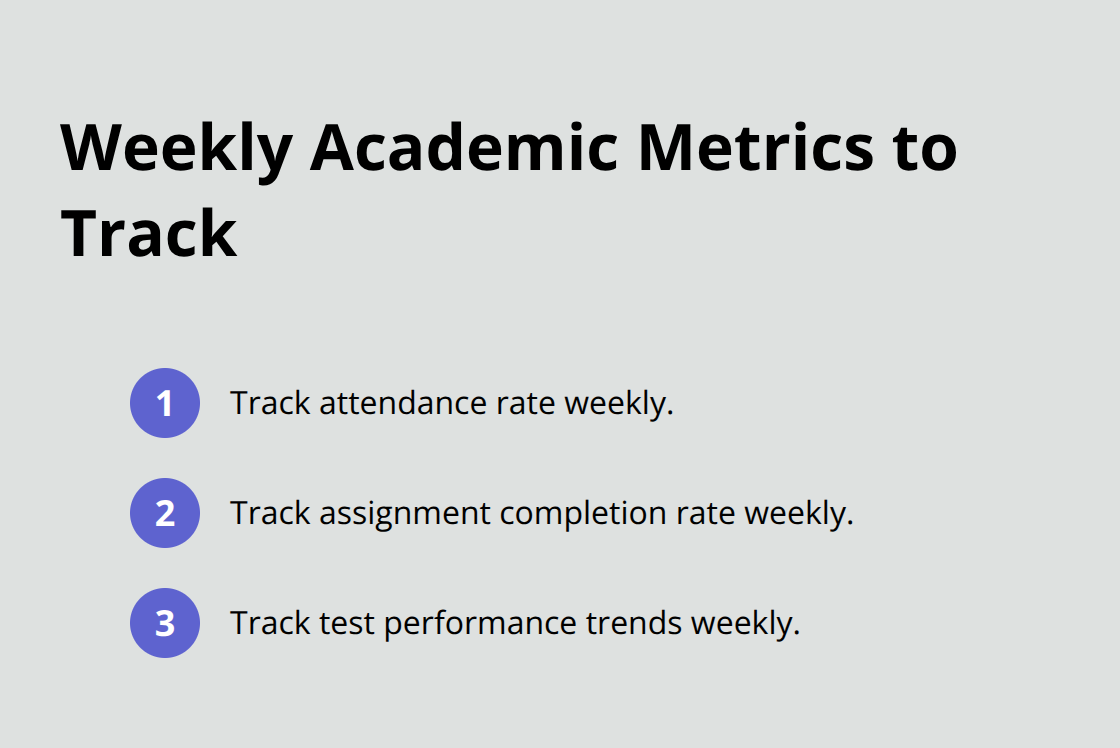
Start with depression symptom tracking using a standardized tool like the PHQ-9 modified for adolescents, which takes three minutes to complete and produces a numerical score that shows whether depressive symptoms are actually declining. Simultaneously, track three academic metrics: attendance rate, assignment completion rate, and test performance. These numbers tell the real story. If depression symptoms drop but attendance stays at 60 percent, the treatment is working but environmental barriers still block school access.
If attendance improves but test scores remain flat, concentration problems persist despite symptom reduction.
Schedule Weekly Coordination Calls
Schedule a 15-minute weekly call between the treatment provider and school contact person to review these numbers together. During this call, discuss what changed that week and adjust the plan immediately rather than waiting six weeks for a formal review meeting. This weekly rhythm prevents the information gaps that allow depression to worsen undetected.
The structured check-in system eliminates communication breakdowns that derail recovery. Parents contact the school when grades drop, therapists adjust medication based on mood reports, teachers modify accommodations when behavior improves, but without coordination, these decisions operate independently. Assign one person at school and one parent to send a weekly email every Friday to the treatment provider summarizing attendance, assignment submission, test results, and social engagement observations. The treatment provider responds with a brief update on symptom changes, medication adjustments, or coping skills the teen is developing.
Maintain Academic Progress During Intensive Treatment
For teens in intensive outpatient programs or residential treatment, coordination becomes more structured. Academic coordinators work directly with families and schools to maintain credit-earning capacity while treatment progresses. The coordinator contacts the teen’s school to create a plan that moves assignments to the treatment facility, allows the student to complete work during scheduled classroom time, and returns finished assignments to teachers for grading. This system allows students to continue earning credits from their home school while receiving intensive mental health treatment, preventing the academic catastrophe that typically accompanies hospitalization or residential care.
Independent study through an accredited partner program offers an alternative when direct school coordination isn’t feasible, limiting focus to two core subjects while the teen stabilizes. Formalize these coordination agreements in writing, not just verbal agreements, because written documentation holds everyone accountable and prevents accommodation drift when the teen shows initial improvement. The written plan ensures that every staff member knows exactly what to do and why, and it creates accountability across all parties involved in the teen’s recovery.
Final Thoughts
Academic coordination for adolescent depression isn’t optional-it’s the difference between a teen who recovers and one who stays trapped in the depression-academic failure cycle. When therapists, teachers, and parents operate independently, teens fall through the gaps. When they coordinate around shared goals, measure progress together, and adjust strategies weekly, recovery accelerates and academic performance rebounds alongside mental health improvement.
The evidence supports integrated, multidisciplinary team-based care that produces better outcomes than fragmented treatment. Teens need their depression addressed in therapy while simultaneously receiving classroom accommodations that remove barriers created by that depression. They need weekly progress monitoring that tracks both symptom reduction and academic metrics on the same timeline, written documentation through 504 Plans or IEPs that formalizes support and prevents accommodation drift, and adults who communicate directly rather than hoping the teen will translate information between settings.
For parents, initiating the coordination conversation early matters more than waiting until crisis forces it-request a release of information form from your treatment provider, identify one school contact person, and schedule that first 20-minute meeting before problems escalate. For educators, recognizing that depression is a medical condition affecting learning capacity (not a motivation problem) strengthens your ability to support the student through collaboration with treatment providers. We at The Teen Center integrate academic coordination directly into our treatment model because we’ve seen how powerfully it works.