Finding the right teen teletherapy coverage options shouldn’t feel like a maze. Many parents struggle to understand what their insurance actually covers, which providers are in-network, and how to avoid surprise bills.
At The Teen Center, we’ve seen firsthand how confusing insurance can be when you’re trying to get your teen mental health support. This guide breaks down the real steps you need to take to navigate coverage, appeal denials, and find affordable care.
Understanding Insurance Coverage for Teen Teletherapy
Insurance plans classify teletherapy as behavioral health or mental health services, which means your coverage depends entirely on how your specific plan categorizes these services. Most plans now cover teletherapy at parity with in-person therapy, so you’ll pay the same copay whether your teen meets a therapist on video or in an office. This parity rule only applies if teletherapy actually appears as a covered modality in your plan documents. Some older plans still exclude telehealth, so verifying coverage before your teen’s first session is non-negotiable. Check your Summary of Benefits and Coverage document or call your insurer’s member services line to confirm teletherapy is covered. Ask specifically whether video, audio, and messaging formats are all included, since some plans limit which delivery methods they’ll pay for.
In-Network Providers Save You Money
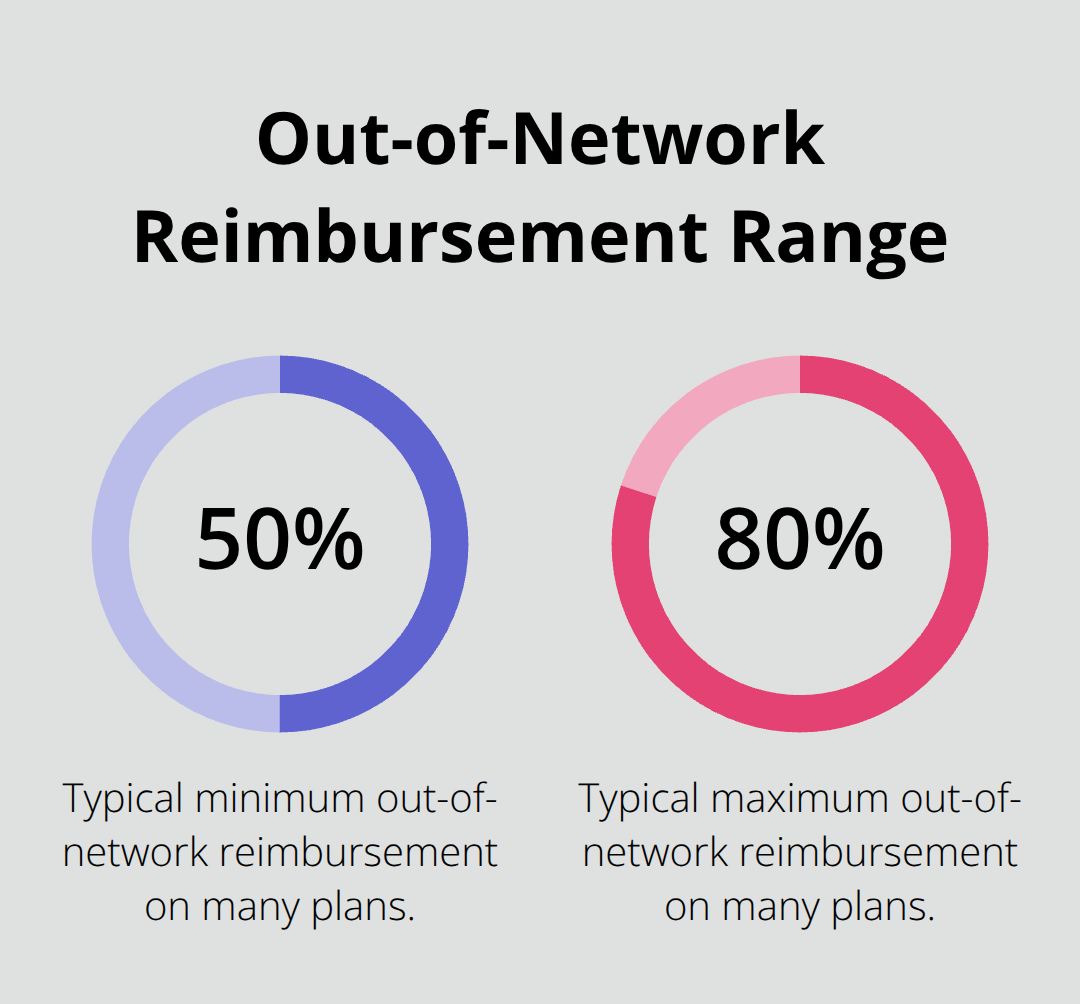
Choosing an in-network teletherapy provider will save you significantly. In-network copays typically range from zero to fifty dollars per session, while out-of-network reimbursement usually covers only fifty to eighty percent of the therapist’s fee, leaving you responsible for the rest. Many families assume their local therapist isn’t in-network, but teletherapy changes that equation entirely.
Digital platforms like Talkspace partner with major insurers including Aetna, Anthem, Blue Cross Blue Shield, Cigna, Optum, and Regence, meaning your teen can access therapists across state lines while staying in-network. Regence plans often show copays around five dollars per session for in-network teletherapy, while Optum and Cigna plans typically run fifteen to twenty dollars. Before booking any provider, use your insurer’s online directory or call to verify network status. Out-of-network therapy might feel necessary if you can’t find in-network options, but exhaust your in-network search first.
Deductibles and Session Limits Shape Your Budget
Deductibles matter tremendously when budgeting for teen therapy. You’ll need to meet your annual deductible before insurance starts paying its share of mental health services. A family with a three thousand dollar deductible might pay the full therapist fee for several sessions before insurance kicks in. After you meet the deductible, you’re responsible for your copay per session. Some plans also cap the number of sessions covered annually, though federal mental health parity protections now require these limits to match physical health benefits. The Mental Health Parity and Addiction Equity Act Final Rules mandate that mental health coverage be as comprehensive as medical and surgical benefits. This means if your plan covers sixty physical therapy sessions, it must cover at least sixty mental health sessions. However, not all plans interpret this equally, so request written confirmation of your session limit from your insurer. Medicaid and CHIP programs cover essential mental and behavioral health services for children and teens with no or low copays, making them valuable options if your family qualifies.
What Happens When You Need More Support
Some teens require intensive treatment beyond standard outpatient teletherapy. Intensive outpatient programs and partial hospitalization programs provide higher levels of care for adolescents facing serious mental health challenges like depression or trauma. These programs typically involve multiple sessions per week and may include individual therapy, group sessions, and medication management. Insurance coverage for these services varies significantly by plan and state. If a clinician recommends higher levels of care, verify coverage with your insurer and provide clinical documentation to support the need. Prior authorization and appeals processes may be necessary if initial coverage decisions are unfavorable; your provider’s billing department can help submit these requests. When insurance falls short, treatment centers may offer programs or financing options to access care.
Navigating Insurance Claims and Maximizing Benefits
Verify Coverage Before Your Teen’s First Session
Getting clarity on your insurance coverage before your teen starts teletherapy prevents costly surprises and wasted time. Locate your Summary of Benefits and Coverage document, which your insurer provides free and lists exactly what mental health services are covered, copay amounts, deductibles, and session limits. Call your insurer’s member services line with your plan number ready and ask three specific questions: Is teletherapy covered? What delivery formats does your plan allow-video, audio, or messaging? Do you need prior authorization before starting treatment?
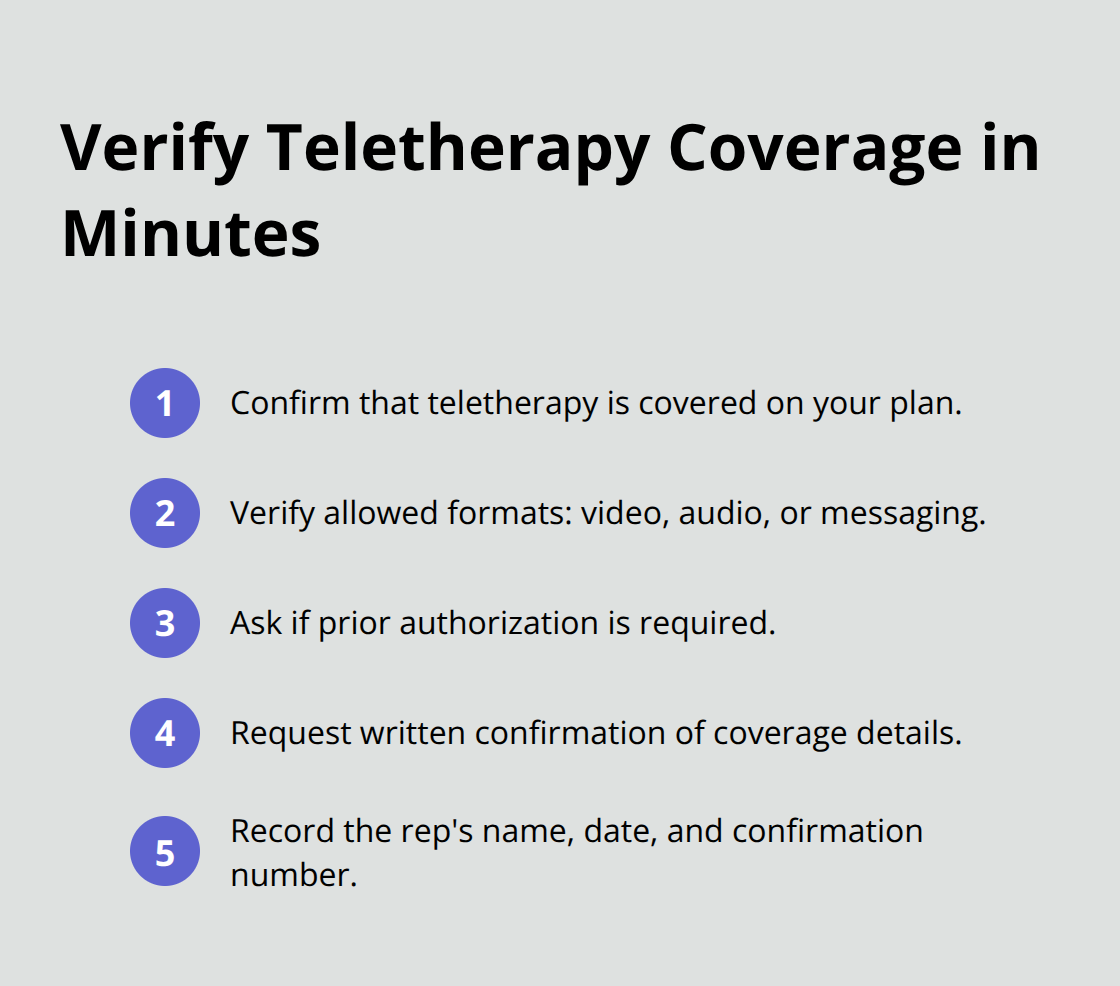
Write down the representative’s name, date, and confirmation number, then request written confirmation via email or mail. This documentation protects you if billing issues arise later.
Check whether your deductible has been met for the year, since you’ll pay full price until that threshold is reached. Ask about your out-of-pocket maximum too-once you hit this limit, your insurer covers one hundred percent of covered services for the rest of the year. Medicaid and CHIP cover essential mental and behavioral health services for eligible children and teens, often with zero or minimal copays, so verify eligibility through your state program if applicable. Many families overlook employer-sponsored Employee Assistance Programs that provide free or low-cost therapy sessions, sometimes three to five sessions annually at no cost to you.
Understanding Prior Authorization Requirements
Prior authorization requirements exist to prevent surprise denials after treatment begins. Your insurer may require the therapist to submit clinical justification before approving coverage, a process that can take anywhere from a few days to several weeks. Request that your chosen teletherapy provider submit prior authorization paperwork on your behalf-reputable platforms like Talkspace handle this routinely with major insurers including Aetna, Anthem, Blue Cross Blue Shield, Cigna, Optum, and Regence. Do not assume verbal approval from your insurer means you’re covered; insist on written authorization before your teen’s first session.
If your insurer denies prior authorization, your provider can appeal with additional clinical documentation, though this delays treatment start dates. The appeals process requires you to gather treatment plans and provider letters that justify the medical necessity of the recommended care. Submit your formal appeal to your insurer within the timeframe specified in the denial letter (typically thirty to sixty days). Your provider’s billing department can guide you through this process and help strengthen your case with clinical evidence.
Managing Out-of-Pocket Costs Effectively
Out-of-pocket costs accumulate quickly without planning, so calculate realistic monthly expenses by multiplying your copay by expected session frequency. A teen attending weekly teletherapy with a twenty-dollar copay will cost roughly eighty dollars monthly before meeting their deductible.
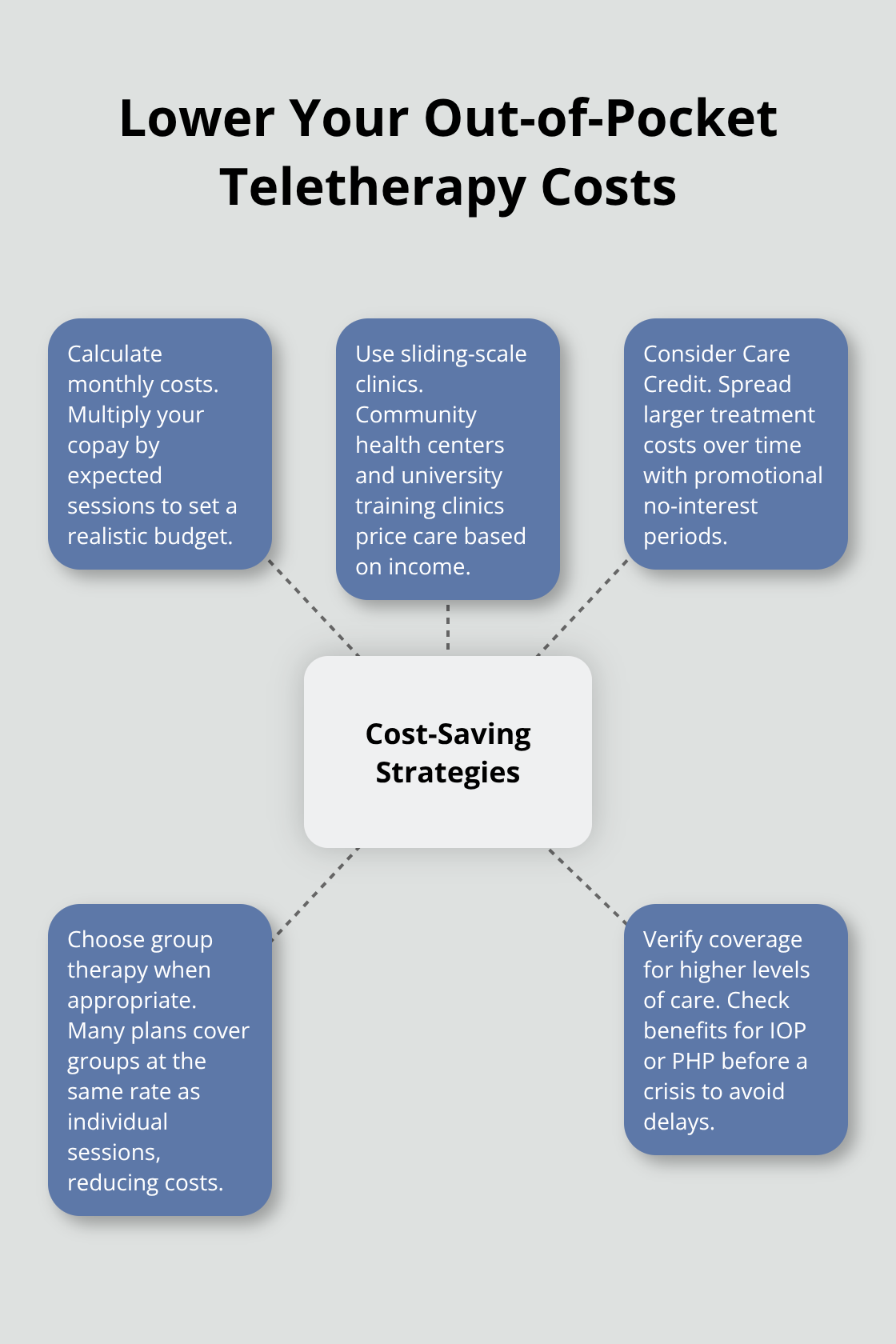
If your family faces financial hardship, sliding-scale therapy options exist through community health centers and university training clinics, which charge based on income rather than standard rates.
Care Credit financing, accepted by many treatment centers, allows you to pay out-of-pocket costs over time without interest if paid within a promotional period, making intensive outpatient programs or higher levels of care more accessible when insurance coverage gaps exist. Group therapy sessions often cost less than individual therapy while providing peer support, and many insurance plans now cover this modality at the same rate as one-on-one sessions. When standard teletherapy doesn’t fully address your teen’s needs, higher levels of care become necessary-and understanding your coverage for these options before crisis hits determines whether your family can access them quickly.
What to Do When Insurance Denies Coverage
Insurance denials happen frequently, and they’re rarely the final word. Your insurer may deny coverage for teletherapy because prior authorization wasn’t submitted, the requested service falls outside your plan’s scope, or the insurer questions whether the treatment is medically necessary. When you receive a denial letter, read it carefully to identify the specific reason. The letter will include an appeal deadline, typically thirty to sixty days from the denial date.
Appeal Denials With Clinical Evidence
Your therapist’s billing department can strengthen an appeal by submitting additional clinical documentation that justifies the medical necessity of treatment. Request that your provider include details about your teen’s diagnosis, current symptoms, treatment goals, and why standard outpatient care alone won’t address their needs. Many denials overturn on appeal when providers submit robust clinical evidence. If your insurer continues to deny coverage after appeal, ask whether your state has an external review process where an independent medical reviewer evaluates the denial. Some states require insurers to cover external reviews at no cost to you. This step bypasses your insurer’s internal decision-making and can reverse unjust denials.
The Mental Health Parity and Addiction Equity Act Final Rules require that mental health coverage match medical and surgical benefits, so if your insurer applies stricter standards to mental health claims, you have grounds for complaint to your state insurance commissioner.
Verify Network Status Before Booking
Finding in-network teletherapy providers requires more than a quick directory search. Start with your insurer’s online provider directory, but verify network status by calling the therapist directly or contacting their billing office, since directories often contain outdated information. Ask specifically whether they accept your insurance plan and which insurance types they bill to, as some therapists claim to accept certain insurers but rarely bill them. Digital teletherapy platforms like Talkspace partner with major insurers including Aetna, Anthem, Blue Cross Blue Shield, Cigna, Optum, and Regence, simplifying the verification process since these platforms handle insurance coordination on your behalf.
Access Care When In-Network Options Fall Short
If you can’t locate in-network providers in your area, ask your insurer whether they offer out-of-network reimbursement rates, which typically cover fifty to eighty percent of the therapist’s full fee. When in-network options genuinely don’t exist or don’t match your teen’s needs, sliding-scale community health centers and university training clinics charge based on income rather than standard rates, making care affordable without insurance navigation. The SAMHSA National Helpline provides confidential referrals to low-cost or state-funded therapy programs in your area.
Group therapy sessions, increasingly covered by insurance plans at the same rate as individual sessions, provide peer support while reducing your out-of-pocket costs. Care Credit financing allows families to spread intensive outpatient program costs over time without interest during promotional periods, making higher levels of care accessible when insurance coverage gaps exist. When your teen needs crisis support or intensive treatment beyond standard teletherapy, treatment centers often offer sliding-scale programs or financing partnerships that bridge the gap between what insurance covers and what treatment actually costs.
Final Thoughts
Navigating teen teletherapy coverage options requires persistence, but the effort pays off when your teen receives the support they need without financial strain. Start by reviewing your Summary of Benefits and Coverage document and calling your insurer’s member services line with specific questions about teletherapy, delivery formats, and prior authorization requirements. Verify network status before booking any provider, and don’t hesitate to appeal denials with clinical documentation from your teen’s therapist.
When in-network options don’t exist or don’t fit your teen’s needs, sliding-scale community health centers, university training clinics, and Care Credit financing bridge coverage gaps effectively. Medicaid and CHIP cover essential mental and behavioral health services for eligible teens with minimal or no copays, so verify eligibility if applicable. If your teen needs intensive outpatient programs, partial hospitalization, or crisis support beyond standard teletherapy, treatment centers often offer financing partnerships and sliding-scale programs that make care accessible.
The SAMHSA National Helpline at 1-800-662-HELP connects families to low-cost or state-funded therapy programs when commercial insurance isn’t sufficient. Visit The Teen Center to learn how we support adolescents ages 12–17 with evidence-based mental health care, including intensive outpatient programs, individual and family therapy, medication management, and crisis support through both in-person and telehealth options. Our statewide telehealth access means your teen can receive care regardless of location.