Teen anxiety rates have climbed sharply over the past decade, with the American Psychological Association reporting that anxiety disorders affect roughly 8% of adolescents. Many teens struggle to access in-person therapy due to long wait lists, transportation challenges, or limited providers in their area.
Teen anxiety online therapy removes these barriers by bringing qualified mental health professionals directly to your teen’s device. At The Teen Center, we’ve seen firsthand how telehealth opens doors for families who need support now, not months from now.
Why Teen Anxiety is Rising and What’s Changed
The Sharp Rise in Teen Anxiety Since 2010
Teen anxiety has accelerated dramatically since 2010, driven by factors that fundamentally shifted how adolescents experience daily life. Anxiety rates increased from 10.4% in 2010 to 24.3% in 2019, while depression rates increased from 9.7% in 2010 to 20% in 2019, according to research highlighted in Jonathan Haidt’s The Anxious Generation. Emergency department visits for self-harm among girls aged 10–14 nearly tripled in that same decade. The causes are concrete: smartphones arrived in teens’ pockets, social media became the primary social space, and unstructured free time collapsed.

Youth ages 15–24 now spend about 70 percent less time with friends face-to-face compared to two decades ago. Roughly 1 in 5 American teen girls used social media more than 40 hours per week in 2015. This shift created a mental health crisis that traditional in-person therapy infrastructure simply cannot absorb.
Why Traditional Therapy Falls Short
Waiting lists stretch months long. Rural areas have almost no teen-specialized therapists. Urban families juggle transportation, work schedules, and therapy appointments that rarely align with their lives. Most anxious teens never receive treatment at all because the system cannot reach them in time.
Online Therapy Closes the Access Gap
Online therapy solves this access problem directly. Online psychological therapies have been found to produce significant reductions in anxiety and depression symptomatology in children. Rural teens are twice as likely to seek therapy when online options exist, according to research in the Journal of Medical Internet Research. Teens themselves prefer this format: flexible evening and weekend sessions mean no missed school or activities, and working from home eliminates commute stress.
What the Research Shows
Over 90 percent of teens report satisfaction with virtual therapy. Cognitive-behavioral therapy delivered online reduces anxiety symptoms measurably, demonstrated in studies from the Journal of Anxiety Disorders. This isn’t a compromise or a second choice-online therapy is faster to access, easier to stick with, and produces the same clinical outcomes as traditional appointments. The evidence is clear: when teens can access therapy from their own space, on their own schedule, they engage more fully and recover faster.
Moving Forward With Treatment Options
Now that you understand why online therapy works, the next step is knowing what to expect when your teen starts sessions.
What Happens in Your Teen’s First Sessions
Your teen’s first online therapy session typically lasts 45 to 60 minutes and focuses on assessment rather than treatment. The therapist will ask detailed questions about your teen’s anxiety symptoms, when they started, what triggers them, and how they affect daily life at school, home, and with friends. This conversation isn’t casual-therapists use validated screening tools like the GAD-7 scale to measure anxiety severity and establish a baseline. Your teen should expect honest questions about sleep, appetite, concentration, and whether anxiety has led to avoidance behaviors like skipping school or withdrawing from social activities. After this first session, the therapist creates a personalized treatment plan that outlines specific goals and the therapy approach they’ll use. Sessions typically happen weekly via video, though some teens prefer audio-only or text-based messaging between video calls.
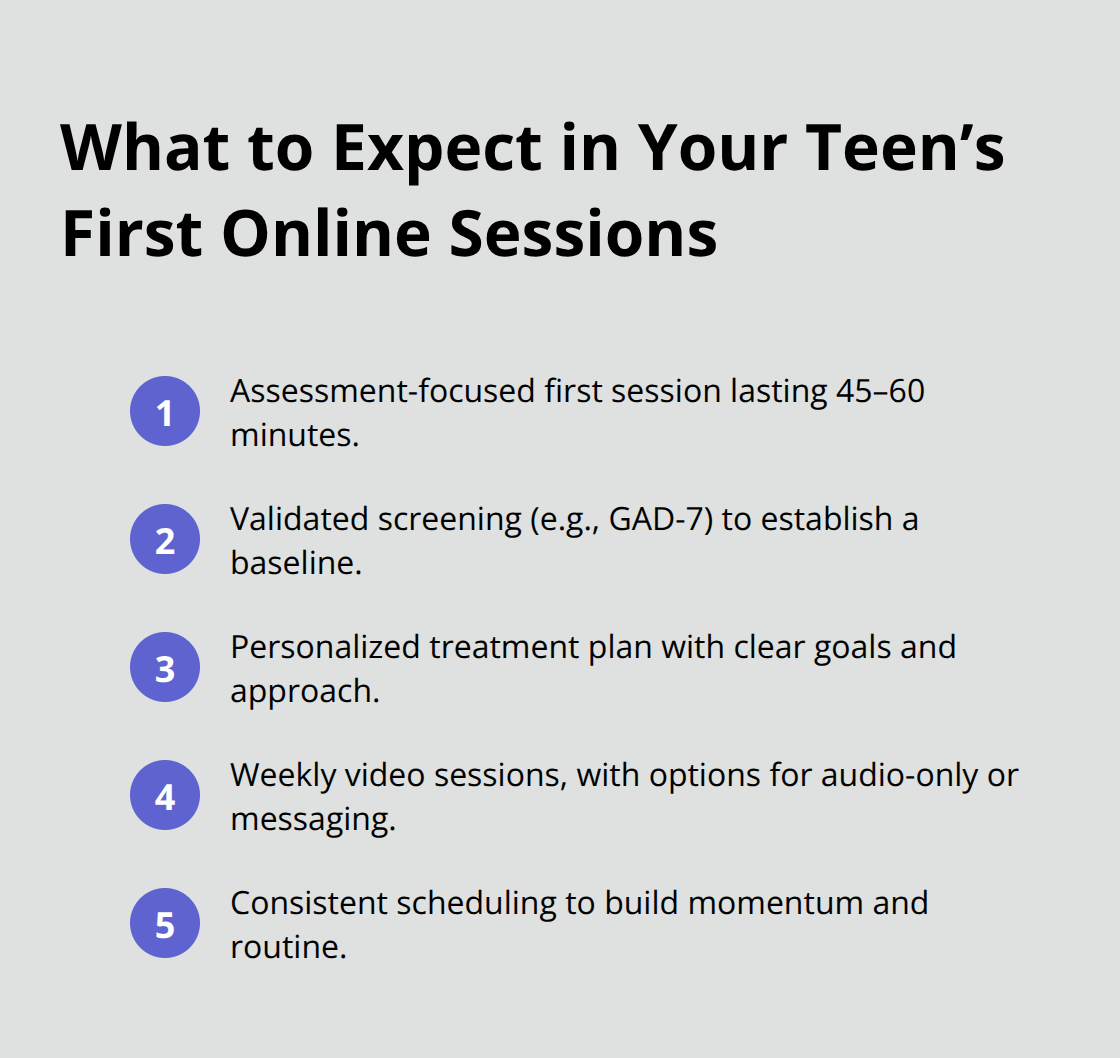
The structure matters: consistent weekly appointments at the same time help your teen build momentum and make therapy part of their routine rather than something that disrupts it.
How Cognitive-Behavioral Therapy Works Online
Cognitive-behavioral therapy, or CBT, dominates online teen anxiety treatment because it works. Research confirms that CBT delivered online reduces anxiety symptoms as effectively as in-person sessions. The therapist teaches your teen to identify anxious thoughts, challenge them with evidence, and practice specific coping techniques like the 4-7-8 breathing method or progressive muscle relaxation. In video sessions, your teen learns these skills hands-on; between sessions, they complete homework assignments that reinforce what they learned. Many platforms include mood tracking tools where your teen logs anxiety levels daily, revealing patterns about what triggers worsen symptoms. Mindfulness-based approaches appear in about half of online teen programs, teaching your teen to observe anxious thoughts without judgment rather than fight them. The key difference from in-person therapy: your teen practices coping skills in the exact environment where anxiety happens-their bedroom, home, or school-rather than in an office setting that feels separate from real life. This context matters enormously for building lasting change.
Why Family Involvement Strengthens Treatment
Parental involvement in teen anxiety treatment dramatically improves results, yet many families treat therapy as something the teen does alone. The therapist should invite you to participate in specific sessions where you learn the same coping strategies your teen is practicing. When you model healthy anxiety management at home-taking deep breaths during stressful moments, naming what you’re worried about instead of hiding it-your teen learns that anxiety is manageable and not shameful. Research shows that teens whose parents actively support their treatment and reinforce coping skills at home show faster symptom reduction than teens receiving therapy alone. Ask your teen’s therapist directly: which sessions should you attend, and what can you practice together between appointments? Some therapists send parents brief summaries of session topics so you understand what your teen is working on. Set boundaries around technology together, using honest conversations rather than parental control apps, since anxiety often worsens when teens feel monitored or distrusted. Your teen should control what information gets shared with you-the therapist explains confidentiality clearly upfront-but your involvement in the treatment process itself strengthens everything.
What Comes Next in Your Teen’s Care
The first few weeks of therapy establish the foundation for real progress. Your teen will start applying coping skills to actual anxiety moments, and you’ll notice shifts in how they handle stress at home. The next chapter covers how to find the right online therapy provider-someone whose credentials, experience, and approach align with your teen’s specific needs.
Choosing a Therapist Your Teen Actually Trusts
The therapist-client match determines whether your teen stays engaged or drops out after two sessions. Credentials matter, but they’re only the starting point. Look for a licensed therapist with specific experience treating adolescents, not just adults or children. In most states, this means a Licensed Professional Counselor (LPC), Licensed Clinical Social Worker (LCSW), or psychologist (PhD or PsyD) with teen specialization explicitly listed on their profile.
What Experience Actually Looks Like
Ask directly: How many years have you worked specifically with teenagers? How many teen anxiety cases have you treated in the past year? A therapist who sees mostly adults will miss the unique pressures teens face around social media, peer dynamics, and academic stress. Experience matters more than credentials alone. When you contact a provider, ask whether they’ve worked with your teen’s specific anxiety presentation-whether that’s social anxiety, test anxiety, or generalized worry. Some therapists specialize in LGBTQ+ teen mental health, trauma, or ADHD-related anxiety, and matching this expertise to your teen’s needs accelerates progress.
The Therapist Switch Matters
Many online platforms guarantee a therapist switch if the first one isn’t working, which is essential. Fit determines everything. If your teen feels unheard or judged during the first session, trust that instinct and request a different therapist. The right match exists-your job is finding it before anxiety deepens further.
Questions to Ask During Your Initial Consultation
Ask the therapist how they involve parents without violating your teen’s confidentiality. A good therapist will explain that your teen controls what gets shared with you, but the therapist expects your participation in specific sessions and homework reinforcement.
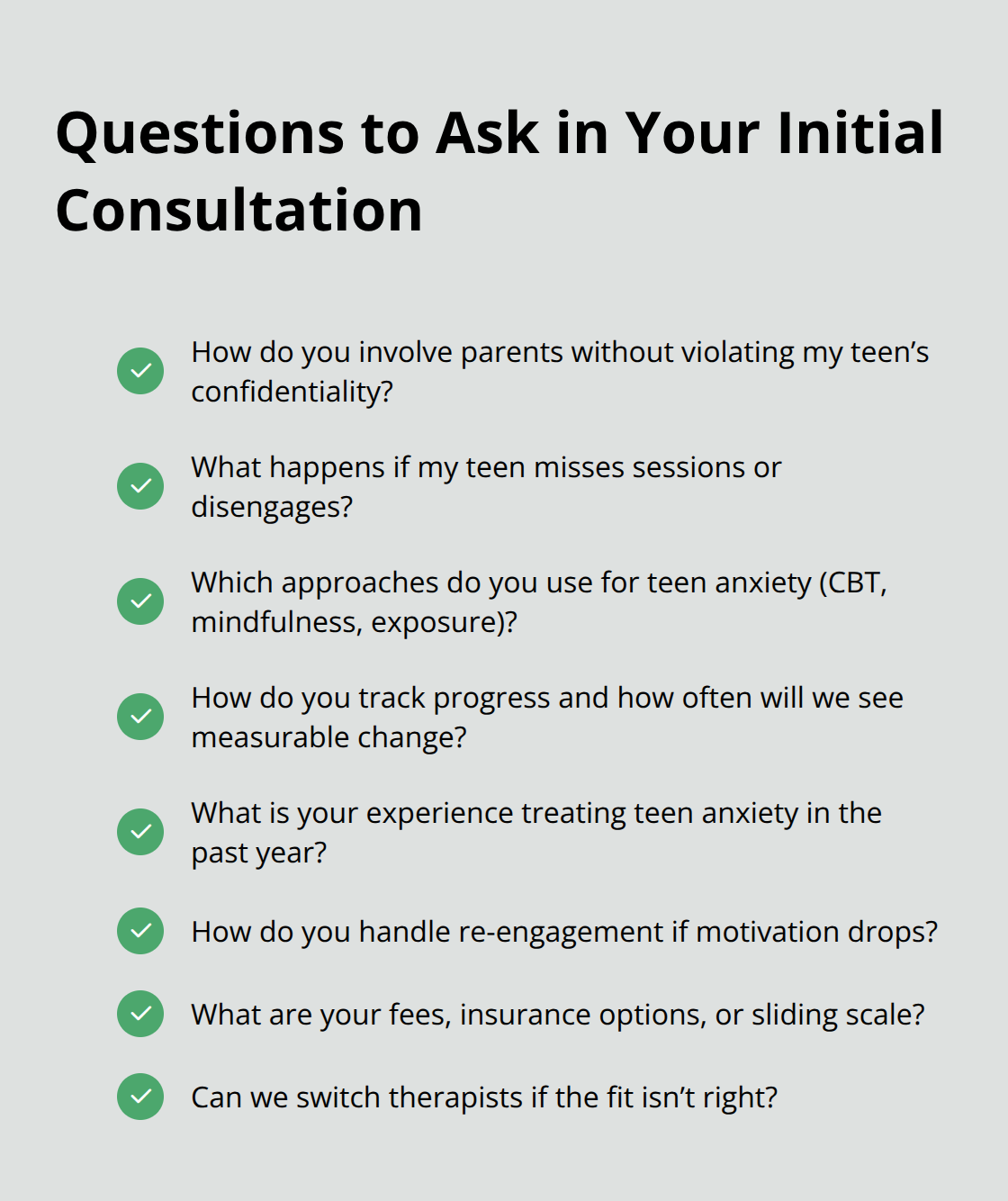
Ask what happens if your teen misses sessions or stops engaging-do they have strategies to re-engage, or do they simply discharge the client? Ask about their approach to anxiety specifically: Do they use CBT, mindfulness, exposure therapy for anxiety treatment in adolescents, or a combination? How do they track progress, and how often will you see measurable improvement? Request their fee structure upfront and whether they accept your insurance. If cost is a barrier, ask about sliding scale options or employer-sponsored mental health benefits.
Red Flags to Recognize Immediately
Red flags appear quickly if a therapist avoids questions, won’t explain their approach clearly, guarantees immediate results, or pressures you to commit to long-term contracts before your teen has even started. A therapist who treats every teen the same way without customizing treatment to individual needs won’t serve your teen well. Watch for providers who dismiss your teen’s concerns or minimize anxiety as a normal part of growing up. Trust your instincts when something feels off-your teen’s mental health depends on finding someone who listens and adapts their approach to your teen’s unique situation.
Final Thoughts
Online therapy for teen anxiety works because it meets adolescents where they are: at home, on their schedule, with a therapist who specializes in their specific struggles. Teens report over 90 percent satisfaction with virtual therapy, anxiety symptoms decrease measurably within weeks, and the access barriers that once prevented treatment vanish. Your teen no longer waits months for an appointment or misses school to attend sessions.
Progress happens gradually but consistently. Within the first month, your teen typically handles stressful moments differently, and within two to three months, anxiety symptoms often decrease noticeably. Sleep improves, concentration sharpens, and social withdrawal reverses as these changes compound over time and build genuine resilience rather than temporary relief.
We at The Teen Center understand that teen anxiety demands immediate, specialized care. The Teen Center delivers evidence-based mental health care for adolescents ages 12–17, offering individual and family therapy, crisis support, and statewide telehealth access that removes geographic barriers. Your teen deserves a therapist who listens, a treatment plan tailored to their anxiety, and family involvement that strengthens recovery-that support is available now, not months from now.