
Many teens experience depression that doesn’t respond well to standard treatment. Often, unprocessed trauma lies beneath the surface, driving symptoms that medication and talk therapy alone can’t fully address.
At The Teen Center, we’ve seen firsthand how trauma-informed depression care transforms outcomes for young people. This approach treats the whole picture-not just depression symptoms, but the trauma that fuels them.
Why Trauma Changes How Depression Shows Up in Teens
Trauma Rewires the Brain’s Threat System
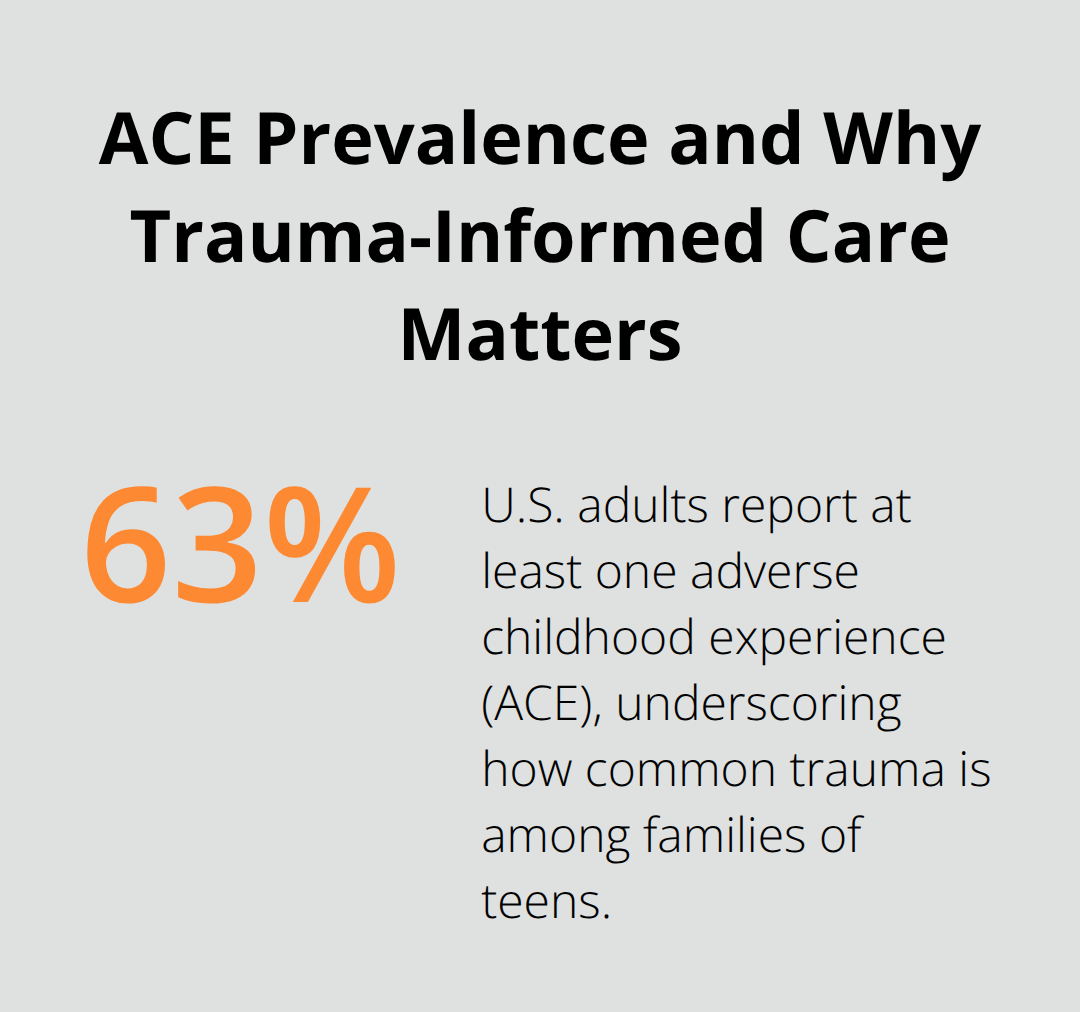
63.9% of U.S. adults reported at least one adverse childhood experience, and teens are no exception. What makes trauma-informed depression care different is understanding that depression in traumatized teens isn’t simply a chemical imbalance or negative thinking pattern. Trauma rewires the brain’s threat-detection system, making the amygdala hyperactive and weakening the prefrontal cortex’s ability to regulate emotions. When a teen has experienced abuse, assault, loss, neglect, or exposure to violence, their nervous system stays locked in survival mode. This constant state of high alert exhausts emotional reserves and creates the withdrawn, hopeless symptoms that look exactly like depression.
How Trauma Symptoms Mask as Depression
The National Institute of Mental Health reports that traumatized teens often experience stomachaches, headaches, sleep problems, concentration difficulties, and loss of interest in activities. These physical and emotional symptoms overlap so completely with depression that clinicians frequently miss the trauma underneath. Standard depression treatment focuses on mood stabilization and behavioral activation, but when trauma is the driver, these approaches feel surface-level to teens because they don’t address the core fear and dysregulation fueling the depression. A teen’s brain cannot distinguish between the two conditions without careful assessment that looks beyond mood alone.
The Gap Between Standard Treatment and What Traumatized Teens Actually Need
Traditional depression care assumes the brain chemistry is the primary problem, so medication and cognitive behavioral therapy become the go-to interventions. This misses a critical reality: traumatized teens need safety and predictability before they can engage in insight-oriented therapy or tolerate medication adjustments. If a teen’s nervous system perceives the therapy office as unsafe or the therapist as unpredictable, no amount of coping skills training will stick. Trauma-informed depression care flips the sequence. It prioritizes establishing genuine safety first, building trust through transparency about what will happen in sessions, and helping teens understand that their depression is an adaptive response to overwhelming experiences.
Clinicians trained in trauma-informed approaches ask about preferred locations for sessions, confirm how information will be shared with families, and explain diagnoses directly rather than using clinical jargon. Research from the Substance Abuse and Mental Health Services Administration identifies six core principles that reshape depression treatment: safety, trustworthiness, peer support, collaboration, empowerment, and cultural responsiveness.

When these principles guide care, teens move from feeling broken by depression to recognizing their symptoms as survival mechanisms that once protected them. This shift in perspective alone changes engagement and outcomes dramatically, opening the door to deeper therapeutic work that addresses both the trauma and the depression it created.
Building the Foundation for Healing
Establishing Safety and Predictability From the Start
The first weeks of trauma-informed depression care look nothing like standard treatment. Instead of jumping into symptom management, clinicians trained in this approach establish genuine safety and predictability. They ask direct questions: Where do you feel most comfortable talking? What should happen if you get upset during our sessions? How will information be shared with your family? These questions signal something profound to a traumatized teen-that their nervous system matters and that control over their environment is possible. Research from the Substance Abuse and Mental Health Services Administration shows that when clinicians explain what will happen in sessions before it happens, teens report higher trust and better engagement with treatment.
Transparency about diagnoses, treatment plans, and difficult topics prevents the re-traumatization that occurs when teens feel blindsided or controlled. A clinician might say directly: I think what happened to you is affecting your mood and how you see yourself, and here’s how we’ll work on that together. This honesty creates the foundation that traumatized teens desperately need but rarely receive in standard depression care.
Creating a Shared Language With Families
Family involvement transforms outcomes in ways that individual therapy alone cannot achieve. Parents and guardians carry their own stress about a teen’s depression, and without support, they may unconsciously trigger trauma responses or reinforce avoidance patterns. Trauma-informed depression care involves families from the start by explaining how trauma affects the brain and mood, teaching caregivers how to recognize dysregulation before it escalates, and creating a shared language for what the teen experiences.
A parent learns that when their teen withdraws after school, it reflects nervous system shutdown-a protective response that needs gentle re-regulation rather than punishment. Clinicians coordinate with schools to maintain academic support, involve trusted adults who strengthen the teen’s sense of safety, and use flexible communication methods so teens don’t feel isolated during treatment. When families understand that depression in their traumatized teen is an adaptive response, not a character flaw, they become partners in healing rather than frustrated observers.
Collaboration That Restores Agency
This collaborative approach, grounded in the SAMHSA principles of mutuality and empowerment, means setting daily and long-term goals together, respecting the teen’s voice in decisions about treatment intensity, and celebrating small wins that restore hope. Clinicians and families work as a team to help teens recognize their depression not as weakness but as evidence of survival. The next phase of treatment-processing trauma while managing depressive symptoms-requires this foundation of safety, trust, and shared purpose to move forward effectively.
Rebuilding Life Skills While Healing From Trauma
Teaching Emotional Regulation in Real-World Conditions
Trauma-informed depression care doesn’t end when a teen stops feeling suicidal or when mood improves. The real work happens in the months after initial stabilization, when teens rebuild the capacity to function in school, maintain friendships, and tolerate the discomfort of processing what happened. This phase requires teaching concrete emotional regulation techniques that work when the nervous system is dysregulated, not just when things are calm.
Grounding techniques like the 5-4-3-2-1 sensory method interrupt the spiral between trauma reminders and depressive shutdown. Teens identify five things they see, four they can touch, three they hear, two they smell, and one they taste. Progressive muscle relaxation, where teens tense and release muscle groups from toes to head, gives physical control back to a body that trauma hijacked. These aren’t optional add-ons; they’re the scaffolding that makes everything else possible.
Research shows that teens who practice these techniques daily report better sleep, fewer intrusive thoughts, and improved ability to stay present in relationships. The key is repetition in safe settings first, then gradual application to more challenging environments like school or family gatherings where triggers cluster. Clinicians track which techniques stick and why, because a grounding strategy that works during a calm therapy session may fail during lunch period at school unless the teen has practiced it dozens of times beforehand.
Restoring Academic and Social Functioning
Academic and social recovery often stalls because adults focus on depression symptoms and miss the nervous system dysregulation that sabotages performance. A teen might feel less depressed but still struggle to concentrate because their amygdala hijacks attention whenever a peer raises their voice.
Schools need specific information about what supports actually work: shorter test periods with movement breaks, permission to sit near the door or in low-stimulation areas, and advance notice of transitions rather than surprise schedule changes. Teachers and counselors should coordinate with the teen’s clinician to distinguish between avoidance that needs gentle pushing and dysregulation that needs accommodation.
Friendships deteriorate during trauma recovery not because depression is still active but because the teen’s nervous system reads social cues as threats and withdraws. Clinicians help teens practice social reentry in stages: starting with one trusted peer in structured settings, then gradually expanding to group activities where the teen controls exit options.
Creating a Sustainable Discharge Plan
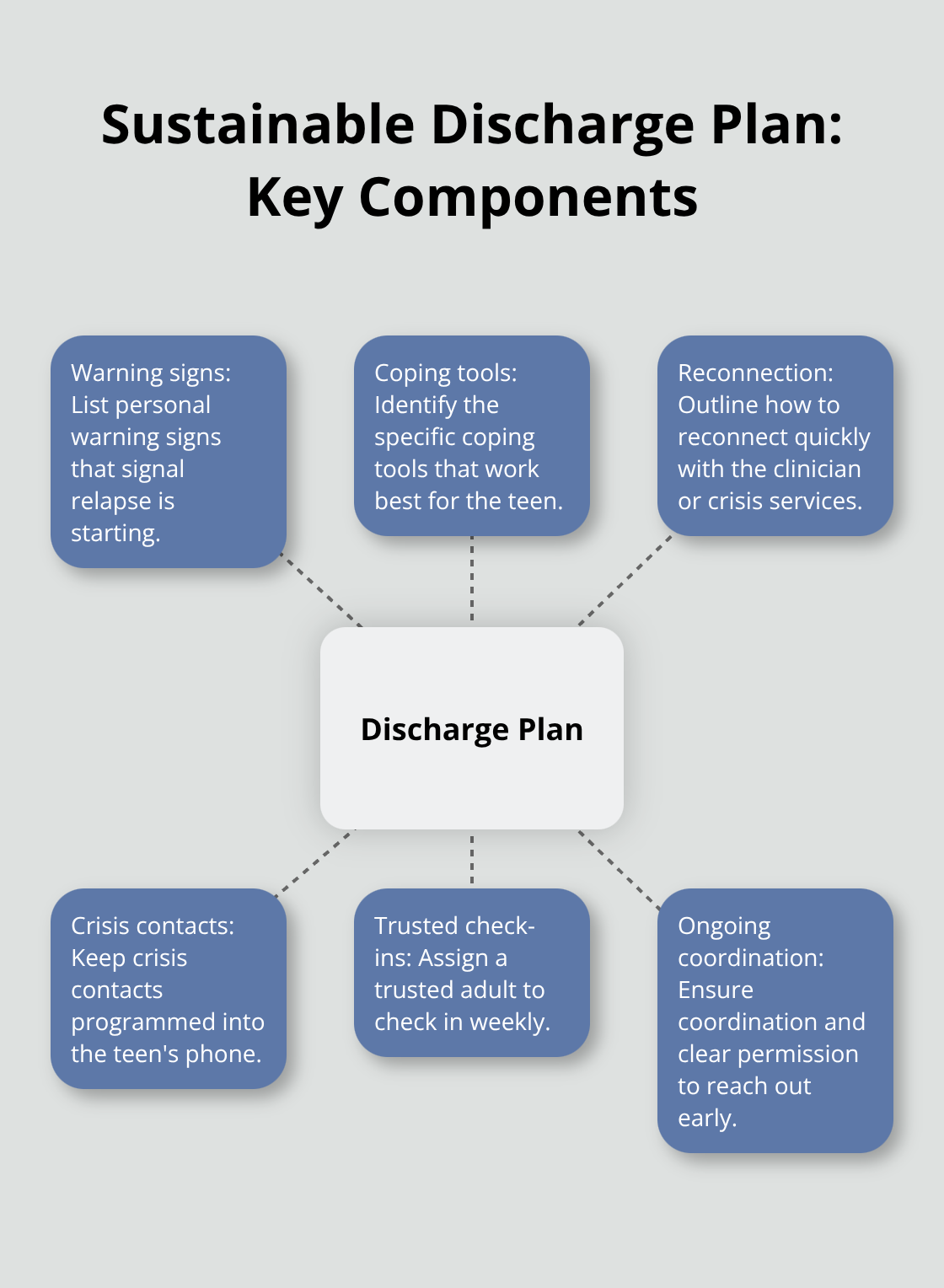
Maintaining progress after treatment formally ends requires a discharge plan that isn’t a piece of paper but a living document reviewed monthly. The plan identifies which warning signs predict relapse, which coping tools work best for that specific teen, and how to reconnect with the clinician or crisis services if symptoms resurface.
Teens who relapse typically haven’t abandoned coping skills; they’ve simply stopped using them consistently. A practical safety net includes a crisis contact list programmed into their phone, a trusted adult who checks in weekly, and clear permission to reach out before things escalate to crisis. The transition from active treatment to maintenance is where most teens struggle, so programs that offer ongoing coordination and crisis access prevent the abandonment that sends traumatized teens spiraling back into depression.
Final Thoughts
Trauma-informed depression care works because it treats the root cause, not just the symptoms. When teens receive treatment that prioritizes safety, builds genuine trust, and recognizes depression as an adaptive response to overwhelming experiences, outcomes shift dramatically. The six core principles-safety, trustworthiness, peer support, collaboration, empowerment, and cultural responsiveness-become practical tools that clinicians use every day to help teens move from survival mode into genuine healing.
The path forward requires more than individual therapy sessions. Family involvement, school coordination, and a discharge plan that prevents isolation all shape whether teens maintain progress or spiral back into crisis. Teens who learn emotional regulation techniques, rebuild academic and social functioning, and understand their depression as evidence of resilience rather than weakness develop the capacity to manage future challenges without crisis intervention.
If your teen struggles with depression that hasn’t responded to standard treatment, or if you suspect unprocessed trauma drives their symptoms, contact The Teen Center for an assessment. Our team can identify what actually happens beneath the depression and create a treatment plan that addresses both the trauma and the depression it created.