
Depression affects roughly 15% of teens annually, yet many still receive generic treatment that ignores their unique needs. At The Teen Center, we know that an effective adolescent depression treatment plan must be personalized and include the people who matter most-family.
When parents and siblings actively participate in treatment, recovery rates improve significantly. This blog post shows you how customized, family-inclusive care creates real, lasting change.
The Real Cost of Depression on Teen Development
Depression’s Immediate Impact on Teen Life
Adolescent depression extends far beyond sadness. One in seven 10-19-year-olds experiences a mental disorder, and the numbers spike higher in specific populations. The condition directly damages academic performance, social relationships, and long-term mental health outcomes. Teens with depression show measurable drops in grades, increased school absences, and withdrawal from friends and activities they once enjoyed. A teen struggling with depression might go from being engaged in class to failing assignments, not because of ability but because concentration collapses and motivation disappears.

Sleep disruption compounds this problem. Depression disrupts sleep patterns, which then worsens cognitive function, creating a downward spiral that affects everything from test performance to peer relationships. Social isolation follows quickly. Depressed teens often push away friends, skip social events, and interpret neutral interactions as rejection, damaging friendships that could otherwise provide support. The longer depression remains untreated, the deeper these patterns become, and the harder recovery becomes.
Why One-Size-Fits-All Treatment Plans Fail
Generic treatment plans fail because they ignore what actually drives a teen’s depression in their specific life. One teen’s depression might stem largely from family conflict and low self-esteem, while another’s roots lie in peer rejection and perfectionism about academics. Research from 562 Chinese adolescents showed that family functioning, self-esteem, and peer relationships work together in complex ways-better family functioning boosts self-esteem, which then reduces depression, but only if peer relationships are also strong enough to buffer the effect.
This means a treatment that only targets thoughts and behaviors, without addressing family dynamics or peer support, misses critical levers for change. Attachment-Based Family Therapy (ABFT) directly addresses family relationships, not just the teen’s internal experience. Treatment-as-usual approaches that ignore family involvement or fail to assess the specific context where a teen’s depression thrives waste months of a teen’s life and frustrate families who don’t understand why progress stalls.
Building Treatment Around What Actually Matters
Personalized care starts with a thorough assessment of family dynamics, social connections, academic stress, and the teen’s own strengths and values. This assessment then informs a treatment plan that tackles the actual sources of depression rather than applying a template to every teen who walks through the door. The next section explores how family involvement transforms treatment outcomes and why parents and siblings matter far more than most generic approaches acknowledge.
Why Family Involvement Transforms Depression Treatment
How Family Dynamics Shape Recovery Outcomes
Family dynamics directly shape whether a teen’s depression improves or worsens. Research on 562 Chinese adolescents found that family dynamics were negatively correlated with depressive symptoms, with better family dynamics associated with lower levels of depression. When family relationships are strong and supportive, teens develop higher self-esteem, which then protects against depressive symptoms. But here’s the critical part: this protective effect only works when peer relationships are also solid. A teen with a supportive family but no friends still struggles. This means treatment that ignores the family system fights with one hand tied behind its back.
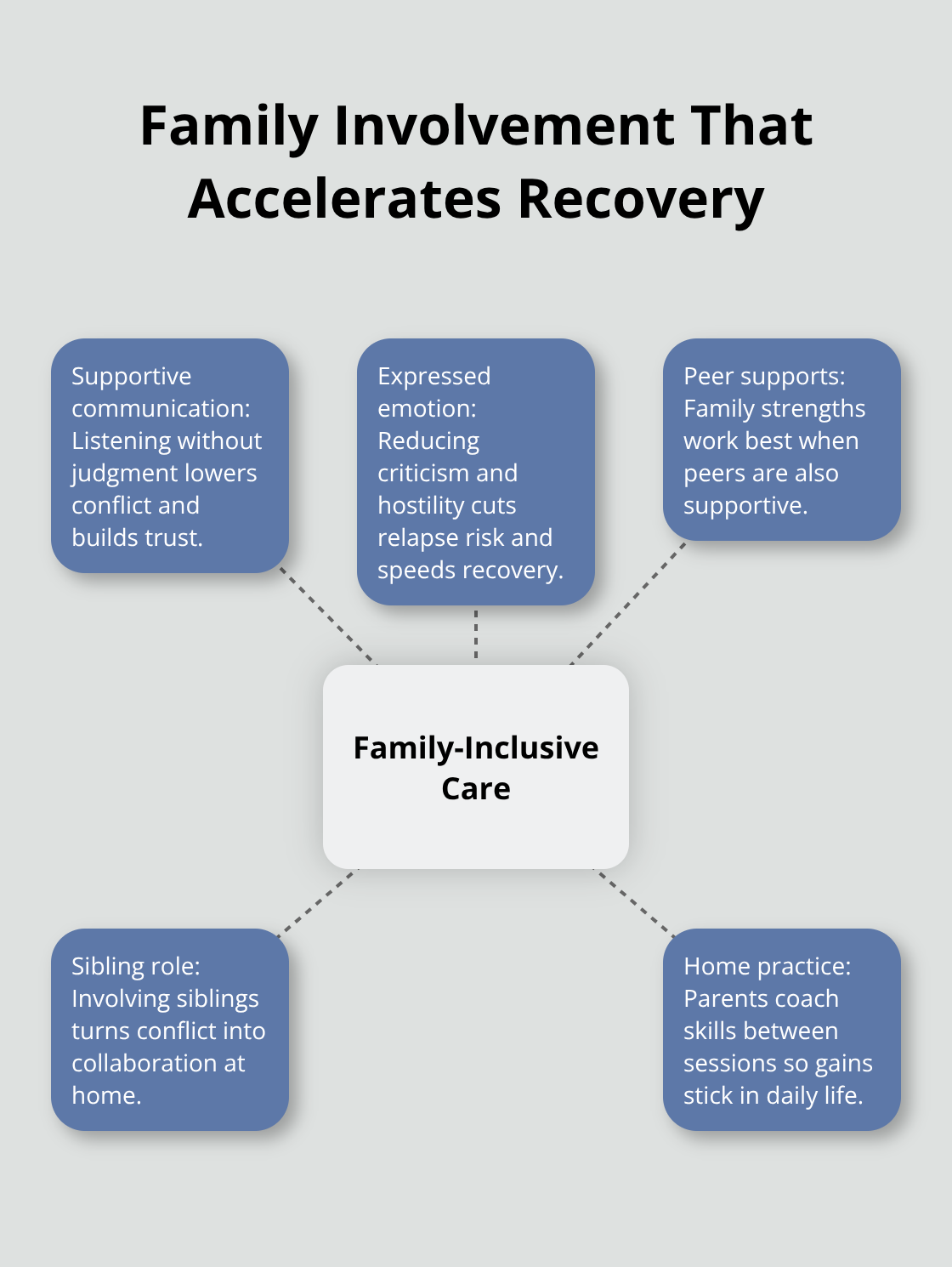
Parents who communicate poorly, show high levels of conflict, or fail to provide emotional support directly worsen their teen’s depression, regardless of what happens in a therapist’s office. Studies show that parental expressed emotion-how critical, hostile, or emotionally overinvolved parents are-predicts relapse and slower recovery. When parents learn to communicate differently, listen without judgment, and reduce conflict, depression outcomes improve measurably.
The Evidence for Family-Centered Treatment
Attachment-Based Family Therapy was studied for its effectiveness in treating depressed teens, with research showing that remission and response rates were low in both treatment and control groups, suggesting the need for continued refinement of these approaches. The difference in outcomes depends significantly on how thoroughly families engage with treatment. Including parents and siblings in treatment creates accountability and practice space that individual therapy cannot match. A teen can learn problem-solving skills in a therapist’s office, but without parents practicing those skills at home, nothing changes in daily life.
When siblings participate, they stop being part of the problem and become part of the solution. The SAFETY program, a 12-week family-oriented intervention for teens with recent suicide attempts, incorporates intensive weekly sessions early on, safety planning with caregiver involvement, and skill-building that happens across family conversations. Families that practice these skills consistently see faster symptom reduction than those who don’t.
Practical Strategies That Work in Real Homes
Concrete strategies that work include teaching parents to give specific, genuine praise rather than vague encouragement, establishing clear routines around sleep and meals (since depression disrupts both), and creating structured family time focused on activities rather than conflict. Parents should learn to recognize when their teen needs space versus when they need connection, and how to validate emotions without trying to fix them immediately.
Start with a family assessment that identifies specific conflict patterns, communication breakdowns, and strengths to build on. Then assign concrete homework: one family meal without phones, one parent-teen conversation using active listening, one problem-solving discussion about a real issue. Progress happens when families treat therapy as something they do together, not something that happens to them. These practical shifts in how families interact create the conditions where individual therapy actually works, setting the stage for the customized treatment approaches that address each teen’s specific needs.
What Effective Individual Therapy Looks Like for a Depressed Teen
Matching Treatment to What Actually Drives Depression
Effective individual therapy for adolescent depression starts with matching the right treatment approach to what actually drives each teen’s symptoms. Cognitive-behavioral therapy remains the gold standard, with strong evidence showing it reduces depressive symptoms and improves functioning across diverse teen populations. However, CBT alone misses the mark when family conflict or peer rejection is the primary driver of depression. Interpersonal therapy for adolescents, or IPT-A, targets relationship patterns directly and works especially well for teens whose depression stems from social struggles, role transitions, or grief. The treatment choice matters far less than the match between the teen’s actual problems and the therapy model. A therapist should spend the first two to three sessions assessing what fuels this particular teen’s depression: Is it perfectionism and academic pressure? Family criticism and low self-esteem? Social exclusion and loneliness? Rumination about past failures? Once that picture clarifies, the therapist selects specific interventions rather than applying a generic protocol.
Building Concrete Skills in Every Session
Sessions should focus on concrete skills the teen can practice immediately: behavioral activation to counter withdrawal, thought records to challenge distorted thinking, assertiveness training for peer conflicts, or emotion regulation techniques when anxiety spikes. Progress tracking matters. Using standardized measures like the Beck Depression Inventory or the Patient Health Questionnaire-9 every session shows whether therapy is actually working or whether the approach needs adjustment. Many teens improve within eight to twelve weeks when therapy targets the right problem, but if progress stalls after four weeks, the treatment plan should change. Therapy should also coordinate with school, since academic struggle both results from depression and worsens it. The therapist should communicate with teachers about realistic expectations during treatment and connect the teen with academic support, whether that means tutoring, reduced course load, or formal accommodations.
When Medication Becomes Part of the Plan
Medication enters the picture when depression is moderate to severe or when therapy alone produces insufficient improvement. Combining an SSRI antidepressant with cognitive-behavioral therapy outperformed either treatment alone, with combination therapy producing a 73% response rate at week 12 compared to 62% for fluoxetine alone and 48% for CBT alone. However, starting medication without concurrent therapy wastes time, since SSRIs typically take four to six weeks to show effect and work best alongside active skill-building. A psychiatrist should prescribe medication while a therapist delivers the psychological treatment, with the two coordinating care weekly. Parents must understand that SSRIs carry FDA warnings about increased suicidal ideation in the first weeks of treatment, requiring close monitoring and clear safety planning.

The SAFETY program, a twelve-week intervention for teens with recent suicide attempts, combines safety planning with caregiver involvement and intensive session frequency early on, then reduces frequency as stability improves. This graduated approach prevents crisis while building sustainable coping skills.
Coordinating Care Across School and Home
School coordination becomes non-negotiable when depression disrupts academics. The teen’s therapist should request a meeting with the school counselor, relevant teachers, and parents to explain how depression affects concentration and motivation without disclosing unnecessary clinical details. A 504 plan or IEP can formalize accommodations like extended test time, deadline flexibility, or check-ins with the school counselor. Academic support should run parallel to therapy, not wait for depression to fully resolve, since academic failure itself deepens depression and damages self-esteem. The therapist, psychiatrist if involved, and school should communicate monthly on progress and adjust the plan if the teen remains withdrawn, grades continue dropping, or suicidal thoughts emerge.
Final Thoughts
Personalized, family-centered care works because it addresses depression where it actually lives-in the teen’s relationships, daily routines, and specific life circumstances. When treatment targets the actual sources of a teen’s depression rather than applying a generic protocol, recovery happens faster and lasts longer. Research consistently shows that teens improve most when their family actively participates in treatment, learns new communication patterns, and practices skills at home. An adolescent depression treatment plan that ignores family dynamics misses the most powerful lever for change available.
Families can start supporting teen mental health immediately by creating consistent routines around sleep and meals, reducing conflict through structured conversations, and validating emotions without trying to fix everything at once. Parents should watch for warning signs like persistent withdrawal, academic decline, or mentions of hopelessness, then act quickly to connect their teen with professional care. The combination of individual therapy, family involvement, and medication when needed produces the strongest outcomes.
Progress takes time-typically eight to twelve weeks before meaningful improvement appears-but families who stay committed see their teens regain motivation, reconnect with friends, and rebuild academic confidence. Teens who receive personalized care develop genuine coping skills they carry into adulthood, stronger family relationships that provide lifelong support, and restored self-esteem that protects against future episodes. If your teen shows signs of depression, reach out for professional support now and prevent years of unnecessary struggle.