
When a teen struggles with mental health, school often suffers too. Grades drop, attendance slips, and the stress compounds for everyone at home.
At The Teen Center, we’ve learned that academic coordination for parents and teens works best when treatment and education move together. That’s why we’re sharing how to keep both in sync.
Why Mental Health and School Performance Are Inseparable
The Immediate Impact on the Classroom
Mental health struggles don’t happen in isolation from school. When a teen battles depression, anxiety, ADHD, or trauma, the impact surfaces immediately in the classroom. Concentration falters. Motivation disappears. Assignments pile up. A teen who was passing classes suddenly fails a test.
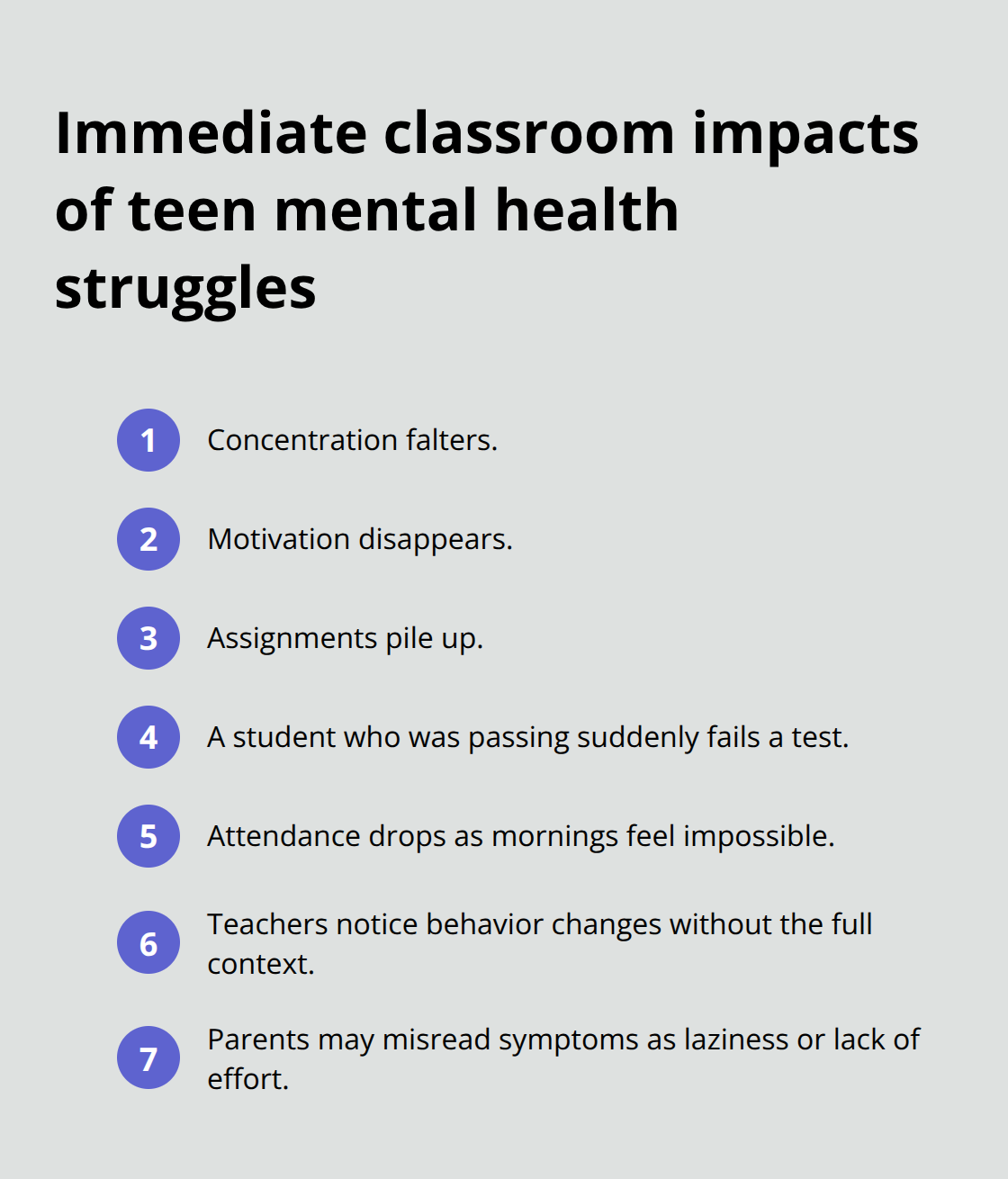
Attendance drops because mornings feel impossible. Teachers notice behavioral changes but often lack the full picture of what happens at home or in treatment. Parents watch grades slip and assume laziness or lack of effort, when actually the teen fights invisible battles that make sitting still in algebra class feel impossible.
The Fragmentation Problem
This disconnect between therapy and school creates a dangerous gap where teens fall further behind while their mental health treatment happens in a separate silo. Studies show that untreated mental health conditions predict academic decline, increased absenteeism, and lower graduation rates. When parents, therapists, and teachers work in separate channels without sharing information, teens receive mixed messages about expectations and progress.
One adult celebrates a small win in emotional regulation during therapy while another adult penalizes the teen for incomplete homework without understanding the executive functioning challenges beneath the surface. A therapist adjusts medication without input from educators about whether the teen has more focus in class. Teachers make decisions about grades and accommodations without knowing the teen is three weeks into trauma treatment. This fragmentation exhausts families. Parents spend energy coordinating between providers instead of supporting their teen’s actual recovery.
What Alignment Actually Changes
The solution isn’t more treatment or stricter academic standards. It’s alignment. When treatment plans include real information about what happens in school, and when academic plans account for what the teen processes in therapy, everything changes. Teens stop feeling like they fail at life and start feeling supported across every part of it.
Academic coordination means someone connects these dots intentionally. A teen struggling with anxiety receives both therapeutic tools to manage panic and classroom accommodations that prevent panic from derailing their education. Treatment progress actually translates to school progress because everyone involved understands that healing and learning happen together, not separately. This integrated approach transforms how teens experience both recovery and education.
Moving Forward with Coordination
The question isn’t whether to coordinate care and academics-it’s how to do it effectively. Understanding what coordination looks like in practice, and how schools and treatment providers can work together, sets the foundation for real change.
How We Connect Treatment and School
Bridging the Therapy-Classroom Gap
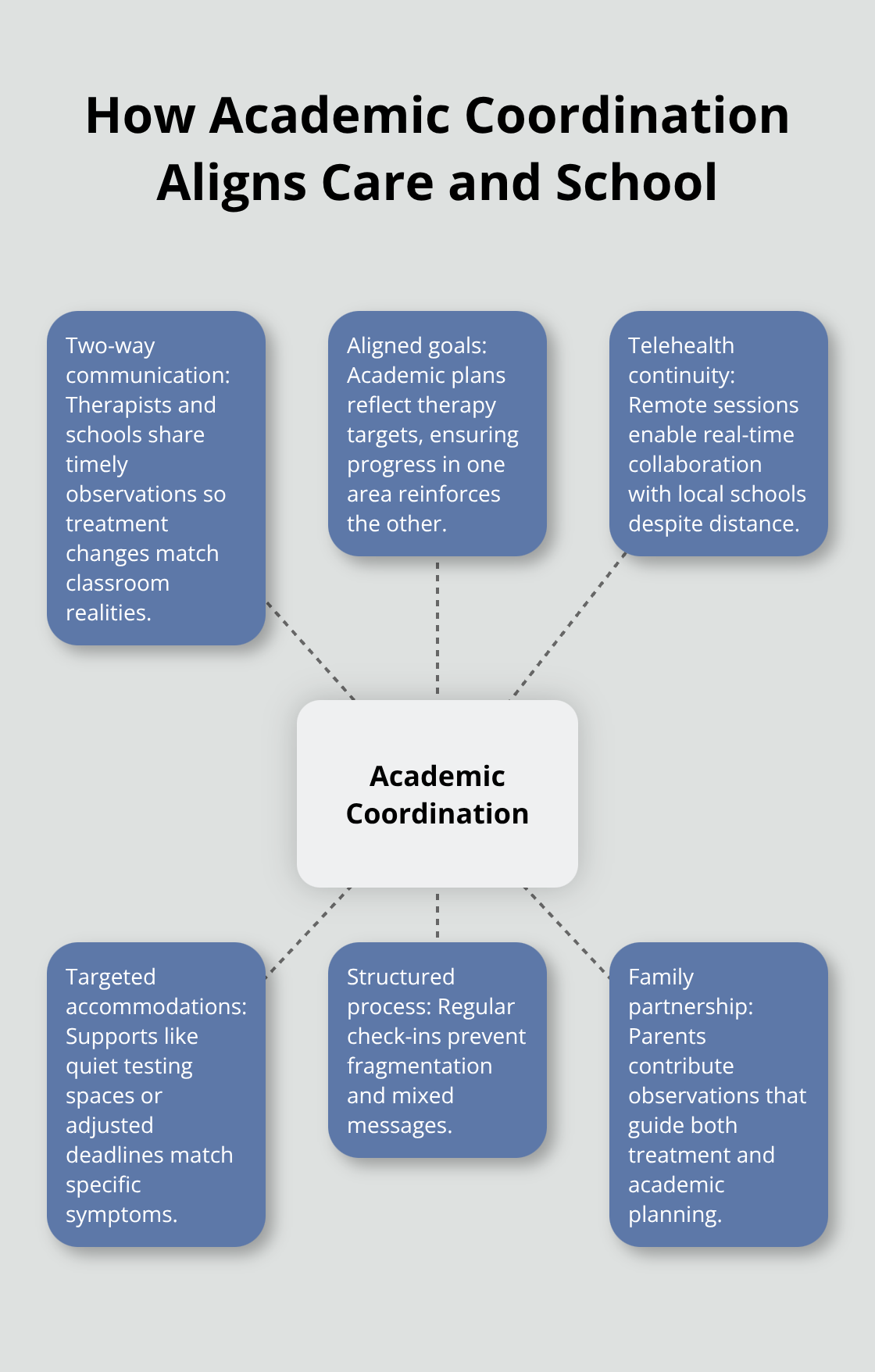
The gap between therapy and the classroom closes when someone actively bridges it. Academic coordination functions as a clinical responsibility, not an administrative task. Therapists and psychiatrists gather specific information about what happens in school-not just asking how grades look, but understanding assignment deadlines, classroom accommodations, teacher concerns, and whether a teen can focus during tests. Direct contact with teachers (with parental consent) reveals what behavioral or attention changes they observe and how treatment adjustments might affect classroom performance. This two-way communication prevents scenarios where a therapist increases medication dosage without knowing a teen suddenly focuses better in math, or where a teacher implements stricter deadlines without realizing the teen started trauma processing two weeks prior.
Understanding What Schools Actually Need
Schools often lack mental health expertise and assume academic struggles stem from motivation or ability rather than from depression, anxiety, or executive functioning deficits. Teachers respond better when providers explain that a teen’s missed assignments during week three of depression treatment reflect a symptom being addressed, not a character flaw. Coordination also identifies which accommodations actually matter. A teen with ADHD might need extended test time, but what they truly need is a quiet testing space because noise triggers their anxiety. Without coordination, schools guess at accommodations while teens continue struggling.
Aligning Academic Plans with Treatment Goals
Families work with providers to develop academic plans that run parallel to treatment goals. If therapy targets emotional regulation in social situations, the academic plan includes strategies for group projects and lunch-period anxiety. If treatment addresses sleep disruption from nightmares, the academic plan adjusts morning expectations and late-start options. This alignment means progress in one domain reinforces progress in the other instead of creating competing demands on a teen’s time and emotional energy.
Telehealth and Continuity Across Distance
Telehealth access matters significantly for coordination because it removes geographic barriers that fragment care. A teen in a rural area no longer travels two hours monthly to therapy while their school operates without real-time updates on treatment progress. Sessions conducted via telehealth allow direct communication with local schools, creating continuity that distance once prevented. Providers document session progress in ways that inform academic planning without violating confidentiality. A parent receives a note that their teen processed a school conflict in therapy and is ready to practice new communication skills with peers-information that helps a teacher understand why the teen might approach group work differently that week.
Rural families report less stress when coordination happens remotely because they stop acting as messengers between providers. Schools in underserved areas gain access to mental health consultation they otherwise cannot afford.
Making Coordination Intentional and Structured
This model works because coordination is intentional and structured, not dependent on hoping providers communicate. Teens experience treatment and school as reinforcing systems rather than competing demands. With this foundation in place, the next step involves practical strategies that parents themselves can implement to maintain this alignment at home and in conversations with educators.
Practical Strategies Parents Can Use to Keep Education and Care Aligned
Communicating with Your Teen’s Teachers About Mental Health Needs
Teachers need specific information about what’s happening in treatment, but most parents freeze when deciding what to share. The answer is straightforward: tell teachers what affects their classroom without oversharing clinical details. A teacher doesn’t need to know your teen’s trauma history or medication dosage. They do need to know that your teen started intensive outpatient treatment three weeks ago and might seem withdrawn during math class because they’re processing difficult emotions in sessions. They need to know that anxiety peaks on test days and your teen benefits from taking exams in a quieter space. They need to know that sleep disruption from nightmares makes mornings brutal and late-start options help your teen actually attend school.
Frame these conversations around academic impact, not diagnosis. Instead of saying your teen has depression, say your teen is working with a therapist on emotional regulation and may need flexibility with deadlines during harder treatment weeks. Teachers respond better to concrete, actionable information than clinical labels. Start with the teacher who teaches your teen’s most challenging subject or who has expressed concern about behavior or grades. Schedule a 15-minute meeting rather than emailing a wall of text. Bring a one-page summary listing three to five specific accommodations or adjustments that would help.
Parent-teacher communication about learning challenges significantly improves student outcomes, and the same principle applies to mental health support. Ask the teacher what they observe that worries them and what they notice when your teen has a good day. This two-way conversation prevents you from requesting accommodations the teacher can’t implement and helps teachers feel like partners rather than obstacles. Document these conversations briefly in a note to yourself with the date and what you discussed. Over the school year, you’ll spot patterns-maybe your teen struggles most on Mondays after a rough weekend, or thrives after morning therapy sessions. Share these patterns with teachers so they understand your teen isn’t being difficult but is genuinely affected by treatment timing and emotional processing.
Setting Realistic Academic Goals During Treatment
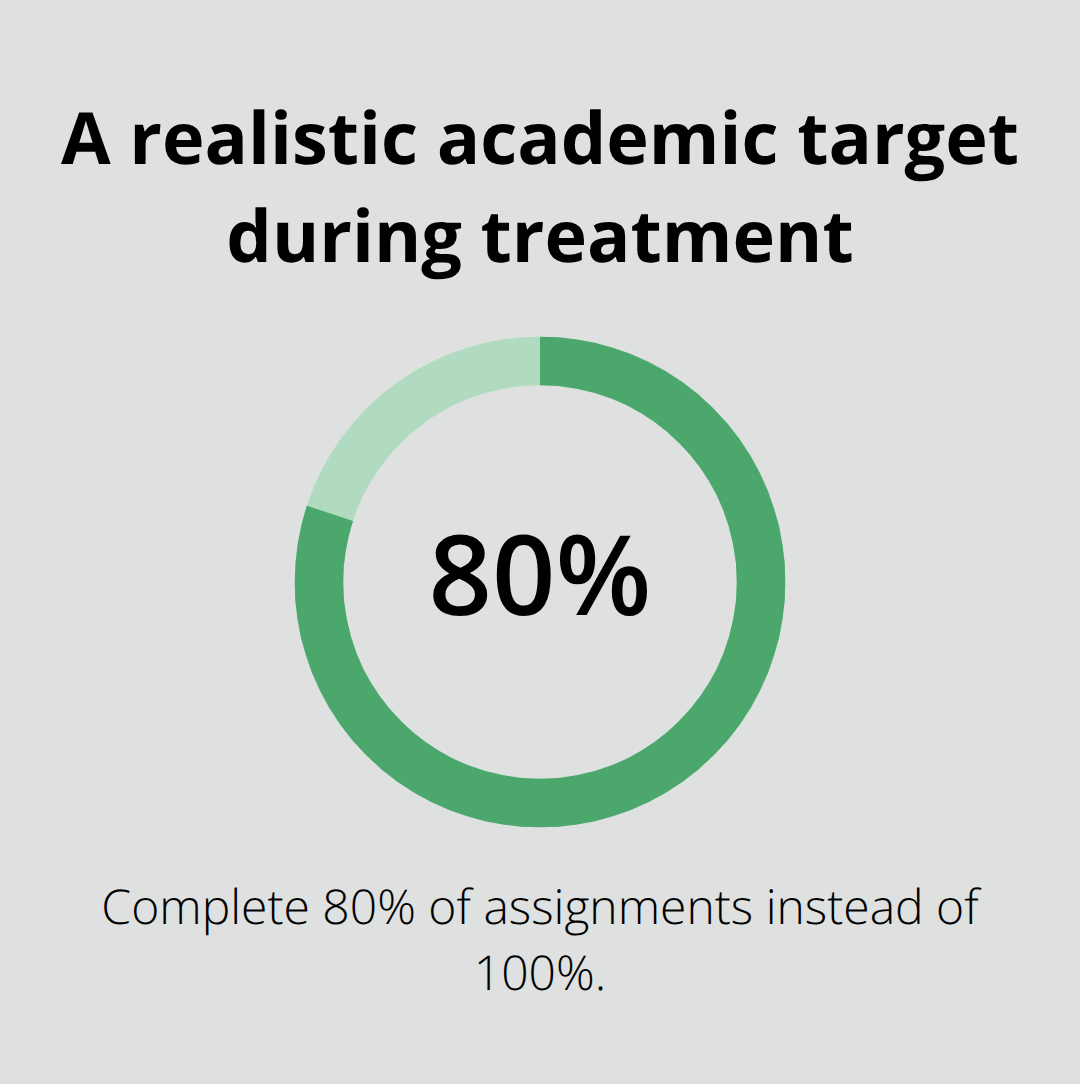
Setting realistic academic goals during treatment requires honest assessment of your teen’s actual capacity right now, not their capacity before mental health challenges emerged. This is the moment to abandon the belief that your teen should maintain straight As while also managing depression, anxiety, or trauma processing. That’s unrealistic and sets your teen up to feel like a failure. Instead, work with your teen’s therapist and school to identify what academic stability looks like during active treatment. Maybe stability means passing all classes without As. Maybe it means completing 80 percent of assignments instead of 100 percent. Maybe it means maintaining current grades rather than improving them.
The goal is preventing catastrophic academic decline while treatment stabilizes your teen’s mental health.
Academic and family stress leads to depression among students, negatively affecting their academic performance and learning outcomes. Unrealistic academic pressure directly undermines mental health progress. Work with your teen to set one or two meaningful academic goals rather than overhauling everything at once. A meaningful goal might be attending school four days per week when attendance dropped to two, or completing homework three nights weekly when it had stopped entirely. Celebrate these wins as real progress because they are.
Tracking Progress in Both Therapy and Schoolwork
Track whether your teen’s grades stabilize within the first two months of treatment. If grades continue sliding despite your teen attending sessions and engaging with therapy, that signals the treatment approach might need adjustment or your teen needs additional academic support like tutoring. Monitoring progress across both therapy and school means checking in regularly with your teen’s therapist and teachers separately, then comparing notes. Ask your therapist whether your teen demonstrates improved emotional regulation, better sleep, reduced anxiety symptoms, or increased engagement. Ask teachers whether your teen participates more in class, completes assignments more consistently, or shows better focus.
Progress in therapy often precedes progress in school by several weeks, so don’t expect immediate grade improvements. Your teen might feel emotionally calmer before grades bounce back. That’s normal and actually a positive sign that treatment is working. If your teen shows progress in therapy but continues declining academically, the gap suggests your teen needs academic intervention-tutoring, study skills coaching, or accommodations-separate from mental health treatment. These are two different problems requiring two different solutions.
Final Thoughts
Coordinated academic support transforms how teens experience both recovery and school. When treatment and education work together instead of competing for your teen’s energy, something shifts. Your teen stops feeling torn between two separate worlds and starts feeling supported across every part of their life. This integration matters because mental health and academic performance are inseparable-a teen who processes trauma in therapy but receives no classroom accommodations still struggles to focus on tests, while a teen whose anxiety improves with medication but whose teachers don’t understand the underlying challenges still feels like a failure.
For families, academic coordination parents teens reduces the exhausting work of acting as messengers between providers. You stop translating between therapists and teachers, repeating the same information to different adults, and wondering whether anyone has the full picture. Instead, you become a partner in a coordinated system where providers communicate directly with schools, where treatment plans account for academic reality, and where progress in one area reinforces progress in the other. This shift alone reduces family stress significantly.
Contact your teen’s school and ask to meet with the teacher or counselor most involved in your teen’s education. Share what you notice about how mental health affects schoolwork and ask what they observe. Then reach out to your teen’s treatment provider and ask whether they coordinate with schools, and if they don’t, ask what information would help most. We at The Teen Center embed academic coordination directly into treatment, ensuring that specialized mental health care for adolescents includes real partnership with schools.