
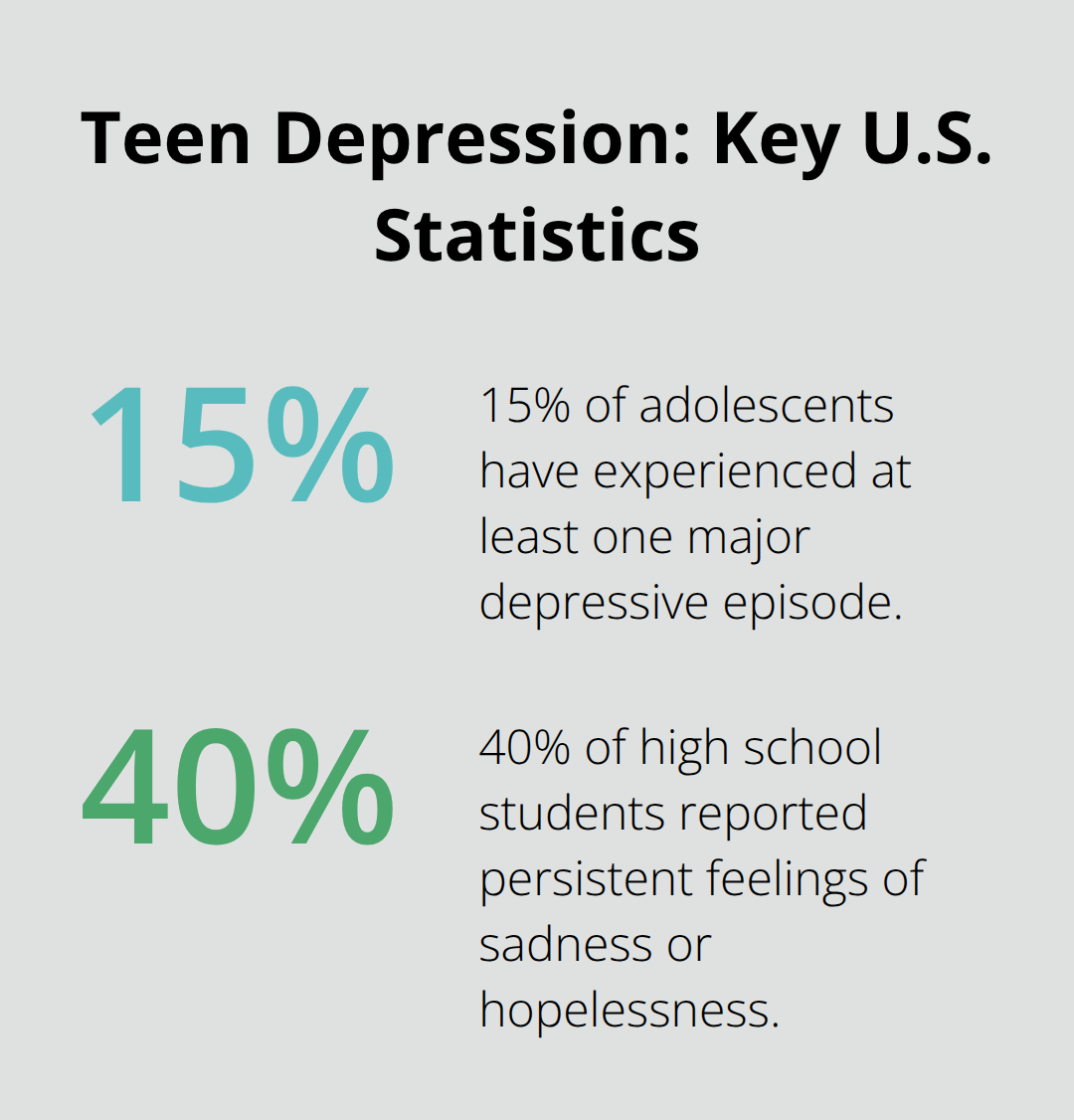
Depression in teenagers is real, and it’s more common than many parents realize. About 15% of adolescents experience at least one major depressive episode, according to the National Institute of Mental Health.
Recognizing the signs of adolescent depression early can make a real difference in your teen’s recovery. We at The Teen Center created this guide to help you spot warning signs and take action when it matters most.
What Does Adolescent Depression Actually Look Like?
Persistent Sadness and Irritability in Teens
Persistent sadness in teenagers looks different than sadness in adults. A teen with depression won’t just seem sad-they’ll seem empty or flat, irritable over small frustrations, or angry without obvious reason. The CDC reports that 40% reported persistent feelings of sadness or hopelessness, and this isn’t temporary moodiness tied to a bad day or social conflict. When sadness persists for two weeks or longer without significant breaks, parents need to take notice. Many teens also describe feeling worthless or like they’re failing at everything, even when they’re performing adequately in school. This emotional shift across multiple situations-at home, at school, with friends-signals something deeper than normal adolescent mood swings. Irritability can actually be more common than sadness in depressed teens, so a parent might see an angry, reactive teenager rather than a withdrawn one.
Sleep and Eating Patterns Shift Noticeably
Sleep changes rank among the earliest physical signals of depression. A depressed teen might sleep significantly more than usual, sometimes 10+ hours on school nights and weekends, yet still feel exhausted. Others experience the opposite-insomnia or frequent waking.
Changes in appetite follow similar patterns: some teens eat much less and lose weight without dieting, while others increase food intake significantly. These aren’t minor fluctuations but noticeable changes that persist over weeks. Appetite and sleep disruption also create a vicious cycle where poor sleep worsens mood, which then disrupts sleep further. Pay attention if your teen’s sleep or eating patterns shift suddenly and stay changed. This matters because sleep deprivation itself can intensify depressive symptoms, making early intervention on sleep issues a practical first step.
Loss of Activities and Social Retreat
Withdrawal from activities a teen previously loved stands as one of the most telling signs. If your teen stopped playing their sport, attending band practice, or hanging with their friend group-and they’re not replacing those activities with new ones-depression may be present. This isn’t laziness or a phase; it reflects a genuine loss of enjoyment called anhedonia in adolescents. A teen with depression often describes activities as pointless or says they just don’t feel like doing things anymore, even activities they once prioritized. Social withdrawal often accompanies this-they spend more time alone in their room, decline invitations, or seem uncomfortable around peers they previously enjoyed. Research shows that this multi-domain impairment across home, school, and social contexts indicates depression more strongly than isolated mood complaints. The combination of lost interests plus social retreat plus mood changes creates a pattern that warrants professional evaluation and opens the door to understanding what physical and behavioral changes parents should also monitor.
Physical and Behavioral Indicators Parents Should Watch For
Unexplained Physical Complaints and Fatigue
Depressed teens often report physical symptoms that parents dismiss as minor or unrelated to mood. Headaches, stomachaches, muscle aches, and general fatigue appear without medical explanation, and standard tests come back normal. These somatic complaints matter because they’re real-depression physically manifests in adolescent bodies. A teen might report feeling exhausted despite sleeping 10 hours, or complain of persistent headaches that don’t respond to over-the-counter pain relief. The fatigue differs from normal tiredness; it’s a heaviness that makes getting out of bed feel impossible, even after adequate sleep. Parents often attribute this to laziness, but it’s a neurological symptom of depression. If your teen suddenly develops multiple physical complaints alongside mood changes and social withdrawal, that combination signals depression more strongly than any single symptom alone. School nurses and pediatricians see this pattern frequently-teens reporting pain or illness that has no physical cause, which actually points to an underlying mental health issue requiring proper assessment.
Academic Decline and Concentration Problems
Academic performance typically declines noticeably when depression takes hold, and this shows up fast. A teen who previously earned B’s and A’s might drop to C’s and D’s within weeks, not because they’re less intelligent but because depression destroys concentration and motivation. Concentration problems make studying feel pointless; your teen reads the same paragraph five times without absorbing it and then quits entirely. Some depressed teens stop turning in assignments altogether, not from defiance but from the cognitive fog depression creates. Teachers often report that a previously engaged student now seems disconnected or spacey in class.
Risky Behaviors and Increased Irritability
Irritability and risky behaviors sometimes emerge alongside academic struggles. A teen might act out in class, experiment with substances, or take dangerous physical risks-behaviors parents sometimes interpret as typical adolescent rebellion rather than depression-driven impulsivity. The irritability manifests as sudden anger over minor frustrations, hostile responses to reasonable requests, or verbal aggression that’s uncharacteristic.
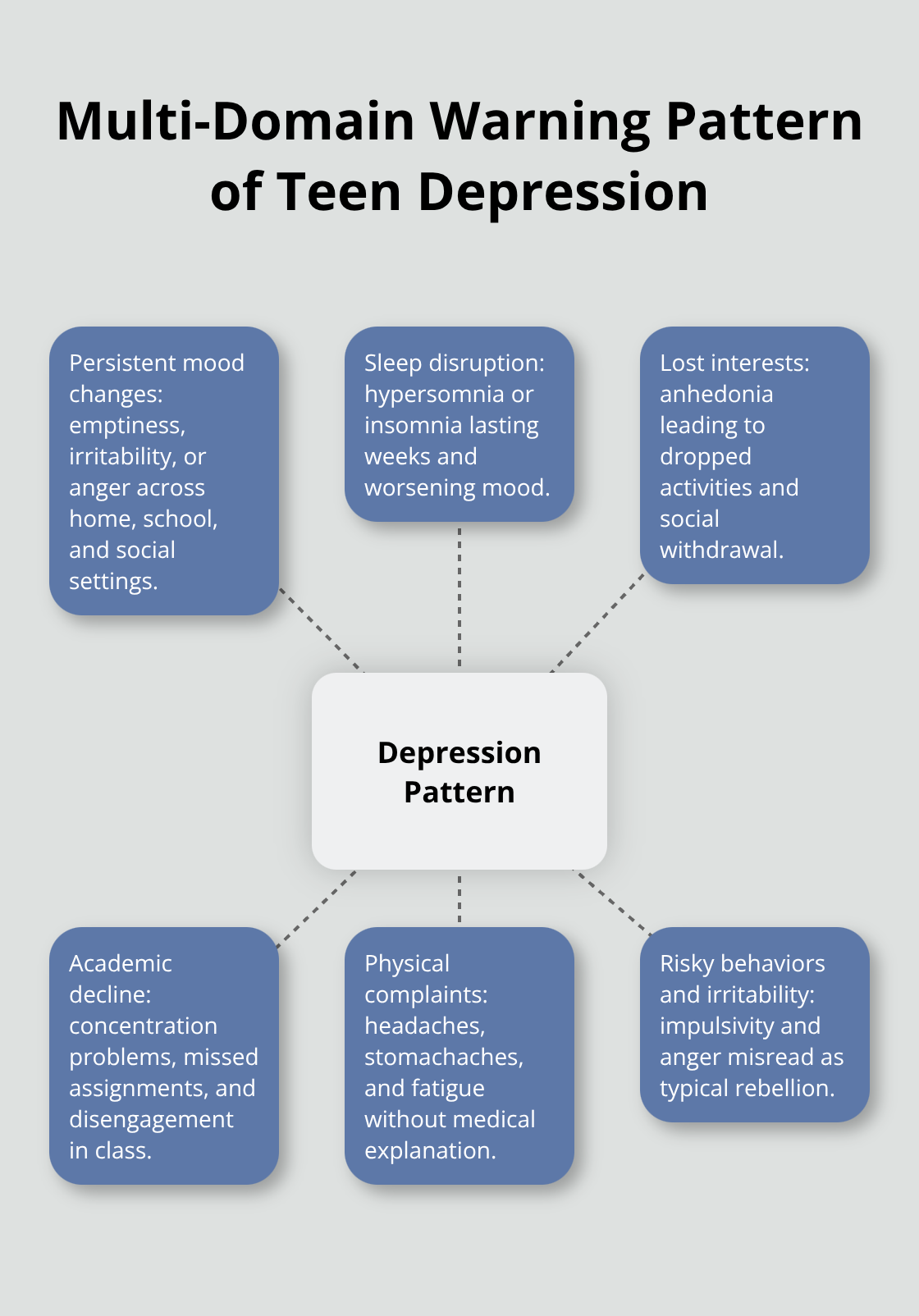
These behavioral shifts combined with academic decline and physical complaints create a multi-domain pattern that demands professional evaluation rather than parental management alone. When you notice these warning signs across multiple areas of your teen’s life, the next step involves understanding which red flags require immediate professional attention and what resources can help your family move forward.
When to Act on Depression Signs
Early intervention in adolescent depression genuinely changes outcomes. Research shows that teens who receive treatment within the first few months of symptom onset respond better and experience shorter depressive episodes than those who wait. The American Academy of Pediatrics recommends depression screening for all adolescents aged 12 and older during routine health visits, yet many parents miss the window because they mistake early warning signs for typical teen behavior. Once you notice the pattern we described-persistent mood changes across multiple settings combined with sleep disruption, lost interests, and academic decline-waiting becomes counterproductive. The longer depression goes untreated, the higher the risk of academic failure, substance experimentation, and self-harm. Your pediatrician can conduct an initial screening using validated tools like the Patient Health Questionnaire for Adolescents (PHQ-A), which takes minutes and helps distinguish depression from normal mood fluctuation. If screening suggests depression, referral to a mental health professional happens quickly, and evidence-based treatments like cognitive-behavioral therapy produce noticeable improvements within 4 to 6 weeks when matched to your teen’s needs.
Red Flags Demanding Immediate Action
Certain warning signs require urgent professional assessment rather than waiting for a routine appointment. Your teen expressing thoughts of suicide, self-harm, or feeling like a burden to others represents an immediate crisis requiring either a call to 988 (the Suicide and Crisis Lifeline, available 24/7) or a trip to the nearest emergency room. Similarly, sudden dramatic changes-a previously social teen becoming completely isolated overnight, a high-performing student abandoning school entirely, or unexplained substance use appearing suddenly-signal acute depression requiring professional evaluation within days, not weeks.
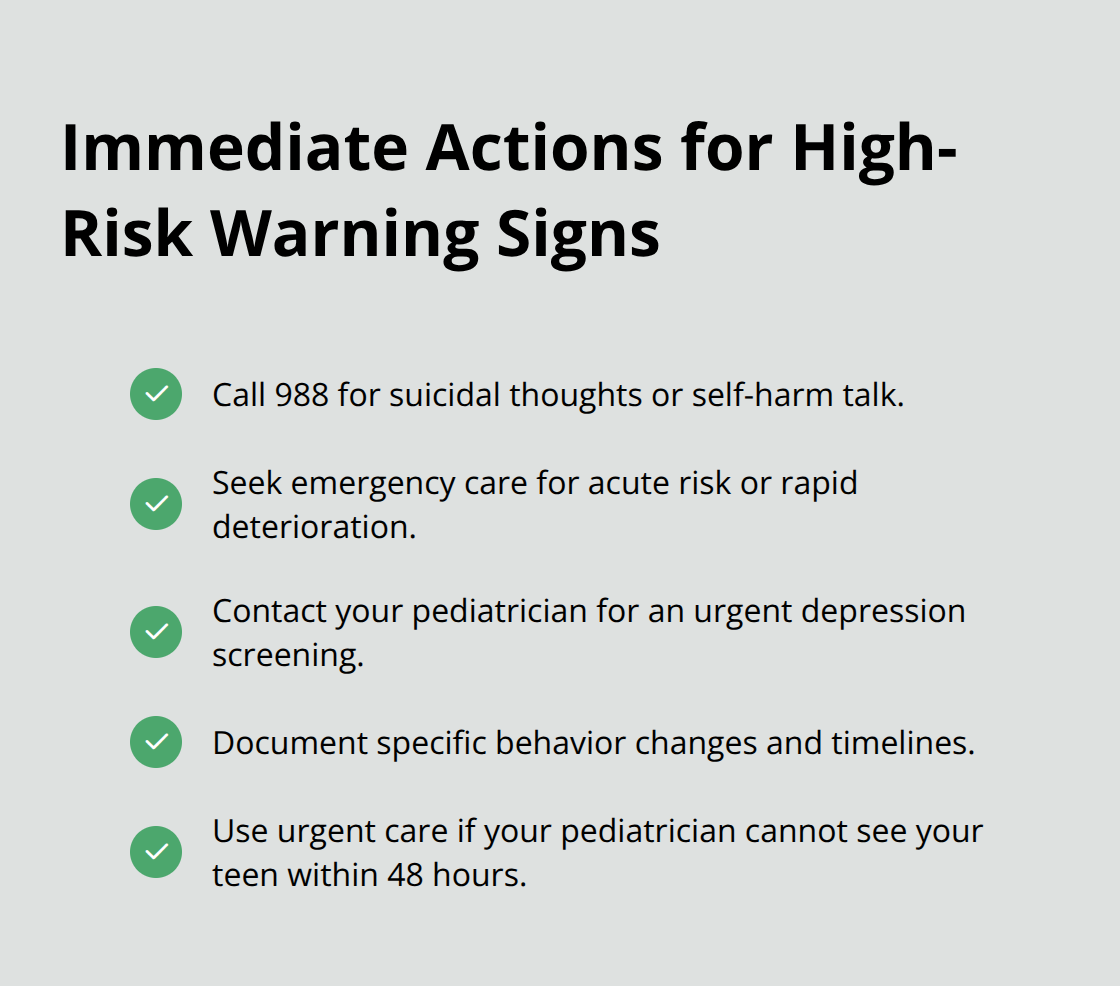
Significant changes in sleep patterns that swing from sleeping 15 hours daily to severe insomnia, combined with irritability or aggression, also warrant prompt assessment. Do not attempt to manage these situations alone or hope they resolve independently. Contact your pediatrician immediately and describe the specific behaviors and timeline. If your doctor cannot see your teen within 48 hours, seek evaluation through an urgent care clinic or emergency department rather than delay.
Starting the Professional Assessment Process
Starting the process involves your pediatrician or a school counselor as the entry point. Your pediatrician can screen for depression, rule out medical causes like thyroid dysfunction or anemia through basic bloodwork, and refer to a psychiatrist or licensed therapist if depression appears likely. Provide your doctor with specific examples of changes you’ve observed-not vague descriptions like your teen seems sad, but concrete details like they stopped attending soccer practice they loved, their grades dropped from A’s to C’s within six weeks, and they’re sleeping 12 hours daily yet complaining of exhaustion. Schools also employ counselors who can identify depression and connect you with community mental health resources. If your insurance covers mental health services, call the number on your card to request in-network providers specializing in adolescent depression. Many therapists have waitlists of several weeks, so starting the referral process immediately matters.
Finding Specialized Care for Your Teen
Mental health providers specializing in adolescent depression offer individualized treatment plans that address your teen’s specific needs. Evidence-based approaches like cognitive-behavioral therapy, family therapy, and medication management (when appropriate) work together to stabilize mood and restore function. Some providers offer telehealth options, which removes transportation barriers and allows your teen to access care from home. Look for programs that involve your family in treatment, as research shows that family participation improves outcomes significantly. Ask potential providers about their experience treating adolescent depression, their approach to involving parents, and their crisis protocols. The Teen Center delivers specialized, evidence-based mental health care for adolescents ages 12 through 17, offering intensive outpatient programs, individual and family therapy, medication management, and crisis support both in person and via telehealth across the state. This combination of individualized treatment, family involvement, and flexible access removes common barriers that delay teens from getting help.
Final Thoughts
Recognizing signs of adolescent depression early gives your teen the best chance at recovery. The patterns we’ve covered-persistent sadness, sleep disruption, lost interests, physical complaints, academic decline, and behavioral changes-rarely appear in isolation. When you notice these warning signs clustering across your teen’s home life, school, and social world, that’s your signal to act, and waiting doesn’t help.
Your role as a parent involves noticing the changes, taking them seriously, and connecting your teen with professionals who can help. Start with your pediatrician, who can screen for depression and rule out medical causes like thyroid dysfunction or anemia. If your teen expresses thoughts of suicide or self-harm, call 988 immediately or go to the nearest emergency room.
Finding the right mental health provider matters, and specialists experienced in adolescent depression who involve your family in treatment produce significantly better outcomes. Telehealth removes transportation barriers and connects your teen to care from home if access feels overwhelming. We at The Teen Center deliver specialized, evidence-based mental health care for adolescents ages 12 through 17, offering intensive outpatient programs, individual and family therapy, medication management, and crisis support both in person and via telehealth-visit The Teen Center to learn how we can support your family’s journey.