
Teen anxiety is showing up earlier and more often than ever before. At The Teen Center, we’ve seen firsthand how hard it is for parents and teachers to recognize when worry crosses from normal stress into something more serious.
The good news? Early signs teen anxiety are often visible if you know what to look for. This guide walks you through the physical, behavioral, and emotional warning signs so you can act fast.
What Physical Changes Signal Teen Anxiety
Sleep Disruption and Fatigue
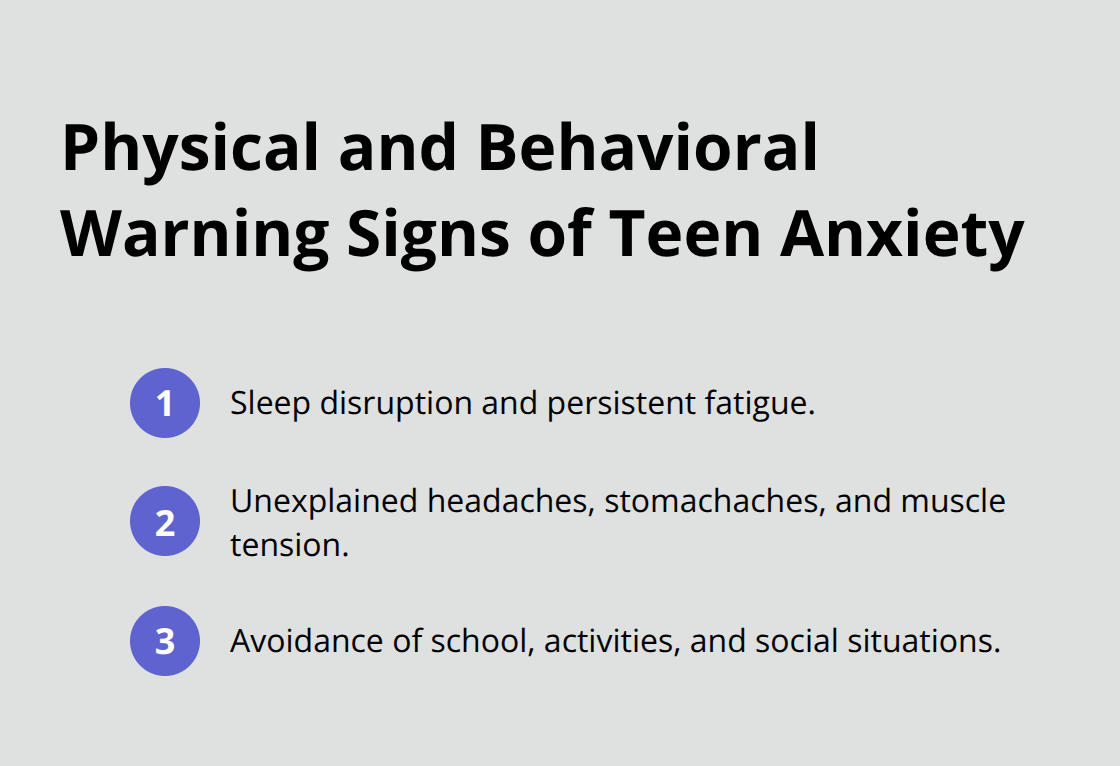
Sleep disruption stands as one of the earliest and most reliable physical indicators of teen anxiety. Anxious teens lie awake for hours, wake repeatedly during the night, or sleep far more than usual-sometimes 10 to 12 hours-as the body attempts to recover from sustained stress. The National Institute of Mental Health reports that sleep disturbances rank among the most common physical symptoms accompanying anxiety disorders in adolescents. Poor sleep then amplifies anxiety the next day, creating a harmful cycle that feeds on itself. If your teen suddenly complains about falling asleep, wakes up frequently, or seems exhausted no matter how much they sleep, that warrants serious attention. Fatigue that persists for more than two weeks, especially when paired with loss of interest in activities they once enjoyed, calls for a conversation with a healthcare provider.
Physical Complaints Without Medical Cause
Headaches, stomachaches, and muscle tension signal anxiety in teens because anxiety triggers the release of cortisol and adrenaline, which tense muscles and disrupt digestion. Many parents assume these complaints are minor or that the teen exaggerates. That approach misses the mark. Anxiety activates the body’s stress response, and teens often experience real physical pain as a result. Persistent physical symptoms need professional evaluation to rule out other causes and confirm anxiety as the driver. The Johns Hopkins grounding technique-naming five things you see, four you can touch, three you can hear, two you can smell, and one you can taste-helps a teen manage symptoms in the moment, but ongoing complaints require medical assessment.
Avoidance of Activities and Social Withdrawal
Avoidance of school, sports, social gatherings, or other activities they once enjoyed signals anxiety just as clearly as physical symptoms. A teen with anxiety finds reasons not to go: the gym feels overwhelming, lunch at school feels impossible, or hanging out with friends suddenly triggers dread. This withdrawal isn’t laziness or moodiness-it’s avoidance behavior, and it worsens anxiety rather than relieves it. The longer a teen avoids situations, the more powerful the anxiety becomes. Teachers and parents often notice this pattern first: a student who once participated in class now stays silent, or a teen who loved soccer suddenly quits the team. These behavioral shifts point to something deeper than a passing mood, and they demand attention before the pattern solidifies.
Recognizing these physical and behavioral changes positions you to act before anxiety takes stronger hold. The next section covers the emotional and cognitive warning signs that often accompany these physical shifts, helping you build a complete picture of what your teen experiences.
What Emotional Shifts Reveal About Teen Anxiety
Excessive Worry and Racing Thoughts
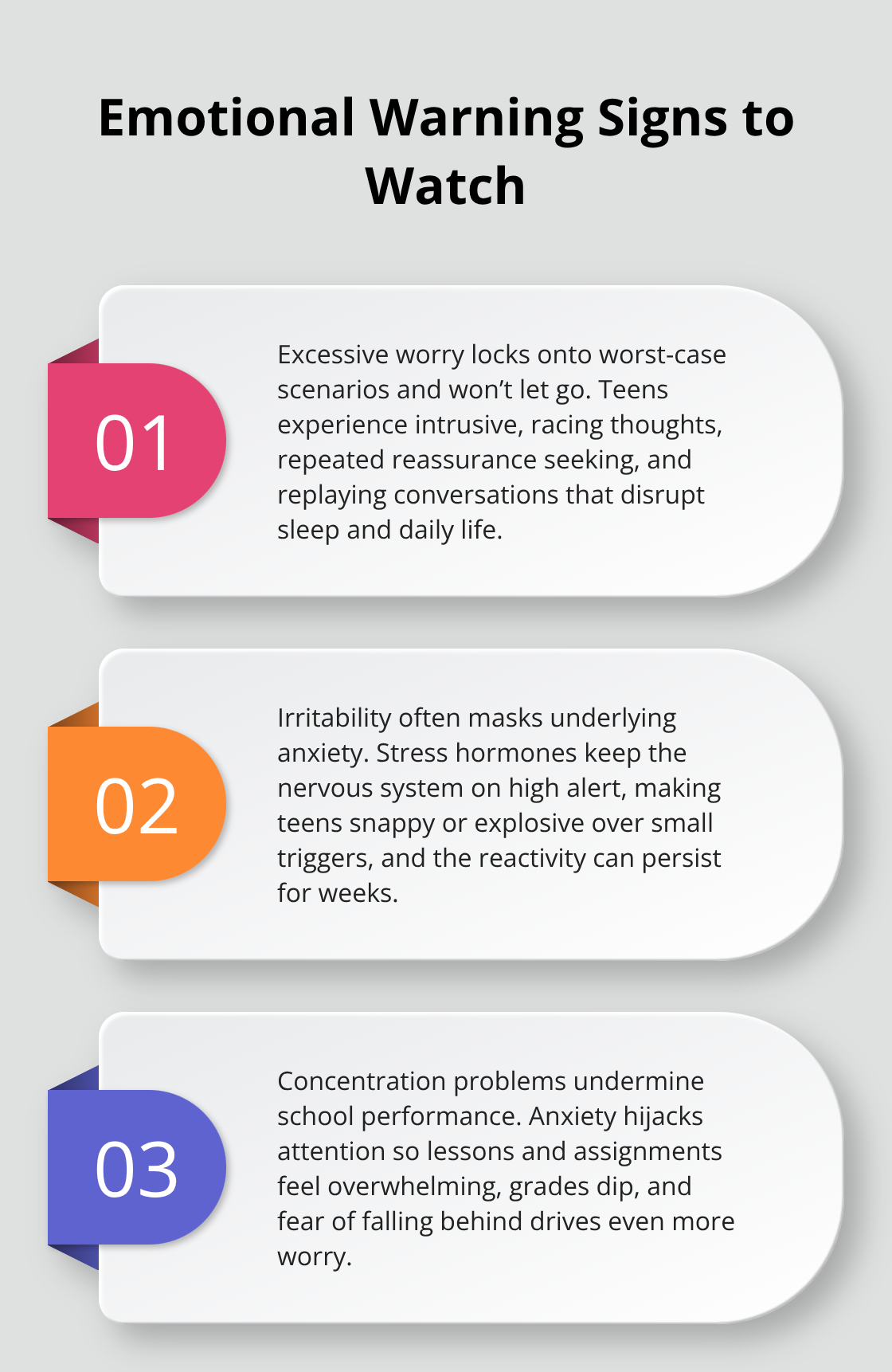
Excessive worry looks different in teens than in adults. A teen with anxiety doesn’t just feel concerned-their mind locks onto worst-case scenarios and refuses to let go. According to the National Institute of Mental Health, teens with generalized anxiety disorder experience persistent, intrusive thoughts about school performance, health, safety, and social judgment that feel impossible to control. The worry surfaces as racing thoughts that prevent sleep, constant second-guessing of decisions, and repetitive questions seeking reassurance. A parent might notice their teen asking the same question multiple times within an hour, or spending hours mentally replaying a conversation at lunch, convinced something went wrong. This isn’t normal teenage overthinking; it’s a pattern that disrupts their day and exhausts them. The Child Mind Institute reports that teens frequently worry about academic performance, athletic achievement, and how peers perceive them-worries that feel completely real and urgent to the teen, even when the actual threat is minimal.
Irritability as a Hidden Warning Sign
Irritability often masks the underlying anxiety, making it the most overlooked warning sign. Parents and teachers frequently interpret an anxious teen’s irritability as typical adolescent moodiness or defiance, when in fact the teen is overwhelmed and struggling to regulate their emotions. Anxiety floods the nervous system with stress hormones, leaving teens short-tempered, snappy, and prone to emotional outbursts over seemingly small triggers. A teen might explode over a homework assignment or snap at a sibling without understanding why they feel so reactive. The irritability persists for weeks rather than appearing as isolated incidents, and it often worsens in the afternoon or evening when anxiety accumulates throughout the day.
Concentration Problems and Academic Decline
Difficulty concentrating in school becomes inevitable when anxiety occupies mental space. A teen sitting in class with racing thoughts and physical tension cannot focus on the lesson, no matter how hard they try. Their grades drop, assignments go unfinished, and teachers report daydreaming or lack of engagement. The teen isn’t lazy or unmotivated-their brain is hijacked by anxiety, leaving little bandwidth for learning. This concentration problem often triggers academic anxiety, creating a second layer of worry about falling behind, which further sabotages focus. Identifying this pattern early matters because the longer anxiety disrupts school performance, the more the teen’s confidence erodes and the stronger their academic anxiety becomes.
These emotional and behavioral shifts often appear together, and they paint a clearer picture when you observe them across multiple settings-home, school, and social situations. The next section shows you how to respond when you spot these warning signs, and what steps parents and teachers can take to support the teen and connect them with professional help.
How to Respond When You Spot Anxiety
Start a Direct Conversation
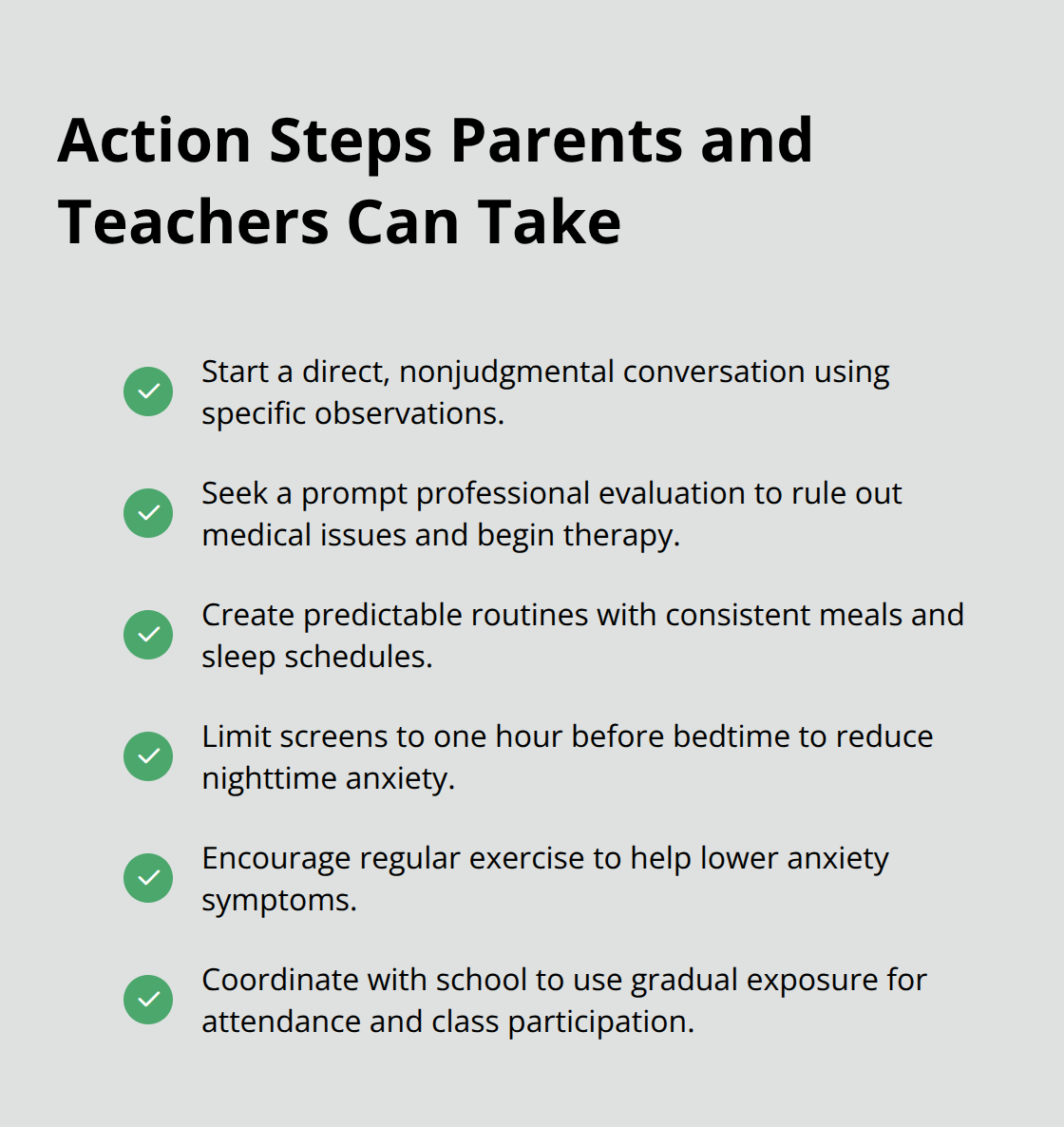
Spotting anxiety in your teen is only the first step. What matters now is how you respond. The window for early intervention is real and narrow. Research from the National Institute of Mental Health shows that teens who receive treatment within the first year of symptom onset experience significantly better long-term outcomes than those who wait. Starting a conversation about what your teen experiences requires directness without judgment. Avoid phrases like “you’re overreacting” or “just calm down”-these dismiss the teen’s experience and make them less likely to open up next time. Instead, name what you observe using specific details: “I’ve noticed you’ve been staying up until 2 a.m. most nights and seem exhausted during the day. I’m concerned about what’s happening. I’d like to understand more.” This approach shows you’re paying attention and treating their struggle as real. Let your teen respond without interrupting or offering immediate solutions. Many parents rush to fix things, but teens need to feel heard first. Ask follow-up questions like “How long has this been going on?” or “What happens when you try to fall asleep?” These details matter because they help you and a professional assess whether anxiety has crossed into territory requiring intervention.
Seek Professional Evaluation Quickly
Professional evaluation should happen quickly once you notice a pattern lasting more than two weeks. Start with your teen’s pediatrician, who can rule out medical causes like thyroid issues or sleep disorders, then refer you to a mental health specialist. Cognitive behavioral therapy stands as the gold standard treatment for teen anxiety according to research from Johns Hopkins and the Child Mind Institute. CBT teaches teens to identify anxious thoughts, challenge them with evidence, and gradually face situations they’ve been avoiding-it works faster than waiting and hoping anxiety passes on its own. Many teens show measurable improvement within 8 to 12 sessions. If your teen resists therapy, involve them in choosing the therapist. Teens are far more likely to engage when they have some control over who they work with.
Build Structure and Reduce Anxiety Triggers at Home
At home, establish predictable routines with consistent meal times and sleep schedules, because anxiety thrives in chaos. Limit screen time to one hour daily before bed, since social media and news feeds amplify worry. Encourage physical activity most days-research shows exercise reduces anxiety symptoms as effectively as some medications. These practical changes create an environment where your teen’s nervous system can settle rather than stay activated.
Work With Schools on Gradual Exposure
Teachers should coordinate with school counselors to create a gradual exposure plan rather than forcing attendance through pressure alone. If a teen refuses school due to anxiety, working with them to attend for just one class, then two, then three builds confidence without triggering shutdown. Small wins matter more than perfect attendance. This step-by-step approach respects the teen’s struggle while moving them forward.
Final Thoughts
Recognizing early signs of teen anxiety matters because waiting costs time your teen doesn’t have. The physical symptoms, behavioral shifts, and emotional changes outlined in this guide send a clear message that something needs attention now, not months from now. Teens who lose sleep, withdraw from activities, and struggle to concentrate signal that intervention can’t wait.
Early intervention changes outcomes dramatically. Teens who receive treatment within the first year of symptom onset experience significantly better long-term results than those who delay, and cognitive behavioral therapy produces measurable improvement within 8 to 12 sessions. Starting a direct conversation with your teen, seeking professional evaluation, and building structure at home are concrete steps that work.
You don’t have to navigate this alone. We at The Teen Center specialize in evidence-based mental health care for adolescents ages 12 to 17, and we offer intensive outpatient programs, individual and family therapy, medication management, and crisis support both in person and via telehealth. If you’ve noticed early signs of teen anxiety in your teen, contact The Teen Center to discuss what support looks like.