
Mental health treatment shouldn’t depend on where you live or how much free time you have. Yet many teens skip therapy because of distance, scheduling conflicts, or anxiety about walking into a clinic.
At The Teen Center, we’ve seen how telehealth access for teens removes these real obstacles. Virtual care brings specialists into your home, fits around school, and lets you get help without the stress of traveling or being seen at a waiting room.
Why Telehealth Matters for Teen Mental Health Access
Distance Eliminates Access to Specialists
The reality is stark: distance kills access to mental health care for teens. Research analyzing studies on help-seeking barriers in adolescents found that systemic and structural factors like limited service availability and long wait times are major obstacles. Geography adds another critical layer. Rural teens often face transportation barriers that make in-person appointments impossible, and even urban teens struggle when specialists aren’t available locally. Telehealth eliminates this entirely.
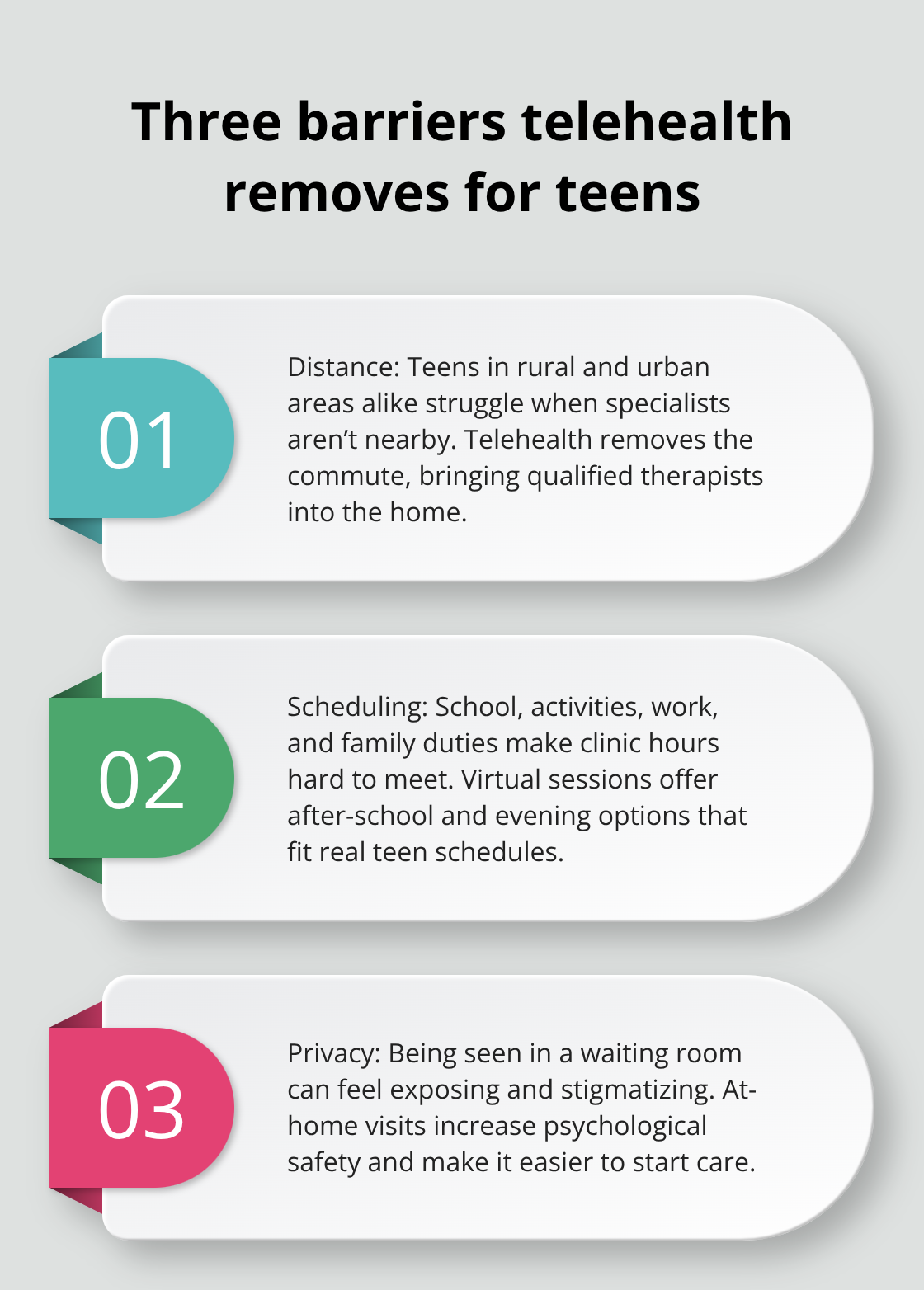
A teen in a rural area no longer needs a two-hour drive to see a therapist. Instead, they access specialists through video from home, removing the transportation barrier that previously forced many to skip treatment altogether.
Scheduling Flexibility Removes Logistical Obstacles
Scheduling conflicts are equally damaging. Teens juggle school, extracurriculars, part-time jobs, and family obligations, making traditional appointment windows nearly impossible to fit. Logistical challenges around getting to appointments remain a significant barrier to care. Telehealth changes this by offering flexible scheduling, including after-school and evening sessions that work around a teen’s actual life. Sessions happen when teens can actually participate, not when clinics happen to have openings.
Privacy at Home Reduces Stigma
Stigma remains one of the strongest barriers to treatment. Research shows that perceived public stigma and embarrassment prevent teens from seeking help. Walking into a clinic waiting room signals to peers, parents, or anyone who might see you that you’re struggling. Virtual care from home removes that visibility entirely, creating psychological safety that makes it easier for teens to take the first step toward treatment. This privacy matters especially for adolescents who fear judgment or worry about their peers finding out they’re in therapy.
These barriers-distance, scheduling, and stigma-don’t exist in isolation. They compound each other, stacking obstacles that keep struggling teens from getting help. Telehealth addresses all three at once, which is why understanding how virtual care actually removes these obstacles matters for anyone working to expand teen mental health access.
How Telehealth Actually Removes the Obstacles Teens Face
Specialists Become Accessible Without Long Commutes
Telehealth doesn’t just theoretically help teens access care-it directly eliminates the friction that keeps them away. When a teen in a rural area no longer needs to drive two hours to see a therapist, the barrier vanishes. An 830% increase in telemental health use among Medicaid-enrolled youth ages 3 to 17 between 2019 and 2020 reveals how quickly teens and families embraced virtual care when it became available. That shift happened because telehealth solved real problems. Transportation challenges and limited service availability rank among the strongest obstacles to treatment. Telehealth eliminates both. A rural teen can now work with a psychiatrist or therapist who specializes in anxiety or trauma without a commute. Urban teens benefit equally when they access specialists their local area doesn’t have.
Scheduling Aligns With Teen Life, Not Clinic Hours
Teens juggle school, jobs, and family obligations, and traditional appointment windows rarely align with their actual schedules. Telehealth scheduling flexibility makes it easier to arrange sessions during school or after hours, including crisis appointments when teens need immediate support. A session at 4:30 p.m. on a Tuesday works for the student who has soccer practice at 6 p.m. An evening appointment works for the teen with a part-time job. This isn’t convenience-it’s the difference between a teen actually attending therapy and skipping it entirely. Sessions happen when teens can actually participate, not when clinics happen to have openings.
Home Privacy Removes the Stigma of Being Seen
Stigma remains one of the strongest reasons adolescents avoid seeking mental health treatment. Walking into a clinic waiting room exposes a teen to judgment from peers, classmates, or anyone in the community who might recognize them. Virtual care from home eliminates that visibility entirely, creating psychological safety that makes the first step toward treatment feel less risky. This matters especially for teens in smaller communities where everyone knows everyone, and for adolescents already struggling with shame about their mental health.
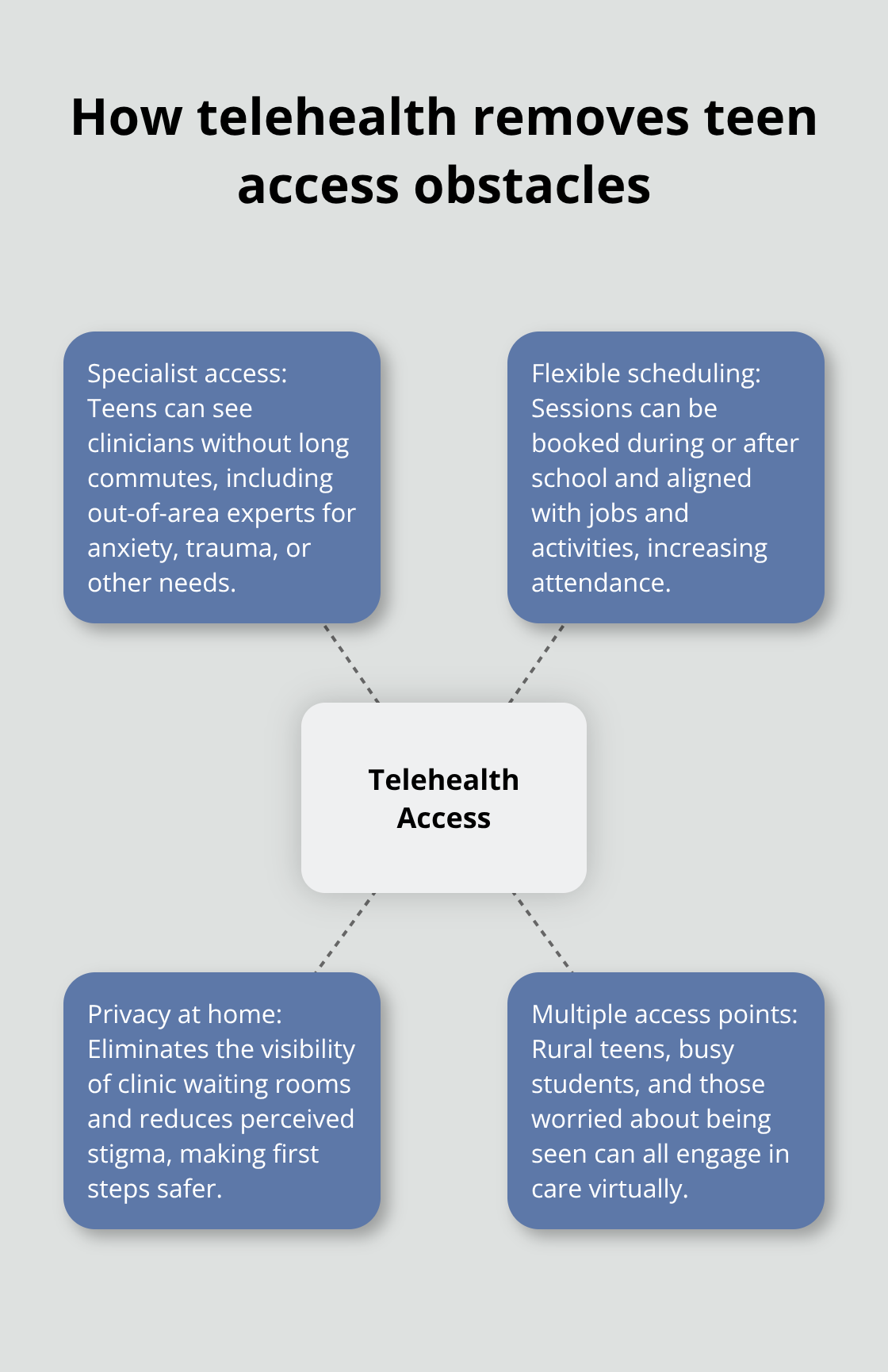
The combination of removing distance, fitting around real schedules, and providing privacy means telehealth doesn’t just add an option-it fundamentally changes who can access care.
Multiple Access Points Expand Who Gets Treatment
A teen in a rural area with no local specialists, a student who can’t miss school, and an adolescent afraid of being seen at a clinic can all receive treatment through virtual care. That shift represents one of the most direct ways to address why teens avoid mental health care in the first place. Yet access alone doesn’t guarantee teens will actually use telehealth services. Insurance coverage, state regulations, and how easily teens can navigate the system all determine whether virtual care truly reaches those who need it most.
What’s Actually Making Telehealth Accessible Right Now
Insurance Coverage Removes Financial Barriers
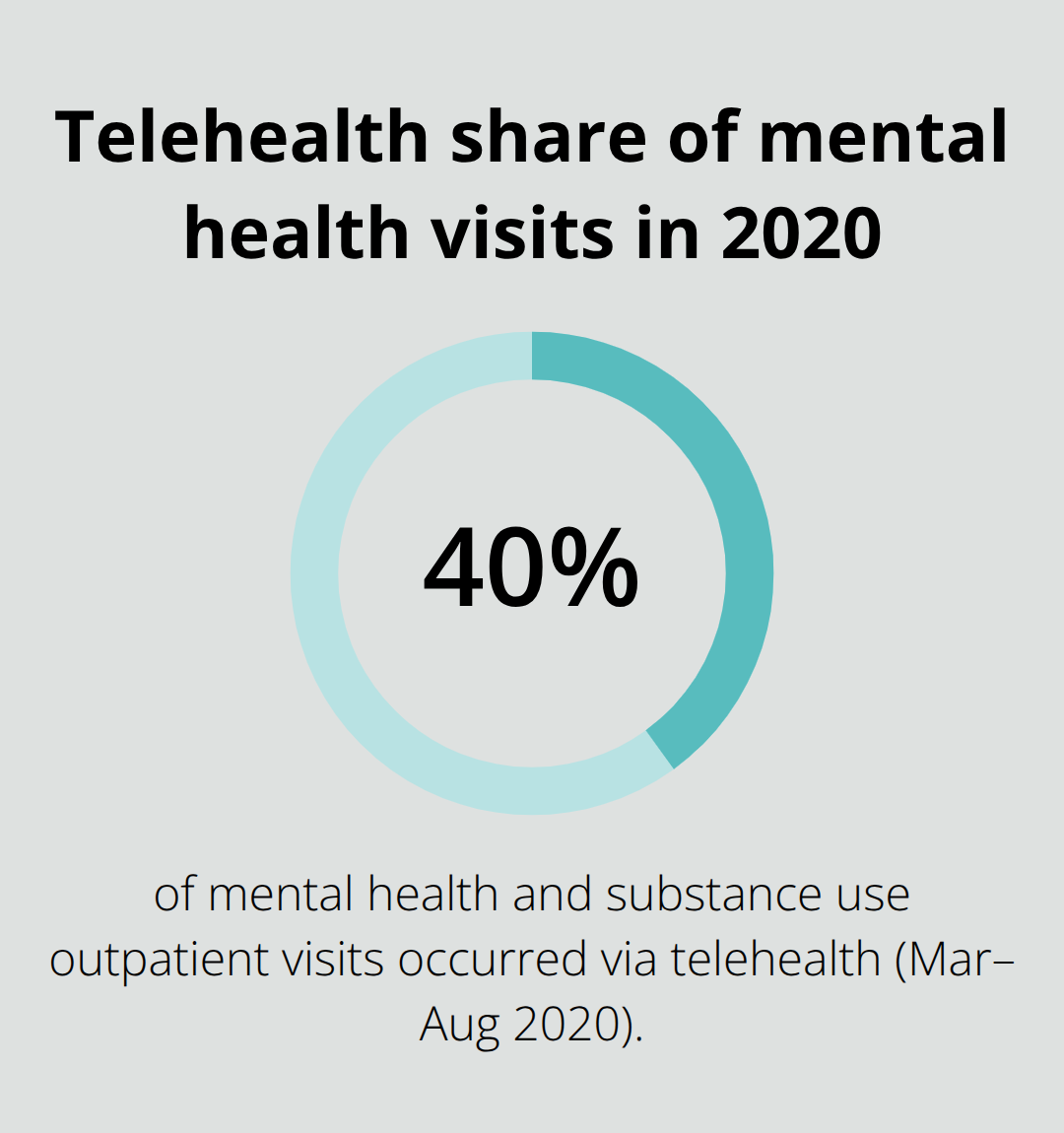
Insurance coverage for virtual mental health sessions expanded dramatically during and after the pandemic, removing a major financial barrier that kept many teens from treatment. Before 2020, telehealth reimbursement was fragmented and inconsistent across insurance plans. Private insurers and Medicaid removed restrictions on virtual visits in March 2020, and many of those changes stuck. From March through August 2020, about 40 percent of mental health and substance use outpatient visits occurred via telehealth, according to data tracked during the pandemic surge. That shift happened partly because insurance stopped creating artificial obstacles to virtual care.
Today, most major insurance plans cover telehealth for mental health treatment at rates comparable to in-person visits, though coverage gaps still exist for low-income families relying on Medicaid. Some states, like Georgia, permanently extended audio-only coverage beyond the public health emergency, recognizing that phone-based therapy works for teens who lack reliable video access or devices.
If you’re exploring telehealth for a teen, verify coverage with their specific insurance plan, because the landscape varies significantly by state and plan type. Financial barriers that once blocked access now matter far less when insurance actually covers virtual sessions.
State Regulations Now Support Cross-Border Care
State regulatory barriers that once blocked telehealth have fallen away, making it far easier for providers to see teens across state lines and for teens to access out-of-state specialists. During the pandemic, states granted temporary licenses to out-of-state providers, and many made those arrangements permanent. A teen in Wyoming struggling with a specific condition can now work with a specialist in California without either party navigating licensing obstacles. Teens also benefit from continuity of care when they move for school or work, since their provider can legally continue treatment across state boundaries. These policy changes shift telehealth from a theoretical option to an actual pathway for care, especially for teens in underserved areas.
Federal Investment Closes the Digital Divide
Federal infrastructure investment broadband expansion addresses the digital divide that undermines telehealth access in rural and low-income areas. The Infrastructure Investment and Jobs Act allocated $65 billion to expand broadband nationwide, a recognition that telehealth only works if families have reliable internet. Schools and community organizations close gaps faster by distributing devices and hotspots directly. When a school provides Chromebooks and free internet access, a teen no longer needs a household with expensive devices or high-speed service to attend virtual therapy. These tangible investments mean telehealth access expands beyond wealthy urban areas to reach teens who previously had no options at all.
Final Thoughts
Telehealth access for teens directly solves the barriers that keep adolescents from treatment. Distance no longer blocks care when a teen sees a specialist from home, scheduling conflicts vanish when appointments fit around school and work, and stigma loses its grip when treatment happens privately without the anxiety of walking into a waiting room. Policy changes and insurance coverage have transformed virtual care from experimental to standard-states lifted regulatory barriers that prevented out-of-state providers from treating teens across borders, insurance plans now cover telehealth at rates comparable to in-person visits, and federal broadband investment closes the digital divide in rural and low-income areas where teens previously had no options.
Yet expanding telehealth access for teens requires more than technology and policy alone. Providers must understand adolescent mental health and deliver evidence-based treatment through screens, families must support teens in seeking help, and organizations need sustained investment to reach teens who still face barriers. Schools distribute devices and hotspots, making virtual therapy accessible to adolescents who lack home internet or expensive equipment (a direct response to the digital divide that once blocked access entirely).
If you’re looking for evidence-based mental health care that removes barriers to access, visit The Teen Center to learn how we help adolescents get the support they need.