
Mental health care shouldn’t drain your wallet. At The Teen Center, we know that cost is one of the biggest barriers keeping teens from getting the support they need.
The good news? Financial help for teen therapy exists, and it’s more accessible than you might think. This guide walks you through insurance options, free resources, and assistance programs that can make care affordable.
How Insurance Actually Covers Teen Therapy
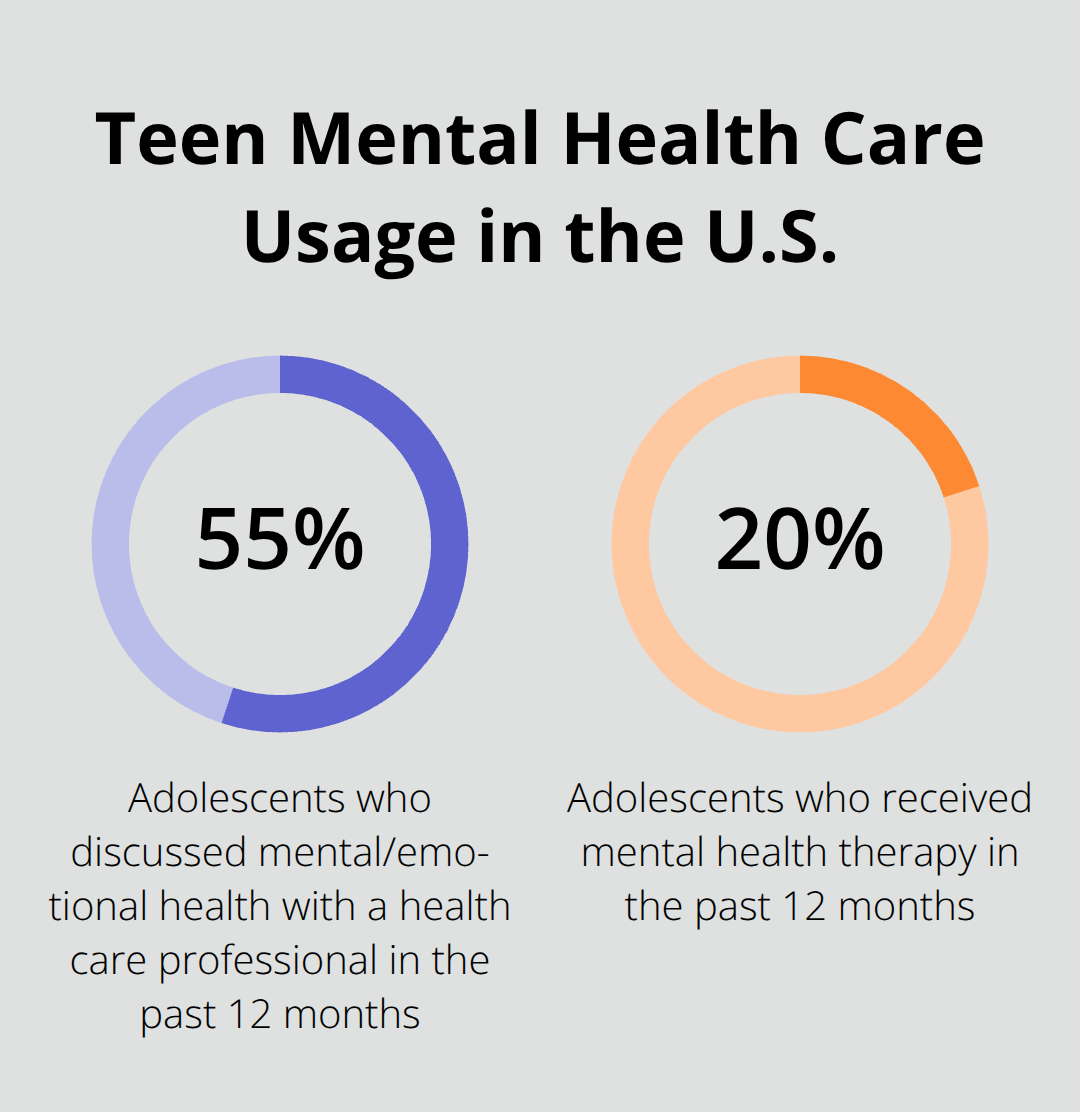
Your insurance plan’s mental health coverage exists, but it won’t help unless you understand what it actually covers. Call the number on the back of your insurance card and ask three specific questions: What is my deductible for mental health services? What percentage of therapy costs does my plan cover after I meet the deductible? And how many therapy sessions per year does my plan allow? These answers determine whether therapy costs you $50 per session or $200. According to the CDC, 55% of US adolescents discussed their mental and emotional health with a health care professional in the past 12 months, but many of those families had no idea what their insurance actually paid for.
In-Network vs. Out-of-Network Providers
In-network providers-therapists contracted directly with your insurance company-charge lower rates because insurance negotiates their fees in advance. Out-of-network providers don’t have these agreements, which means higher upfront costs and more paperwork for you. If your insurance covers 80% of in-network therapy at $100 per session, you pay $20. The same therapist out-of-network might charge $150, with your insurance covering nothing until you hit your deductible. This difference adds up fast when teens typically need weekly sessions.
Know Your Deductible and Coverage Limits
Your deductible is the amount you pay before insurance kicks in. Many families don’t realize they’re responsible for the full cost of therapy until they hit this number. If your deductible is $1,500 and therapy costs $100 per session, you’ll pay out of pocket for roughly 15 weeks before insurance starts sharing costs. Ask your insurance company if mental health services have a separate deductible from medical services-some plans do, which can work in your favor. Also ask about your out-of-pocket maximum, the most you’ll pay annually for covered services. Once you hit this limit, insurance covers 100% of remaining therapy costs that year. Families often waste money by not tracking these numbers, paying more than necessary because they don’t know when they’ve reached their limits.
Maximizing Your Benefits Without Breaking the Bank
If your plan covers therapy, use it strategically. Schedule sessions when your deductible resets each year-typically January 1st. If you know you’ll need ongoing therapy, front-loading sessions early in the year lets you meet your deductible faster and benefit from higher insurance coverage for the rest of the year. Ask your in-network provider if they offer sliding-scale fees for out-of-pocket costs. Many therapists reduce what you pay directly even when insurance is involved, recognizing that copays and coinsurance add up. Some plans cover telehealth therapy at better rates than in-person sessions, so ask about this option. According to CDC data, 20% of US adolescents received mental health therapy in the past 12 months, yet many families never explored whether telehealth options lowered their costs.
When Insurance Alone Isn’t Enough
If your insurance plan is weak or doesn’t cover enough sessions, stop relying on it alone. Nonprofit organizations like Open Path Collective operate nationwide and charge as little as $30–70 per session through a one-time membership around $65, making them far cheaper than most insurance copays for ongoing care. This approach works best when you combine insurance for initial assessment with affordable therapy providers for consistent support. Understanding what your insurance covers sets the foundation, but knowing your other options-especially when coverage falls short-determines whether your teen actually gets the help they need.
Where to Find Affordable Therapy Right Now
Community Mental Health Centers and Sliding-Scale Fees
Community mental health centers operate in virtually every county and charge fees based on what your family actually earns. The CDC reports that 55% of US adolescents discussed mental health with a professional in the past year, yet many families never checked whether their local community health center could serve them for affordable rates. Call your county health department or search for Federally Qualified Health Centers using the HRSA health center finder to locate one near you. These centers accept uninsured teens, offer sliding-scale fees tied to household income, and often have therapists available within weeks rather than months.
School-Based Counseling Programs
School-based counseling programs reach your teen without transportation barriers and cost nothing beyond tuition. High schools employ counselors who handle crisis situations, but they also provide short-term therapy and referrals to community providers when longer treatment is needed. If your school’s counselor has a two-month wait, ask directly whether they can connect you to a therapist within the school district or refer you to a community partner. Many districts contract with local nonprofits to provide therapy on campus during school hours, eliminating the excuse that your teen can’t attend appointments.
Crisis Hotlines vs. Ongoing Therapy
Crisis hotlines like the 988 Suicide and Crisis Lifeline provide free, confidential support 24/7 by calling or texting 988-trained counselors answer immediately during moments of acute distress. Teen Line offers peer-to-teen support by calling 800-852-8336 or texting TEEN to 839-863 for conversations with other teens rather than adults. These services handle emergencies but don’t replace ongoing therapy. For continuous care at minimal cost, Open Path Collective operates a network of 35,000+ therapists across the US and Canada, charging a one-time membership of $65 with therapy sessions at $30–70 depending on the therapist and your financial situation.
Affordable Online Therapy Networks
Student interns through Open Path charge as little as $30 per session, making this option genuinely affordable for families without insurance or with high deductibles. You can message potential therapists before joining to confirm they have availability and treat teens, reducing wasted time searching. The membership never expires and carries no recurring fees, so you maintain access to reduced rates indefinitely once you join. These affordable networks fill the gap when insurance coverage falls short or when your family needs immediate access without waiting for insurance approvals.
Who Actually Funds Teen Therapy Programs
Nonprofit Networks Lead the Way
Nonprofit organizations fund far more teen therapy than government programs, and most families never realize this. Open Path Collective operates the largest affordable therapy network in the US and Canada, with 35,000+ vetted therapists charging $30–70 per session through a one-time $65 membership that never expires. Student interns provide sessions for $30–40, making this the single cheapest legitimate option for uninsured families. Families access these services daily, not as a theoretical possibility but as real, working solutions.
Federal and State Funding Programs
Your state likely runs mental health funding programs, though they hide in bureaucracy. Federally Qualified Health Centers receive federal funding and charge based on household income, making them free or nearly free for families earning under 100% of the federal poverty line. Contact your county health department directly rather than searching online-their websites rarely list pricing clearly. Some states operate dedicated teen mental health grants that cover therapy costs for families above poverty thresholds but below middle-class income (income that makes them ineligible for free care but leaves therapy unaffordable). Massachusetts runs a free counseling hotline that connects teens to free therapy referrals, and similar programs exist in other states, though they rarely receive advertising. Call your state mental health authority and ask this specific question: Do we have state-funded therapy programs for teens whose families can’t afford care? This single question often reveals funding sources your family qualifies for.
Employer Benefits and Tax-Advantaged Accounts
Employer-sponsored mental health benefits are the exception, not the rule, and most employers offer weak coverage. If your employer offers an Employee Assistance Program, it typically covers 3–5 free therapy sessions annually-enough for crisis intervention but not ongoing treatment. Health Savings Accounts and Flexible Spending Accounts let you pay for therapy with pretax dollars, reducing costs by your tax bracket (but only if your employer offers these plans).
Combining Multiple Funding Sources
The real leverage comes from combining multiple funding sources. Use your insurance for initial assessment, shift to Open Path or a community health center for ongoing therapy, and call crisis hotlines during acute moments. Families stuck between insurance coverage gaps and poverty thresholds-earning too much for free care but too little for copays-benefit most from Open Path’s fixed-rate model. The nonprofit explicitly targets this income range, and its membership structure ensures you never pay recurring fees after joining. This approach beats waiting for government programs that move slowly or have strict eligibility rules.
Final Thoughts
Affordable therapy for teens exists across multiple pathways, and you don’t need to choose just one. Insurance coverage, community health centers, school-based counseling, crisis hotlines, and nonprofit networks like Open Path Collective each fill different gaps in financial help for teen therapy. The families who succeed in accessing care combine these resources strategically rather than waiting for a single perfect option.
Start by calling your insurance company this week and asking those three questions about your mental health coverage. While you gather that information, contact your county health department to ask about Federally Qualified Health Centers and sliding-scale clinics in your area. Check whether your teen’s school offers counseling services, and if insurance coverage falls short, Open Path Collective’s one-time $65 membership with therapy sessions at $30–70 removes the financial barrier for most families.
We at The Teen Center offer specialized mental health care for adolescents ages 12–17, combining individual and family therapy, medication management, and crisis support both in person and via telehealth. The barrier isn’t finding affordable care-the barrier is taking the first step. Call one resource this week and ask one question.